US Civil Rights Enforcement Under the Trump Administration
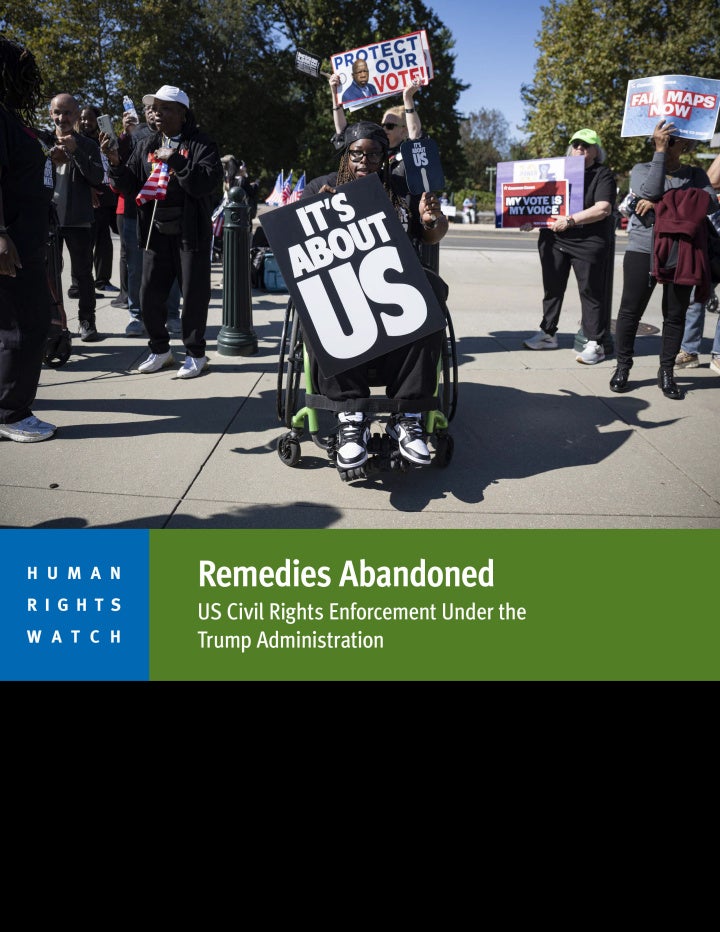
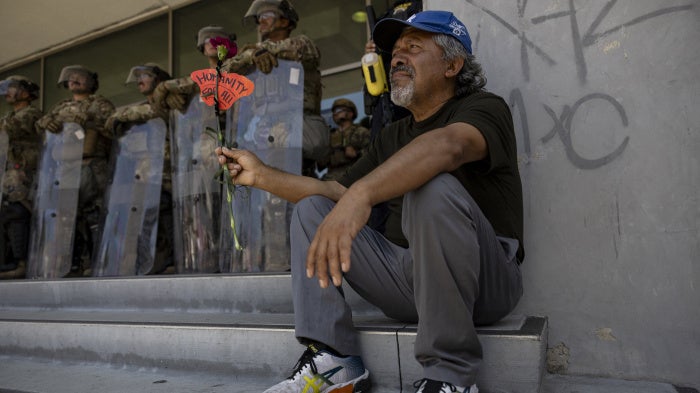
The 112-page report, “Remedies Abandoned: US Civil Rights Enforcement Under the Trump Administration,” documents the administration’s efforts to unravel the work of four key agencies between January 2025 and the spring of 2026: the Justice Department’s Civil Rights Division, which lost about 75 percent of its attorneys; the Education Department’s Office of Civil Rights, which moved to lay off nearly half its staff in one day and closed 7 of its 12 regional offices; the Housing and Urban Development Department’s Fair Housing Office, which shrank dramatically; and the Equal Employment Opportunity Commission, which reached its lowest staffing levels in over 40 years.
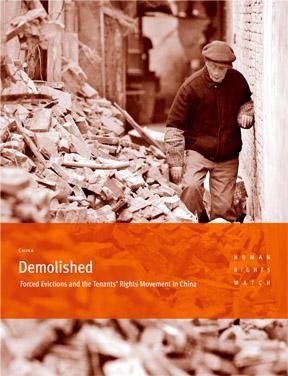
Forced Evictions and the Tenants' Rights Movement in China
Chinese local authorities and developers are forcibly evicting hundreds of thousands of homeowners and tenants who have little legal recourse. China's rapid urban development, fueled in Beijing by preparations for the 2008 Olympics, is leading to the eviction of homeowners and tenants in violation of Chinese law and international standards on the right to housing.
On February 20, 2004, President George W. Bush notified Congress of his intent to sign the U.S.-Central America Free Trade Agreement (CAFTA)-an accord that the United States recently negotiated with Costa Rica, El Salvador, Guatemala, Honduras, and Nicaragua. According to U.S.
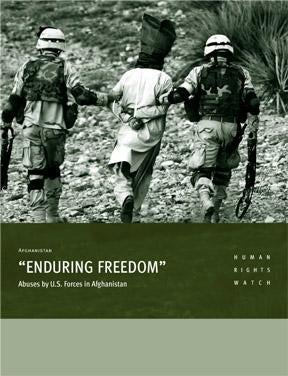
This 59-page report is based on research conducted by Human Rights Watch in Afghanistan and Pakistan in 2003 and early 2004. Human Rights Watch documented cases of U.S. forces using military tactics, including unprovoked deadly force, during operations to apprehend civilians in uncontested residential areas—situations where law enforcement standards and tactics should have been used.
South Africa's Efforts to Prevent HIV in Survivors of Sexual Violence
This 73-page report documents how government inaction and misinformation from high-level officials have undermined the effectiveness of South Africa’s program to provide rape survivors with post-exposure prophylaxis (PEP) — antiretroviral drugs that can reduce the risk of contracting HIV from an HIV-positive attacker.
The Assault on Justice in Egypt's Crackdown on Homosexual Conduct
This 144-page report documents the government’s increasing repression of men who have sex with men. The trial of 52 men in 2001 for the “habitual practice of debauchery”—the legal charge used to criminalize homosexual conduct in Egyptian law—was only the most visible point in the ongoing and expanding crackdown.
Rebel forces are advancing on Haiti’s capital Port-au-Prince, sparking fears of widespread bloodshed. Among the leaders of the insurgency are such notorious figures as Louis Jodel Chamblain, a former paramilitary responsible for countless atrocities under the military government that ruled Haiti from 1991 to 1994.
What is new about this policy? The Bush Administration’s policy on landmines, announced February 27, 2004, reverses many of the positive steps the U.S. has made over the past decade to eradicate antipersonnel mines. The use of self-destructing mines is permitted indefinitely without any geographic restrictions.
The concept of smart (i.e., self-destructing) mines certainly has humanitarian allure. In theory, a mine that blows itself up in a relatively short period of time is preferable to a mine that lasts for decades, and should pose less danger to civilians.
Torture in Egypt is a widespread and persistent phenomenon. Security forces and the police routinely torture or ill-treat detainees, particularly during interrogation. In most cases, officials torture detainees to obtain information and coerce confessions, occasionally leading to death in custody. In some cases, officials use torture detainees to punish, intimidate, or humiliate.
A Human Rights Watch Briefing Paper, February 24, 2004
After the November 23, 2003 revolution, leading to the formation of a new government and the election of Mikheil Saakashvili as president, an opportunity has opened to make real progress on human rights in Georgia. The new government must take up this opportunity by making respect for human rights the core of its reform program.
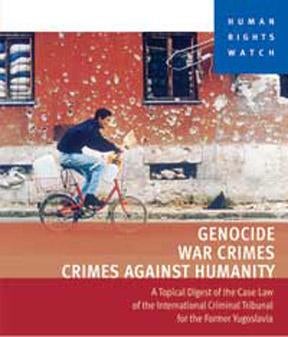
Topical Digests of the Case Law of the ICTR and the ICTY
This 285-page book organizes the tribunals’ decisions by topic, including genocide, crimes against humanity, war crimes, individual criminal responsibility, command responsibility and sentencing.
A Human Rights Watch Briefing Paper , February 2004
The purpose of this briefing paper is to outline Human Rights Watch's main concerns regarding the barrier as the International Court of Justice, at the request of the United Nations General Assembly, considers the barrier's legal consequences.
Background information on the detention and harassment of human rights defenders and organization in Tunisia in anticipation of President Ben Ali's visit to Washington D.C.