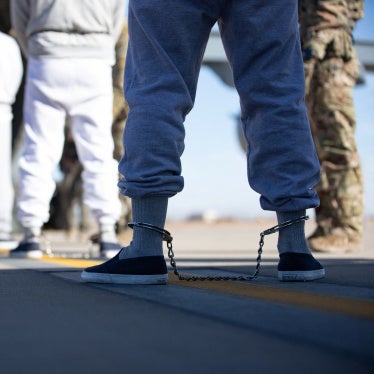
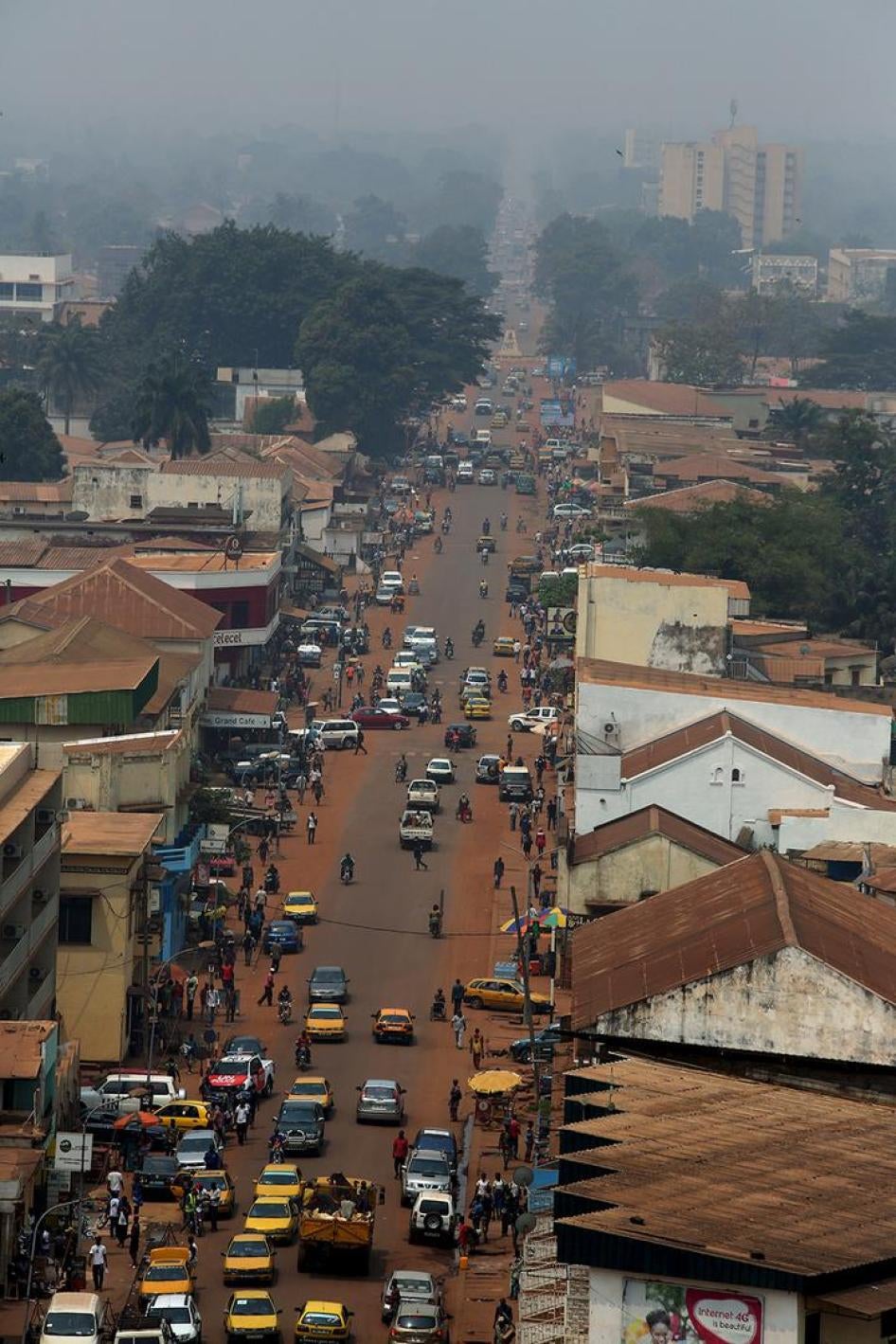
On June 12, the Central African Republic accepted 18 men and women of other nationalities deported from the United States, despite its own fragility as a country recovering from decades of conflict and suffering a protracted humanitarian crisis.
The new arrivals included people from Afghanistan, Iran, Iraq, Jordan, Turkey, Armenia, Georgia, Kyrgyzstan, Cameroon, Egypt, and Tunisia, almost all of whom had US court-ordered protections against deportation to their countries of origin due to fears of persecution or torture.
Central African authorities should do the right thing and protect anyone fearing persecution, torture, or other serious harm in their home countries, who under international law should not be forcibly repatriated.
This is the first time an African state participating in a US third-country transfer agreement has accepted people from Iran and Afghanistan, where risks are particularly high for returnees.
In Iran, though an interim peace agreement has halted active fighting with the US and Israel, the country’s already dire situation has worsened in recent months. Tens of thousands of arrests followed January’s countrywide massacres of protesters and bystanders.
Iran’s authorities have arbitrarily executed at least 44 men since March on politically motivated charges, at least two of whom were sentenced to death after returning from abroad. A UN Fact-Finding Mission concluded that Iran’s authorities have committed crimes against humanity.
In Afghanistan, the human rights situation has continued to deteriorate. Women and girls face institutionalized discrimination and repression by the Taliban. Human rights defenders, journalists, and former government personnel are at particular risk. Human Rights Watch has documented cases of forced returnees arbitrarily detained and tortured. Afghanistan is also facing dire economic conditions marked by soaring unemployment and a broken healthcare system.
Given that six people the US deported to the Central African Republic are women, the authorities should ensure that reception conditions respect their dignity, privacy, and access to basic necessities, including menstrual hygiene supplies.
Central African authorities should not have colluded with US mistreatment of refugees and asylum seekers in the first place. Now that they have, they need to ensure deportees’ due process rights, freedom of movement, and adequate living conditions. The country should refuse to continue to be a dumping ground for people the United States refuses to accept.