From the day it took office, January 20, 2025, the second Trump administration has spawned new immigration policies at a dizzying pace. Some obliterated with the stroke of a pen programs that had been built over decades to enable avenues to safety for people fleeing war and persecution.
The impact of the 13 harmful immigration and refugee policies listed below is not only being felt directly by the asylum seekers, migrants, refugees, families, US citizens, and communities whose lives are being upended. Their reach extends much further because the US government’s conduct sets an example that is likely to embolden other governments considering pushbacks for asylum seekers and migrants at international borders throughout the world and encourage other countries to turn their backs on people fleeing for their lives.
- Declaring an ‘Invasion’ by ‘Aliens,’ Sealing the Border, and Barring Asylum on US Territory
The foundational executive order for many of the harmful US immigration and refugee policies was a proclamation that “millions of illegal aliens” have invaded the United States. Another order specific to the US southern border “suspend[s] the physical entry of any alien engaged in the invasion across the southern border.”
That order explicitly excludes people from exercising their right to seek asylum if it would permit their continued presence in the United States. This order also suspended entry for anyone posing a public health risk, without specifying what that risk might be, and mandated construction of a border wall.
Invoking a fictitious “invasion” is intended to short-circuit normal due process and enable conduct that would not otherwise be lawful. The administration invoked the Alien Enemies Act, an archaic 1798 statute that had been used rarely and never outside of wartime, in March, to summarily deport 137 Venezuelan nationals to El Salvador, where they were arbitrarily detained and systematically tortured.
A three-judge panel of the US Court of Appeals for the Fifth Circuit rejected the administration’s pretext for invoking the Act, finding that the United States was not under any sort of invasion as the administration alleged. The case is being reviewed by the full Fifth Circuit and may go before the Supreme Court.
- Mandatory Detention
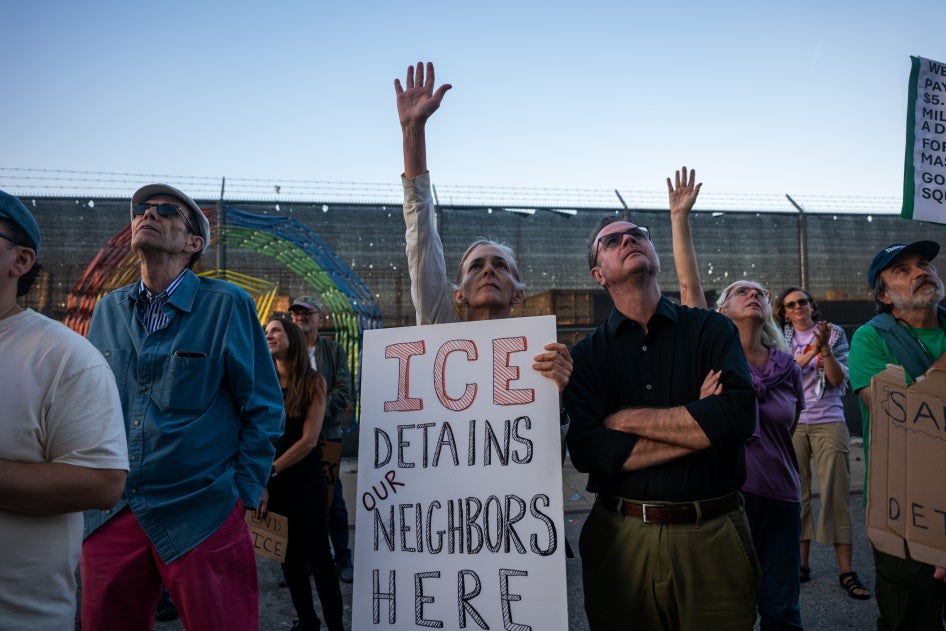
Another Inauguration Day order called for “detaining, to the maximum extent authorized by law, aliens apprehended on suspicion of violating Federal or State law, until such time as they are removed from the United States.” On July 8, the acting director of Immigration and Customs Enforcement (ICE) issued a memo instructing ICE personnel that applicants for admission arrested by ICE would no longer be eligible for bond hearings before an immigration judge, but "[e]ffective immediately…are subject to detention...and may not be released from ICE” unless an ICE officer paroles them.
In a November 25 class certification order, a federal judge in California emphasized that that people in regular deportation hearings before immigration judges are eligible for bond hearings. Many attorneys are still resorting, though, to file for writs of habeas corpus for access to these bond hearings. The result has been that many long-term immigrants picked up on the street continue to be detained. The number of people in ICE detention reached a record high of 68,400 in December.
- Nationwide Expansion of Expedited Removal
As of January 21, 2025, expedited removal was expanded to include noncitizens apprehended anywhere in the United States who cannot prove they had been in the United States continuously for two years. When enacted in 1996, expedited removal was intended to allow low-level immigration officers to summarily remove newly arriving, improperly documented people without a hearing before an immigration judge. But over time it has been expanded to include longer periods after arrival and areas farther from the border.
An executive order on January 23 put people into expedited removal who were paroled into the country for up to two years under the programs the Trump administration terminated for people affected by recent emergencies.
This broad expansion of expedited removal strips immigrants who may have been living in the interior of the United States for as long as two years of multiple due process rights.
- Terminating Cuban/Haitian/Nicaraguan/Venezuelan Parole, Smart Phone Apps for Port-of-entry Appointments, Temporary Protected Statuses, and Safe Mobility Programs
An executive order terminated “categorical” parole programs that had allowed safe and legal entry to people vetted and sponsored in response to recent refugee emergencies, such as the Taliban takeover in Afghanistan and the Russian invasion of Ukraine. It specifically terminated the existing parole programs for Cubans, Haitians, Nicaraguans, and Venezuelans.
While parole successfully reduced the number of Cuban, Haitian, Nicaraguan, and Venezuelan irregular border crossings, with a decrease of 99, 98, 97, and 96 percent, respectively, based on Border Patrol encounters with these four nationalities between December 2023 and August 2024, it had allowed about 532,000 members of these nationalities legal entry into the country.
The Trump administration also terminated or tried to end Temporary Protected Status (TPS) for multiple nationalities. TPS provides temporary protection against deportation for nationals of countries experiencing armed conflict, environmental disasters, or other extraordinary and temporary conditions that would pose a serious threat to the personal safety of its returning nationals.
With the termination of TPS for 350,000 Haitians on February 3, 2026, more than 1 million beneficiaries from various nationalities will be at risk of deportation to their home countries. This includes about 90,000 nationals of Afghanistan, Cameroon, Ethiopia, Honduras, Myanmar, Nepal, Nicaragua, Somalia, South Sudan, and Syria, and about 616,000 Venezuelans. While some of these terminations have been under legal challenges, renewals are highly unlikely.
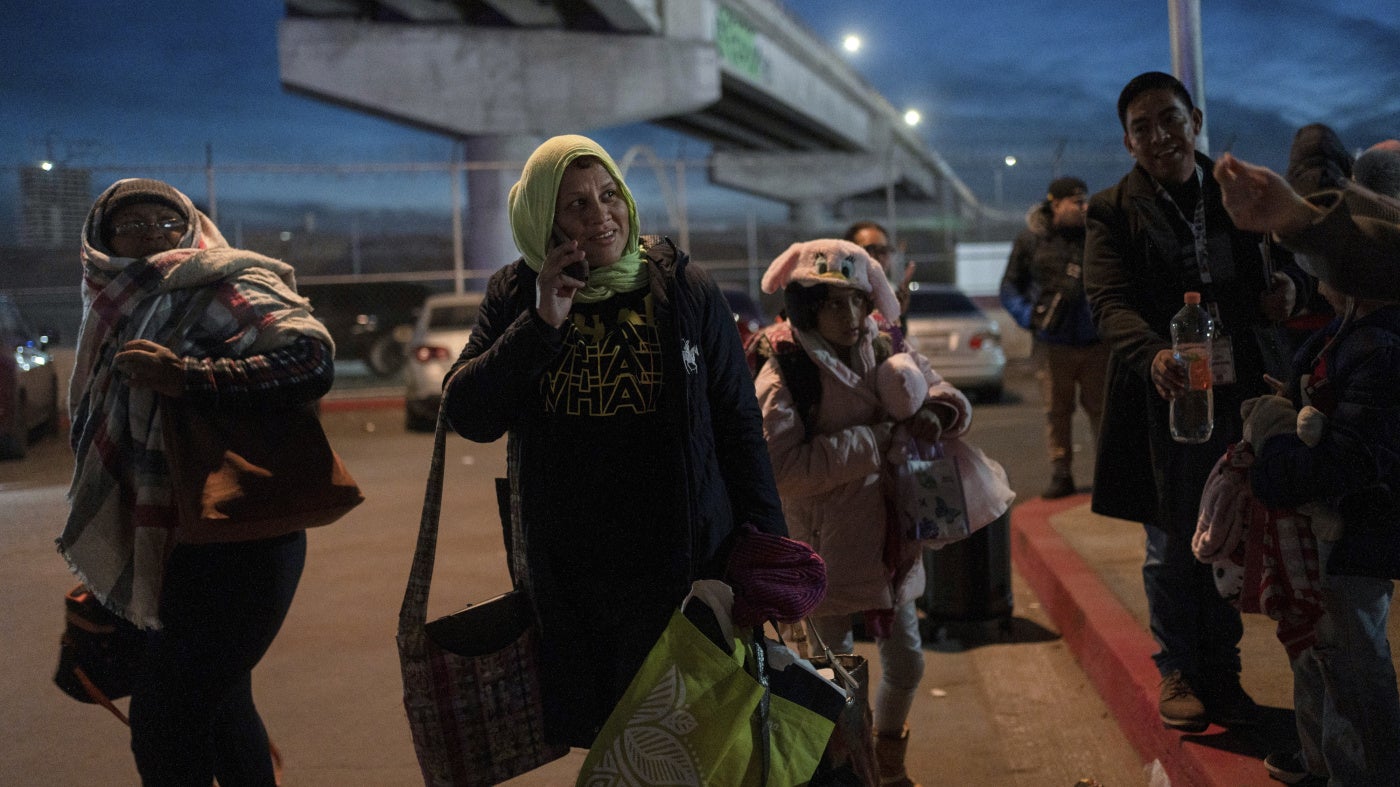
Trump also ordered cessation of use of the “CBP One” application to schedule appointments at ports of entry along the southwestern border, which had allowed 936,500 people to make appointments between January 2023 and the end of 2024 as a safe and orderly alternative to irregular entry. On Day One, the administration also closed down “safe mobility offices” in Colombia, Costa Rica, Ecuador and Guatemala that had been used for orderly processing of protection claims.
- Vast Expansion of Resources to Detain and Deport
The ‘Big Beautiful Bill Act,’ the Trump administration’s second-term signature tax and spending law, provided$170 billion in overall immigration enforcement spending over four years—five times the combined prior annual budgets of ICE and US Customs and Border Protection (CBP), according to an analysis by the nonpartisan Migration Policy Institute. It included $45 billion for ICE detention, which would more than triple that agency’s detention capacity. It also specified $14.4 billion for ICE transportation and removal operations, $46.5 billion for the border wall, and $858 million for ICE employee bonuses.
ICE is currently engaged in a $100,000 “wartime recruitment” campaign to hire 14,000 people for enforcement, investigations, and removal operations, according to an ICE strategy document leaked to the Washington Post. Some promotional materials explicitly target “conservative-leaning” people.
The administration has also declared a “whole of government” approach to immigration enforcement across federal agencies, many of which have previously had little or no involvement in this area. Within DHS, the Trump administration has diverted many staff who had worked on combatting child exploitation and abuse, organized crime, and counter-terrorism to immigration enforcement. Personnel from federal agencies outside DHS, including the Federal Bureau of Investigation (FBI), the Drug Enforcement Agency (DEA), the Bureau of Alcohol Tobacco and Firearms (ATF), the US Marshals Service, the Federal Bureau of Prisons, and the Internal Revenue Service (IRS), have also been diverted to immigration enforcement.
Federal funding for Florida’s “Alligator Alcatraz” detention facility came from $608 million in Federal Emergency Management Agency (FEMA) funds. The administration has been seeking to use Social Security, Medicaid, and income tax databases for immigration enforcement.
- Using the US Armed Forces to Deport, Detain, and ‘Seal the Border’
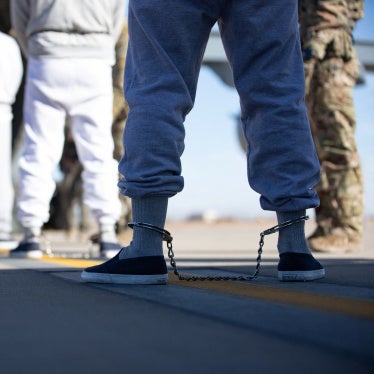
The Trump Administration has issued an order directing officials to plan for the deployment of armed forces personnel “to seal the borders and maintain the sovereignty, territorial integrity, and security of the United States by repelling forms of invasion including unlawful mass migration.” The administration has used the US naval base at Guantánamo, Cuba, to detain and deport migrants, and the largest ICE detention facility is now at Fort Bliss, a US Army base in Texas that was used in World War II as a Japanese internment camp.
In a move that further criminalized irregular border crossing and expanded militarization of the border, the administration has created “National Defense Areas,” essentially designating narrow strips of land adjacent to the US-Mexico border as military bases. This makes it possible to charge migrants crossing the border with criminal trespass on a US military installation. As of late June, about 1,400 migrants had been charged with trespass in this way, although judges have thrown out many cases.
- Expansively Widening Immigration Arrests, Including Overt Racial Profiling and Deputizing State and Local Police
Another order expanded using state and local police “to the maximum extent permitted by law…to perform the functions of immigration officers in relation to the investigation, apprehension, or detention of aliens in the United States.”
It also sought to cut off federal funding to “sanctuary” jurisdictions that do not cooperate with immigration enforcement. DHS has also rescinded a Biden-era policy that had barred immigration agents from raiding churches, mosques, schools, and hospitals, which could lead to serious harm for immigrants who might be afraid to seek needed medical care or to send their children to school. Arrests in courthouses effectively punish immigrants who comply with immigration proceedings and the justice system.
In response to widespread sweeps in Los Angeles, where usually masked ICE and Border Patrol agents targeted people who looked Latino and were working in low-paying jobs, a federal judge issued a temporary restraining order, enjoining ICE and CBP officers from making arrests based on a person’s location, such as a car wash or day-laborer pickup site; the type of work the person does; whether they speak Spanish or speak English with an accent; and/or their apparent race or ethnicity. Using its emergency docket, a Supreme Court 6-3 majority lifted the injunction pending final resolution of the case.
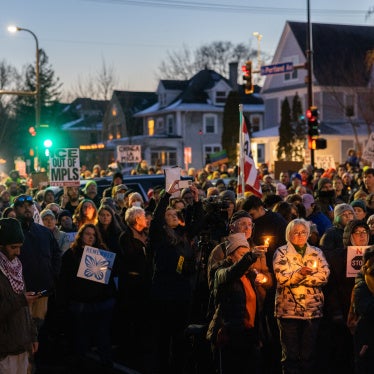
Since that ruling, immigration stops based on racial profiling have reportedly proliferated in many parts of the country, for example, targeting people in Minnesota who appear to be Somali. ICE and CBP operations have been accompanied by excessive force, including the fatal shooting of a US citizen, Renee Good, in Minneapolis on January 7, 2026.
- Turning Immigration Judges into Deportation Judges
The immigration court system sits within the Justice Department, and Attorney General Pam Bondi is working to roll back the quasi-judicial independence many immigration judges have aspired to achieve. The administration purged the Board of Immigration Appeals of judges who had ruled favorably on behalf of non-citizens.
Despite the need for more judges and appeals board members to make a dent in the immigration court backlog, the Trump administration reduced the members of the BIA from 28 to 15, including 9 members appointed by the Biden administration. In what appears to have been a similar purge, the administration has also fired more than 100 immigration judges. At the same time, it authorized 600 military lawyers to work as temporary immigration judges and DHS is advertising on social media for people to apply to be a “deportation judge.”
The system is also generating harmful precedents, such as the BIA’s ruling that gender should no longer be regarded as a protected ground under the refugee definition, which inevitably means more denials of asylum claims, especially for women who have been victims of domestic abuse or persecution for various forms of expression, for example, from the Taliban in Afghanistan.
- Third-Country Removals
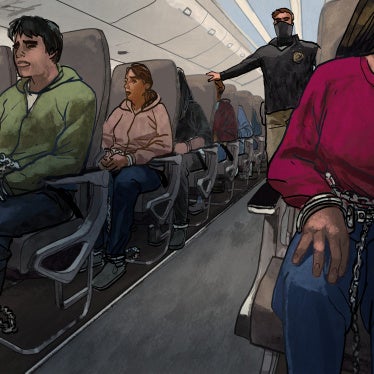
The Trump administration has flown third-country nationals to countries they are not citizens of, including Costa Rica, El Salvador, Eswatini, Equatorial Guinea, Ghana, Guatemala, Honduras, Panama, Rwanda, South Sudan, Uzbekistan, and Poland. The most notorious was the transfer of 252 Venezuelans to the Center for Terrorism Confinement (Centro de Confinamiento del Terrorismo, CECOT) in El Salvador, where they were tortured. The third-country transfers appear to be an end run around court orders that prohibit the government from returning people to their countries of origin, including orders stemming from the prohibition to return anyone to a place where they would face the threat of being tortured.
The US deported hundreds of asylum seekers from Afghanistan, Russia, China, Iran, Cameroon, and other countries in the Middle East, Asia, Europe, and Africa to Costa Rica and to Panama without giving them any opportunity to lodge their asylum claims in the United States, even though they had no connections with those countries. The administration subsequently deported people to other countries to which they had no connection whatsoever, such as Eswatini and South Sudan.
Third-country returns are also being used to short circuit the asylum process. The Trump 2.0 administration has also revived transfer “asylum cooperative agreements” based on the concept that asylum claims will be examined by a safe third country. In addition to reviving these agreements with El Salvador, Guatemala, and Honduras, the US has concluded new agreements with Belize, Ecuador, Paraguay, Rwanda, and Uganda.
On the basis of these agreements, immigration judges have begun “pretermissions”—denying asylum claims without a full evidentiary hearing. This follows a BIA decision that an immigration judge need not examine an asylum claim from a Guatemalan asylum seeker because he is barred from seeking asylum in the United States due to the agreement with Honduras, even if no transfers have actually taken place and there is no evidence that Honduras has the capacity to receive asylum seekers and fairly adjudicate their claims.
- Travel Bans and Other Restrictions on Legal Immigration
Following the efforts of the first Trump administration to impose a travel ban on selected nationalities, in 2025 Trump imposed full or partial entry bans on nationals of 39 countries and the Palestinian Authority. While this version of the travel ban is worded more carefully than the ham-fisted “Muslim ban” of the first Trump administration, it nevertheless bears the hallmarks of prejudice and malice.
In addition, the administration suspended all diversity visas, citing “the shooting at Brown University and killing of an MIT professor suspected to have been committed by an individual admitted to the United States through the program.” Diversity visas, established by Congress in 1990, have been based on an annual lottery of people from countries with historically low immigration to the United States.
- Trying to End Birthright Citizenship for Children of Undocumented Parents
An order purports to end birthright citizenship for any child born in the United States unless one parent is a US citizen or permanent resident. The order is being challenged as unconstitutional and will be considered by the Supreme Court.
If the order is implemented, such children might spend the rest of their lives fearing being deported from the country of their birth. They might be disqualified from receiving federal identity documents, which would most likely make it hard to get essential health care and nutrition assistance or to enroll in school. Some children could become de facto stateless.
- Indefinite Suspension of All Refugee Resettlement (Except Afrikaners from South Africa)
Another executive order proclaimed that admitting refugees is “detrimental” to US national interests and indefinitely halted the US refugee admissions program, which has been operating since the Vietnam War era. This stranded thousands of refugees who had already been screened and approved to travel to the US.
The Trump administration slashed the refugee admissions ceiling from 125,000 in the final year of the Biden administration to 7,500 “refugees who can fully and appropriately assimilate.” So far, the only groups of people the Trump administration has identified as meeting the criteria are white, Afrikaner South Africans and Europeans supposedly persecuted because of their “opposition to mass migration or support for ‘populist’ political parties.”
For 50 years, the US refugee admissions program had rescued refugees like Afghan and Iraqi interpreters who served side-by-side with US armed forces and had to flee their countries as a consequence, along with refugees fleeing emergencies in Cambodia, Sudan, Bosnia, and Myanmar, to name a few.
- Suspension of Development Aid and Humanitarian Assistance Worldwide, and Attempts to Rewrite the International Refugee System
In the first days of Trump’s second term, the administration ordered a suspension of foreign humanitarian assistance and moved quickly to dismantle the United States Agency for International Development (USAID). This had an immediate impact on health and nutrition programs worldwide, including in refugee camps.
In July, the Office of the UN High Commissioner for Refugees (UNHCR) said that funding cuts would most likely leave more than 11 million refugees without assistance. On December 29, the Trump administration announced a reduction in its funding for UN humanitarian programs to $2 billion, in contrast to annual contributions as high as $17 billion in recent years.
In the same executive order that stopped funding for the UN agency that aids Palestinian refugees and that said the US would not participate in the UN Human Rights Council, the administration said that it would review all conventions and treaties the United States had joined to ensure they promote US national interests.
It convened a high-level meeting on the margins of the United Nations General Assembly in what looked like a possible bid to start tearing down the global refugee system. A US State Department “concept note” for the meeting emphasized the discretion of sovereign states to decide when and how refugees should be returned, and made no references to the principle of nonrefoulement – not returning refugees to places where they would face serious harm – as limiting such discretion.
The US has long been the world leader in refugee assistance and resettlement and in promoting respect for refugee rights principles in global forums, such as UNHCR’s executive committee, and in diplomatic interventions when refugees have been at risk of refoulement. The loss of financial and political support for multilateral institutions that protect refugees and drying up humanitarian assistance for displaced people around the world, combined with the indefinite suspension of refugee resettlement and questioning of the underpinning of the global refugee system, is having a direct impact on refugees
The US example still matters on the world stage, and the administration is now setting an example ranging from indifference to hostility that risks being emulated by other governments seeking to rationalize closing their hearts and doors.