(Berlin) – Belarusian authorities are carrying out a countrywide intimidation campaign against former and current students of the European Humanities University (EHU), Human Rights Watch said today.
The authorities have searched the homes of dozens of students and their families and harassed, interrogated, and detained them. The actions violate their rights to freedom of thought, expression, and association.
“The vicious targeting of the community of free academic thinkers fostered by the EHU is a blatant attack by the Belarusian government on academic freedoms, free expression, and the right to education,” said Hugh Williamson, Europe and Central Asia director at Human Rights Watch. “Governments negotiating with Belarus should call on Minsk to put an end to the political crackdown and respect its international human rights commitments.”
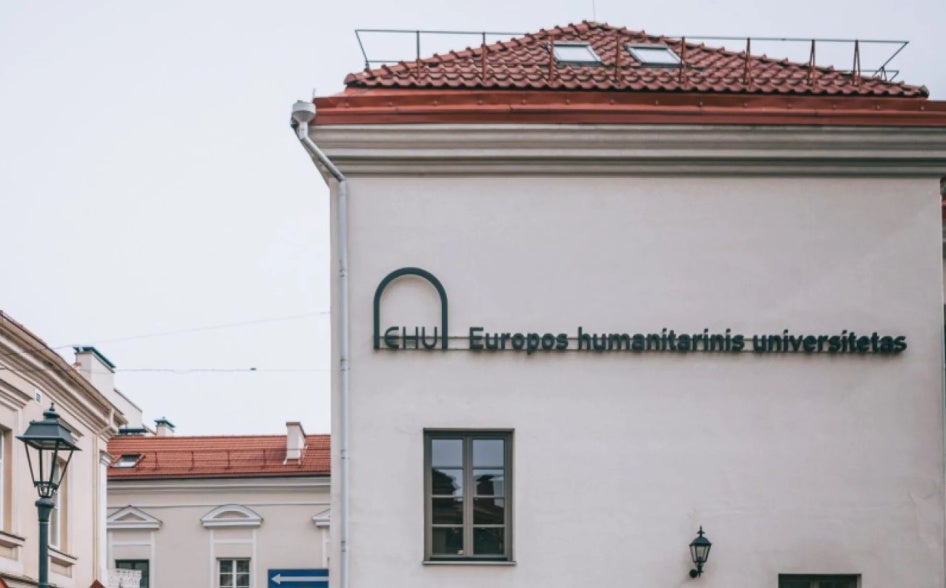
The EHU is a private, independent university established in 1992 in Minsk, Belarus to foster democratic values and strengthen civil society. In 2004, the Belarusian Ministry of Education revoked the university’s license following a series of unsuccessful attempts to undermine the university’s autonomy. In 2005, the university reopened in Vilnius, Lithuania, with several thousand students, mostly Belarusians, graduating since.
On June 2, 2026, Belarusian law enforcement agents searched the homes of family members of current students, alumni, and even former students who did not complete their studies and formally questioned the family members. Human Rights Center Viasna, which provided legal assistance, said that the interrogations were connected to a criminal investigation into “aiding” and “financing extremist activities.” The investigation was apparently opened against an “unidentified group of people” who have allegedly collected and organized the collection of funds to support the university since April 30, 2016.
The criminal case stemmed from the April 2026 designation by the Belarus Supreme Court of the university as an “extremist organization.” The designation was based on an application filed by the Belarusian prosecutor general in September 2025, following a recommendation by the State Security Committee (KGB), and means that all the university’s activities, as well as the use of its signs and symbols, are prohibited in Belarus.
The application contends that the university “destabilized the socio-political situation in the country,” assisted “radically politicized formations,” and was used by special forces of foreign governments to damage Belarusian interests. At the time of the designation, the university reportedly had about 1,500 students, around 80 per cent of them Belarusians.
In the month following the designation, about 100 students dropped out of the university out of fear of prosecution. Several students and lecturers had quit earlier following the Minsk Central District Court’s designation of the university’s social media pages as “extremist materials” in August 2025.
Evgenia Belkina, the coordinator of Viasna’s volunteer service, told Human Rights Watch that since June 2, KGB officers have carried out more than 60 house searches and interrogations across the country in relation to the case.
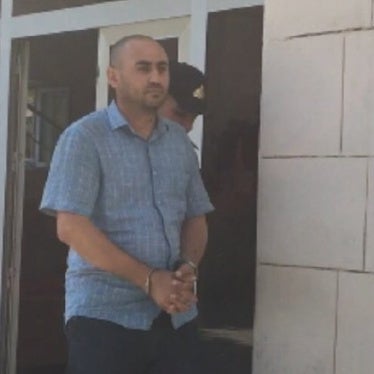
The KGB officers mostly targeted relatives of current students. Belkina said that most parents questioned were told that they were designated as witnesses in the case. Several people were briefly detained as well. The officers told the families that sending money to their children studying at the university could qualify as funding extremism.
In at least 20 cases, the officers demanded that parents call their children to pressure them to drop out of the university and return to Belarus with a written confirmation of their withdrawal.
The officers also targeted former students who had graduated or dropped out after 2019.
In May, the head of the prosecutor’s department in the Vitsyebsk region stated that following the designation by the Supreme Court, “any financial operations, including tuition fees and donations, qualify as financing extremist activities under Article 361-2 of the Criminal Code, punishable with up to five years in prison.”
He also said that employment, teaching, and continuous education at the university “are interpreted as participation in extremist formation” punishable with up to six years in prison, while using symbols or disseminating materials or following the university on social media are also prosecutable offenses.
Belarusian authorities notoriously use “extremism” charges for politically motivated prosecution of civil society actors, including independent journalists, human rights defenders, and political opponents, Human Rights Watch said.
Both academic freedom and the right to education are protected under international human rights law, including the International Covenant on Economic, Social and Cultural Rights and the International Covenant on Civil and Political Rights (ICCPR). Using “extremism” legislation to prosecute former and current students, including for studying abroad, not only violates academic freedom and the right to education, but also the rights to freedom of opinion, expression and association, also guaranteed by the ICCPR.
“The state intimidation campaign targeting the EHU’s community demonstrates that there has been no systemic change in the human rights situation in the country,” Williamson said. “It also constitutes a blatant act of transnational repression carried out by the Belarusian authorities against Belarusians living abroad.”