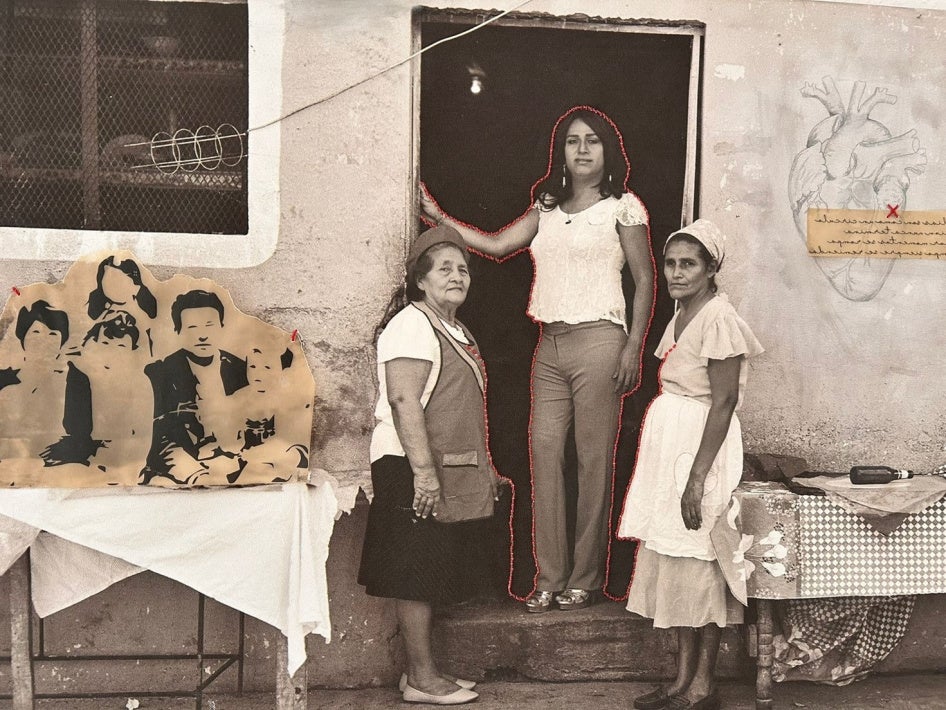
I met Karla, a 52-year-old trans woman from Villahermosa, in 2023. She graduated with honors in nursing but has never been able to find stable work. In 2020, she passed all the exams for a nursing job at a public Tabasco hospital. When she went in to sign her contract, the head nurse, referencing her documents, told her that there was a “problem”: “You look like a woman, but have a man’s name. There is a discrepancy.” The hospital hired someone else.
Karla’s story is not an isolated one. Across Mexico, trans people face daily obstacles because their identity documents do not reflect who they are. These mismatches are not merely bureaucratic inconveniences. They can prevent employment, obstruct education, impede health care, and violate basic dignity.
Today, the world marks the International Transgender Day of Visibility, an occasion to recognize both the resilience of trans people and the barriers they face. For Mexico, this moment brings a clear choice: allow inequality to persist or take decisive steps to guarantee equal recognition under the law. That choice is not only about rights, but also about sovereignty.
Mexican states have the authority to determine their laws in civil and registration matters. In recent years, several states have passed legislation to allow individuals to amend their gender markers on official documents, and the Supreme Court has affirmed principles of equality and dignity that support such recognition.
But progress remains uneven. In some states, the process is administrative and accessible. In others, trans people must go to court—often a lengthy, costly, and inaccessible route. But rights should not depend on where you live. Federalism allows for diversity in policy, but not inequality in fundamental rights.
For Karla in Tabasco, which does not have gender identity legislation, that fragmentation has had real consequences. The system recognizes her credentials on paper, but not her as a person.
Ensuring equal rights across states is not a departure from Mexico’s federal system. It is a core responsibility of a sovereign state committed to its Constitution. Harmonizing legal gender recognition is a matter of constitutional integrity.
At the same time, public debates in Mexico do not exist in isolation. In recent years, narratives and strategies that have gained prominence in U.S. political debates, including on gender and sexuality, have increasingly appeared in Mexican discourse. International networks and forums have helped circulate these framings across borders, including in Mexico, often recasting questions of rights in polarizing terms.
The concern is not the exchange of ideas. Open debate across borders is a feature of any democratic society. The point, rather, is that Mexico should decide to reject the embrace of arguments drawn from US culture wars that risk obscuring Mexico’s own constitutional commitments and the lived realities of people like Karla.
The United States offers a cautionary example of how bigoted narratives can translate into policy. Under the Trump administration, transgender people have faced an unprecedented wave of legal and political attacks. Policies have sought to restrict access to health care, limit recognition in education, and curtail basic protections. These developments have had profound consequences for people’s lives, and have contributed to a broader global backlash.
Mexico does not need to follow that path. It has its own legal traditions, its own constitutional framework, and its own history of expanding rights. Upholding those principles is about ensuring that Mexico’s own constitutional commitments to equality and dignity are meaningful in practice for people like Karla.
Mexico’s reality remains far from ideal. Transgender people face high levels of violence, discrimination, and exclusion. Legal recognition alone will not solve these challenges. But, without it, many are locked out of basic rights and opportunities.
That is precisely why harmonization matters. Ensuring that all trans people in Mexico can obtain identity documents that reflect who they are is not a symbolic gesture. It is a practical necessity. Without accurate documents, people like Karla are shut out of professions they are trained for, forced into precarious employment, or excluded altogether.
The path forward is clear. All Mexican states should work toward a consistent, nationwide framework that guarantees accessible, administrative procedures for legal gender recognition based on self-determination. Such reforms would not create new rights; they would ensure that existing constitutional protections are applied equally across the country.
At a time of global human rights backsliding, Mexico can choose its own course, grounded in its constitutional principles and democratic commitments.
For Karla, and for thousands like her, it makes the difference between being recognized or excluded. “I need to work. I just want to contribute, to feel useful in society,” she told me.
In this sense, sovereignty is not about insulating a country from ideas. It is about ensuring that constitutional promises are realized for everyone, everywhere.