“I woke up to my sister Fadwa calling me, and I was terrified. ‘Jehad, State Security were here. They took mom.’ I feel I never got past that moment. A lot has happened since then, but I still haven’t moved on from it.”
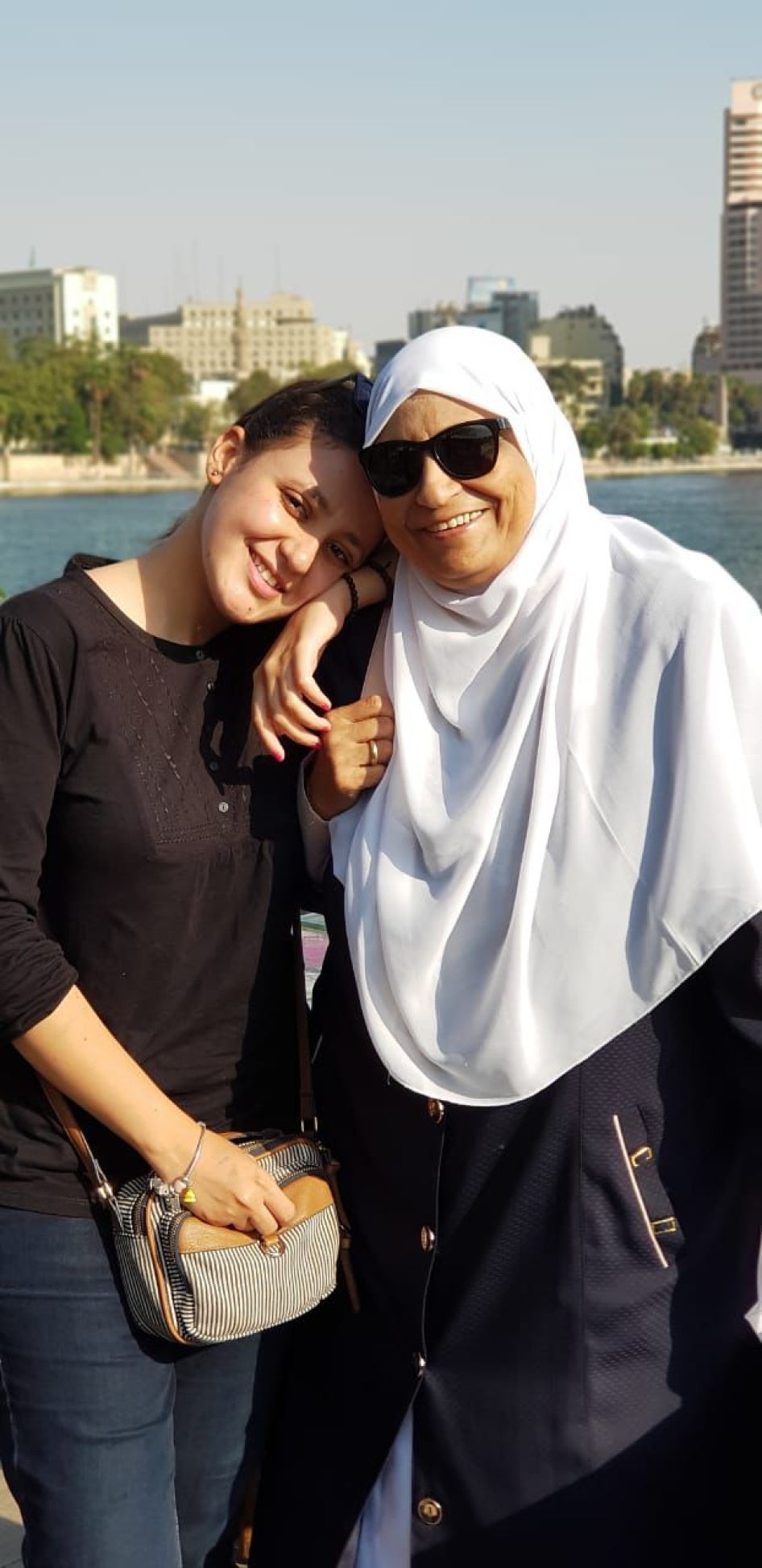
Jehad Khaled, a young Egyptian activist, told Human Rights Watch that she felt utter panic as her mother—Hoda Abdel Moneim, 67, a prominent lawyer and human rights defender—was arrested in 2018. “All I wanted to do was to call mom and ask her what to do.”
But she couldn’t get her mother’s advice because, this time, her mother had disappeared. The early period of Hoda’s detention was especially distressing for her family, as, for several months, they did not know her whereabouts and how she was being treated despite their requests to the authorities. During that time, Jehad slept on the floor of her apartment, knowing that her mother was probably sleeping on a concrete floor in some dungeon.
People close to Jehad had been detained before, including her ex-husband, but “mom was always there with me through everything…. She’s the one who handled everything. I needed her then, to call her and ask, ‘what should I do?’”
Jehad has lived outside Egypt in exile for several years and is still advocating for the release of her mother, Hoda, still arbitrarily detained. She hopes to see her mother free even though she herself cannot go back to her home country for fear of reprisal.
Jehad cannot talk with her mother even by phone. Constantly worrying about her health, including chronic kidney, heart, and knee conditions that are deteriorating amid poor detention conditions, she impatiently awaits updates from one of her sisters’ visits, usually every four weeks.
As Jehad speaks about her mother—describing the small routines that filled their home in Cairo’s Nasr City neighborhood—her voice softens. Hoda was always the first to wake, quietly preparing her morning milk tea while the rest of the house was still asleep. She always made sure breakfast was ready and shared a cup of milk tea with her husband before he headed to work. If she did not catch him before he left, she’d wait until she arrived at their shared office to have breakfast with him. Jehad’s sister would also arrive in the morning to drop off her baby boy with his grandmother before she went to the university to study; Hoda always put something aside for her daughter to eat for breakfast on the way to campus.
Despite the intensity of Hoda’s human rights advocacy, she never allowed work to eclipse her social life, Jehad said. She made time for friends, family, and the simple joys that grounded her.
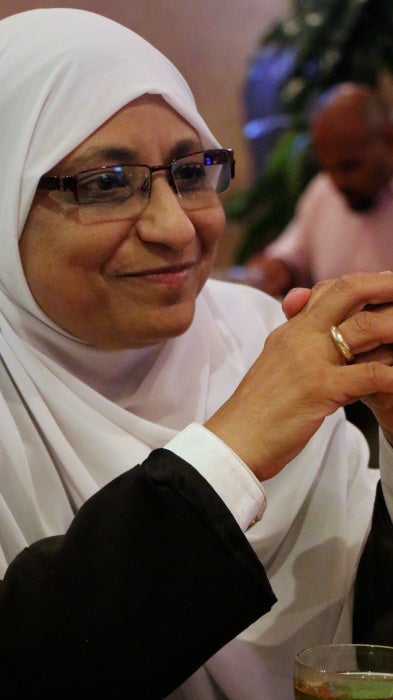
Hoda was a member of the official National Council for Human Rights in Egypt in 2012 and was involved in documenting human rights abuses in Egypt for several years before she herself fell victim to them. Following her last trip abroad in 2014 to attend a conference where she spoke about enforced disappearances in Egypt, authorities placed her under a travel ban and she received threatening messages on Facebook such as “Stop speaking about enforced disappearance or you will be one of them.”
The authorities arrested Hoda on November 1, 2018. “They smashed the house for a couple of hours,” before taking Hoda to undisclosed location, forcibly disappearing her for 21 days, until they brought her before a state security prosecutor in a state of “severe fatigue and exhaustion.” After a lawyer recognized Hoda and called the family, Jehad’s father, as a lawyer, rushed to see her in the prosecutor’s office. The two had little privacy during the brief meeting and Hoda was unable to share details of her detention, Jehad said.
After spending two more months in an unknown location, on January 31, 2019, Hoda was transferred to Qanater Prison where she was held in near-total isolation, locked in her cell for 23 hours daily with one other prisoner. Her one hour of reprieve was in an enclosed corridor without sunlight. For several years, she told prison guards, “I long to see the sun.” In 2023, Hoda was transferred to the 10th of Ramadan prison where she experienced similar conditions. Even though Hoda was a member of the National Council for Human Rights, the family said Council members made no visits to look into her prison conditions despite promises to do so.
In the first three years of Hoda’s detention, her family could obtain very little information about her because authorities denied their repeated requests to visit. When authorities did grant visits, they always happened in the presence of a National Security officer and Hoda was unable to speak freely about her ill-treatment and concerns. But during short meetings with her lawyer and later with her family in prison visits, Hoda told her family that, during the first three months she was forcibly disappeared, she was subjected to psychological torture, including being forced to listen to other women being tortured. She said officers also threatened to arrest her husband and daughters and forced her to record and sign confessions under duress.
When Hoda initially saw her family for the first time since being detained, the first words out of her mouth were to ask in panic whether any of them were hurt or arrested. “My mother is a very strong woman, but when my sisters saw her at the prosecutor’s office, they broke down because of the condition she was in,” Jehad said.
Hoda spent a long time in pretrial detention while authorities prosecuted her in a mass trial with 28 others. The abusive charges included joining a “terrorist” organization, namely the independent rights group Egyptian Coordination for Rights and Freedoms, and “spreading false news,” all stemming solely from her peaceful work.
In March 2023, the trial concluded before the abusive Emergency State Security Court, whose verdicts are not subject to appeal in violation of the right to a fair trial. The court convicted Hoda of the charges and sentenced her to five years in prison which she completed in October 2023, taking into account the time she had already spent in pretrial detention. Instead of releasing her, Supreme State Security Prosecution brought new charges—almost identical to the ones which she was already jailed for—in a practice known as “recycling” or “rotation” used extensively in Egypt to bring repeated charges for the same alleged crime and keep critics in infinite loops of pretrial detention and prosecutions.
In prison, she developed additional medical issues including a kidney condition and diabetes. She has experienced four heart attacks. Her family said the prison administration never informs them of these developments, leaving them in constant anxiety until the next visit. These conditions developed on top of existing ones before her arrest in 2018, such as deep vein thrombosis and knee issues that almost compelled her to cease her work altogether.
In 2025, the International Bar Association honored Hoda for the immense price she has paid for her human rights work.
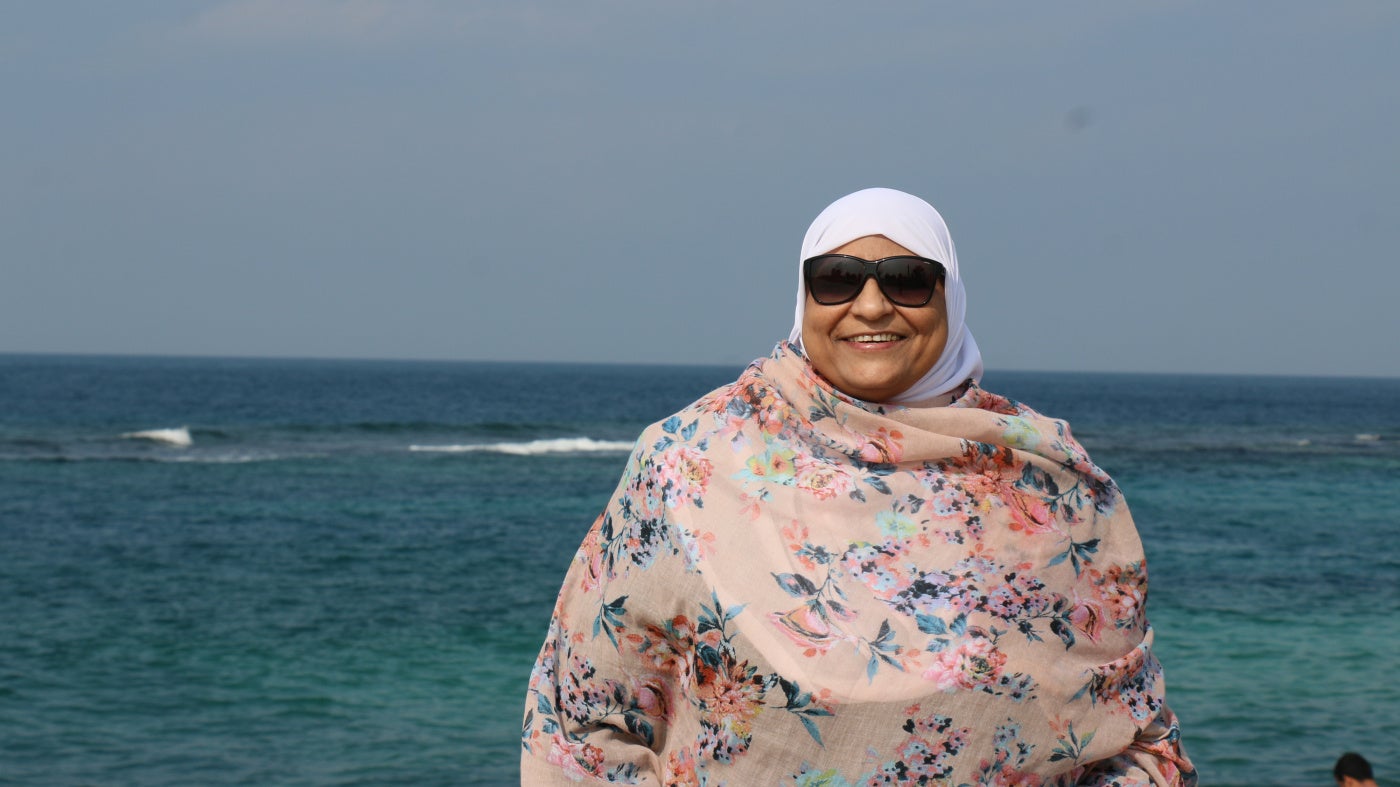
Jehad said her mother’s absence has profoundly reshaped her own life. “Prison does not only take away an individual’s life away: it tears entire families apart.” There were places Jehad could not bring herself to visit after her mother’s detention, such as the beach, her mother’s favorite place. For four years, she stayed away from the shore because the sight of the sea made Jehad feel her mother’s absence so sharply. It wasn’t until her mother sent a message through her sisters urging her to go to the beach “for her,” that she went.
While Hoda has been in prison, Jehad went through a divorce, during which she felt unbearably “weak and alone” without her mother. One of her sisters gave birth and another went through a major surgery, all without their mother knowing until much later. “Without my mother’s voice, even simple daily moments feel hollow…. I miss the feeling when, talking to her over the phone, she’d quickly realize from the tone of my voice that something went wrong.”
A photo of Hoda standing in a court room is hung on a wall in Jehad’s apartment. It was the first picture Jehad saw of her mother in three years. “It brings me hope and comfort,” Jehad says, clinging to bright memories and dreaming of the day she hears her mother’s voice again.