Summary
Spurred by increasing public recognition of the dangers posed by police responses to mental health and substance use crises—particularly for people of color and individuals with disabilities[1]—communities have sought new mental health crisis response models. This report examines the landscape of non-police mental health crisis response programs across the United States, offering an illustration of rights-based crisis response alternatives to traditional carceral crisis interventions.
Human Rights Watch (HRW), New York Lawyers for the Public Interest (NYLPI), and Center for Racial and Disability Justice (CRDJ) identified more than 150 non-police crisis response programs nationwide,[2] and this report highlights 8 programs that illustrate one or more components of rights-based mental health crisis response[3], including but not limited to:
- Removal of police as primary or default responders to mental health crises
- Diverse participation of peers with lived mental health experience or substance use across all levels, from program design to frontline responses to oversight.
- No involuntary services.
- Consent-centered approach placing people experiencing mental health crises at the center of decision-making.
- Community-based approach with crisis workers having deep familiarity with the community.
- Provision of free, confidential, 24/7, and accessible services.
- Response time comparable to that of other emergencies.
- Alternative contact number to 911 (where 911 is operated by the police).
- Comprehensive, trauma-informed, and culturally responsive training for all responders.
- Measures to minimize power imbalances (e.g., unmarked vehicles, non-police-style uniforms and badges).
- Availability of services to avoid crises and, as follow-up to crises, connections to community-based resources.
Accessible and transparent data management.
The programs featured are:
- Mental Health First (MH First)—Oakland, CA.
- Mobile Assistance Community Response of Oakland (MACRO)—Oakland, CA.
- Cambridge Holistic Emergency Alternative Response Team (HEART)—Cambridge, MA.
- Mobile Crisis Response Teams (MCRT)—San Diego County, CA.
- New Orleans Mobile Crisis Intervention Unit (MCIU)—New Orleans, LA.
- Elm City Compassionate Allies Serving our Streets (COMPASS)—New Haven, CT.
- Support Team Assisted Response (STAR)—Denver, CO.
Netcare Access Community Mobile Team (Netcare)—Franklin County, OH.
This report is divided into three parts. The first part, “Context and Frameworks,” provides foundational background, while also addressing critical issues surrounding mental health crisis response. The second part, “Rights-Based Components of Mental Health Crisis Response,” highlights how the rights-based components described above have been embodied in practice in existing programs. The final part, “Recommendations,” offers suggestions for governments and service providers, of specific policies for expanding rights-aligned and non-police mental health crisis responses.
As institutional and political threats to community-based care continue to increase, human rights-based crisis response models offer a critical path forward—one in which people experiencing a crisis are met with care and support, not violence and criminalization.
It is important to note that we do not endorse any specific program in this report. We did not evaluate the effectiveness of these programs in practice. We also recognize that program design will vary based on local needs. Still, we hope this overview serves as a resource guide and helpful starting point in creating human rights-based crisis response programs.
Introduction
The Need for Alternative Mental Health Crisis Response Programs: Trends and Analysis
In the United States, police violence against people with mental health conditions is a national concern. People with serious mental health conditions are 16 times more likely than those without such conditions to be killed by police and are significantly more likely to experience police use of force and injury.[4] People with disabilities, particularly Black, Latinx, and Indigenous people with disabilities, face disproportionate police contact, force, and fatal encounters when experiencing mental health crises, reflecting longstanding racial and disability-based inequities in crisis response.[5] These disparities also underscore the fundamental mismatch between police-centered crisis responses and the needs of people experiencing mental health crises. In recent years, many mobile crisis response programs have emerged as alternatives to traditional police responses in cases involving mental health and substance use crises. This trend accelerated after the murder of George Floyd—a Black man killed by police in Minneapolis—in 2020, which sparked nationwide conversations about non-police alternatives to crises.[6] As a result, alternative crisis response programs have expanded nationwide, at both state and local levels.[7]
In 2024, 50 states reported they had mobile crisis teams.[8] Together, these states reported a total of 2,448 mobile crisis teams, with 12 states planning to add a total of at least 89 more in 2025.[9] However, only 34 states provided services statewide.[10] In addition, only 28 states had mobile crisis teams operating 24 hours a day, 7 days a week.[11] States supported these programs through a variety of funding sources, including state funds, private insurance, Medicaid, and a five percent set-aside of the Community Mental Health Block Grant (MHBG), awarded by the US Substance Abuse and Mental Health Services Administration (SAMHSA).[12]
Many mobile crisis programs have also emerged at the local level. A 2024 survey of the 50 largest American cities found that 44 had already implemented alternative emergency response programs “in which non-police personnel (such as mental health professionals) respond to at least some categories of 911 calls instead of, or alongside, police officers.”[13] A separate 2023 survey of 117 cities reported that 82 percent had launched new initiatives or increased funding for mental health services, many of which included mobile crisis teams.[14]
Despite this growth, programs that intentionally exclude police remain limited.[15] Most crisis responses still rely on police-led models or co-responder teams in which clinicians accompany law enforcement.[16] These programs still embed police at the center of crisis response.[17] The mere presence of officers, especially armed and uninformed officers, can escalate rather than de-escalate crisis situations.[18] Rather than guaranteeing support and safety, police presence can trigger heightened fear and distress for individuals experiencing a crisis.[19] Since officers often retain decision-making authority and the power to use force, the presence of mental health professionals alone is insufficient to eliminate the risks inherent in a law enforcement response.[20] For example, in many cases, emergency medical personnel wait for police to deem a scene safe before providing care.[21] This practice creates opportunities for harmful interactions.[22]
Recent restructuring plans under the Trump administration raise serious concerns about the sustainability of non-police crisis response programs.[23] In early 2025, the US Department of Health and Human Services (HHS) announced that SAMHSA would be dissolved and merged into the newly created Administration for a Healthy America (AHA).[24] This change includes the proposed consolidation of major funding streams—such as the MHBG and the Substance Abuse Prevention and Treatment Block Grant (SABG)—into a single Behavioral Health Innovation Block Grant (BHIBG).[25] Although the Trump administration has asserted that “critical programs” will continue under the AHA, the loss of SAMHSA as a stand-alone agency could severely undermine the federal infrastructure that currently provides significant financial support for ongoing and planned non-carceral,[26] rights-based mental health responses.[27]
In addition, the Trump administration has proposed sweeping changes[28]—including the July 24, 2025, Executive Order on “Ending Crime and Disorder on America’s Streets”[29]—that seek to expand coercive and punitive mental health interventions at the federal, state, and local levels.
Initial Program Survey of 2023
In 2023, HRW and NYLPI launched a joint project exploring crisis response programs designed to address mental health and substance use crises in the US. This project identified over 150 crisis response programs across various regions that do not deploy police as initial responders, or as automatic co-responders.[30]
This initial program survey intentionally excluded co-response programs in which police officers are paired with other service providers. Even when another provider is present, the involvement of police can increase the risk of escalation, violence, and incarceration,[31] and exacerbate psychosocial stress among individuals experiencing a crisis.[32]
We identified the programs through independent research, as well as a review of existing resources, including materials from Transform911,[33] the Indivisible Eastside,[34] Just Mental Health Canada,[35] and Mark 43.[36] The program survey did not include independent audits or direct input from service users, and we did not independently verify or otherwise assess the programs’ claims or outcomes. Instead, the program survey was based on publicly available materials, including government documents, reports, public meetings, program websites, conference presentations, news articles, and from self-reported information, including stated commitments to non-carceral, rights-based approaches.
Many of the non-police crisis response programs identified were in their early stages of implementation, with the majority launched after 2019. The initial research documented various aspects of these programs, including operational frameworks, organizational structures, staffing models, call triage procedures, service offerings, funding mechanisms, and program outcomes. While the program survey was not comprehensive, and the landscape is continually evolving, the widespread adoption of such approaches reflected a growing interest among states and localities in addressing community mental health needs without police involvement. In reviewing the 150 programs, we identified the following broad trends:
- Location: Most programs are concentrated in urban areas both large and small. For example, Denver, Colorado[37]—with a population over 700,000—and Fairbanks, Alaska[38]—with a population just over 30,000—implemented non-police crisis teams starting in 2020 and 2021, respectively. As of late 2025, California had the largest number of programs with 28, followed by New York with 15.[39]
- Operational framework: Although the designs of programs vary, local governments often play a central role. In some cases, multiple government agencies collaborate to operate the program. In other cases, local governments contract with private, nonprofit organizations. Some nonprofit organizations operate programs independently of local government.
- Team composition: The composition of response teams differs depending on community needs and resources, but most teams consist of two or more individuals. They may include peers with lived experience of mental health conditions or substance use, clinicians, social workers, Emergency Medical Technicians (EMTs) or paramedics,[40] nurses, counselors, and other crisis intervention specialists. Notably, at least three dozen programs of the over 150 studied have formally integrated peers into their teams.
- Operating hours: While several programs operate 24 hours a day, seven days a week, many are currently limited to specific time windows. Program administrators frequently expressed interest in expanding hours but cite staffing and funding challenges as major barriers.
- Call triage: The programs respond to a range of calls involving people experiencing mental health crises, substance use crises, or other non-violent situations that do not require law enforcement. Although the programs do not automatically co-respond with police, they may do so in situations that involve weapons. Most receive calls through 911 or their own dedicated hotlines, and some also integrate with the national 988 Suicide & Crisis Lifeline (988).
- Services provided: The programs generally provide a range of services, including on-site assessments, de-escalation, safety planning, crisis counseling, education, transportation, referrals to community resources, and follow-ups. The programs typically respond in person at the site of the crisis, whether a home, public space, or other community location.
- Funding structure: Some programs are supported through city or county general funds, while others receive state, federal, or private foundation funding. Many combine multiple public or private sources. A few programs receive public resources from countywide sales taxes approved by voters to support their work.
Methodology: Evaluating Rights-Based Alternatives
Following our initial program survey, HRW and NYLPI partnered with CRDJ to evaluate the identified programs against human rights standards. The framework we developed for the evaluation was based on the human rights-based approach to disability justice and mental health services extensively explored in HRW’s report “Mental Health Crisis Support Rooted in Community and Human Rights” (Gerstein Centre Report).[41] Drawing from both international human rights standards and World Health Organization (WHO) guidelines, the framework centers individuals in crisis as active decision-makers and rights holders. The Gerstein Centre Report also provides a case study on lessons learned and good practices from the Gerstein Crisis Centre’s rights-respecting and community-based approach in Toronto, Canada.
Based on the approach set forth in the Gerstein Centre Report and other rights-respecting approaches—such as those set forth in New York’s Daniel’s Law[42]—we have identified several key components that can advance rights-based mental health crisis support services in the US, although these should not be viewed as exhaustive:
- Removal of police as primary or default responders to mental health crises.[43]
- Diverse participation of peers with lived mental health or substance use experience across all levels, from program design to frontline responses to oversight.[44]
- No involuntary services.[45]
- Consent-centered approach placing people experiencing mental health crises at the center of decision-making.[46]
- Community-based approach with crisis workers having deep familiarity with the community.[47]
- Provision of free, confidential, 24/7, and accessible services.[48]
- Response time comparable to that of other emergencies.[49]
- Alternative contact number to 911 (where 911 is operated by the police).[50]
- Comprehensive, trauma-informed, and culturally responsive training for all responders.[51]
- Measures to minimize power imbalances (e.g., unmarked vehicles, non-police-style uniforms and badges).[52]
- Availability of services to avoid crises and as follow-up to crises, including connections to community-based resources.[53]
- Accessible and transparent data management.[54]
Using this list as a guide, we narrowed the initial group of over 150 programs to about a dozen that emphasized one or more of these components. Because the Gerstein Centre Report already examined a rights-based program in detail—the Gerstein Crisis Centre—we did not replicate that approach here. Rather than covering each program in detail, we examined how the programs adopted, or seek to adopt, specific rights-based design components, looking for examples of each program. In this way, the current report directly builds upon the Gerstein Centre report and extends its analysis.
We conducted informational interviews with program administrators to assess program operations, challenges, and outcomes.[55] Where possible, we also interviewed representatives of community-based organizations and community members to gain independent perspectives on how these programs operate in practice. Interviews were conducted through video calls, phone conversations, and emails.
Programs Featured
From our research and interviews, we identified certain promising aspects in each program that aligned with the key rights-based principles outlined above. Ultimately, we selected the following eight programs for this report:
- Mental Health First (MH First)—Oakland, California: MH First,[56] which began operations in 2020, is run by the Anti-Police Terror Project (APTP),[57] —a “Black-led, multiracial, intergenerational coalition” that “aims to build a sustainable model for eradicating police violence in communities of color.”[58] MH First is staffed by volunteers and deploys a three-person team: (1) a nurse or EMT, (2) a mental health or community crisis expert (no license required), and (3) a security person to handle encounters if law enforcement arrives.[59] The program operates Fridays and Saturdays, from 2 p.m. to 2 a.m., and can be reached by phone or text through a dedicated line.
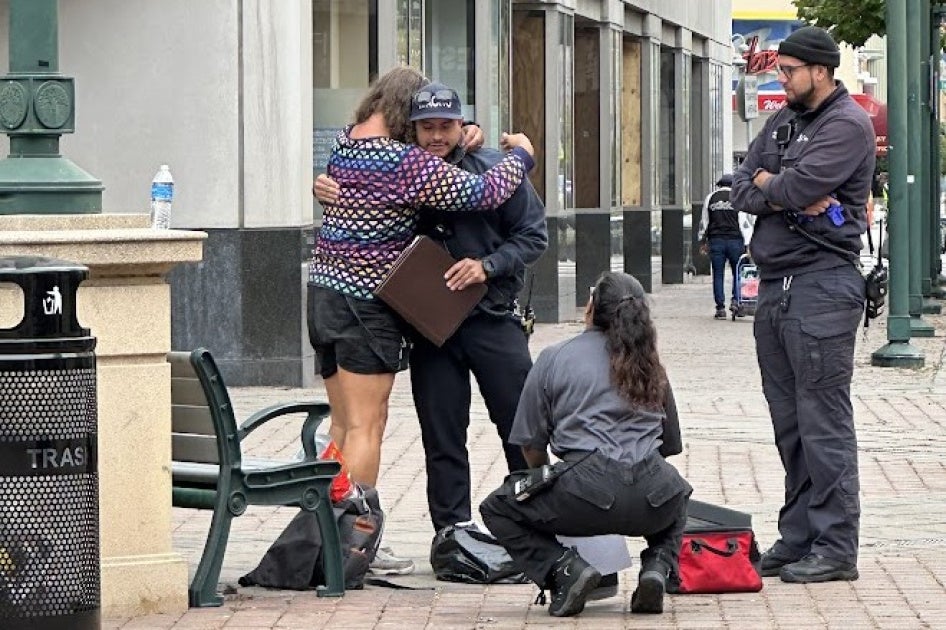
- Mobile Assistance Community Response of Oakland (MACRO)—Oakland, California: Launched in 2022, MACRO[60] is operated by the Oakland Fire Department. MACRO deploys two-person teams consisting of an EMT and a community intervention specialist.[61] The program operates daily from 6:30 a.m. to 8:30 p.m. Individuals can contact MACRO through a dedicated phone line or email.
- Cambridge Holistic Emergency Alternative Response Team (HEART)—Cambridge, Massachusetts: HEART[62] is a grassroots organization that was launched in 2021. It currently operates a peer-led support line offering emotional support and help navigating resources.[63] A mobile crisis response team is planned for launch in the future.[64] The support line operates on Tuesdays and Thursdays, from 10 a.m. to 4 p.m., and can be reached by phone or email.
- Mobile Crisis Response Teams (MCRT)—San Diego County, California: MCRT[65] is a mobile crisis intervention program, operating 24 hours a day, seven days a week. Initially launched as a pilot in January 2021, MCRT expanded countywide by December 2021 and began full-time, around-the-clock operations in April 2022.[66] It is operated by a family-owned company Telecare Corporation under contract with the County of San Diego, and each MCRT team includes a licensed clinician, a master’s-level case manager, and a certified peer recovery specialist. Individuals can access the program via the San Diego Access and Crisis Line or 988.
- New Orleans Mobile Crisis Intervention Unit (MCIU)—New Orleans, Louisiana: MCIU[67] is a crisis response program for mental health emergencies. Officially launched in June 2023, MCIU is operated by the nonprofit Resources for Human Development (RHD) under contract with the New Orleans Health Department. The program operates 24 hours a day, seven days a week and responds to non-violent, weaponless mental health calls, which are answered by 911 dispatchers and routed directly to the MCIU teams. Teams typically include a peer support specialist and a behavioral health professional and are supervised by a licensed mental health clinician. Calls are routed through 911, and police can request MCIU assistance when appropriate.[68]
- Elm City Compassionate Allies Serving our Streets (COMPASS)—New Haven, Connecticut: COMPASS[69] is a civilian-led crisis response program developed through a community-driven process. It was launched in 2021 and operates in partnership with the nonprofit Continuum of Care, which manages staffing and operations. Each team includes a social worker and a peer support specialist. The program operates in three shifts—8 a.m. to 4 p.m., 4 p.m. to 12 a.m., and 12 a.m. to 3 a.m.[70] COMPASS responds to non-emergency mental health crises and provides follow-up care. Calls are dispatched through New Haven’s 911 system.
- Support Team Assisted Response (STAR)—Denver, Colorado: STAR[71] is an emergency response program for mental health, substance use, and related crises. It began in June 2020 as a partnership between the Denver Department of Public Health and Environment, WellPower (a local community mental health center), and Denver Health and Hospital Authority (DHHA). STAR teams consist of a mental health clinician from WellPower and a paramedic or EMT from DHHA. STAR is recognized as a “fourth responder,” in addition to police, fire, and Emergency Medical Services (EMS). The program operates daily from 6 a.m. to 10 p.m. and responds to calls through Denver’s 911 and non-emergency lines. A dedicated STAR line is also available, but routes through the same dispatch center. Community members may specifically request a STAR-only response when appropriate.[72]
- Netcare Access Community Mobile Team (Netcare)—Franklin County, Ohio: Netcare[73] is a civilian mobile crisis response program launched in 2023, serving Columbus, Ohio and surrounding areas in Franklin County, Ohio. Netcare is operated by Netcare Access, and is primarily funded by the county’s Alcohol, Drug, and Mental Health Board. Each mobile team consists of a licensed clinician and a certified peer recovery specialist. The program operates 24 hours a day, seven days a week. Individuals can access services through either 988 or the program’s direct line.
Scope of Report
While we chose these programs because they illustrate one or more of the rights-based design components we identified, we do not mean to suggest they are the best available programs or the only programs we could have chosen. This report does not serve as a comprehensive or holistic evaluation of each program, and does not purport to assess their results in practice. It should not be interpreted as an endorsement of any particular program. We also did not discuss programs like Crisis Assistance Helping Out On The Streets (CAHOOTS) because it has been widely covered elsewhere.[74]
Because of the importance of confidentiality in mental health crisis response, we did not interview consumers of the programs. As such, this report evaluates the programs based on their stated commitments to rights-based principles, as conveyed through interviews with program staff and advocates, public-facing materials, existing documentation, and outside assessments, where available.
The initial program survey was conducted in 2023, with informational interviews following through early 2025. Further studies—conducted under formal protocols—are necessary to assess long-term performance and how well the programs follow their stated principles.
This report comes at a time of significant political backlash against rights-based approaches to mental health care. These developments heighten the urgency of identifying and defending rights-based mental health crisis response programs.
Readers are encouraged to view this report as a starting point and a resource for exploring promising alternatives—not as a definitive guide. Crisis response solutions must ultimately be tailored to the unique needs and context of each community.
Context and Frameworks
Terminology and Foundational Concepts
Non-stigmatizing definitions of mental health terms are important for shaping effective rights-based alternatives to traditional crisis response systems. The terms below provide context for a rights-driven framework centered on dignity, autonomy, and community-rooted mental health care.
Mental Health Crisis
A mental health crisis is typically defined as a situation in which someone’s behavior raises concerns for their safety, or the safety of others.[75] But crisis itself is not a fixed or purely clinical category; institutional definitions of crisis vary widely and reflect political and disciplinary assumptions. A crisis can also be conceptualized as “a unique, context-dependent experience marked by an escalation in distressing emotions, thoughts and behaviors that may interfere with an individual’s social, familial, occupational and/or interpersonal functioning.”[76] A crisis can be shaped by racial and disability bias, and by the environments in which distress becomes visible.[77] While often associated with mental health conditions or substance use disorders, a crisis may also stem from life stressors—such as the loss of a job, relationship, or loved one.[78]
The prevailing notion of a “mental health crisis” is rooted in a medicalized framework that prioritizes diagnosis, risk management, and behavioral control over the lived experience of the individual. This approach can overlook the person’s own understanding of their distress and the types of support they find meaningful. By framing crisis as a pathological deviation to be managed by professionals—rather than a human experience that calls for empathy, connection, and voluntary assistance—the approach can undermine a person’s ability to define when they need support and what form that support should take, while reinforcing systems of coercion.[79] This coercion can be especially acute when influenced by racism and discrimination against people with disabilities.[80]
Mental Health Crisis Services
Mental health crisis services refer to “an array of services provided to a person experiencing a mental health crisis.”[81] These services may include de-escalation, safety planning, crisis counseling, peer support, and referrals to community-based resources.[82]
The non-police crisis service models highlighted in this report emphasize trauma-informed and recovery-oriented care, seek to avoid coercive tactics such as involuntary hospitalization, and intentionally exclude police involvement to foster safety and trust, and to lay the foundation for recovery. These principles reflect a rights-based approach supported by World Health Organization (WHO) guidance[83] and the United Nations Convention on the Rights of Persons with Disabilities (CRPD).[84]
Response Models in Mental Health Crises
Response models can be categorized as police-led, co-responder, or non-police, which differ in their structure and guiding philosophies.[85]
Police Response Model
In this model, 911 operators typically dispatch police officers to respond to reports of mental health crises.
Police officers receive, on average, fewer than 15 hours of mental-health and de-escalation training.[86] Specialized Crisis Intervention Team (CIT) units, explicitly developed to “shift police roles and organizational priorities to a service-oriented model that responds to mental illness as a community safety and public health concern,”[87] typically receive about 40 hours of additional training.[88] Even officers who undergo this additional training have considerably less directly relevant training than mental-health providers.[89]
A 2019 review of studies of CIT programs indicated that they have limited impact on reducing the use of force, arrest rates, or injury outcomes for individuals experiencing a mental health crisis.[90] A 2014 systematic review and meta-analysis of studies on CIT programs found that, while they may improve officers’ knowledge, attitudes, and confidence, their effects on arrests, use of force, and safety of individuals experiencing a crisis remain inconsistent and limited.[91] Police officers typically arrive to mental health crisis calls armed and in uniform, and too often operate with a mindset that prioritizes asserting authority and commanding compliance over more supportive approaches.[92] This dynamic can intensify a person’s distress, especially for individuals who are confused, disoriented, or unable to comply with orders.[93]
Co-Responder Model
The co-responder model pairs police officers with mental health providers who respond together to crisis calls.[94] These programs embed police officers in crisis response, the mere presence of which can “exacerbate feelings of distress and escalate mental health-related situations, particularly in Black communities and other communities of color, where relationships with police are historically characterized by tension and distrust”.[95] Clinicians in co-responder teams assist with evaluations and connections to services, yet co-responder teams typically serve as a secondary response, deploying only after police have determined that a call does not present a threat of violence.[96]
Co-responder models tend to reinforce law enforcement as the primary authority, especially when communities lack the option to dispatch non-police responders.[97]
Non-Police Response Model
Non-police crisis teams, also known as civilian-led or community-based teams, intentionally exclude police.[98] These programs position teams—which are typically composed of clinicians, peers with lived experience of mental health conditions or substance use, and other crisis workers—as the primary responders to mental health crises, instead of law enforcement.[99] Peer participation—as responders, leaders, and decision-makers—is often a critical feature of these models.[100]
Non-police crisis response programs operate without weapons or police-like uniforms and may use trauma-informed, consent-based approaches centered on de-escalation and care.[101] These programs are generally dispatched through dedicated crisis lines, 911 diversion pathways, or 988.[102]
Non-police crisis response programs prioritize voluntary, peer-led, and non-coercive responses that uphold the dignity, autonomy, and self-determination of individuals with disabilities. [103] They redirect mental health care away from forced, hospital-based interventions that are inconsistent with human rights norms and historically rooted in discrimination against disability communities.[104] These programs aim to reduce the use of involuntary psychiatric holds and related emergency department transports and hospital admissions by offering timely, in-community crisis support.[105]
Studies show that non-police crisis response programs can also cut costs by reducing reliance on emergency, hospital, and criminal justice systems.[106]
Community-Based Approach
Community-based response teams operate locally, within specific geographical locations, and seek to ensure services are available, accessible, affordable, and acceptable.[107] A community-based model prioritizes individuals’ needs as the individuals themselves define them.
Non-police crisis response programs are often built on a community-based approach—valuing equity, staffed by responders who are representative of the local community, and developed in direct response to community demands.[108]
Community-based approaches require tailoring services to the unique needs, priorities, and social contexts of each community.[109] This includes involving people with lived experience to inform and guide program design and delivery,[110] such as: establishing partnerships with local organizations, grassroots groups, and community leaders to strengthen support networks[111]; and funding the broader continuum of care and support, including housing, employment, and healthcare, to address the social determinants of health.[112]
Cultural Appropriateness and Competence
International human rights standards maintain that “all health facilities, goods and services must be … culturally appropriate, i.e. respectful of the culture of individuals, minorities, peoples and communities, sensitive to gender and life-cycle requirements, as well as being designed to respect confidentiality and improve the health status of those concerned.”[113]
Cultural competence refers to the process by which individuals and systems respond respectfully to people of diverse backgrounds that values the worth of individuals, families, and communities.[114] Key elements of services sensitive to people with diverse backgrounds include staff who are self-aware of their own cultural biases, staff who represent the community they serve, and collaboration with diverse communities.[115]
Harm Reduction
Harm reduction is an approach that acknowledges the inherent dignity of people who use drugs and supports them without judgment.[116] It involves providing tools and information to reduce the health and social risks of drug use. Examples include overdose prevention centers, drug checking services, syringe exchange programs, and accessible education about drug effects and interactions. Harm reduction does not require abstinence and is rooted in respect for an individual’s agency and autonomy, as well as evidence-based approaches to public health and social justice concerns.[117]
Peers
Peers are individuals with lived mental health or substance use experience. They often provide non-clinical support to individuals facing similar challenges, and serve as part of crisis response teams, in crisis respite homes, and on warm lines (non-emergency mental health support lines) or hotlines.[118] Their lived experience allows them to build trust and rapport with individuals experiencing a crisis.[119] Peers have been supporting individuals experiencing mental health crises for years.[120] Peer leadership can reach beyond direct service delivery to include roles in program design, governance, and evaluation.[121]
Race and Disability in Mental Health Crisis Response
Police violence against people with disabilities is a widespread and systemic issue in the US that cuts across racial lines.[122] People with disabilities are more likely to be harmed by police than those without disabilities.[123] But community members of color face a particularized threat. Time after time, police respond with force to people of color—particularly Black individuals—living with a mental health condition, causing trauma, injury, and even death.[124] In New York City, for example, police have killed more than 20 individuals experiencing mental health crises since 2015, most of whom were people of color.[125]
Individuals with Disabilities Killed by Police Among the tragic litany of people of color killed by the police in recent years, many also held intersecting disability statuses, such as:
|
There is considerable evidence that these incidents are often marked by racial and disability biases, unnecessary escalation of a mental health crisis, and stigmatization.[132] To ensure that the rights of people with mental health conditions are fully respected on an equal basis with those of others, it is critical to understand the racial and disability disparities plaguing the intersecting systems of mental health service provision and policing.
Disparities in Diagnosis
Racial disparities in mental health diagnoses begin in childhood. For example, Black students are three times more likely than non-Black peers to be labeled as having an “emotional disturbance.”[133] Non-white youth are more likely to be diagnosed with “disruptive behavior disorders,” which can limit access to appropriate services like therapy and medications.[134] Black and Latinx youth under 18 are twice as likely as white children to be diagnosed with a “psychotic disorder.”[135]
These diagnostic disparities persist in adulthood. Research shows—because of factors including provider bias, misinterpretation of trauma, and a lack of cultural competency—Black and Latinx individuals are over-diagnosed and misdiagnosed with certain mental health conditions at much higher rates than white individuals.[136]
These disparities stem from a complex set of intersecting structural, social, and economic factors. Historical and ongoing discrimination in housing, education, and employment, as well as disproportionate incarceration rates, may also contribute to the overrepresentation of Black men within certain diagnostic categories.[137]
Disparities in Outcome
People of color in the US face disproportionate social and psychological stressors, yet they have less access to adequate mental health services. Studies have shown that discrimination or perceived discrimination negatively impact the physical and mental health outcomes of community members of color.[138] Discrimination is also a harmful social stressor because it spans a person’s entire lifetime, is unpredictable, and may be encountered across numerous contexts.[139] Even after accounting for other factors, Black individuals are more than twice as likely as their white counterparts to be exposed to traumatic events.[140]
Despite these elevated stressors, communities of color have less access to mental health services that meet their needs.[141] A 2017 study showed an increasing trend of Black–white and Latinx–white disparities in access to mental health care.[142] Furthermore, hospitals serving predominantly Black neighborhoods often have fewer resources, fewer specialists and board-certified physicians, and higher documented rates of medical negligence and patient mortality.[143]
While having less access to adequate voluntary mental health resources, people of color are simultaneously overrepresented in inpatient settings and psychiatric emergency rooms.[144] Compared to white patients, all non-white patients—particularly Black patients—are more likely to be involuntarily admitted.[145]
Disparities also extend to outpatient commitment.[146] In New York, for example, Black individuals make up only 17.7 percent of the state population but represent 38 percent of Involuntary Outpatient Commitment (IOC) recipients.[147] Latinx individuals, who comprise 19.8 percent of the population, account for 26 percent of IOC orders.[148]
Police Violence, Race, and Disability
Police remain the dominant responders to mental health crises, despite extensive evidence that police involvement can escalate, rather than de-escalate, crisis situations.[149] The presence of police officers can heighten fear, distress, and confusion, particularly for people experiencing psychiatric symptoms.[150] Police are fundamentally trained to use force, assert authority, and achieve compliance[151]—approaches that usually conflict with providing support for individuals experiencing mental health crises.[152] This can create structural conditions where disability-related behaviors are interpreted as threatening.[153]
Police-centered responses also reinforce coercive pathways into psychiatric hospitalization, detention, and incarceration, as officers often retain statutory authority to detain and transport individuals experiencing a crisis.[154]
Nationwide, approximately 50 percent of people killed by law enforcement had a disability.[155] Community members with mental health conditions—particularly those who lack access to adequate support services—are more than 16 times as likely to be killed during police encounters as nondisabled individuals.[156] But Black people with mental health conditions are particularly vulnerable to violent encounters with law enforcement, experiencing deadly force at significantly higher rates than white people.[157] In one study, Black individuals showing signs of acute distress, designated as “serious mental illness,” were shot and killed by police at a rate ten times higher than Black individuals in the general population.[158]
The fatal 2019 police shooting of Miles Hall—a young Black man experiencing a mental health crisis—illustrates the intersection of race, disability, and police escalation. Despite police department access to CIT-trained officers, police fatally shot Hall within minutes of arriving on the scene.[159]
These racialized and disability-based disparities are integrally related to the limits of police-led responses to mental health crises and underscore the urgent need for non-carceral, community-rooted alternatives.
Disparities in Incarceration
Police responses structurally reinforce dangerous and coercive pathways to institutionalization in hospitals, jails, and prisons.[160] Beyond the immediate dangers of police violence, people with disabilities face enduring structural harms through their disproportionate overrepresentation in jail and prison populations.[161] Approximately 40 percent of people in jail and 32 percent of those in prison report having a disability, rates significantly higher than in the general population.[162] These disparities are compounded by race and ethnicity, with incarceration rates particularly high among Black individuals with mental health conditions.[163] Low-income, Black, Latinx, and Indigenous people are disproportionately disabled and disproportionately incarcerated,[164] and are frequently held in solitary confinement, all of which exacerbate psychiatric distress and disability.[165]
The pathways to incarceration for people with disabilities frequently begin with the systemic criminalization of disability, poverty, and mental distress.[166] Unmet needs—such as housing instability, lack of access to care—are too often met with police intervention, rather than autonomy, care, and community-based services.[167] These consequences are not incidental; they are foundational to the current system and reflect the deeply racialized and ableist logic embedded in policing and incarceration.[168]
Legal Frameworks
The Americans with Disabilities Act and Section 504
Anti-discrimination laws provide protection for people with disabilities. The Americans with Disabilities Act (ADA) prohibits discrimination against people with disabilities by state and local governments.[169] Similarly, Section 504 of the Rehabilitation Act (Section 504) prohibits discrimination against people with disabilities in programs and activities that receive federal funding.[170] State and local antidiscrimination laws may also provide additional protection.[171]
Under the ADA, people with mental health conditions must be able to “participate in or benefit from” government services, programs, and activities to an extent “equal to that afforded others,” and that is “as effective in affording equal opportunity to obtain the same result.”[172] And the government must make “reasonable modifications” to policies, practices, or procedures, if necessary to avoid discrimination based on disability.[173]
As such, the ADA requires governments to make reasonable modifications to avoid discrimination against people with mental health conditions, and these may include creating and expanding a first-responder entity staffed by mental health practitioners and peers.[174] When a government fails to provide safe, appropriate, and immediate responses to people experiencing mental health crises, it may violate the ADA and Section 504.
For this reason, the US Department of Justice—the entity charged with interpreting and enforcing the ADA[175]—found the City of Minneapolis and the Minneapolis Police Department (MPD) discriminated by dispatching police to mental health calls,[176] and noted that: “[m]any behavioral health-related calls for service do not require a police response, but MPD responds to the majority of those calls, and that response is often harmful and ineffective. This deprives people with behavioral health disabilities an equal opportunity to benefit from the City’s emergency response services.”[177] The DOJ stressed that because mental health calls “often involve no violence, weapon, or immediate threat of harm,” such calls “could be safely resolved with a behavioral health response, such as a mobile crisis team.”[178]
The Fourth Amendment to the United States Constitution
The Fourth Amendment protects against “unreasonable” search, seizure, and use of force by government officials. These considerations often do not sufficiently contemplate disability status, leading to inadequate protection for people with disabilities in various situations.[179]
In the use of force context, courts have failed to provide consistent guidance on how disability should be considered in assessing reasonableness.[180] Even where disability is considered, it tends to be treated as an additional factor among many, rather than as a factor that influences the very nature of the confrontation itself.[181]
This failure of the Fourth Amendment to adequately consider disability in various situations and to consider how disability influences who is considered a suspect, limits its value in protecting people with disabilities.
International Human Rights Law
International human rights law also articulates a framework for how governments should protect the rights of people with disabilities, by setting forth that all people have the right to “the highest attainable standard of physical and mental health.”[182] Free and informed consent, including the right to refuse treatment, is a core element of that right to health.[183]
The Convention on the Rights of Persons with Disabilities (CRPD), which the US signed but has not ratified, requires that people with disabilities be provided “the same range, quality, and standard of free or affordable health care” as those without disabilities.[184] This quality of care must be rooted in free and informed consent.[185] Where a person requires health services specifically because of their disability, those services must be provided.[186] And services and programs must be comprehensive, support participation and inclusion in the community, be accessible, and be voluntary.[187] The development of support services should be person-centered[188] and culturally appropriate[189], and the eligibility criteria for gaining access to these services should be defined in a non-discriminatory way, not focused on a person’s impairments.[190]
Furthermore, the CRPD makes clear that “the existence of a disability shall in no case justify a deprivation of liberty.”[191] To this end, state parties are required to “promote appropriate training for those working in the field of administration of justice, including police and prison staff.”[192]
The World Health Organization has also criticized practices promoting involuntary mental health treatments as leading to violence and abuse, rather than recovery, which should be the core basis of mental health services.[193] Recovery holds different meanings for different people, but one of its key elements is having control over one’s own mental health treatment, including the option to refuse treatment.[194] Expansive measures for imposing mental health treatment can constitute discrimination on the basis of disability.[195]
Rights-Based Components of Mental Health Crisis Response
This section examines how various human-rights-based components of mental health crisis responses can be illustrated in practice.[196]
Component | Programs featured |
1. Removal of police as primary or default responders to mental health crises. | · Cambridge Holistic Emergency Alternative Response Team (HEART) · Mental Health First (MH First) |
2. Diverse peer participation. | · Cambridge Holistic Emergency Alternative Response Team (HEART) · Mental Health First (MH First) · Elm City Compassionate Allies Serving our Streets (COMPASS) · Netcare Access Community Mobile Team (Netcare) |
3. No involuntary services. | · Cambridge Holistic Emergency Alternative Response Team (HEART) · Mental Health First (MH First) |
4. Consent-centered approach. | · Mobile Crisis Response Teams (MCRT) · Support Team Assisted Response (STAR) · Cambridge Holistic Emergency Alternative Response Team (HEART) · Mental Health First (MH First) |
5. Community-based approach. | · Mobile Crisis Response Teams (MCRT) · Support Team Assisted Response (STAR) · Cambridge Holistic Emergency Alternative Response Team (HEART) · Mental Health First (MH First) · Elm City Compassionate Allies Serving our Streets (COMPASS) · New Orleans Mobile Crisis Intervention Unit (MCIU) |
6. Provision of accessible services. | · Mobile Crisis Response Teams (MCRT) · Support Team Assisted Response (STAR) · Cambridge Holistic Emergency Alternative Response Team (HEART) · New Orleans Mobile Crisis Intervention Unit (MCIU) |
7. Response time comparable to that of police-led approaches. | · Mobile Assistance Community Response of Oakland (MACRO) · New Orleans Mobile Crisis Intervention Unit (MCIU) · Elm City Compassionate Allies Serving our Streets (COMPASS) |
8. Alternative contact number to 911. | · Mobile Crisis Response Teams (MCRT) · Cambridge Holistic Emergency Alternative Response Team (HEART) · Mental Health First (MH First) · Mobile Assistance Community Response of Oakland (MACRO) · Netcare Access Community Mobile Team (Netcare) |
9. Comprehensive, trauma-informed, and culturally responsive training. | · Cambridge Holistic Emergency Alternative Response Team (HEART) · Mental Health First (MH First) · New Orleans Mobile Crisis Intervention Unit (MCIU) |
10. Measures to minimize power imbalances. | · Mobile Crisis Response Teams (MCRT) · Support Team Assisted Response (STAR) · Elm City Compassionate Allies Serving our Streets (COMPASS) · New Orleans Mobile Crisis Intervention Unit (MCIU) · Mental Health First (MH First) |
11. Follow-up services. | · Mobile Crisis Response Teams (MCRT) · Support Team Assisted Response (STAR) · Cambridge Holistic Emergency Alternative Response Team (HEART) · Mobile Assistance Community Response of Oakland (MACRO) · Elm City Compassionate Allies Serving our Streets (COMPASS) · Netcare Access Community Mobile Team (Netcare) |
12. Accessible and transparent data management. | · Support Team Assisted Response (STAR) · Mobile Assistance Community Response of Oakland (MACRO) · Elm City Compassionate Allies Serving our Streets (COMPASS) · New Orleans Mobile Crisis Intervention Unit (MCIU) |
1. Removal of police as primary or default responders to mental health crises.
The presence of police officers, especially those who are uniformed and armed can escalate rather than de-escalate crises, particularly in Black and other communities of color, where relationships with police are historically characterized by tension and distrust.[197] Removing police as primary or default responders to mental health crises aims to increase the likelihood that crisis response is grounded in care, dignity, and voluntary support—rather than criminalization or coercion.[198]
- Cambridge Holistic Emergency Alternative Response Team (HEART)—Cambridge, Massachusetts: The program is committed to providing crisis support without any involvement from police or other “carceral identities” (such as the Department of Children and Families, psychiatric wards, or Immigration and Customs Enforcement).[199] They have made clear from the beginning that they “didn't want to . . . collaborate with the police at all,”[200] as in their view, such a collaboration would compromise any true alternative for vulnerable community members and possibly further harm those seeking help.[201] The program does not call police or emergency medical services (EMS) “unless the community member asks” for it.[202]
- Mental Health First (MH First)—Oakland, California: MH First says it is “a strong model showing that non-police mental health crisis response programs are practical and possible.”[203] The mission of MH First is to “rationalize community response to community crisis” and push back against the idea of calling police to situations that require care and compassion.[204] MH First strives to “eliminate the need for law enforcement in mental health crisis first response by providing mobile peer support, de-escalation assistance, and non-punitive and life-affirming interventions.”[205] Unlike many community mental health crisis response teams routed through 911, “MH First is entirely separate from law enforcement and 911 systems, prioritizing community leadership and trust building over carceral approaches.”[206]
2. Diverse participation of peers with lived mental health experience or substance use across all levels, from program design to frontline responses to oversight.
Peers with lived mental health and substance use experience can be essential to ensuring that crisis response programs remain person-centered, trauma-informed, and culturally responsive. As responders, they can help build trust, reduce stigma, and meet people where they are. In design, leadership, and oversight roles, the inclusion of peers helps prevent bias, ensures accountability, and centers community needs.
- Cambridge Holistic Emergency Alternative Response Team (HEART)—Cambridge, Massachusetts: HEART operates as a peer support model.[207] One hundred percent of HEART responders identify as peers,[208] and have direct experience with different carceral systems.[209]
- Mental Health First (MH First)—Oakland, California: MH First believes that “those that are closest to the problem are the ones that have the greatest solutions.”[210] Several individuals involved “in the design and the co-creation of the program … had lived experience with substance [use], mental health crisis, and IPV [Intimate partner violence] because [MH First]...respond[s] to all three.”[211] The majority of crisis responders are volunteers with lived experience of substance use, mental health crisis, or IPV.[212] MH First views peers as having both “issue competency [and] situational competency.”[213] In addition to shaping the program’s design, individuals with lived experience remain involved in its leadership and decision-making, with a view to ensuring that peer perspectives continue to guide program direction.[214]
- Elm City Compassionate Allies Serving our Streets (COMPASS)—New Haven, Connecticut: Each COMPASS crisis response team includes a peer with lived mental health or substance use experience who has undergone specialized training to become a mental health or addiction specialist.[215] In addition to this peer-led approach, the COMPASS program’s community advisory board plays a vital role in ensuring oversight and accountability.[216] This advisory board includes individuals with lived experience, people from diverse racial and ethnic backgrounds, and formerly incarcerated individuals, ensuring that historically marginalized voices are centered in decision-making processes.[217]
- Netcare Access Community Mobile Team (Netcare)—Franklin County, Ohio: Each Netcare response team includes a Certified Peer Recovery Specialist with lived mental health or substance use experience.[218] These peers play a vital role in supporting individuals during crises, sharing their own experiences to build trust and connect with clients.[219] Peers are trained in motivational interviewing and actively engage clients in conversations about their goals and care decisions.[220] The peer is “really essential in talking through what the client wants, what their goals are, sharing some of their own experience, and just kind of offering that perspective.”[221] Additionally, Netcare integrates peers into their follow-up services, offering continued engagement for up to 14 days post-crisis to help clients stabilize and connect with essential resources.[222] This intentional inclusion of peers aims to ensure that individuals in crisis receive empathetic, relatable support from those with firsthand experience.[223]
3. No involuntary services.
A rights-based approach to mental health crises begins with honoring the will and preferences of the person experiencing a crisis. Free and informed consent—including the right to refuse services—is a fundamental component of the right to health.
- Cambridge Holistic Emergency Alternative Response Team (HEART)—Cambridge, Massachusetts: HEART would “never involuntarily hospitalize somebody or put them in our van against their will. It all has to be totally consent-driven.”[224] The program is built around providing a crisis response that guarantees people will not face the coercive interventions they might encounter elsewhere.[225]
- Mental Health First (MH First)—Oakland, California: The program is consent-based and “do[es] not believe in forced treatment.”[226] It also rejects the notion that people with suicidal thoughts should be locked up, pointing to data showing that people placed on involuntary psychiatric holds are at greater risk of suicide.[227] Its work is informed by a conviction that even if someone is “not sharing our version of reality, they still know what they want and they need.”[228] For people who do want to go to the hospital, a member of MH First will often accompany them to help them navigate interactions with the police and conversations with medical professionals.[229]
4. Consent-centered approach placing people experiencing mental health crises at the center of decision-making.
A consent-centered approach respects an individual’s autonomy and their right to make decisions about their own care.[230] The provider offers clear, accessible, and culturally appropriate information about a proposed treatment—its benefits, risks, and alternatives—so the individuals can decide voluntarily whether they want that treatment. [231] It includes the right to refuse treatment, which must be respected.[232] Disability must not strip a person of their legal capacity or personal agency. A consent-centered approach affirms dignity and self-determination by empowering individuals to decide what support they need, when, and how.
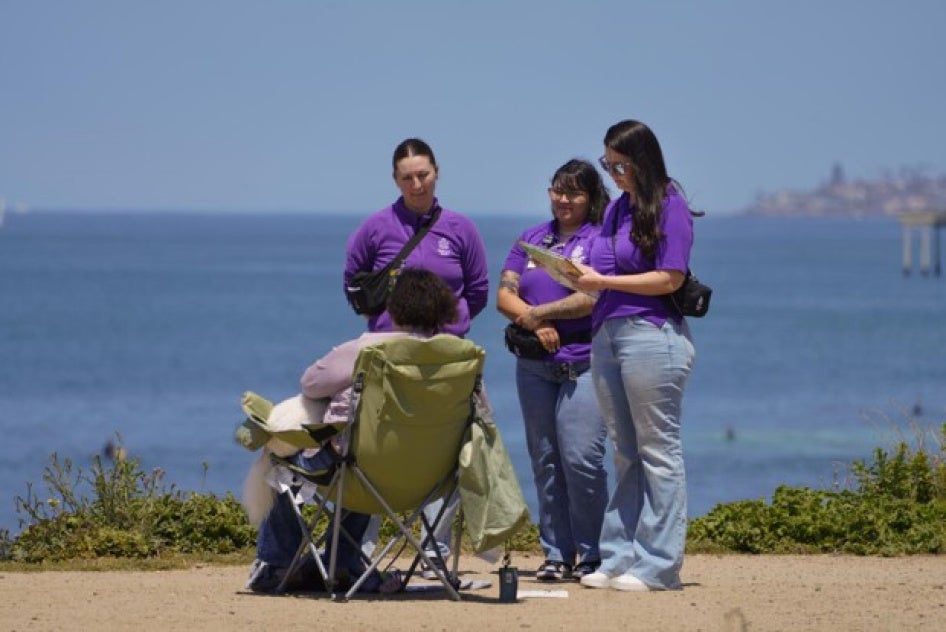
- Mobile Crisis Response Teams (MCRT)—San Diego County, California: MCRT is guided by the principle of “serve anyone, anywhere, anytime.”[233] Responders “don’t have to start with [obtaining] technical information.”[234] MCRT prioritizes relational connection over protocol.[235] The team starts by asking people if they are okay and where they would like to meet.[236] One director explained, “[if] they want to meet in our van, they can meet in the van. If they want to take a walk around the block, they can take a walk around the block. [If]...they want to sit in their living room or they want their mom with them, that’s their choice.”[237] The program emphasizes listening with the intent to understand and to respect where the person is coming from.[238] MCRT responders also consider which team member the individual might connect with best, and allow that person to take the lead.[239] Staff are trained to recognize that they are “probably meeting the person on the worst day of their life” and are encouraged to approach each encounter with “compassion.”[240]
- Support Team Assisted Response (STAR)—Denver, Colorado: The responders “provide a full assessment to identify the needs collaboratively with the community member.”[241] The program’s goals are to divert people from unnecessary visits to emergency departments as well as unnecessary interactions with the criminal justice system by providing the most appropriate intervention and resource.[242] In one survey of service recipients conducted by STAR, 72 percent of respondents “agreed or strongly agreed that the STAR van teams understood and respected them.”[243] Participants noted that “they really help your situation,” with one saying that that STAR teams “help me get out of trouble, help me calm down, and get me what I need.”[244] Importantly, STAR responders remain with the individual for “however long it takes so someone doesn’t have to feel rushed and [the responders] don’t have to feel like [they’re] on a clock when they’re talking with someone.”[245] The time-intensive model tries to ensure that responders can act as true “care connectors”[246]
- Cambridge Holistic Emergency Alternative Response Team (HEART)—Cambridge, Massachusetts: HEART’s model is “fully consent-based.”[247] Anyone can call for emotional support or assistance navigating life challenges, and the program offers confidential support that does not require “mandated reporting.”[248] They never share personal information with another provider without the caller’s consent.[249] HEART is “committed to engaging people in their full dignity and self-determination.”[250] Even when connecting individuals to longer-term support, they prioritize informed consent, ensuring that people understand, for instance, if a resource involves mandated reporting.[251]
The program centers self-determination, defined as “the absolute right of every human to be the main arbiter of how they will engage with the world around them and pursue their own happiness.”[252] Their “care-focused approach” to community crisis response begins “from the standpoint that each person involved in the crisis is a whole human and an equal member of our community.”[253] HEART is also committed to “accompanying people through their experience of suicidality”[254]—meaning they provide non-judgmental, consent-based support to individuals experiencing suicidal thoughts or feelings, without rushing to coercive interventions. HEART is “not here to fix people or save people,” but rather “committed to being present with people and how they show up around their own relationship to life and ... how they’re experiencing pain.”[255]
- Mental Health First (MH First)—Oakland, California: The program is consent-based.[256] To MH First, “self-determination is the pathway to liberation and that informs everything that [they] do,” especially because they serve communities whose right to self-determination has historically been denied.[257] If a participant does not want to participate, “the best thing that [MH First] can do is offer resources” and provide the option to reconnect in the future.[258] The program refers to service recipients as “participants”[259]—not patients or clients—because, “the participants are the ones who design their safety plan. They know what they need. We don’t. Our job is to help facilitate their desires.”[260]
5. Community-based approach with crisis workers having deep familiarity with the community.
A community-based approach—where crisis workers are deeply rooted in and reflective of the communities they serve—can build trust, reduce stigma, and ensure care that is culturally responsive and tailored to the local needs. Crisis workers may share lived experience, cultural background, language, or longstanding relationships within the community—whether by living there, having grown up there, or being closely connected through shared identity or social networks.
- Mobile Crisis Response Teams (MCRT)—San Diego County, California: MCRT emphasizes outreach, not only to the community at large, but also to schools, law enforcement agencies, clinics, doctors’ offices, therapists, and other mental health providers.[261] They credit their “robust outreach plan” as a key driver of their current call volume.[262] MCRT conducts ongoing community education, training approximately 1,600 people each month on how to contact and engage with their services.[263] Staff diversity is a priority, and the program intentionally hires people from various backgrounds, including veterans—a large population in San Diego.[264] Several staff members are veterans who respond to calls involving other veterans struggling to re-enter civilian life.[265] The program also has two staff members who use American Sign Language.[266] One program director noted that “the peer experience is incredibly important,” and that MCRT works to match callers with staff who share similar experiences or backgrounds to make the person being served as comfortable as possible.[267] Further, once MCRT is on the scene, team members continuously monitor which team member the client connects with the most and they let that team member lead.[268]
- Support Team Assisted Response (STAR)—Denver, Colorado: STAR was developed collaboratively by city stakeholders and community members following a visit to CAHOOTS in Oregon.[269] The community “came together with all these different stakeholders to design everything from programming to the logo, to the name.”[270] While the city has struggled to sustain community involvement beyond implementation,[271] STAR continues to engage its volunteer Community Advisory Committee, which is made up of 15 volunteer Denver residents, who provide guidance and help raise awareness of the STAR program within the community.[272] The Committee meets monthly to evaluate the outcomes of the STAR program and provide input and feedback from the community.[273] The Committee is composed of Denver residents representing each City Council district, and interested community members can directly apply for open positions.[274]
STAR also partners with six organizations led by people of color through its Community Partner Network to provide case management, follow-up, and wrap-around services.[275] These partner organizations “connect the STAR clients to culturally, linguistically, and geographically specific providers to increase client safety and self-sufficiency.”[276] The program strives to make referrals that are “culturally responsive and linguistically appropriate.”[277] The program also participates in various community events to provide education and awareness about programmatic services and how to appropriately request and access STAR.[278] “STAR responders have access to multiple interpretation services,” including the city’s language line, as well as language lines provided by WellPower (which employs the program’s clinicians) and Denver Health Hospital Authority (which employs medics/EMTs).[279]
- Cambridge Holistic Emergency Alternative Response Team (HEART)—Cambridge, Massachusetts: HEART was created through a year-long participatory action research (PAR) effort conducted by The Black Response—an advocacy organization committed to bringing Black voices to the table in conversations around policing in Cambridge[280]—to “demand solutions to the inequities and injustices perpetrated by the existing public safety system.”[281] The coalition included city council members, organizers, youth, service providers, and people directly impacted by carceral systems.[282] HEART’s PAR process engaged young people and others most affected,[283] and of those surveyed, 82 percent believed there should be an alternative to police for responding to emergencies and crises.[284]
HEART responders come from diverse backgrounds, and every responder identifies as having lived experience with a carceral system, such as psychiatric incarceration, Department of Children and Families, and prison, etc.[285] The responders are “folks from ... Cambridge, rooted in community, and [with] experiences of marginalization in many different ways.”[286] Responders are “not coming to this work through a professional lens of clinical training or orienting towards the people they might be supporting as ... clients or separate from their own communities.”[287] There is a “deep history ... around showing up for community, around caring for folks.”[288] Rather than simply helping, responders are “present and support somebody centering their humanity and recognizing ... people for their humanity and not labeling them based on a particular experience that they’ve had.”[289] The program “also hosts education sessions open to the public on Zoom, featuring guest speakers [on topics like]… alternative public safety models, transformative justice, [and] violence prevention.”[290]
- Mental Health First (MH First)—Oakland, California: MH First is a project of the Anti-Police-Terror Project (APTP), “a Black-led, multi-racial, intergenerational coalition that seeks to build a replicable and sustainable model to eradicate police terror in communities of color.”[291] APTP was “born 15 years ago, out of the rejection of the paradigm that this is how we have to live”[292]—responding to state violence, not just after the fact, but through visionary alternatives. Because “most Black people have either experienced state violence themselves [or] have a relative that’s incarcerated,”[293] they often avoid calling the police out of fear or concern that the situation will escalate. APTP viewed it as a “moral and political imperative to create alternatives,” believing that “the more people see, the more that they believe in alternatives,” and that “small replicable models across the country will eventually create a tipping point.”[294] To advance this vision, MH First developed a community-based and community-led model, grounded in principles such as self-determination, healing justice, intersectionality, disability justice, abolition, and transformative justice.[295] MH First was “created by and with impacted community members, grassroots organizations, and mental health and medical professionals.” [296] It is “rooted in community needs and led by community members to reduce state violence.”[297] MH First offers trainings on their “vision ... principles and ... strategy” to as many people as they can, including people living in different jurisdictions.[298] MH First emphasizes deep familiarity with the communities it serves and it is “trusted by and rooted in th[os]e local communit[ies]”[299]
- Elm City Compassionate Allies Serving our Streets (COMPASS)—New Haven, Connecticut: A key component of COMPASS’s community-based approach is its Community Advisory Board, which includes people with lived mental health experience, people from diverse racial and ethnic backgrounds, and people who were formerly incarcerated.[300] The Board’s role is to foster local leadership and maintain strong community ties.[301] This intentional inclusion of diverse voices ensures that the advisory board plays a meaningful role in guiding the program and holding both COMPASS and the city accountable.[302] The community “really owns what is happening.”[303] Additionally, COMPASS maintains partnerships with over 200 organizations, including faith communities and grassroots groups, fostering trust and expanding the program’s reach.[304] By grounding its approach in the Arnstein Ladder of Citizen Participation,[305] COMPASS effectively prioritizes community engagement and ownership, seeking to ensure that its services are informed by and responsive to the needs of the local population.[306]
- New Orleans Mobile Crisis Intervention Unit (MCIU)—New Orleans, Louisiana: MCIU collaborates closely with local organizations, 911, police, and other community services to ensure coordinated and effective crisis response. [307] MCIU holds a monthly calibration meeting with representatives of other first responder branches and 911 call center to stay integrated and informed.[308] Additionally, MCIU equips its staff with culturally responsive training, ensuring responders are prepared to engage effectively with the diverse populations they serve.[309] MCIU also prioritizes hiring staff who are reflective of New Orleans’ demographics,[310] a majority-Black city.[311] MCIU staff are recruited locally, fostering trust and relatability in crisis response.[312] MCIU staff “is very reflective of the demographics of New Orleans . . . many of them are from New Orleans with ties to New Orleans as well.”[313] Further strengthening its community-based approach and community ties, MCIU receives guidance from its Community Advisory Board, which includes individuals with lived experience, people of color, and people with disabilities.[314] The Community Advisory Board meets every quarter to ensure the community has a place for feedback and input regarding the services.[315] The Board plays an important role in ensuring MCIU remains accountable to the community’s needs and concerns.[316]
6. Provision of free, confidential, 24/7, and accessible services.
A rights-based approach recognizes access to care as a fundamental right—not a privilege contingent on economic status. Offering accessible services that are free and will be kept confidential helps eliminate financial and privacy-related barriers that often deter individuals from seeking support. Consistent availability is also key to ensuring that care is a right, not a privilege.
- Mobile Crisis Response Teams (MCRT)—San Diego County, California: MCRT operates 24-hours a day, seven-days a week, 365-days a year.[317] When San Diego County launched the program, they intentionally avoided billing for services so MCRT could focus on hiring, building infrastructure, and dedicating time to client care.[318] Later, the state directed the County to begin billing for services.[319] Currently, the County bills Medi-Cal when individuals have coverage, and for those who do not, MCRT assists with obtaining it.[320] Importantly, MCRT does not deny services based on insurance status.[321] Team members do not begin interactions by asking for insurance information, but they may request it later “in a way that will not cause panic or disruption.”[322] Regardless of coverage, individuals still receive care.[323]
- Support Team Assisted Response (STAR)—Denver, Colorado: There is no cost associated with STAR services for the community. [324] STAR’s clinical provider agency does bill for Medicaid services if the individual who has a STAR encounter is an existing client and open to receiving services through their agency, and that information is already in their chart. [325] However, STAR responders do not collect Medicaid or insurance information from anyone and there are no fees or requirements of any kind.[326]
- Cambridge Holistic Emergency Alternative Response Team (HEART)—Cambridge, Massachusetts: The program offers a phone line where anyone can call “to receive emotional support, to receive support navigating resources.”[327] The program offers services at no charge and all information shared with the program is confidential and will never be shared outside of the program team without an individual’s consent.[328] Some crises are resolved over the phone and some require in person support.[329] The team is available for both.[330]
- New Orleans Mobile Crisis Intervention Unit (MCIU)—New Orleans, Louisiana: All MCIU services are offered free of charge, with no costs billed to clients.[331] MCIU “would like to start billing Medicaid . . . but that’s a secondary issue to ensuring [that MCIU is] on the scene and meeting people’s needs.”[332] This commitment to accessible care ensures that financial barriers never prevent individuals from receiving the critical crisis support they need.[333]
7. Response time comparable to that of other emergencies.
Immediate access to mental health services is critical to de-escalate mental health crises and provide appropriate care. Rights-based mental health support envisions that mental health crises receive equitable treatment when compared with other emergencies. Ensuring comparable response times to other emergencies reinforces that mental health crises deserve the same urgency and prioritization as physical health or safety crises.
- Mobile Assistance Community Response of Oakland (MACRO)—Oakland, California: The program response time is anywhere between “five to 15 [minutes] at the most.”[334] This is shorter than response times for the Oakland Police Department.[335] In 2023, for example, police response times for priority calls averaged between approximately 14 to 61 minutes.[336]
- New Orleans Mobile Crisis Intervention Unit (MCIU)—New Orleans, Louisiana: MCIU’s average response time is approximately 8.31 minutes from the time a call is received to when responders arrive on scene.[337] The MCIU response is “quicker than police in some cases.”[338]
8. Alternative contact number to 911 (where 911 is operated by the police).
Offering alternatives to 911—where 911 is operated by the police—reduces the risk of unnecessary police involvement, minimizing the potential for escalation, coercion, or harm during a crisis.
- Mobile Crisis Response Teams (MCRT)—San Diego County, California: Individuals can reach MCRT by calling 988 or the San Diego Access and Crisis Line.[339] Clinicians screen the calls and connect the callers to the MCRT team.[340] MCRT aims to keep calls brief and respond quickly.[341] In addition, if someone calls 911 regarding a mental health issue, the 911 dispatcher can use a direct line to speak with an MCRT member.[342] Law enforcement officials can also directly call the MCRT team if they think an issue is more appropriate for the team.[343]
- Cambridge Holistic Emergency Alternative Response Team (HEART)—Cambridge, Massachusetts: The program operates a dedicated phone line which community members can call for support, as well as an email option for assistance.[344] The service is separate from 911, ensuring that law enforcement is not involved in crisis response in any way if someone calls HEART.[345]
- Mental Health First (MH First)—Oakland, California: MH First operates a dedicated phone line which community members can call or text for support.[346]
- Mobile Assistance Community Response of Oakland (MACRO)—Oakland, California: Individuals can reach MACRO by calling MACRO’s dedicated phone line.[347] It also has an email address that allows MACRO to communicate directly with the public without having to go through intermediaries like 911 police dispatch or the fire department.[348] The email also gives community members a platform to “communicate about persistent issues.”[349]
- Netcare Access Community Mobile Team (Netcare)—Franklin County, Ohio: Netcare runs a community crisis hotline offering a direct, non-police response for individuals experiencing a mental health crisis.[350] Netcare “takes tens of thousands of calls a year,” underscoring the hotline's established role as a trusted resource in the community.[351]In addition to this crisis line, Netcare is also connected to 988, potentially expanding access to non-police intervention options.[352]
9. Comprehensive, trauma-informed, and culturally responsive training for all responders.
Comprehensive training equips responders to respect an individual’s dignity, recognize systemic inequities, build trust, and avoid re-traumatization, all of which help ensure services are both trauma-informed and culturally responsive.
- Cambridge Holistic Emergency Alternative Response Team (HEART)—Cambridge, Massachusetts: The first cohort of HEART responders, hired in 2022, completed training in areas such as de-escalation, self-defense, mental health and peer support, and supporting individuals experiencing various forms of violence.[353] They are also trained to become certified peer specialists.[354]
- Mental Health First (MH First)—Oakland, California: MH First is run by staff, healing justice practitioners, and members of the Anti-Police-Terror Project (ATPT).[355] Staff must complete MH First training, shadow an experienced staff member, and do another co-shift with an experienced staff member before starting.[356] Training covers de-escalation, first aid, cultural competency, trauma-informed questioning, cultural humility and responsiveness, and harm reduction.[357] Staff also “have an opportunity to role play certain scenarios in which a person may call the hotline.”[358] MH First also offers training specifically for people of color to create space for Black and Brown participants to discuss lived experiences and community needs.[359]
- New Orleans Mobile Crisis Intervention Unit (MCIU)—New Orleans, Louisiana: MCIU provides culturally responsive training for all responders.[360] Staff training includes crisis intervention techniques, mental health first aid, domestic violence awareness, and suicide and homicide precaution protocols.[361] In addition, the program emphasizes the importance of cultural and linguistic competencies to ensure responders reflect and understand the communities they serve.[362]
10. Measures to minimize power imbalances (e.g., unmarked vehicles, non-police-style uniforms and badges).
Avoiding traditional symbols of authority helps reduce power differentials and fosters a more equitable, non-threatening interaction between crisis responders and individuals.
- Mobile Crisis Response Teams (MCRT)—San Diego County, California: The MCRT teams drive vans that are “subtly marked with purple coloring and say MCRT,” but they do not say “mobile crisis response” meaning “people would have to Google it to figure out who [they were].”[363] The MCRT team members do not have badges.[364] The team members wear a purple polo shirt that says MCRT, and they usually wear jeans or khakis.[365] And in the colder months, they wear a jacket that says MCRT rather than anything that says mental health crisis.[366]
- Support Team Assisted Response (STAR)—Denver, Colorado: STAR’s responders do not have badges.[367] They wear regular street clothes, typically jeans and T-shirts.[368] They might have a hat or shirt that says STAR, but it is not required.[369]
- Elm City Compassionate Allies Serving our Streets (COMPASS)—New Haven, Connecticut: The COMPASS staff wear polos and jeans.[370] They use a branded van that avoids resembling a police vehicle, further distinguishing their role from law enforcement.[371] These measures help create a calm, supportive environment that encourages individuals in crisis to engage more comfortably with responders.[372]
- Mental Health First (MH First)—Oakland, California: MH First’s responders wear T-shirts and sweatshirts labeled with “MH First.”[373]
11. Availability of services to avoid crises and, as follow-up to crises, connections to community-based resources.
Crisis prevention and follow-up services focus on sustained support and community connection, including connecting people to housing, health care, and other voluntary, community-based resources. Addressing the social determinants of health—such as housing insecurity—acknowledges that lasting well-being depends on meeting broader structural and material needs.
- Mobile Crisis Response Teams (MCRT)—San Diego County, California: MCRT estimates that, for about for 50 to 60 percent of their calls, they can stabilize and resolve the situation and “refer them to resources.”[374] For about 25 percent of their calls, they transport someone to a “lower level of care,” which means not a jail, emergency room, or hospital, but rather a crisis stabilization unit, crisis walk-in center, or crisis house that allow residents to stay for two weeks.[375] MCRT also transports people to the services they need and “maintains productive relationships with crisis stabilization units, residential programs, sobering centers, and medical and psychiatric hospitals, to connect individuals with the most appropriate care.[376]
- Support Team Assisted Response (STAR)—Denver, Colorado: The STAR teams can refer clients for STAR case management through the Community Partner Network, and conduct a full needs assessment which includes appropriate resource and service connections.[377] Client outreach by the assigned case manager can be immediate for high-priority referrals, but staff generally try to make contact with the person within 24 hours of receiving the referral.[378] STAR responders also work closely with the first responder drop off center that has a crisis stabilization clinic and other crisis-related resources.[379]
- Cambridge Holistic Emergency Alternative Response Team (HEART)—Cambridge, Massachusetts: HEART’s focus is to “meet people in the moment of crisis and then do some aftercare to help them find any other resources that they might need for longer term support.”[380] If someone needs longer term support, HEART would “follow up a few times, especially after the immediate moment of need or crisis” and “would be working with them to find a provider or a resource that could offer [that support].”[381] HEART has previously supported some community members for more than a year, but is shifting to a “warm” hand off model (where the individual is introduced by one provider to another provider), while not sharing anyone’s information to a provider without consent.[382]
- Elm City Compassionate Allies Serving our Streets (COMPASS)—New Haven, Connecticut: Beyond crisis response, COMPASS conducts outreach to help individuals obtain essential services such as showers, meals, and shelter resources.[383] COMPASS collaborates with a crisis stabilization center and a 90-day emergency housing shelter that accommodates families and pets, ensuring individuals have access to stable and supportive environments.[384] COMPASS extends its impact beyond immediate crisis intervention, offering sustained support that addresses root causes and promotes long-term stability.[385] COMPASS also engages in proactive outreach efforts to engage with individuals before they reach a crisis stage.[386]
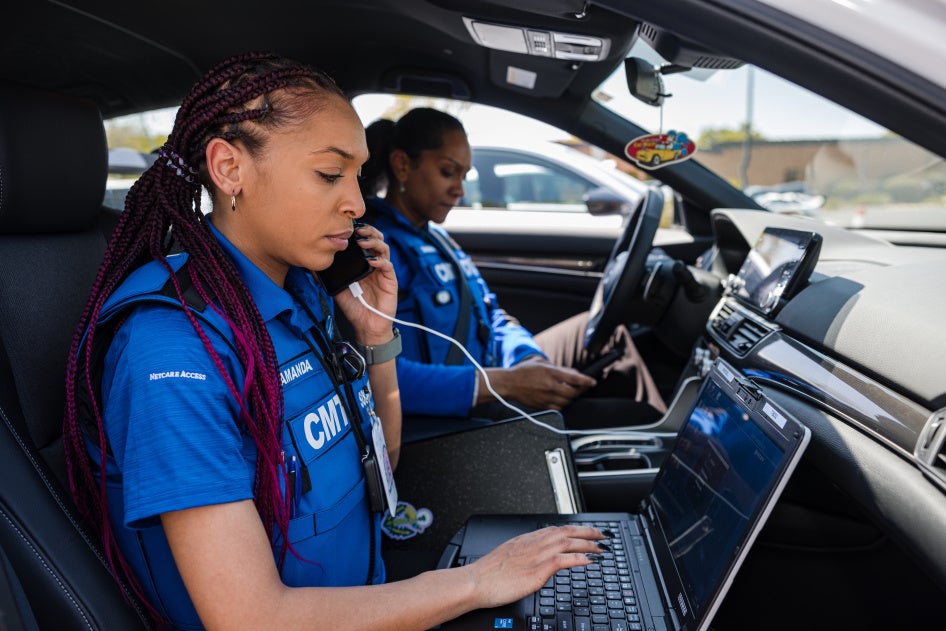
- Netcare Access Community Mobile Team (Netcare)—Franklin County, Ohio: Netcare offers up to 14 days of follow-up support for individuals who remain in the community and do not require a higher level of care.[387] During this period, staff assist clients in reconnecting with existing treatment providers or establishing new connections to mental health care, housing, and social services.[388] Netcare staff follow up with the people they assist and establish a brief two-week crisis treatment plan.[389] This structured follow-up ensures individuals receive ongoing support tailored to their needs, which promotes long-term stability and reduces the risk of future crises.[390]
12. Accessible and transparent data management.
Accessible and transparent data management fosters accountability and enables the public to assess the effectiveness of crisis response systems.
- Support Team Assisted Response (STAR)—Denver, Colorado: STAR engages in ongoing evaluations of their programs.[391] The latest evaluation analyzed 911, public safety, and STAR encounter data.[392] This evaluation also included surveys and interviews with STAR program stakeholders, community members, staff, and clients.[393] The proposed next stage of evaluation will attempt to “measure differences in public safety outcomes for people who received STAR services, compared to people with similar characteristics who did not receive STAR services,” assess costs, and determine how they might expand their services.[394] Other data STAR currently collects include the number of calls for service that are STAR-eligible, the percentage of eligible calls to which the program can respond, the number of STAR-eligible calls to which police end up responding instead of STAR, the hours for STAR-eligible calls for service, the reasons recorded for STAR-eligible calls, the number of calls that requested STAR-only assistance, the number of calls to which STAR teams responded that were not initially flagged as STAR-eligible, the number of each clinical STAR encounter, and the priority issue listed for a clinical STAR encounter.[395] Currently, each of STAR’s contracted partners and 911 collect their own internal data and then report it out.[396] STAR tracks whether calls are eligible for STAR services, even if the callers do not ultimately receive them.[397]
- Mobile Assistance Community Response of Oakland (MACRO)—Oakland, California: MACRO has collected data from the beginning of its program in 2022.[398] They release annual output data that includes a wide range of metrics on program responses, including incident types, source of calls, outcomes, demographics, and response location.[399]
- Elm City Compassionate Allies Serving our Streets (COMPASS)—New Haven, Connecticut: COMPASS publishes monthly public reports detailing key metrics, such as the total responses, response times, demographics, and referrals.[400] This commitment to transparency allows stakeholders to assess the program’s impact and reinforces accountability and best practices in data-informed evaluations.[401]
- New Orleans Mobile Crisis Intervention Unit (MCIU)—New Orleans, Louisiana: MCIU developed a dashboard to ensure comprehensive tracking of key metrics, reinforcing the program’s commitment to data-driven evaluation.[402] The dashboard is updated bi-weekly, providing detailed information on response times, outcomes, and demographics,[403] although the dashboard was down at the time of writing. However, MCIU was working to improve their data collection and reporting process and anticipated the dashboard would be back in operation later in 2026.[404]
Recommendations
To create a rights-based crisis response system, governments at all levels, as well as crisis response service providers, should take proactive steps to expand and strengthen non-police alternatives. Below are targeted recommendations for implementing alternative non-police mental health crisis response systems.
To the Federal Government
- Fund the development of non-police crisis response programs nationwide, recognizing that resources such as the American Rescue Plan Act (ARPA) funds have expired.
- Fund research to evaluate the effectiveness of non-police crisis response programs.
- Launch public awareness campaigns about non-police crisis response programs.
- Strengthen 988 to ensure it offers non-police, non-coercive, privacy-respecting crisis support.
- Create a central hub for non-police crisis response programs to collaborate, share expertise, and publish data and reports.
To State and Local Governments
- Develop local and state-level non-police crisis response programs grounded in the good practices identified in this report.
- Recognize non-police crisis response programs as first responders, so that appropriate 911 and 988 calls can be diverted to these programs.
- Collaborate with other local and state-level programs to enable fast, localized responses.
- Prioritize underserved and rural areas where mental health resources are limited.
- Conduct public awareness campaigns about non-police crisis response programs.
- Collaborate with and support nonprofit and community-based organizations that operate non-police crisis response programs.
- Maintain transparency through data dashboards and regular reporting.
To Crisis Response Programs
- Ensure that police are not the primary, default, or sole responders to mental health crises.
- Uphold individuals’ autonomy by seeking informed consent prior to service delivery.
- Center the voices of peers, community members, and local organizations in program planning, implementation, and oversight.
- Integrate peers into service delivery, leadership roles, and oversight processes.
- Provide in-depth, field-based, peer-led training that emphasizes trauma-informed care, cultural responsiveness, and community-specific needs.
- Provide robust follow-up services that address the social determinants of health, including housing, food access, and financial security.
- Ensure services are free, confidential, and available 24 hours a day, seven days a week.
- Minimize power imbalances by using unmarked vehicles and avoiding police-type uniforms or badges.
- Offer multiple ways of connecting with providers, such as dedicated phone lines, text messaging, and social media.
- Guarantee language access, including access to sign language.
- Collect and evaluate program data to monitor outcomes and promote transparency.
- Maintain response times comparable to those of other emergency responders.
Conclusion: Crisis Response Reimagined
Designating police as the primary or default responders to people experiencing mental health crises is both ineffective and lethal. People with mental health conditions are particularly vulnerable to police violence and this vulnerability is especially true for Black people with mental health conditions. Fortunately, alternative non-police crisis response programs can offer a path toward compassionate and community-rooted care for people experiencing mental health or substance use crises. The programs highlighted in this report seek to avoid police violence and provide more effective support for people experiencing crises. The programs demonstrate that it is possible to prioritize autonomy and public health over coercion and criminalization.
These goals should be considered in any effort to reform crisis response systems and redefining what safety, care, and community support can and should look like. Given the pervasive threat of institutionalization and incarceration, the need for bold, rights-based alternatives has never been more urgent. Realizing this vision requires not only commitment, but concrete investment and coordination across all levels of government. We must create a future where people experiencing crises are met with care, not force.
Acknowledgements
Olivia Ensign of Human Rights Watch, Jordyn Jensen of the Center for Racial and Disability Justice, and William Juhn of New York Lawyers for the Public Interest researched and wrote this report. This report was edited at Human Rights Watch by John Raphling, US Program associate director and Tanya Greene, US Program director, and reviewed by Chris Albin-Lackey, senior legal advisor, Joseph Saunders, deputy program director, Carlos Rios-Espinosa, Disability Rights Division associate director, and Matt McConnell, Economic Justice & Rights Division researcher. The report was edited at New York Lawyers for the Public Interest by Ruth Lowenkron, Disability Justice director. Freddie Salas, Human Rights Watch US Program senior associate, and Jack Spehn, Human Rights Watch Economic Justice & Rights Division senior coordinator provided assistance with preparation of the report, formatting, and footnotes. Layout and production were coordinated by Travis Carr, Human Rights Watch publications manager.
We would like to thank Jamelia Morgan, founder and faculty director, Kate Caldwell, director of research and policy, and Dimitri Nesbitt, civic planning and design manager of the Center for Racial and Disability Justice, for their review and guidance. We would like to thank McGregor Smyth, executive director, and Justin Wood, director of policy, of New York Lawyers for the Public Interest for their review and support.