Human Rights Watch appreciates the opportunity to provide a submission to the Joint Standing Committee on Foreign Affairs, Defence and Trade’s Inquiry into the role of Australia's international development program in preventing conflict.
Human Rights Watch is an independent, nongovernmental organization that reports on and advocates for human rights in some 100 countries around the world.
Human Rights Watch’s submission will focus on the strategic use of international development funding to support accountability measures because of the effect these measures have on conduct before, during, and after conflicts. We also address the heightened need for support for accountability because of the already apparent impacts of aid cuts by the United States on documentation efforts that are crucial to the accountability landscape.
- Accountability and conflict prevention
Support for accountability efforts is a critical way to support conflict prevention. Human Rights Watch research[1] over the past 35 years in many different countries has demonstrated that a decision to ignore atrocities and to reinforce a culture of impunity can carry a high price. While there are undoubtedly many factors that influence the start of, or resumption of armed conflict and impunity is not the sole causal factor, Human Rights Watch research shows that the impact of justice is too often undervalued.
a) Accountability and conflict resolution
Maintaining focus on justice and accountability—or at least keeping open possibilities for justice—can yield short and long-term benefits. Indictments of abusive leaders and the resulting stigmatization can lead to marginalizing a suspected war criminal, ultimately facilitating other efforts to promote peace and stability. For example:
- In Bosnia and Herzegovina the indictment of Radovan Karadzic by the International Criminal Tribunal for the former Yugoslavia (ICTY) marginalized him and prevented his participation in the peace talks leading to the success of the Dayton negotiations to end the Bosnian war.
- The unsealing of an arrest warrant for Liberian President Charles Taylor at the opening of talks to end the Liberian civil war was ultimately viewed as helpful in moving negotiations forward. By delegitimizing Taylor both domestically and internationally, the indictment helped make clear that he would have to leave office, an issue that had been a potential sticking point in negotiations. He left Liberia’s capital, Monrovia, a few months later.
- Articulating that justice-related investigations are underway may also convince lower-level security officials to exercise some levels of restraint or refrain from at least some abuses.
b) Impunity and destabilization
In the longer term, lack of accountability can be fertile ground for subsequent leaders who seek to manipulate history to sow seeds of new conflict to achieve their own political ends. For example:
- Lack of justice for atrocities during the Second World War enabled ultra-nationalist politicians in Yugoslavia to promote highly inaccurate narratives to divide Serb, Croat, and Muslim communities, triggering cycles of intercommunal violence during the conflicts of the 1990s.
- In Burundi, the absence of criminal prosecutions for atrocities committed over a period of decades contributed to periodic explosions of inter-ethnic strife: members of each group feared violence—even potential annihilation—by the other and felt anger for past sufferings. These feelings were then exploited by those with their own political agenda.
Without individualizing guilt, the notion of collective responsibility for crimes has greater resonance, and it is easier for blame focused on a group to be passed from one generation to the next.
c) Impunity emboldens abusers
The failure of international and regional bodies and donor states to demand accountability can embolden abusive leaders to commit more crimes. For example:
- In Myanmar in 2017, Min Aung Hlaing orchestrated crimes against humanity in which the military committed horrific abuses against ethnic Rohingya in northern Rakhine State, killing thousands and forcing over 730,000 to flee to Bangladesh. In 2021, the same notorious military units implicated in the 2017 atrocities were deployed to the streets of Yangon, Mandalay, and other cities and towns and have carried out grave abuses ever since. The throughline of these two grave crises—the 2021 coup and the years of abuse since, and the 2017 atrocities against the Rohingya—lies in the decades-long impunity enjoyed by Myanmar’s military. Several pro-democracy Myanmar dissidents, some of whom did not earlier champion or care about military abuses against ethnic and religious minorities, have acknowledged that the recurrent lack of justice for the military’s crimes against minorities in past years was directly linked and has repeatedly served as an alarm bell and general measure of the many abuses it has carried out for decades against democratic institutions.
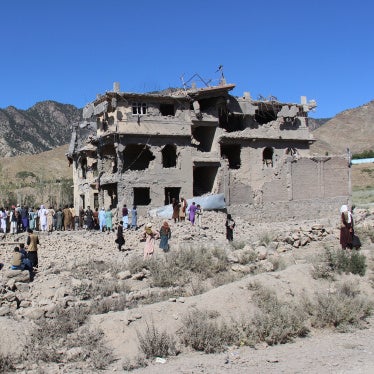
- Until now, there has been no meaningful accountability for conflict-related crimes and grave human rights violations in Afghanistan. This has facilitated an environment in which all perpetrators including Taliban leaders are unafraid of any repercussions for their actions. The 2025 establishment of a comprehensive accountability mechanism for Afghanistan is a vital tool in addressing the entrenched impunity at the heart of Afghanistan’s human rights crisis, advancing access to justice, truth, and reparation for victims of abuses. It could also have an important deterrent effect. Taliban officials and all other perpetrators should have received the message – that they cannot commit grave rights abuses with impunity, and they will be held accountable for their abuses in Afghanistan.
d) Accountability and the historical record
Fair trials assist in restoring dignity to victims by acknowledging their suffering and help to create a historical record that protects against revisionism by those who will seek to deny that atrocities occurred. The evidentiary rules used at judicial proceedings, and the requirement that judgments be based on proven facts, help confer legitimacy on otherwise contestable facts and make it more difficult for “societies to indulge their fantasies of denial.” Trials also bring forward evidence that might not otherwise be disclosed. For example:
- The international trials at Nuremburg and Tokyo, and associated trials by Allied powers conducted after World War Two, performed this important function. Evidence revealed in the trials became insurmountable obstacles to those seeking to deny the crimes of the Nazi regime and Imperial forces of Japan.
- In the course of its trials, the ICTY also accumulated a formidable wealth of documentary evidence and testimony that can serve as a reference point in years to come and help prevent revisionist history that can be used to foment conflict.
Of course, trials are only one of a number of tools that can assist in this process of creating a record and addressing the needs of victims: as important as they are, they will only address a small subset of crimes. Broader truth-telling mechanisms, in addition to reparations, vetting, economic development, and reconstruction are needed as part of the process of moving society forward in a sustainable way.
e) Cost of impunity – Sudan case study
The situation in Sudan today throws into sharp relief the price of impunity. In October 2025, the International Criminal Court (ICC) convicted Ali Muhammad Ali Abd-Al-Rahman (also known as Ali Kosheib), a former leader of the “Janjaweed,” a militia created by the government of former Sudanese President Omar al-Bashir, on numerous counts of war crimes and crimes against humanity committed in Sudan’s Darfur region between 2003-2004. This was the first case on Sudan to come to trial before the ICC, more than 20 years after the UN Security Council referred the situation to the ICC prosecutor. That referral recognized the key link between justice and international peace and security.
While the Kosheib verdict marked a key step forward on justice, a lack of arrests in other cases before the ICC, and the absence of other forms of accountability have contributed to cycles of impunity-fueled violence in Darfur and other parts of the country. Since 2023, parties to the current hostilities – the Rapid Support Forces (RSF) and the Sudanese Armed Forces (SAF) – continue to commit rampant human rights abuses across the country, most recently in the context of the RSF takeover of El Fasher, a city in Darfur. The UN’s Independent International Fact-Finding Mission for the Sudan and the African Union’s Joint Fact-Finding Mission for Sudan recently reported on accountability options for the country as a whole. Both fact-finding bodies acknowledged the urgent need for effective regional and international cooperation to make justice a reality on the ground.
- US aid cuts impacting documentation efforts that support accountability
In the first year of its second term, the Trump administration made massive and abrupt cuts to US foreign aid. There are several types of US foreign aid, including bilateral development assistance, humanitarian relief, as well as smaller allocations for security, multilateral development, and economic assistance.
Prior to the cuts, the US government provided approximately US$2.6 billion on foreign aid focused on human rights, democracy, and governance. This funding supported human rights defenders, independent media, and civil society groups, many of them working in conflict zones and authoritarian states, to support rights and document abuses.
The administration said it completed a review of all foreign aid to determine which programs to cut but did not publicly release any clear methodology that guided the review or the formal findings. The US government initiated the cuts without legal process and appeared to lack coordination with other donor governments, many of whom contribute to US-administered mechanisms. The US government also did not put in place any plans or policies to mitigate significant risks to staff of US-funded organizations or those who relied on US-funded services, nor discuss the possibility of, instead, phasing out programs over time.
a) Documentation as a conflict early warning system
To know what is occurring on the ground in other countries, governments like Australia rely on reporting from independent media, civil society groups, and other actors who conduct investigations and share their research and analysis. In countries that are less stable, this information helps foreign governments like Australia craft cogent, effective foreign policy on preventing conflict. It is impossible to understand early warning signs without a robust understanding of what is happening on the ground. When media or human rights organizations are no longer able to provide information, early warning and prevention systems can more easily break down.
For example, in the wake of the 2021 military coup in Myanmar and the Taliban takeover of Afghanistan, thousands of journalists from Myanmar and Afghanistan have gone into exile in neighboring and third countries. As a result of the 2025 US government cuts to funding for support for independent journalism, and other cuts to US programs for Radio Free Asia, Radio Free Europe, and Voice of America, the reporting for these and many other exiled journalists and media outlets, covering closed societies like Vietnam, Cambodia, and China (and Hong Kong), have had to severely cut back operations. The entire ecosystem of exiled media working on closed societies across Asia—from North Korea to Afghanistan—is facing steep operational challenges.
b) Documentation as a step towards accountability
One of the areas the US foreign aid cuts have affected is human rights documentation and accountability efforts for serious international crimes. Groups receiving US funding have independently documented human rights violations abuses, including those that amount to serious crimes under international law, in countries around the globe, provided legal aid to victims and witnesses, and engaged with international mechanisms such as UN Human Rights Council fact-finding bodies and the International Criminal Court.
The cuts have hampered efforts to document the abuses during conflict—a key building block for accountability. As detailed above, the absence of accountability can have an impact on the resumption of conflict and further weakens the ability to deter would-be perpetrators.
Conclusion and recommendations
There are several ways in which the Australian government can support conflict prevention work, accountability, and documentation. We urge you to explore new ways the government can help ensure support for justice initiatives, fact-finding and reporting programs, and other programs meant to address impunity.
Recommendations:
- Support the International Criminal Court by:
- Expressing support for the ICC’s critical work across all situations and committing to providing the court with the consistent financial, political, and practical support needed to fulfill its global mandate.
- Encouraging non-member states to join the ICC to ensure its universal reach.
- Strongly condemning threats and attacks against the court, its officials, and those cooperating with it, including the US sanctions, calling for the swift revocation of US Executive Order 14203, and urging other member states to do the same.
- Speaking out in support of the critical work that civil society does on behalf of victims of serious crimes and calling for enhanced protection of civil society organizations and human rights defenders at risk due to their advocacy for justice.
- Taking concrete actions to limit or, where possible, nullify the effects of any coercive measures, including sanctions, against the court, its officials, and those cooperating with it.
- Increase direct financial assistance, including bilateral grants and other funding, to organizations involved in fact-finding, documentation, and other accountability initiatives.
- Provide support for other government’s judicial sectors and encourage them to invest in these sectors as well.
- Establish a specialized war crimes unit within the Australian Federal Police to pursue universal jurisdiction cases, and once expertise is developed, to train counterparts in the region.
- Increase bilateral financial support for other domestic justice initiatives in conflict and post conflict settings to build trust in the legal system and close impunity gaps, particularly when it comes to the prosecution of serious international crimes.
- Increase funding for media support funds for exiled media groups, and provide funding to the JX Fund, BBC Media Action, and/or Deutch Welle Akademie’s Hannah Arendt Initiative, each of which provide assistance or make tailored grants to outlets that need help.
[1] Human Rights Watch, Selling Justice Short: Why Accountability Matters for Peace (New York: Human Rights Watch, 2009), https://www.hrw.org/report/2009/07/07/selling-justice-short/why-accountability-matters-peace.