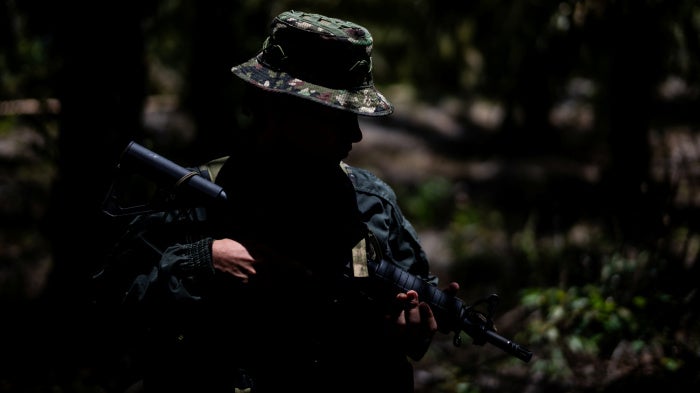
Recruitment and Use of Children by Colombian Armed Groups
The 102-page report, “‘I Thought I’d Never See My Mom Again’: Recruitment and Use of Children by Colombian Armed Groups,” examines the dynamics of child recruitment, the factors that place children at risk, and the strategies and tools used by armed groups, including through social media platforms, to recruit them. Researchers also analyzed the government’s response and its shortcomings in preventing child recruitment, protecting and rescuing children, assisting the reintegration of those who have been released, and prosecuting the individuals responsible.
When Armed Groups Use Schools in the Central African Republic
This report documents how armed groups, and even soldiers from the United Nations peacekeeping mission, known as MINUSCA, have used school buildings as bases or barracks, or based their forces near school grounds. The government and the peacekeeping mission should increase protection for students and schools in areas of the country affected by armed conflict, Human Rights Watch said.
This report contains examples of law and practice from 40 countries, from Afghanistan to Yemen, instituting some level of protection for schools or universities from military use. Many of the examples come from countries currently or recently involved in armed conflict, indicating that governments and armed forces are recognizing the negative consequences of military use of schools and have found practical solutions to deter such use. Examples of these measures can be found throughout the world, in legislation, court decisions, and military policies and doctrine. Governments should adopt and follow protections for schools, Human Rights Watch said.
Abuses and Discrimination against Children in Institutions and Lack of Access to Quality Inclusive Education in Armenia
This report documents how thousands of children in Armenia live in orphanages, residential special schools for children with disabilities, and other institutions. They often live there for years, separated from their families. More than 90 percent of children in residential institutions in Armenia have at least one living parent. Human Rights Watch also found that the Armenian government is not doing enough to ensure quality, inclusive education for all children. Inclusive education involves children with disabilities studying in their community schools with reasonable support for academic and other achievement.
This report examines obstacles, including some rooted in outmoded government policies, that prevent more than 1.5 million adolescents from attending secondary school and cause many students to drop out because of poor quality education. The problems include a lack of secondary schools in rural areas, an exam that limits access to secondary school, and a discriminatory government policy to expel pregnant or married girls.
This report documents Pakistan’s abuses and the role of the United Nations High Commissioner for Refugees (UNHCR) in promoting the exodus. Through enhancing its “voluntary repatriation” program and failing to publicly call for an end to coercive practices, the UN agency has become complicit in Pakistan’s mass refugee abuse. The UN and international donors should press Pakistan to end the abuses, protect the remaining 1.1 million Afghan refugees in Pakistan, and allow refugees among the other estimated 750,000 unregistered Afghans there to seek protection, Human Rights Watch said.
Compendium of Human Rights Watch Reporting 2012-2017
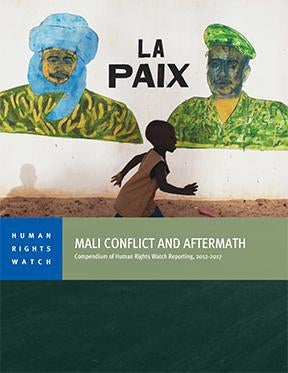
This compendium contains much of Human Rights Watch’s reporting and analysis from 2012 to 2017. In our advocacy we called on all sides to abide by international humanitarian law, or the laws of war, and urged Mali’s government to take concrete steps with the assistance of its international supporters to address the conditions that led to the crisis and that fuel ongoing instability.
The Trial of Civilians by Military Courts in Lebanon
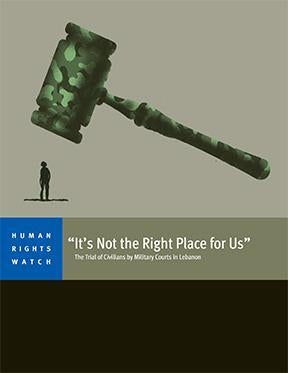
This report documents the due process deficiencies inherent in trying civilians before military courts, the use of confessions extracted under torture, and allegations that Ministry of Defense or army officials have used the courts’ broad jurisdiction to intimidate individuals or retaliate against critical speech or activism. Children have also reported being tortured while awaiting prosecution in these courts.
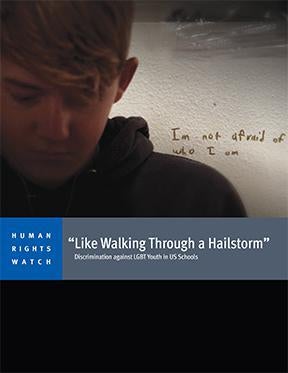
This report documents a range of problems facing LGBT students. The concerns include bullying and harassment, exclusion of LGBT topics from school curricula and resources, restrictions on LGBT student groups, and discrimination and bigotry from both classmates and school personnel on the basis of sexual orientation and gender identity.
Restrictions on Bathroom and Locker Room Access for Transgender Youth in US Schools
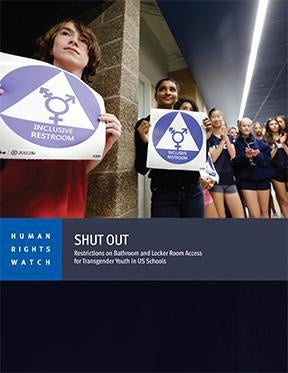
This report examines how transgender youth are adversely affected by rules that bar them from using bathrooms and locker rooms matching their gender identity. Transgender students described how these rules have given rise to physical and verbal harassment, and adversely affected their physical and mental health, academic achievement, and participation in school.
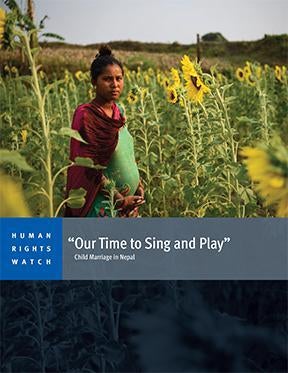
This report documents the economic and social pressures that lead to child marriage, and the devastating consequences of those marriages. Nepal has the third-highest rate of child marriage in Asia, with 37 percent of girls marrying before age 18, and 10 percent before 15, though the minimum age of marriage for both women and men is 20 under Nepali law. An estimated 11 percent of boys marry before 18. Nepal’s government has made some effort to end the practice, but a long-promised national plan has met with delays.
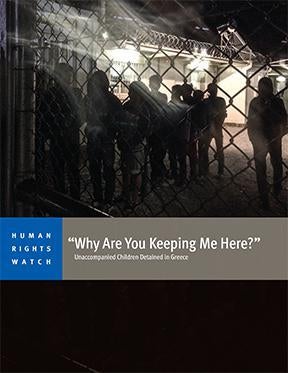
This report documents arbitrary and prolonged detention of children in violation of international and Greek law. Children are held in unsanitary conditions, sometimes with unrelated adults, in police stations and detention centers where they have little access to basic care and services. The report is based on interviews with 42 children who were or had been detained, as well as visits to two police stations and two detention centers in mainland Greece.
Military Use of Schools in Afghanistan’s Baghlan Province
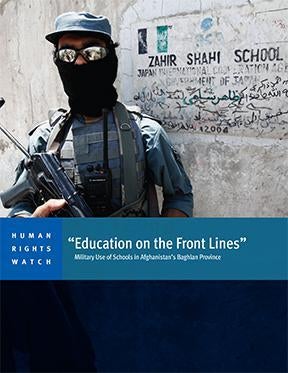
This report documents the occupation and other military use of schools by state forces and the Taliban in Baghlan province in northeastern Afghanistan. It is based on interviews with more than more than 20 school principals, teachers, and administrators, as well as local families affected by the conflict. As school districts across Afghanistan increasingly find themselves on the front lines of the country’sarmed conflict, students risk their lives at schools being used by soldiers which may become military targets, or are deprived of an education until facilities are found elsewhere.
Barriers to Education for Syrian Refugee Children in Jordan
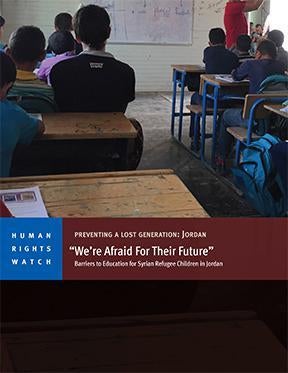
This report describes Jordan’s generous efforts to enroll Syrian children in its public school system, which was struggling with capacity and quality issues even before refugees began to arrive from Syria. But Human Rights Watch also documented barriers to education, including asylum-seeker registration requirements that many Syrians cannot meet; punishments for refugees working without permits that contribute to poverty, child labor, and school drop-outs; and a bar on enrollment for children who have been out of school for three or more years. Jordan has eased some restrictions, but authorities should expand efforts to realize the fundamental right to education for all Syrian children, Human Rights Watch said.
Abuses against Children Detained as National Security Threats
This report documents the arrest and detention of children for alleged association with non-state armed groups or involvement in conflict-related offenses. Overbroad and vague counterterrorism legislation adopted in response to extremist armed groups such as the Islamic State and Boko Haram has increased the detention of children perceived to be security threats. Human Rights Watch specifically examined the detention and treatment of children in Afghanistan, the Democratic Republic of Congo, Iraq, Israel/Palestine, Nigeria, and Syria.
Barriers to Education for Syrian Refugee Children in Lebanon
This report documents the important steps Lebanon has taken to allow Syrian children to access public schools. But Human Rights Watch found that some schools have not complied with enrollment policies, and that more donor support is needed for Syrian families and for Lebanon’s over-stretched public school system. Lebanon is also undermining its positive education policy by imposing harsh residency requirements that restrict refugees’ freedom of movement and exacerbate poverty, limiting parents’ ability to send their children to school and contributing to child labor. Secondary school-age children and children with disabilities face particularly difficult obstacles.