Torture and Other Abuses Against Venezuelans in El Salvador’s Mega Prison
The 81-page report, “‘You Have Arrived in Hell’: Torture and Other Abuses Against Venezuelans in El Salvador’s Mega Prison,” provides a comprehensive account of the treatment of these people in El Salvador. In March and April 2025, the US government sent 252 Venezuelans, including dozens of asylum seekers, to the Center for Terrorism Confinement (Centro de Confinamiento del Terrorismo, CECOT) mega prison in El Salvador, despite credible reports of serious human rights abuses in El Salvador’s prisons. The Venezuelans were subject to refoulement—being sent to where they would face torture or persecution—arbitrary detention, enforced disappearance, torture, inhumane detention conditions and, in some cases, sexual violence.
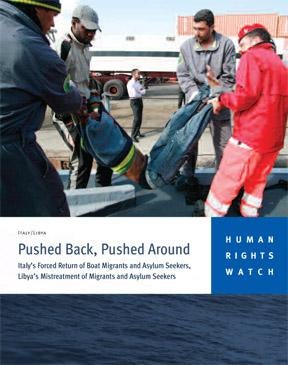
Italy's Forced Return of Boat Migrants and Asylum Seekers, Libya's Mistreatment of Migrants and Asylum Seekers
This 92-page report examines the treatment of migrants, asylum seekers, and refugees in Libya through the eyes of those who have managed to leave and are now in Italy and Malta. It also documents Italy's practice of interdicting boats full of migrants on the high seas and pushing them back to Libya without the required screening.
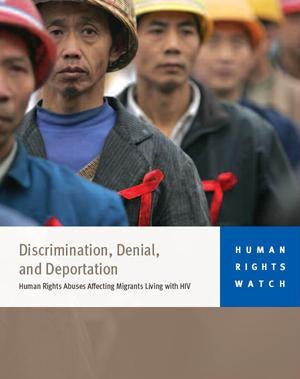
Human Rights Abuses Affecting Migrants Living with HIV
This 22-page report describes how discrimination and human rights abuses faced by migrant populations result in increased vulnerability to HIV infection and barriers to care and treatment.
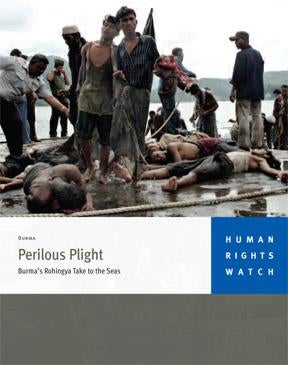
This 12-page report examines the causes of the exodus of Rohingya people from Burma and Bangladesh, and their treatment once in flight to Southeast Asian countries. Persecution and human rights violations against the Rohingya inside Burma, especially in Arakan state, have persisted for over 20 years, with insufficient international attention.
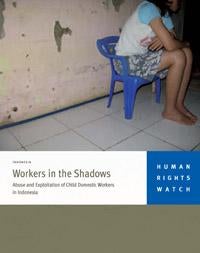
Abuse and Exploitation of Child Domestic Workers in Indonesia
This report documents how hundreds of thousands of girls in Indonesia, some as young as 11, are employed as domestic workers in other people’s households, performing tasks such as cooking, cleaning, laundry, and child care. Most girls interviewed for the report worked 14 to 18 hours a day, seven days a week, with no day off. Almost all are grossly underpaid, and some get no salary at all.
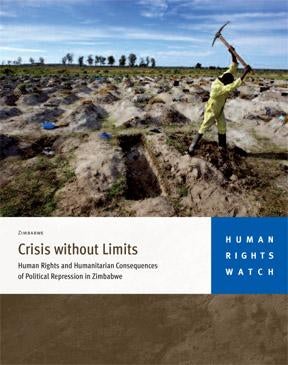
Human Rights and Humanitarian Consequences of Political Repression in Zimbabwe
This 33-page report details the Zimbabwean government's responsibility for the country's humanitarian crisis. A cholera epidemic has left over 2,000 Zimbabweans dead and another 39,000 ill. Over 5 million Zimbabweans face severe food shortages and are dependent on international aid.
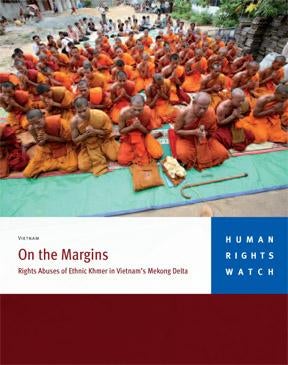
Rights Abuses of Ethnic Khmer in Vietnam’s Mekong Delta
This report documents ongoing violations of the rights of the Khmer Krom in southern Vietnam and also abuses in Cambodia against Khmer Krom who have fled there for refuge. Wary about possible Khmer Krom nationalist aspirations, Vietnam has suppressed peaceful expressions of dissent and banned Khmer Krom human rights publications.
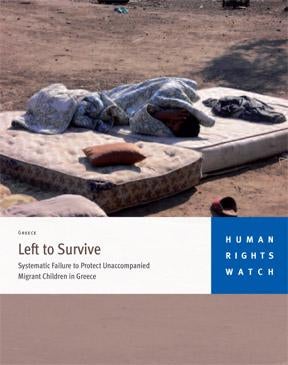
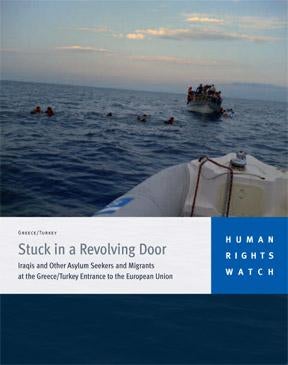
Systematic Failure to Protect Unaccompanied Migrant Children in Greece
Some 1,000 unaccompanied migrant children who have entered Greece in 2008 without parents or caregivers struggle to survive without any state assistance, Human Rights Watch said in a new report issued today.
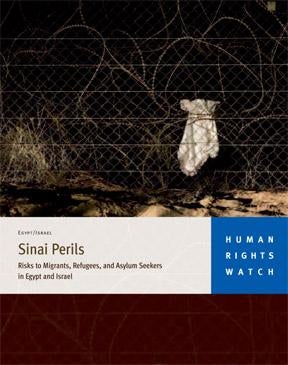
Risks to Migrants, Refugees, and Asylum Seekers in Egypt and Israel
In this 90-page report, Human Rights Watch called on Egypt to halt the use of lethal force against border crossers and all deportations of persons to countries where they risk persecution or ill-treatment. Israel should halt forced returns of migrants to Egypt, where they face military court trials and possible unlawful deportation to their countries of origin.
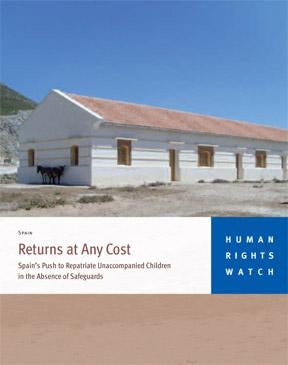
Spain’s Push to Repatriate Unaccompanied Children in the Absence of Safeguards
This 22-page report says that in Andalusia, the southern region that is a common entry point for migrants, authorities have said they intend to send up to 1,000 unaccompanied children in their custody to Morocco, claiming that safeguards are in place. But officials could not explain how they determined it was in a child’s best interest to return, as required by law.
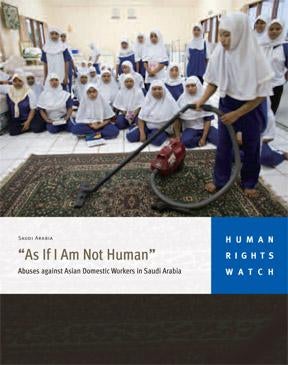
Abuses against Asian Domestic Workers in Saudi Arabia
This 133-page report concludes two years of research and is based on 142 interviews with domestic workers, senior government officials, and labor recruiters in Saudi Arabia and labor-sending countries. Saudi households employ an estimated 1.5 million domestic workers, primarily from Indonesia, Sri Lanka, the Philippines, and Nepal. Smaller numbers come from other countries in Africa and Asia. While no reliable statistics exist on the exact number of abuse cases, the Saudi Ministry of Social Affairs and the embassies of labor-sending countries shelter thousands of domestic workers with complaints against their employers or recruiters each year.
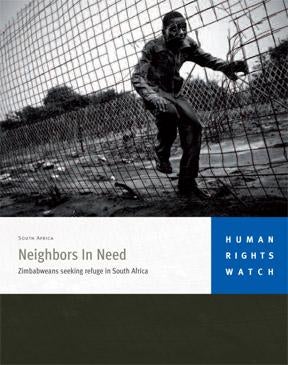
This 119-page report examines South Africa’s decision to treat Zimbabweans merely as voluntary economic migrants and its failure to respond effectively to stop the human rights abuses and economic deprivation in Zimbabwe that cause their flight and to address their needs in South Africa. Human Rights Watch spoke to almost 100 Zimbabweans in South Africa about their plight.
The 44-page briefing paper offers an analysis of the Dutch overseas integration test in light of the Netherlands’ international human rights obligations. Human Rights Watch found that people of Moroccan and Turkish origin are especially affected, while citizens from “western” countries such as Canada, Australia, and Japan are exempt.
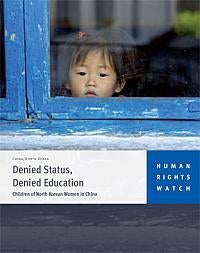
This 23-page report documents how such children live without legal identity or access to elementary education. These children live in the Yanbian Korean Autonomous Prefecture in eastern Jilin Province, northeast China (near its border with North Korea). Some are from North Korea while others were born in China and have Chinese fathers and North Korean mothers.
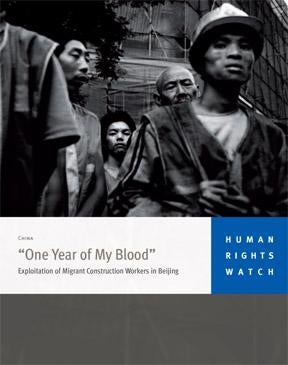
Exploitation of Migrant Construction Workers in Beijing
This 61-page report documents the Chinese government’s failure to fulfill long-repeated promises to protect the rights of migrant construction workers, as well as to end deprivations caused by the discriminatory nature of China’s household registration (hukou) system. An estimated 1 million migrant construction workers, hailing from other parts of China, make up nearly 90 percent of Beijing’s construction workforce.