The 75-page report, “No Money, No Care: Obstetric Violence in Sierra Leone,” documents cases of verbal abuse, medical neglect, and abandonment of women and girls facing serious obstetric complications, practices that experts interviewed say are common. Many women interviewed said they were shamed and mistreated by healthcare providers for expressing pain, needing help, or for not having enough money to pay fees. Others described humiliating experiences in which healthcare providers treated them brusquely or withheld important health information. Some cases documented constitute obstetric violence, a largely unaddressed form of gender-based violence prevalent across the world.
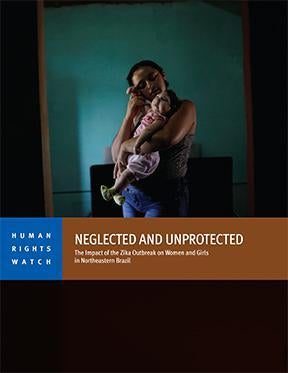
The Impact of the Zika Outbreak on Women and Girls in Northeastern Brazil
This report documents gaps in the Brazilian authorities’ response that have a harmful impact on women and girls and leave the general population vulnerable to continued outbreaks of serious mosquito-borne illnesses. The outbreak hit as the country faced its worst economic recession in decades, forcing authorities to make difficult decisions about allocating resources. But even in earlier times of economic growth, government investments in water and sanitation infrastructure were inadequate. Years of neglect contributed to the water and wastewater conditions that allowed the proliferation of the Aedes mosquito and the rapid spread of the virus, Human Rights Watch found.
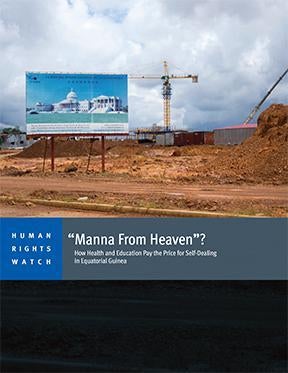
How Health and Education Pay the Price for Self-Dealing in Equatorial Guinea
This report reveals that the government spent only 2 to 3 percent of its annual budget on health and education in 2008 and 2011, the years for which data is available, while devoting around 80 percent to sometimes questionable large-scale infrastructure projects. The report also exposes how, according to evidence presented in money laundering investigations carried out by several countries, senior government officials reap enormous profits from public construction contracts awarded to companies they fully or partially own, in many cases in partnership with foreign companies, in an opaque and noncompetitive process.
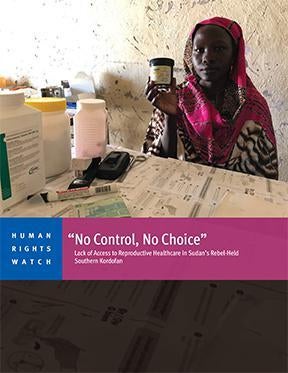
Lack of Access to Reproductive Healthcare in Sudan’s Rebel-Held Southern Kordofan
This report documents how women and girls cannot get contraception and have little access to health care if they face complications during pregnancy and childbirth. The parties to the six-year-long conflict, the Sudanese government and the rebel Sudan People’s Liberation Army-North (SPLA/M-North), have both obstructed impartial humanitarian aid.
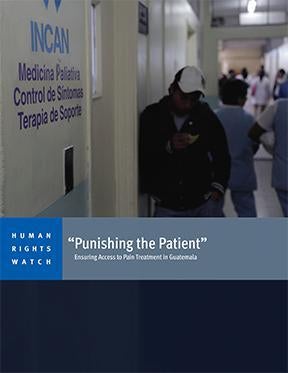
This report documents how Guatemala’s drug control regulations – meant to prevent drug abuse – make it almost impossible for many patients with cancer and other advanced illnesses to get strong pain medicines like morphine. Patients described their extreme pain and other symptoms and how they struggled to cope with a dim prognosis. They said they had to make visits to multiple doctors because many were unable to adequately treat pain, and many said they faced lengthy travel on crowded buses to reach hospitals that offer pain treatment.
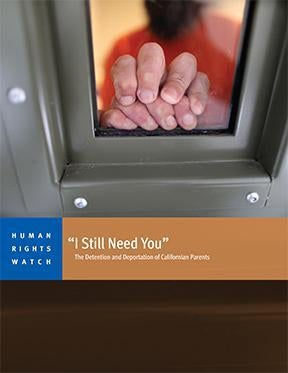
The Detention and Deportation of Californian Parents
This report is based on data obtained via a Freedom of Information Act request to federal immigration authorities. The data covers nearly 300,000 federal detentions of immigrants in facilities in California over a four-and-a-half-year span. Over that period, an average of about 65,000 immigrants a year were detained in California in 15 facilities. Many were parents of US citizen children. Although the records for most of the period do not specify whether detainees have US citizen children, the records for one nine-month span (October 2014 to June 2015) generally do, and statistical methods can reliably fill the gaps. Analyzing the records for that nine-month span, Human Rights Watch found that nearly half – 42 percent – of detainees had US citizen children.
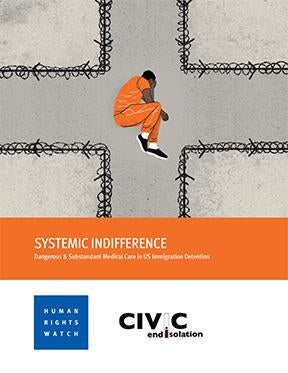
Dangerous & Substandard Medical Care in US Immigration Detention
This report reveals systemic failures, such as unreasonable delays in care and unqualified medical staff, that are likely to expose a record number of people to dangerous conditions under President Donald Trump’s ramped-up deportation and detention plans.
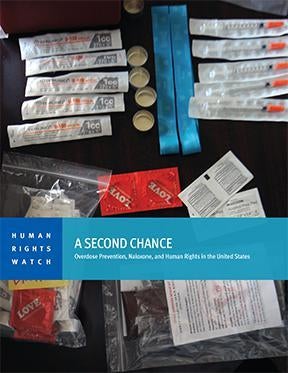
Overdose Prevention, Naloxone, and Human Rights in the United States
This report identifies federal and state laws and policies that are keeping naloxone out of the hands of people most likely to witness accidental overdoses, denying them the ability to save lives.
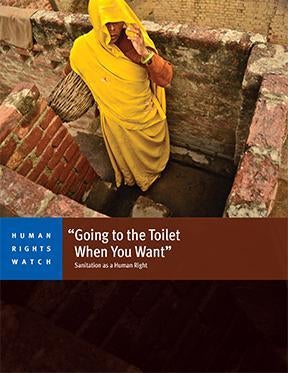
This report is based on more than a decade of reporting by Human Rights Watch on the abuses, discrimination, and other obstacles people encounter in trying to perform the simple act of relieving themselves with dignity and in safety. As of 2015, 2.4 billion people around the world were estimated to be using unimproved sanitation facilities, defined as those that do not hygienically separate human excreta from human contact. Nearly a billion people practice open defecation – which has been linked to malnutrition, stunting, and increased diarrheal disease, among other harmful effects.
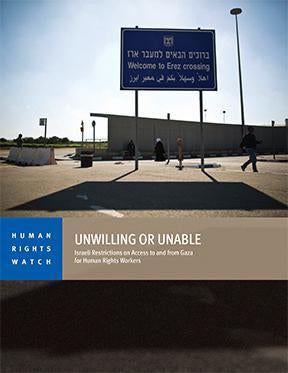
Israeli Restrictions on Access to and from Gaza for Human Rights Workers
This report documents how Israel systematically bars human rights workers from traveling into and out of Gaza, even where the Israeli security services make no security claims against them as individuals. Egypt is also imposing severe travel restrictions on its border with Gaza. The International Criminal Court (ICC) prosecutor’s office should take note of the restrictions in the context of its ongoing preliminary examination of the Palestine situation.
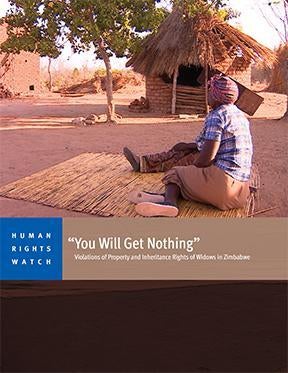
Violations of Property and Inheritance Rights of Widows in Zimbabwe
This report found that in-laws often tell women shortly after the deaths of their husbands that the relatives intend to take over the homes and lands or other property where the husband and wife had lived for decades. One widow quoted her brother-in-law’s words to her after her husband’s funeral, in front of the family that had gathered: “He said in my face, ‘You are rubbish and you will get nothing. I am taking everything.’”
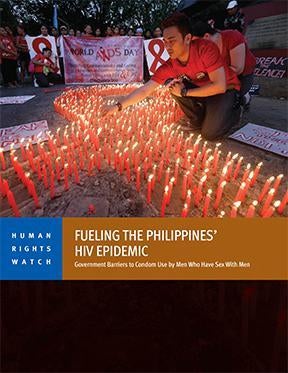
Government Barriers to Condom Use by Men Who Have Sex With Men
This report documents the failure of national and local governments in the Philippines to address the growing HIV prevalence among men who have sex with men.
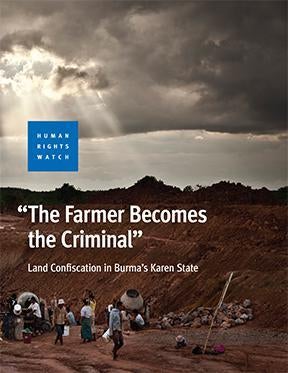
This report documents human rights violations by militias, police, and government officials in Karen State for the confiscation of land from ethnic Karen farmers, many of whose families had farmed the land for generations.
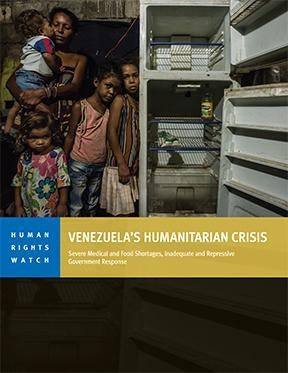
Severe Medical and Food Shortages, Inadequate and Repressive Government Response
This report documents how the shortages have made it extremely difficult for many Venezuelans to obtain essential medical care or meet their families’ basic needs. The Venezuelan government has downplayed the severity of the crisis. Although its own efforts to alleviate the shortages have not succeeded, it has made only limited efforts to obtain international humanitarian assistance that might be readily available. Meanwhile, it has intimidated and punished critics, including health professionals, human rights defenders, and ordinary Venezuelans who have spoken out about the shortages.
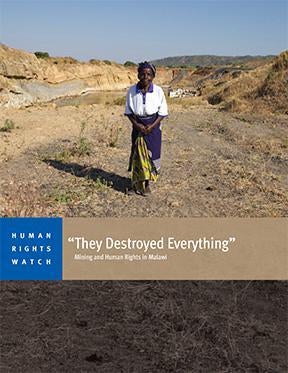
This report examines the impact of extractive industries on communities in some of Malawi’s first mining areas, in Karonga district located on the northwestern shores of Lake Malawi. Malawi’s government has promoted private investment in mining and resource extraction to diversify its economy. But environmental risks are common in resource extraction and mining significantly contributes to climate change, which in turn affects governments’ ability to realize the rights to health, water, and food.
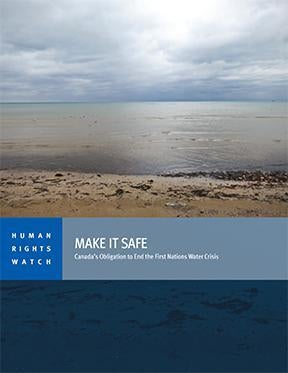
Canada’s Obligation to End the First Nations Water Crisis
This report documents the impacts of serious and prolonged drinking water and sanitation problems for thousands of indigenous people – known as “First Nations” – living on reserves. It assesses why there are problems with safe water and sanitation on reserves, including a lack of binding water quality regulations, erratic and insufficient funding, faulty or sub-standard infrastructure, and degraded source waters. The federal government’s own audits over two decades show a pattern of overpromising and underperforming on water and sanitation for reserves.