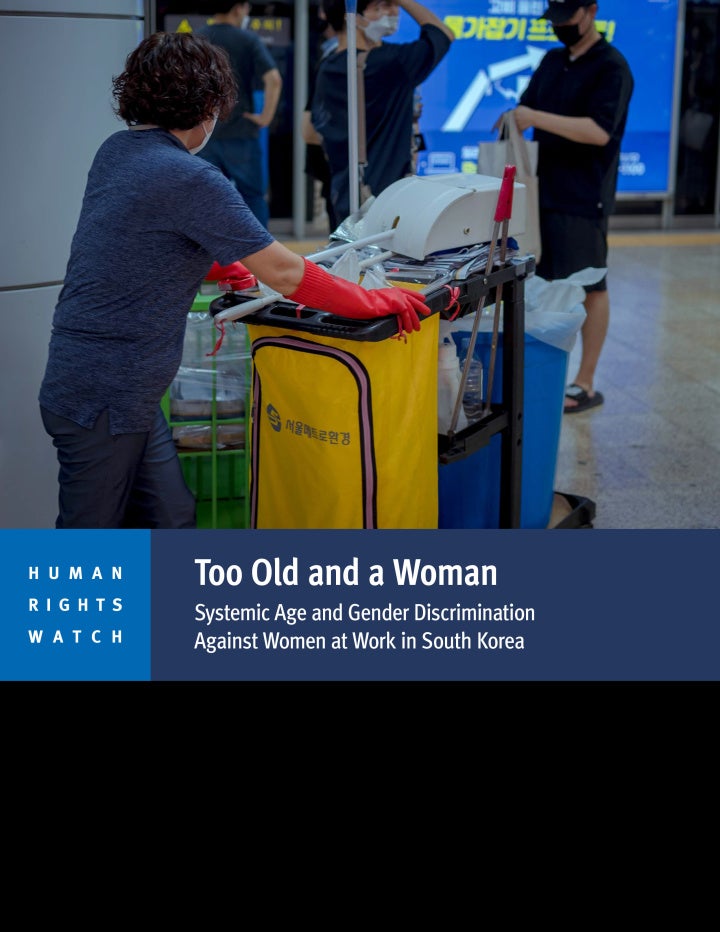
Systemic Age and Gender Discrimination Against Women at Work in South Korea
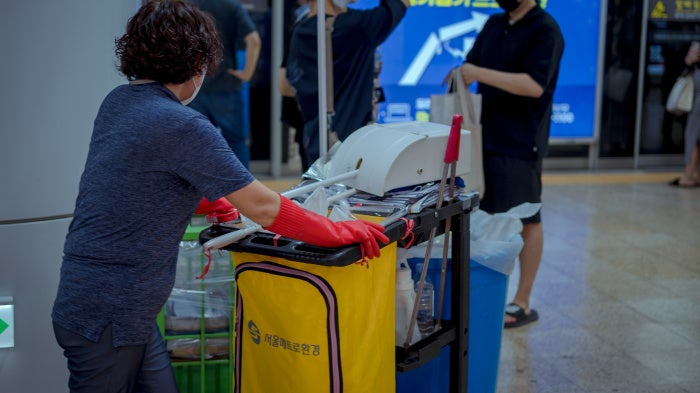
The 92-page report, “Too Old and a Woman: Systemic Age and Gender Discrimination Against Women at Work in South Korea,” documents that social attitudes toward education, unfair treatment in hiring, disrupted careers due to family responsibilities, limited promotion opportunities, glass ceilings, and sexual harassment create a disadvantage for South Korean women throughout their working lives. As women get older, their work opportunities narrow to a handful of low-paid, insecure jobs, and the gender pay gap increases. By the time they are eligible for pensions, women face a significant gender pension gap.
Retaliation Against Women in Michigan State Prisons
This report documents how women inmates who have been raped by guards in Michigan prisons are suffering retaliation from their attackers."In Michigan, a woman risks being sexually assaulted if she's imprisoned, and being terrorized by guards if she dares report the assault," said Regan Ralph, executive director of theWomen's Rights Division of Human Rights Watch.
Reports that ethnic Chinese women were raped during riots in Jakarta in mid-May have generated an outpouring of rage from around the world and a furious debate inside Indonesia. Legislators in Taiwan and Hong Kong have threatened cut-offs of aid and expulsions of Indonesian migrant workers.
In March 1995, Human Rights Watch released Neither Jobs Nor Justice, a report documenting widespread employment discrimination on the basis of sex that was practiced, condoned, and tolerated by the Russian government.
This report focuses mainly on one aspect of the criminal justice system and its handling of violence against women: the performance of those involved in the provision of medical expertise to the courts when it is alleged that women have been abused. Medical evidence is often a crucial element in the investigation and prosecution of a case of rape or sexual assault.
Trafficking of Nepali Girls and Women to India's Brothels
At least hundreds of thousands, and probably more than a million women and children are employed in Indian brothels. Many are victims of the increasingly widespread practice of trafficking in persons across international borders. In India, a large percentage of the victims are women and girls from Nepal.
In this document, Human Rights Watch seeks to raise concerns about some disturbing trends in the protection of refugees it has observed in the course of researching human rights abuses.
and Other Human Rights Obligations on the First Anniversary of its Accession to the Council of Europe
On February 28, 1996, the Russian Federation became a full member of the Council of Europe, an intergovernmental organization based in Strasbourg, France, which, among other goals, aims to protect human rights. Accession to the Council of Europe heightened expectations that the Russian Federation would take concrete steps to improve its poor human rights record in the year that has followed.
Being a woman prisoner in U.S. state prisons can be a terrifying experience. If you are sexually abused, you cannot escape from your abuser. Grievance or investigatory procedures, where they exist, often do not work, and correctional employees continue to engage in abuse because they believe they can get away with it. The sexual misconduct documented in “All Too Familiar” takes many forms.
Kurds are the largest non-Arab ethnic minority in Syria, comprising about 8.5 to 10 percent of the population of 13.8 million. This report documents the situation of stateless Syrian-born Kurds — 142,465 by the government's count, and well over 200,000 according to Kurdish sources — who have been arbitrarily denied the right to Syrian nationality in violation of international law.
Sexual Violence during the Rwandan Genocide and its Aftermath
During the 1994 genocide, Rwandan women were subjected to sexual violence on a massive scale, perpetrated by members ofthe infamous Hutu militia groups known as the Interahamwe, by other civilians, and by soldiers of the Rwandan Armed Forces(Forces Armées Rwandaises, FAR), including the Presidential Guard.
Maquiladoras, or export-processing factories, along the U.S.-Mexico border account for over US billion in export earnings for Mexico and employ over 500,000 workers.
On May 7, 1992, an Egyptian administrative court decided to uphold last year's decree dissolving the Egyptian branch of the Arab Women's Solidarity Association (AWSA), a prominent women's rights organization. The court refused to grant an injunction that would have allowed AWSA to continue operating while it awaits the outcome an appeal on the merits of the government decree.
This report is a culmination of five years of work gathering evidence of the epidemic levels of violence against women and rampant sex discrimination around the world.
Trafficking of Nepali Girls and Women to India’s Brothels
Hundreds of thousands of women and children are employed in Indian brothels—many of them lured or kidnapped from Nepal and sold into conditions of virtual slavery. The victims of this international trafficking network routinely suffer serious physical abuse, including rape, beatings, arbitrary imprisonment and exposure to AIDS.
Economic and political changes in Russia have left many Russians staggering under the burdens of rising unemployment, high rates of inflation, disappearing social services and the encroaching threats of corruption and organized crime.