US Expulsions of Third-Country Nationals to Countries in Africa
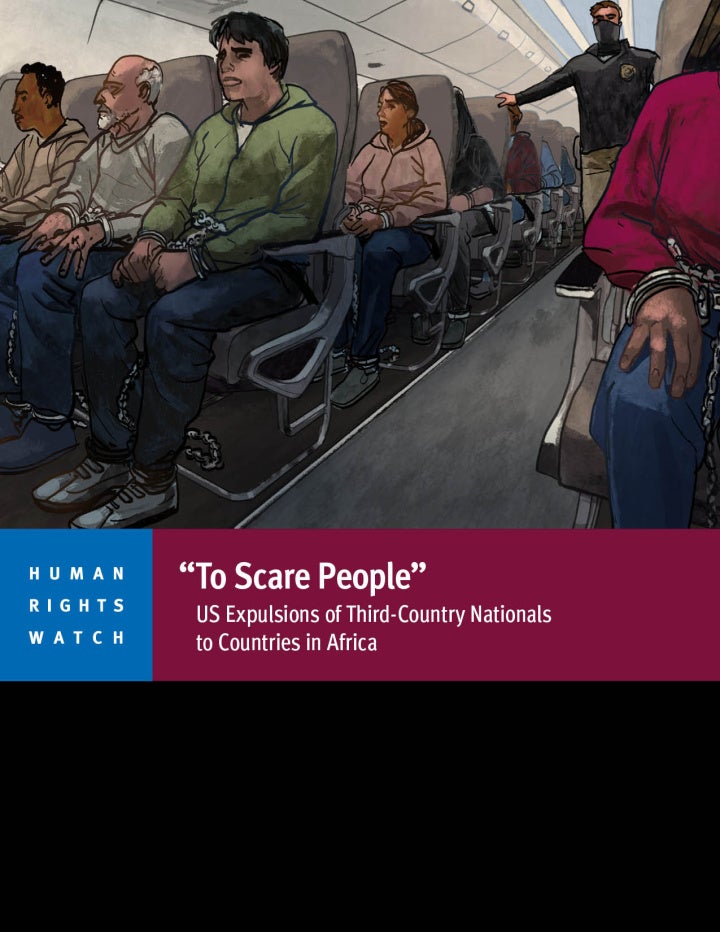
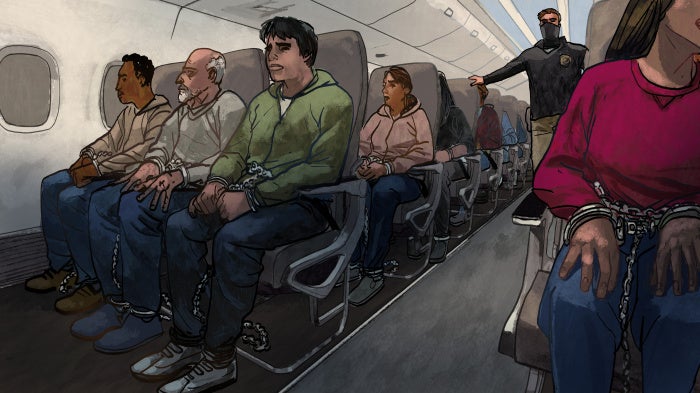
The 125-page report, “‘To Scare People’: US Expulsions of Third-Country Nationals to Countries in Africa,” documents that US authorities denied the more than 500 people transferred to third countries a meaningful chance to contest their removals or to articulate their fears of being removed to these countries. Some countries arbitrarily detained people they had accepted, and some have sent people onward to the risk of persecution or torture in their home countries, violating the international law principle of nonrefoulement.
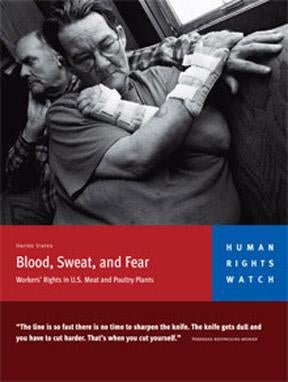
Workers in the U.S. meat and poultry industry endure unnecessarily hazardous work conditions, and the companies employing them often use illegal tactics to crush union organizing efforts. In meat and poultry plants across the United States, Human Rights Watch found that many workers face a real danger of losing a limb, or even their lives, in unsafe work conditions.
Since February 2003, Darfur has been the scene of massive crimes against civilians of particular ethnicities in the context of an internal conflict between the Sudanese government and a rebel insurgency. Almost two million people have been forcibly displaced and stripped of all their property and tens of thousands of people have been killed, raped or assaulted.
Human Rights Watch’s key concerns on Turkey for 2005
At its December 16-17 summit in Brussels, the European Council is expected to decide whether or not to open negotiations for Turkey’s full membership of the European Union. The decision follows the October 2004 evaluation by the European Commission that “Turkey sufficiently fulfils the political criteria” and its recommendation that accession negotiations be opened.
Turkish state forces violently and illegally displaced upwards of 380,000 Kurdish villagers in the 1990s during a conflict with the Kurdish Workers Party (PKK) in southeast Turkey. Turkey should stop fending off the legitimate involvement of international agencies and make a formal declaration to integrate them in its return plans.
This 35-page report documents how the Sudanese armed forces and the government-backed Janjaweed militias continue to target civilians and their livestock in villages in rural areas and in the towns and camps under government control. The report also analyzes Sudanese government pledges to rein in the militias, end impunity and restore security in Darfur.
Abuses against Female Migrant Domestic Workers in Indonesia and Malaysia
This 110-page report documents the abuse and exploitation that Indonesian female domestic workers experience at each step of the migration process. Most domestic workers are forbidden to leave their workplace and unknown numbers suffer psychological, physical, and sexual assault by labor agents and employers.
Exploitation and Abuse of Migrant Workers in Saudi Arabia
Migrant workers in the purportedly modern society that Saudi Arabia has become continue to suffer extreme forms of labor exploitation that sometimes rise to slavery-like conditions. Their lives are further complicated by deeply rooted gender, religious, and racial discrimination.
Human Rights Watch's engagement with IOM arises from our concern that IOM has no formal mandate to monitor human rights abuses or to protect the rights of migrants and other persons, even though literally millions of people worldwide participate in IOM-sponsored programs and projects. We began to monitor and document IOM operations in the field in the early 1990s.
June 20, 2003 will mark international refugee day - a day when governments should reaffirm their obligations to protect some of the world's most vulnerable people. Instead, European governments will meet on June 20 to debate the United Kingdom's (U.K.) proposal that promises to undermine those obligations.
Human Rights Watch urged Bhutan and Nepal to implement a screening and repatriation process that protects the human rights of more than one hundred thousand refugees of Nepalese ethnicity who were arbitrarily stripped of their citizenship and forced to flee Bhutan in the early 1990s.
Australia is the only country to grant temporary status to refugees who have been through a full asylum determination system and who have been recognized as genuinely in need of protection for 1951 Refugee Convention reasons.
The Triumph of Efficiency over Protection in Dutch Asylum Policy
Critical aspects of Dutch asylum policy violate international refugee standards, Human Rights Watch said in this new report. Human Rights Watch urged the new Dutch government being formed to prioritize reforms to bring asylum policy back in line with international standards.
West African governments are failing to address a rampant traffic in child labor that could worsen with the region’s growing AIDS crisis, Human Rights Watch charged in a new report released today. The 79-page report, “Borderline Slavery: Child Trafficking in Togo,” highlights Togo as a case study of trafficking in the region.
Briefing to the 59th Session of the UN Commission on Human Rights
The Commission on Human Rights has not focused specifically on the human rights of asylum seekers and refugees, except as a part of its work on the human rights of non-nationals more generally.