Cuban and Other Third-Country Nationals Deported from the US to Mexico
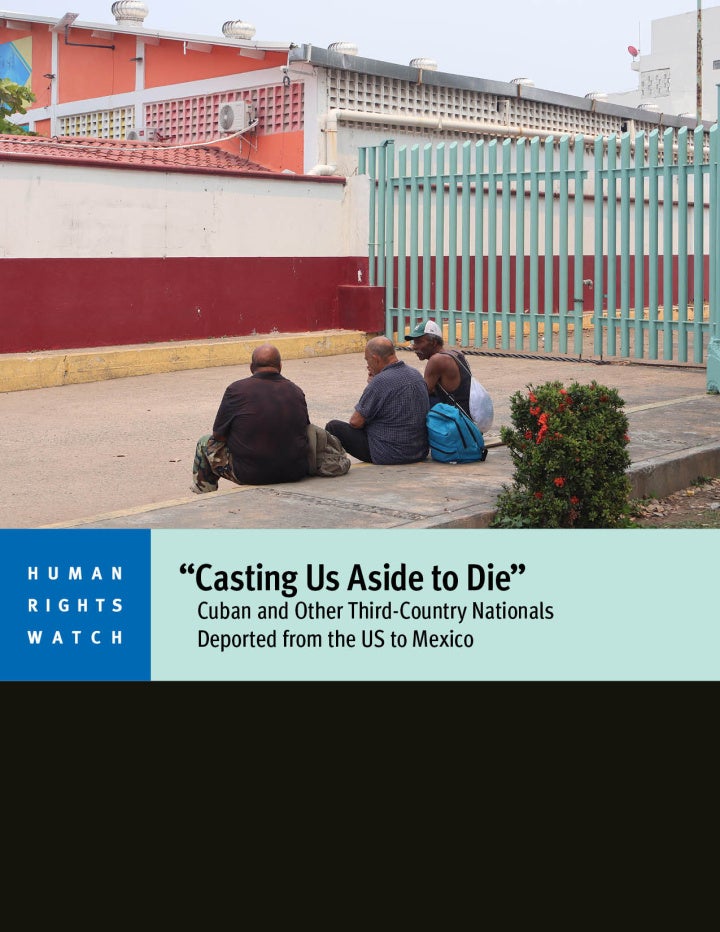
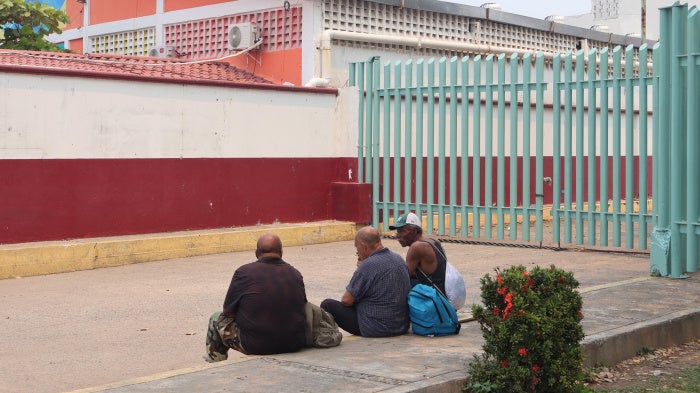
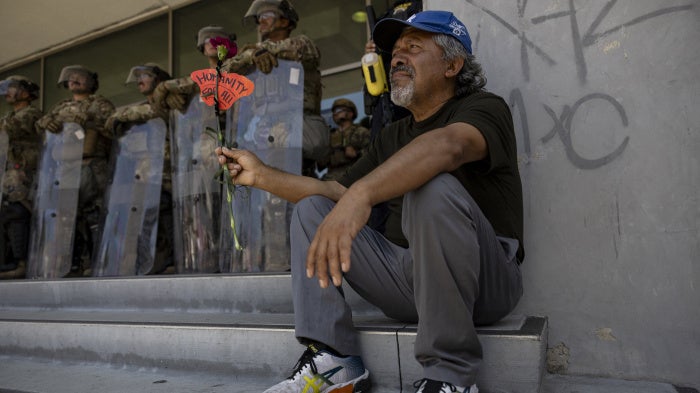
The 66-page report, “‘Casting Us Aside to Die:’ Cuban and Other Third-Country Nationals Deported from the US to Mexico,” documents US government abuses against Cubans and other third-country nationals deported to Mexico between January 2025 and March 2026. With no other recourse to obtain permanent residency in Mexico, many Cuban deportees, whose home government refuses to take them back, are trapped in a legal limbo. Since arriving in Mexico, they have received little if any government support, and many are without access to shelter, food, or health care.
The military forces that overthrew Haiti’s first freely elected president, Jean-Bertrand Aristide, have consolidated their rule by ruthlessly suppressing Haiti’s once diverse and vibrant civil society — the range of civic, popular and professional organizations that had blossomed since the downfall of the Duvalier dictatorship seven years ago.
This report describes some of the events that have taken place since Prime Minister Suleyman Demirel’s coalition government took office in November 1991 and their effects on the Turkish Kurds in southeast Turkey.
Fifteen Nigerians are currently imprisoned, awaiting death by hanging for their supposed participation in ethnic-religious riots in northern Nigeria in May 1992.
The testimonies presented here-of abductions, clandestine detentions, and physical or psychological mistreatment and torture-comprise just a few examples of which Americas Watch is aware. Two occurred in 1992, while a third occurred during the government of Vinicio Cerezo Arévalo (1986-1991).
The Sudanese Copts are a small but prominent minority who are now threatened by an Islamic fundamentalist government that seems determined to drive them out of their country. They are subjected to a wide range of discriminatory practices.
This report covers a broad spectrum of human rights abuses that occurred in the region of the Dniester River in Moldova. The most egregious are those committed in connection with the armed conflict that erupted in the first half of 1992, including indiscriminate attacks on civilians and civilian structures and extrajudicial killings.
Cubans are all too familiar with their government’s perennial campaigns to “perfect” all aspects of Cuban society. Yet after more than three decades in power, Fidel Castro’s government has succeeded in perfecting nothing so much as its pervasive system of control.
Britain has historically been a society with great respect for the tradition of freedom of the press. In recent years, however, there has been a significant increase in restrictions on liberty. Not only have press freedoms been threatened with greater restrictions, but broadcasting has faced similar challenges, and the right to protest has been limited.
In 1992, 16 people died in the custody of police or gendarmes. An extraordinarily high percentage of these suspects were said by police to have committed suicide and three of the alleged suicides were children between the ages of 13 and 16.
In late November 1992, a long-simmering conflict broke out in the open over the leadership of the Batak Protestant Christian Congregation (Huria Kristen Batak Protestan or HKBP) in north Sumatra.
During the period of Ethiopian rule in Eritrea (1962-91), a systematic policy of denying educational freedoms to Eritreans was followed. This ranged beyond stifling freedom of thought to a sustained attempt to dismantle the educational system and block the emergence of a university serving Eritreans.
The vicious conflict in Kashmir, now in its fourth year, is characterized by the Indian army’s and other security forces’ blatant disregard for international norms of medical neutrality.
Landmines have rendered large areas of arable land and pasture, many roads, bridges, river banks, villages, and some important economic installations unfit for the people of Angola.
Bowing to intense pressure from the international community, President Milosevic released opposition leader Vuk Draskovic and his wife Danica from prison on July 9, 1993. Serbian authorities had held the couple for over a month for allegedly leading demonstrators to commit violent acts in the demonstration against the Parliament on June 1.
The first such report by a human rights organization including on-site inspections and extensive interviews with current inmates, Prison Conditions in Egypt documents appalling conditions and practices.