Discrimination and Violations of the Right to Work for Persons with Albinism in Malawi
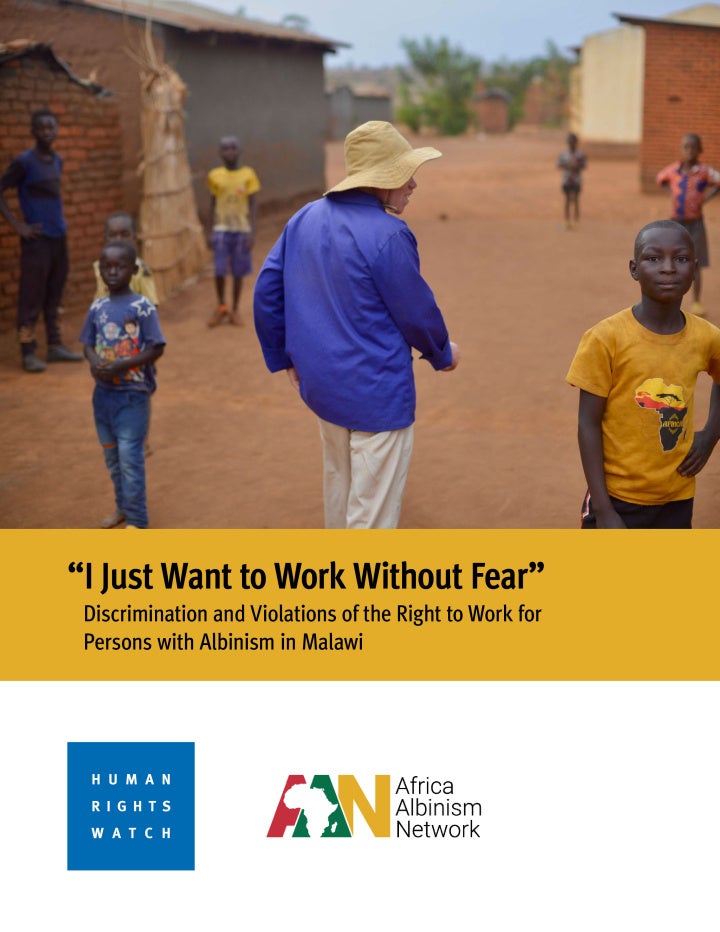
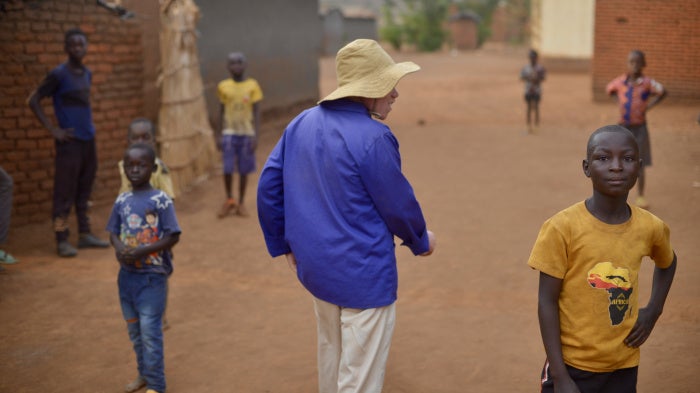
The 65-page report, “‘I Just Want to Work Without Fear’: Discrimination and Violations of the Right to Work for Persons with Albinism in Malawi,” documents how stigma, discrimination, fear of violence, and lack of reasonable accommodation undermine the rights of people with albinism to work, education, health and social security.
The 75-page report, “'We’ll Kill You If You Cry:' Sexual Violence in the Sierra Leone Conflict,” presents evidence of horrific abuses against women and girls in every region of the country by the rebel Revolutionary United Front (RUF), as well as other rebel, government and international peacekeeping forces.
Human Rights Abuse and Indonesia's Pulp and Paper Industry
Indonesian police and company security forces are responsible for persistent human rights abuses against indigenous communities involved in the massive pulp and paper industry in Sumatra, Human Rights Watch said in a new report released today. Abuses include land seizures without compensation and brutal attacks on local demonstrators.
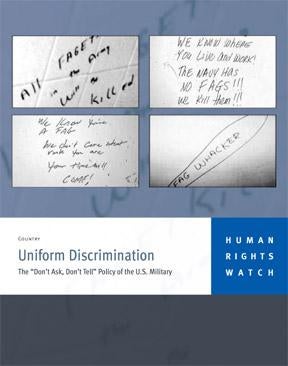
The “Don’t Ask, Don’t Tell” Policy of the U.S. Military
The U.S. military’s “Don’t Ask, Don’t Tell” policy of discharging gay and lesbian servicemembers who reveal their sexual orientation violates human rights and deprives the military of skilled personnel. Under “don’t ask, don’t tell,” any servicemember who acknowledges his or her homosexuality by word or deed is discharged.
State-Sponsored Homophobia and Its Consequences in Southern Africa
In this report, Human Rights Watch and the International Gay and Lesbian Human Rights Commission (IGLHRC) document and analyze the impact of state-sponsored homophobia in Zimbabwe, Namibia, Zambia, and Botswana.
Indonesia's Sham Prosecutions, the Need to Strengthen the Trial Process in East Timor, and the Imperative of U.N. Action
The world watched in horror in September 1999 when the Indonesian National Army (TNI) and Timorese militias went on a campaign of murder, arson, and forced expulsion after the people of East Timor voted for independence in a United Nations administered referendum.
This policy paper discusses: the need for justice; principles that should be met regarding any future form of justice to redress the most serious crimes committed by the Iraqi authorities; justice mechanisms that best further those principles; complementary measures to promote justice and accountability in Iraq; and other considerations relevant to justice and accountability.
Repression of Women and Girls in Western Afghanistan
Afghan women and girls have suffered mounting abuses, harassment and restrictions of their fundamental human rights during 2002, Human Rights Watch said in a new report.
This backgrounder was prepared for EU officials to assist them in identifying benchmarks for seeking improvements in the human rights situation in Iran. Human Rights Watch called on the participants in the EU-Iran human rights conference to incorporate these important recommendations in the dialogue.
Many refugees who come uninvited to Australia are compelled to do so because they cannot find effective protection anywhere else, Human Rights Watch said in a new report released to mark International Human Rights Day.
The briefing paper outlines a number of areas in which the Afghan government and international actors have missed opportunities to improve security and protect human rights. Human Rights Watch makes several recommendations to international and Afghan actors to help realize key provisions in the agreement.
Four Years Of Communal Violence In Central Sulawesi
The violence plaguing Central Sulawesi today is a direct result of the Indonesian government's failure to punish the perpetrators of major attacks and protect communities in the province since 1998, Human Rights Watch said in a new report released today.
The visit of U.S. Secretary of State Colin Powell to Colombia on December 3 and 4 marks an important opportunity to advance human rights and the rule of law in that country.
Against a backdrop of start-and-stop negotiations to end the civil war in Burundi, both rebels and the government army have stepped up military activities, killing civilians and raising the risk of widespread slaughter on an ethnic basis. The rebel forces are largely Hutu, as is the majority of the population.