The Inhumane Effects of White Phosphorus Munitions and the Need for Stronger Law
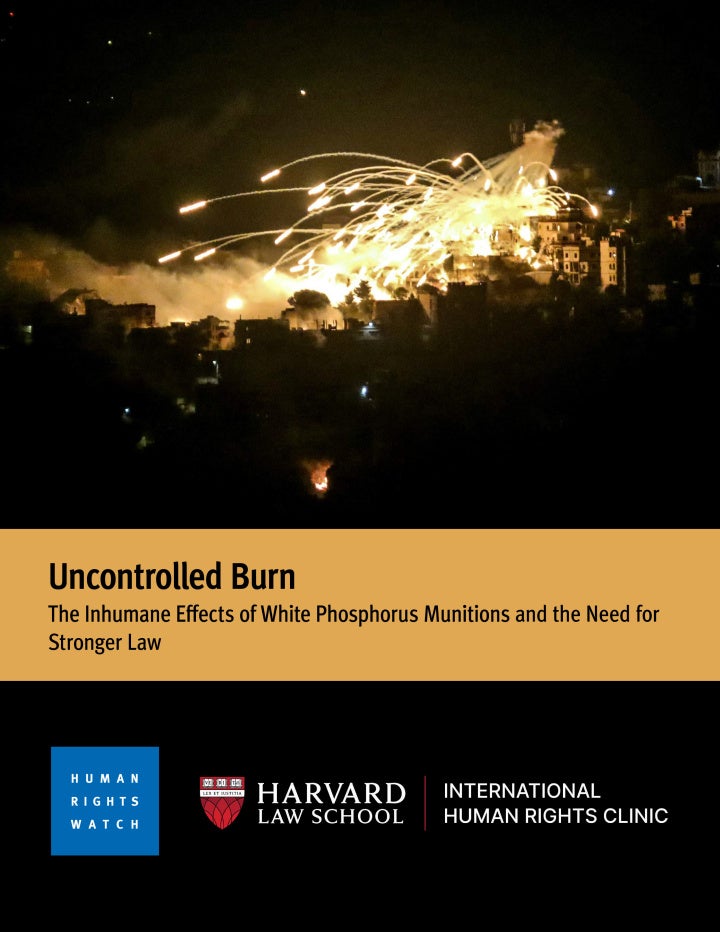
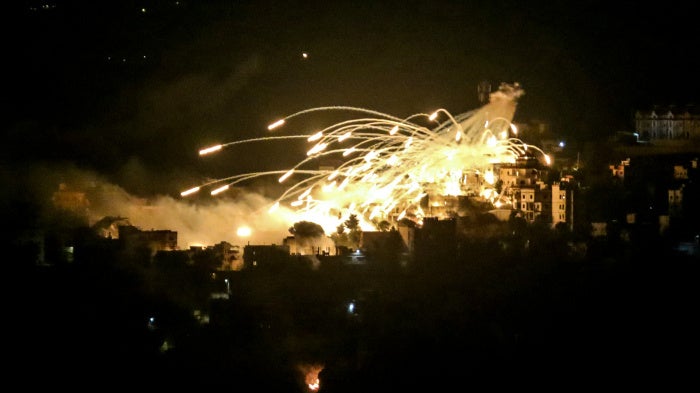
The 45-page report, “Uncontrolled Burn: The Inhumane Effects of White Phosphorus Munitions and the Need for Stronger Law,” documents 23 verified incidents of Israeli use in southern Lebanon between March and May 2026. The report also details the horrific harm the munitions have caused in armed conflicts in recent years. White phosphorus munitions, which produce fire when their payload is exposed to oxygen, are not currently regulated by a specific treaty.
In the aftermath of President Soeharto's resignation in May 1998, political tension in Irian Jaya, Indonesia's easternmost province, has increased. The province, called West Papua by supporters of independence, occupies the western half of the island of New Guinea.
How Victims Can Pursue Human Rights Criminals Abroad
On the night of October 16, 1998, London police arrested Gen. Augusto Pinochet. They were acting on a Spanish warrant charging the former dictator with human rights crimes committed in Chile during his seventeen-year rule. The British courts rejected Pinochet's claim that he was entitled to immunity and ruled that he could be extradited to Spain to stand trial.
On August 8, 1998, Taliban militia forces captured the city of Mazar-i Sharif in northwest Afghanistan, the only major city controlled by the United Front, the coalition of forces opposed to the Taliban. The fall of Mazar was part of a successful offensive that gave the Taliban control of almost every major city and important significant territory in northern and central Afghanistan.
Freedom of Expression and the Public Debate in Chile
Since the 1980s, the term “transition to democracy” has been used to describe those processes of political change that aim toleave behind a dictatorial past, a situation of internal armed conflict or another type of radical breakdown of the political orderor absence of the rule of law, and to advance toward the foundation or reconstruction of a democratic system.
Former Deputy Prime Minister Anwar Ibrahim was arrested on September 20 under the Internal Security Act, a law that Human Rights Watch believes to be a violation of basic human rights. Since his sacking on September 2, many of his supporters have also been arrested. The background to the case follows.
In light of the Federal Republic of Yugoslavia's (FRY) poor record of cooperation with the international community, Human Rights Watch is concerned that the OSCE Kosovo Verification Mission, established to monitor compliance with Security Council Resolutions 1160 and 1199, may face serious incidents of non-compliance and obstruction of its work.
At almost no time since Burmese asylum seekers started arriving on Thai soil in 1984 has the need for protection of this group been greater. Human rights violations inside Burma continue almost a decade after the State Law and Order Restoration Council (SLORC) seized power in Burma in September 1988
This report documents serious breaches of international humanitarian law, the rules of war, committed in Kosovo from February to early September 1998. The vast majority of these abuses were committed by Yugoslav government forces of the Serbian special police (MUP) and the Yugoslav Army (VJ).
The Impact of Felony Disenfranchisement Laws in the United States
The expansion of suffrage to all sectors of the population is one of the United States' most important political triumphs. Today, all mentally competent adults have the right to vote with only one exception: convicted criminal offenders .The racial impact of disenfranchisement laws is particularly egregious.
Violations of international humanitarian law -- the laws of war -- are not abstract concepts in Colombia, but the grim material of everyday life. War bursts into the daily activities of a farm, a village, a public bus, or a school with the speed of armed fighters arriving down a path or in four-wheel drive vehicles. Sometimes, armed men carefully choose their victims from lists.
Malaysia's Internal Security Act provides for preventive detention for up to two years with the possibility of renewal every two years. Any police officer may, without a warrant, arrest and detain anyone he has "reason to believe" has acted or likely to act in "any manner prejudicial to the security of Malaysia."
President Mohammed Khatami of Iran is scheduled to visit the United Nations next week. On the occasion of this newsworthy trip, Human Rights Watch has prepared the following backgrounder on the domestic situation in Iran. We also attach a recent press release on the Shi'a minority in Afghanistan, which may draw Iran into armed conflict outside its borders.
Sudan, once promoted as the bridge between the Arab and African worlds, is distinguished by human rights abuses arising from the government's determination to create an Arab Islamic state.
Reports that ethnic Chinese women were raped during riots in Jakarta in mid-May have generated an outpouring of rage from around the world and a furious debate inside Indonesia. Legislators in Taiwan and Hong Kong have threatened cut-offs of aid and expulsions of Indonesian migrant workers.
Retaliation Against Women in Michigan State Prisons
This report documents how women inmates who have been raped by guards in Michigan prisons are suffering retaliation from their attackers."In Michigan, a woman risks being sexually assaulted if she's imprisoned, and being terrorized by guards if she dares report the assault," said Regan Ralph, executive director of theWomen's Rights Division of Human Rights Watch.