Arakan Army Massacre of Rohingya Muslims in Hoyyar Siri, Myanmar
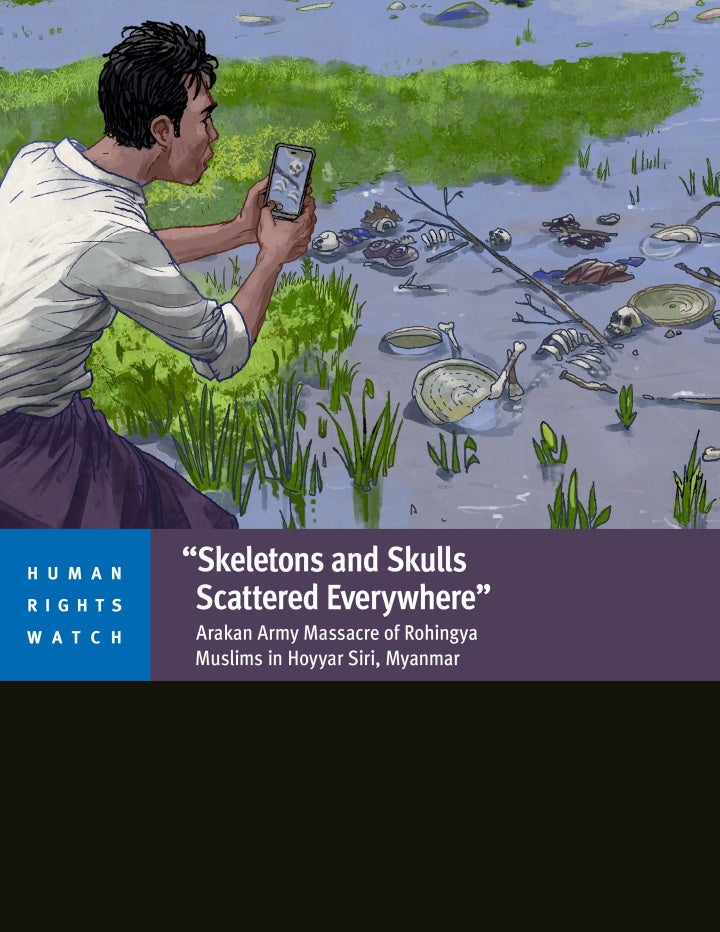
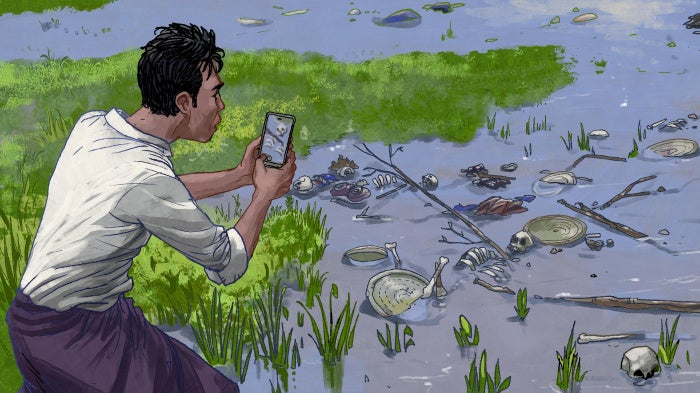
The 56-page report, “‘Skeletons and Skulls Scattered Everywhere’: Arakan Army Massacre of Rohingya Muslims in Hoyyar Siri, Myanmar,” documents the May 2, 2024 attack, in which Arakan Army fighters deliberately fired on unarmed villagers who were seeking safety after the armed group advanced on two Myanmar military bases in the vicinity. Details of the massacre only began emerging more than a year later, after some survivors fled to Bangladesh and Malaysia.
Abuse of Undocumented Migrants, Asylum Seekers, and Refugees in South Africa
Unpunished attacks on foreigners in South Africa are disturbingly common; and foreigners are regularly victimized by the South African police,the army, and by guards at detention facilities. Detention conditions for migrants awaiting deportation are substandard and overcrowded. South Africa's treatment of refugees is also troubling, and fails to conform with international standards.
The Clinton administration deserves commendation for its recent efforts to develop a fresh approach toward Africa. The continent is finally receiving high-level attention from the U.S. government, including a trip by Secretary of State Albright in December 1997 and a historic visit from President Clinton in 1998. The emphasis of the administration's new Africa policy is on trade and security.
The collapse of the Asian economy has given rise to massive layoffs of workers and wage and benefit cuts, not only in those countries worst affected by the economic crisis, but region-wide.
Background Information Regarding Visit of Prime Minister Milorad Dodik, February 18-20, 1998
Human Rights Watch has issued an open letter to Republika Srpska Prime Minister Milorad Dodik on his first official visit to the United States. He has come to Washington to discuss the terms of international financial assistance to the Republika Srpska (RS), one of the two entities of the Republic of Bosnia and Hercegovina.
Among the many human rights tragedies in Algeria has been the "disappearance" of more than one thousand men and women since 1992, following their arrest by government forces. As with many acts of violence in Algeria, authorship of some cases of "disappearances" has been difficult to confirm.
This report examines barriers to academic freedom and the exercise ofbasic rights erected during the thirty-two year authoritarian rule of PresidentSoeharto in Indonesia. As this report was being prepared, Indonesia was undergoing what appeared to be a momentous transition, spurred on by students and faculty, toward a more democratic society.
Today in Romania, gays and lesbians are routinely denied some of the most basic human rights guaranteed by international law. Despiteamendments in 1996 to the criminal code provisions relating to homosexual conduct, gays and lesbians continue to be arrested and convictedfor such relations if they become public knowledge.
The human rights situation in Bahrain showed no improvement in 1997 and in some respects worsened. Street protests and clashes betweensecurity forces and demonstrators calling for political reform, which had first erupted in December 1994, continued throughout the year,intensifying in June 1997.
With the legacy of the Derg behind it, the EPRDF proclaimed, as it instituted a four-year transitional period (1991-1995), its commitment to democratization and respect for the rule of law and pledged to establish human rights in the country. The transitional legislature ratified the major international human rights treaties.
Transition and Human Rights Violations in the Congo
Upon taking office in late May 1997, President Laurent Kabila promised a transitional agenda that would lead to legislative and presidential elections in two years.
In March 1995, Human Rights Watch released Neither Jobs Nor Justice, a report documenting widespread employment discrimination on the basis of sex that was practiced, condoned, and tolerated by the Russian government.
In the past few years, the human rights panorama in Peru has brightened considerably because of the decline in the massive "disappearances" and extrajudicial executions that has accompanied reduced political violence. Despite this positive trend, however, serious human rights violations continue, chief among them the use of torture.
The Indonesian government made a series of serious missteps leading to human rights violations in its handling of one of the worst outbreaks of ethnic conflict the country has seen in decades, according to a new report, Communal Violence in West Kalimantan.
In its bid to monopolize power, the government of the Congo severely cracked down on those political parties with any credible claim of popularity and national presence. Police and a plethora of security agencies attacked their meetings, public and private, and arrested their supporters and often subjected them to torture and ill-treatment.