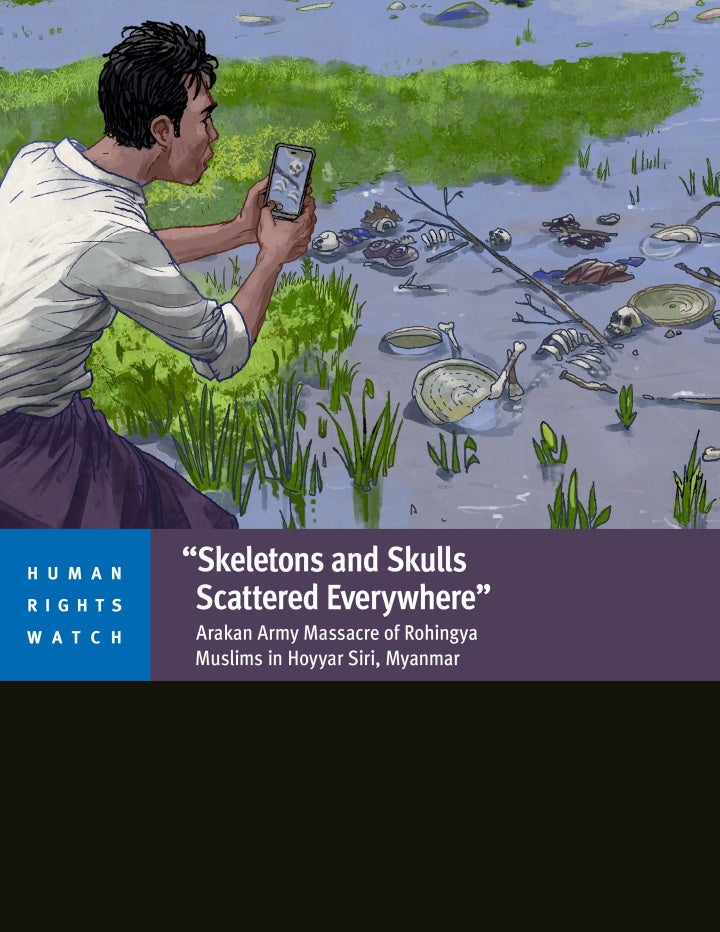
Arakan Army Massacre of Rohingya Muslims in Hoyyar Siri, Myanmar
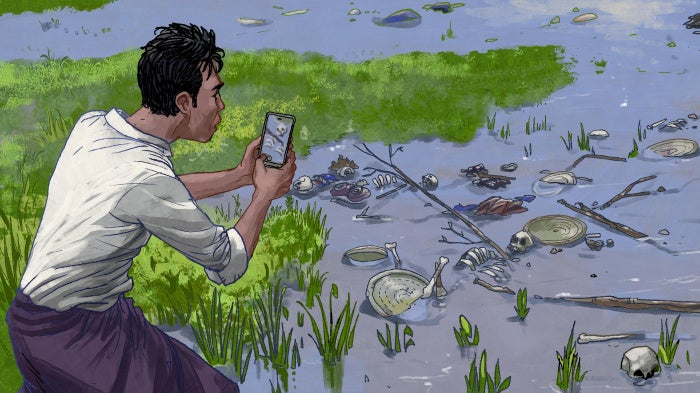
The 56-page report, “‘Skeletons and Skulls Scattered Everywhere’: Arakan Army Massacre of Rohingya Muslims in Hoyyar Siri, Myanmar,” documents the May 2, 2024 attack, in which Arakan Army fighters deliberately fired on unarmed villagers who were seeking safety after the armed group advanced on two Myanmar military bases in the vicinity. Details of the massacre only began emerging more than a year later, after some survivors fled to Bangladesh and Malaysia.
In the early morning of May 14, 1999, in the midst of NATO's air campaign against Yugoslavia, Serbian security forces descended on the small village of Cuška--Qyshk in Albanian--near the western Kosovo city of Pec (Pejë). Fearing reprisals, many men fled into the nearby hills while the rest of the population was forcibly assembled in the village center.
In the wake of the military takeover in Pakistan, Human Rights Watch released this major report on the state of women's rights in the country. The 100-page report, Crime or Custom?
Schools and universities throughout Uzbekistan are closing their doors to Muslim men with beards and women in headscarves. n a new report about Uzbekistan, Human Rights Watch documents a pernicious form of religious discrimination practiced by the government against Muslims.
As Chile prepares for presidential elections in December 1999, the Pinochet arrest has prompted debate about the human rights legacy of the military. The crisis has also highlighted the undemocratic aspects of the constitution which Chile inherited from Pinochet. In this report, Human Rights Watch describes encouraging developments in Chilean courts during the year since Pinochet's arrest.
In a new report released ahead of this week's parliamentary elections in Kazakhstan, Human Rights Watch charged that the government was repeating the manipulation used in the January election of President Nazarbaev. These tactics, which include the banning of opposition candidates and censoring the media will taint the polls for the lower house of parliament, to be elected on October 10.
The Indian government has failed to prevent increasing violence against Christians and is exploiting communal tensions for political ends, Human Rights Watch charged in a report released today.
The Movement System and Political Repression in Uganda
Government harassment and discriminatory legislation are suppressing independent political activity in Uganda, Human Rights Watch charged in a report released today.
Angola returned to all-out war in December 1998, the fourth period of open warfare in living memory. The human cost since fighting resumed is impossible to determine with precision, but the United Nations estimates that nearly one million people have become internally displaced persons because of the renewed conflict, 10 percent of Angola's population.
For most Kenyan children, violence is a regular part of the school experience. Teachers use caning, slapping, and whipping to maintain classroom discipline and to punish children for poor academic performance. The infliction of corporal punishment is routine, arbitrary, and often brutal.
This report profiles five Tibetans living in exile in Dharamsala, India. All are in their late twenties or thirties, and all are originally from the areas known to Tibetan nationalists as Amdo and Kham. Today almost all of this territory lies in what Tibetans call "eastern Tibet" and Chinese call the Tibetan regions of Sichuan, Gansu, Qinghai, and Yunnan provinces. Their stories show a common pattern: all had unusual access to education; all became involved in political activities through discussions at state schools or academies; all were arrested and detained by Chinese security forces for possession or circulation of published materials about the Dalai Lama or Tibetan independence; and some were tortured. The men's stories are similar to many others we heard in Dharamsala, and while we do not claim that five cases are illustrative of a broader pattern of repression, their accounts suggest that peaceful political activity in Tibetan areas outside the Tibetan Autonomous Region (T.A.R.) and its capital, Lhasa, is no more acceptable to authorities than it is in the T.A.R.
Between January 1998 and February 1999, the Indian Parliament reported a total of 116 incidents of attacks on Christians across the country. Unofficial figures may be higher. Gujarat topped the list of states with ninety-four such incidents.
The twenty-four year conflict in East Timor may be nearing the end game with voters there choosing on August 30 between autonomy under Indonesian sovereignty and independence. But a potentially much more dangerous conflict is spiraling out of control in Aceh, the resource-rich region on the northern tip of Sumatra.
This report documents how ethnic Serbs and Roma (Gypsies) face fear, uncertainty, and violence in Kosovo. According to the United Nations High Commissioner for Refugees (UNHCR), more than 164,000 Serbs have left Kosovo during the seven weeks since Yugoslav and Serb forces withdrew and the NATO-led Kosovo Force (KFOR) entered the province.
Azerbaijani security forces regularly torture those in custody, and get away with it, according to a this report. The international monitoring group charged that Azerbaijan has failed to enact legal reforms and that corruption is rampant in the criminal justice system.