US Civil Rights Enforcement Under the Trump Administration
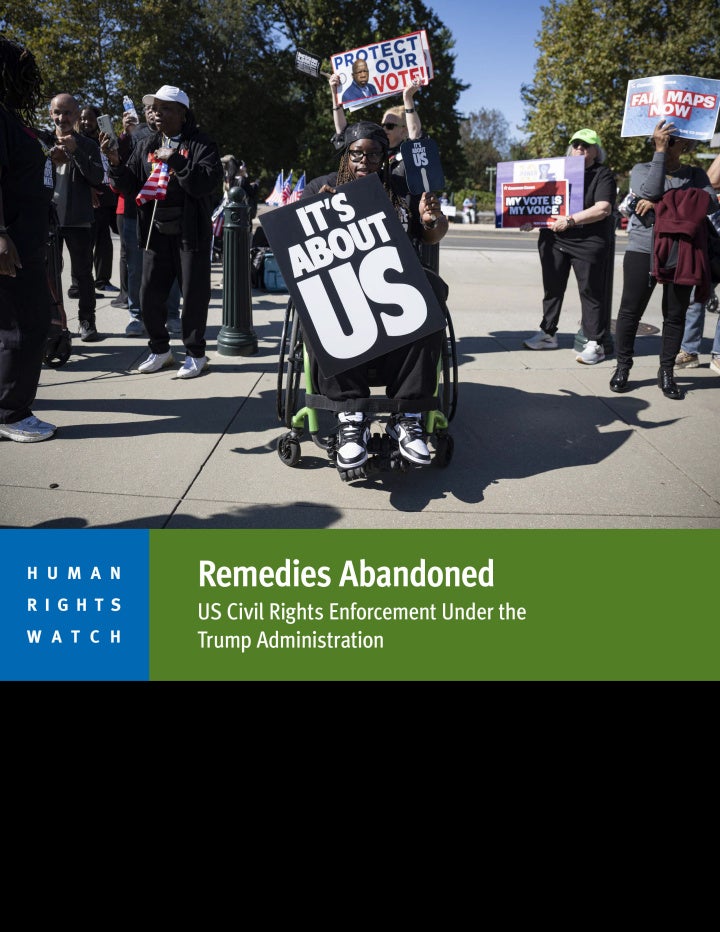
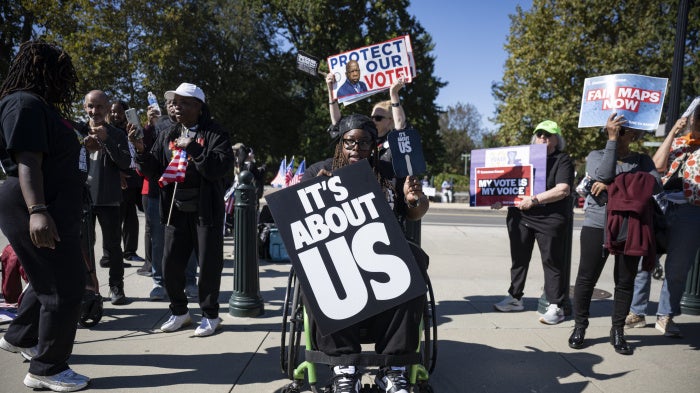
The 112-page report, “Remedies Abandoned: US Civil Rights Enforcement Under the Trump Administration,” documents the administration’s efforts to unravel the work of four key agencies between January 2025 and the spring of 2026: the Justice Department’s Civil Rights Division, which lost about 75 percent of its attorneys; the Education Department’s Office of Civil Rights, which moved to lay off nearly half its staff in one day and closed 7 of its 12 regional offices; the Housing and Urban Development Department’s Fair Housing Office, which shrank dramatically; and the Equal Employment Opportunity Commission, which reached its lowest staffing levels in over 40 years.
Ongoing Impunity for Police Beatings, Rape, and Torture in Papua New Guinea
This 50-page report is a follow-up to Human Rights Watch’s 2005 report on police violence against children. The report tracks developments in 2005 and 2006, and determines that abusive police officials rarely face punishment. Police violence against children remains rampant in Papua New Guinea, despite recent juvenile justice reform efforts.
Abuses with Impunity at the National Intelligence Service in Burundi
This 33-page report, “‘We flee when we see them’: Abuses with Impunity by the Burundi National Intelligence Service,” documents five incidents of extrajudicial executions, as well as instances of torture and arbitrary detention. Some detainees were beaten with batons until they lost consciousness.
This briefing paper documents how the government barred at least 12 students from university registration this past year, despite the fact that graduate programs had accepted them on the basis of successful competitive entrance examinations.
European Union efforts to shift responsibility for migration to countries beyond EU borders threaten the human rights of migrants, asylum seekers, and refugees. Current EU migration polices are largely focused on keeping migrants and asylum seekers outside EU borders.
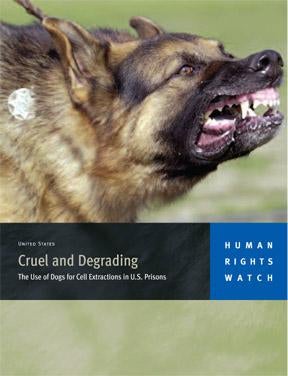
The Use of Dogs for Cell Extractions in U.S. Prisons
This 20-page report publicly reveals this practice for the first time. It also shows that the practice is not only cruel, but wholly unnecessary as there are safer, more humane alternatives that corrections officers can use – and most across the country do use – to remove prisoners from their cells.
An Analysis of the Uzbek Government’s June 30, 2006 Aide-Memoire
In this 16-page briefing paper, Human Rights Watch analyzes an Uzbek government memorandum from June 2006, which was prepared in response to a December 2005 UN General Assembly resolution that was critical of Uzbekistan’s human rights record.
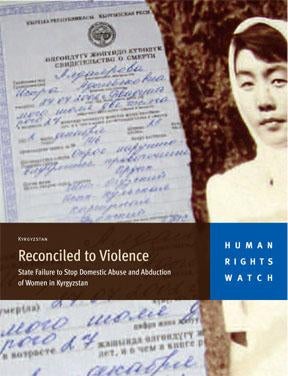
State Failure to Stop Domestic Abuse and Abduction of Women in Kyrgyzstan
This 140-page report concludes that although Kyrgyzstan has progressive laws on violence against women, police and other authorities fail to implement them. As a result, women remain in danger and without access to justice.
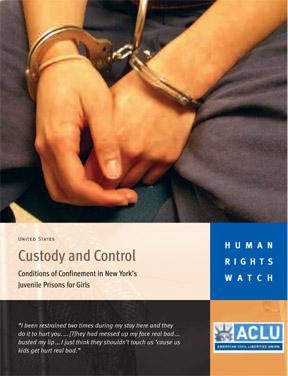
Conditions of Confinement in New York’s Juvenile Prisons for Girls
This 136-page report provides an in-depth look at the abuses and neglect suffered by girls confined in two remote New York State juvenile facilities known as Tryon and Lansing. The facilities are operated by the New York Office of Children and Family Services (OCFS) and are the only two higher-security facilities in New York State holding girls.
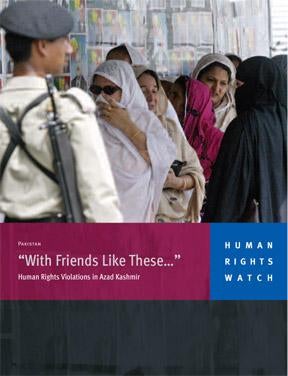
This 71-page report, based on research in Azad Kashmir, uncovers abuses by the Pakistani military, intelligence services and militant organizations. In Azad Kashmir, a region largely closed to international scrutiny until a devastating earthquake hit in 2005, the Pakistani government represses democratic freedoms, muzzles the press and practices routine torture.
This 58-page briefing paper makes 34 recommendations to the Sri Lankan government and the Liberation Tigers of Tamil Eelam (LTTE), known as the Tamil Tigers, to better protect civilians. Human Rights Watch urges the government and the LTTE to accept a United Nations human rights monitoring mission in Sri Lanka and adopt specific measures to protect the civilian population.
The General Intelligence Department and Jordan’s Rule of Law Problem
This 66-page report documents the arbitrary arrest and abusive treatment of detainees held at the General Intelligence Department’s (GID) central detention facility in Amman. The report finds that there is no clear basis in Jordanian law for the GID’s law enforcement role, and that detainees cannot seek an independent judicial review of the grounds for arrest and continued detention.
New Approaches to Addressing Human Rights Situations
The new Human Rights Council (“HRC” or “Council”) was created in order to strengthen protection for the victims of human rights violations worldwide. The Council’s ability to succeed in that mission will depend on the development of a more effective approach to consideration of human rights situations in particular countries.
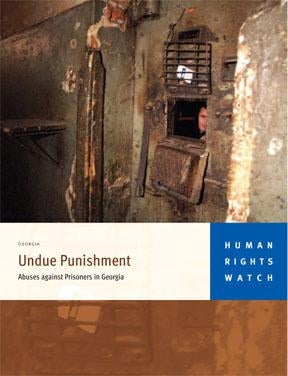
This 101-page report documents the conditions in which the majority of the country’s 13,000 prisoners are being held. In many facilities, prisoners live in severely overcrowded, filthy and poorly-ventilated cells. In the last two years, the prison population has nearly doubled due to the routine use of pretrial detention, even for nonviolent offences.