US Civil Rights Enforcement Under the Trump Administration
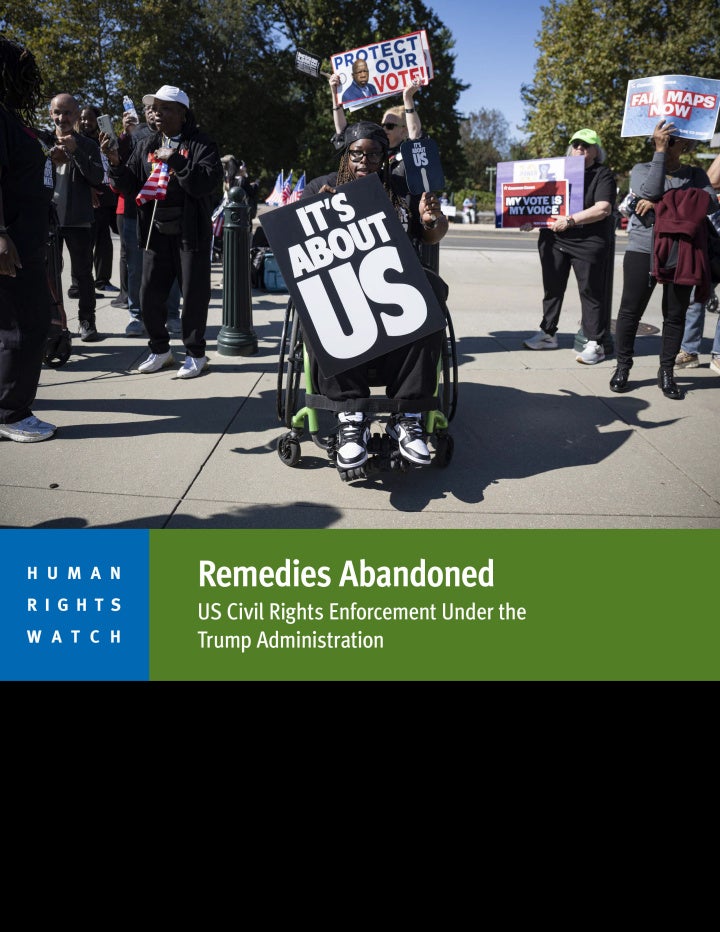
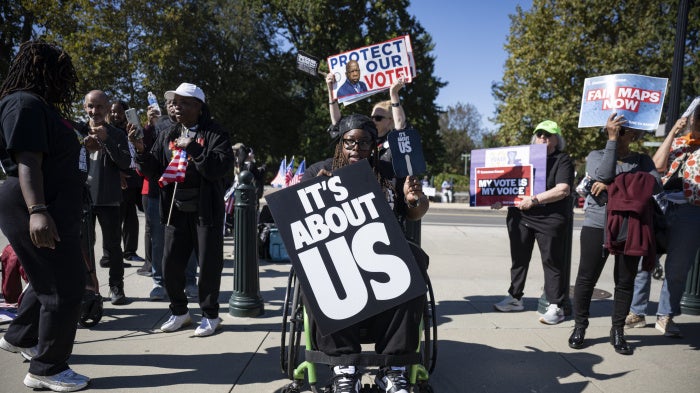
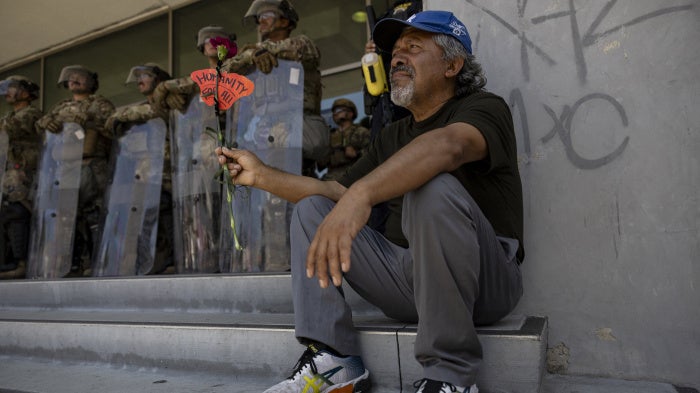
The 112-page report, “Remedies Abandoned: US Civil Rights Enforcement Under the Trump Administration,” documents the administration’s efforts to unravel the work of four key agencies between January 2025 and the spring of 2026: the Justice Department’s Civil Rights Division, which lost about 75 percent of its attorneys; the Education Department’s Office of Civil Rights, which moved to lay off nearly half its staff in one day and closed 7 of its 12 regional offices; the Housing and Urban Development Department’s Fair Housing Office, which shrank dramatically; and the Equal Employment Opportunity Commission, which reached its lowest staffing levels in over 40 years.
President Clinton's policy of disregarding fundamental human rights issues to resolve Haiti's political crisis, combined with his inhumane and illegal practice of summarily returning Haitian refugees, has contributed to a human rights disaster that has tarnished his presidency and discredited its stated commitment to democracy and human rights around the world.
While paramilitary groups carry out punishment shootings and beatings, the government is responsible for the failure to ensure that police officers and soldiers are held accountable for the use of lethal force, unfair trials, and ill-treatment in detention, among other violations.
Kosovo is a police state. Police raids on homes and marketplaces occur daily and Serbian authorities have stepped up a drive to push Albanians out of Serbian-populated areas. Heavily armed Serbian police, paramilitary troops and regular army forces spread their terror.
Physician Participation in Executions in the United States
This report documents that physicians continue to be involved in executions, in violation of ethical and professional codes of conduct. This involvement is often mandated by state law and specified in departmental regulations about execution procedures.
Human Rights on the Eve of the March 1994 Elections
As El Salvador winds up the campaign for presidential, legislative, and municipal elections scheduled for March 20, 1994, no issue represents a greater threat to the peace process than the rise in political murders of leaders and grassroots activists belonging to the Farabundo Martí National Liberation Front (FMLN).
Researched and written prior to the 1994 elections in South Africa, this report describes how the former South African government failed to fulfill its obligations to protect its citizens from violence and guarantee the exercise of their political rights in two homelands.
In spite of the peace accord signed in October 1992 between government forces and RENAMO rebels, innocent civilians are maimed and killed by landmines in Mozambique on a daily basis.
Violations of Human Rights and Humanitarian Law during the Armed Revolt in Chiapas, Mexico
This report examines the underlying causes of the New Year’s Rebellion, the Mexican government’s two-phase response, and the most serious human rights and humanitarian law violations that occurred to date during the conflict.
While visiting over twenty prisons as well as lockups in at least five different cities throughout South Africa, we found significant improvements had been made since the political climate began to change in 1990.
On January 3, 1994, a massacre in a Venezuelan prison left more than one hundred inmates dead and scores injured. While security personnel stood by, a group of prisoners set fire to a prison building, then shot and stabbed prisoners who tried to escape the inferno.
In two separate shipments in May 1992 and August 1993, eighteen tons of official Iraqi state documents captured by Kurdish parties in the 1991 uprising arrived in the U.S. for safekeeping and analysis. Our team has conducted research on these documents and catalogued a large percentage.
On February 22, 1993, the U.N. Security Council promised to create an international tribunal to try accused war criminals in the former Yugoslavia, but a year later the tribunal appeared to be part of a pattern of empty threats and broken promises.
This report provides an update on the human rights situation in Cuba. Again this last year, Human Rights Watch/Americas (formerly Americas Watch) has been handicapped in monitoring Cuba because of the regime's refusal to allow us to visit the country, to conduct inquiries and talk to victims, and to engage in a dialogue with the authorities.
A campaign to curb pornography has backfired dangerously in Canada, leading not toward its ostensible goal of gender equality, but to a weakening of fundamental liberties for women and gay men. The cornerstone of this campaign is R. v. Butler, an anti-pornography decision issued by the Canadian Supreme Court in 1992 that sets forth a litmus test for determining obscenity and has been used to prosecute a lesbian magazine, to destroy books intended for gay consumers, and to confiscate an array of political and erotic works.
Police and Death Squad Homicides of Adolescents in Brazil
Despite the considerable attention that has been brought to homicides of adolescents, impunity for those responsible for these abuses has in most respects, continued to prevail.