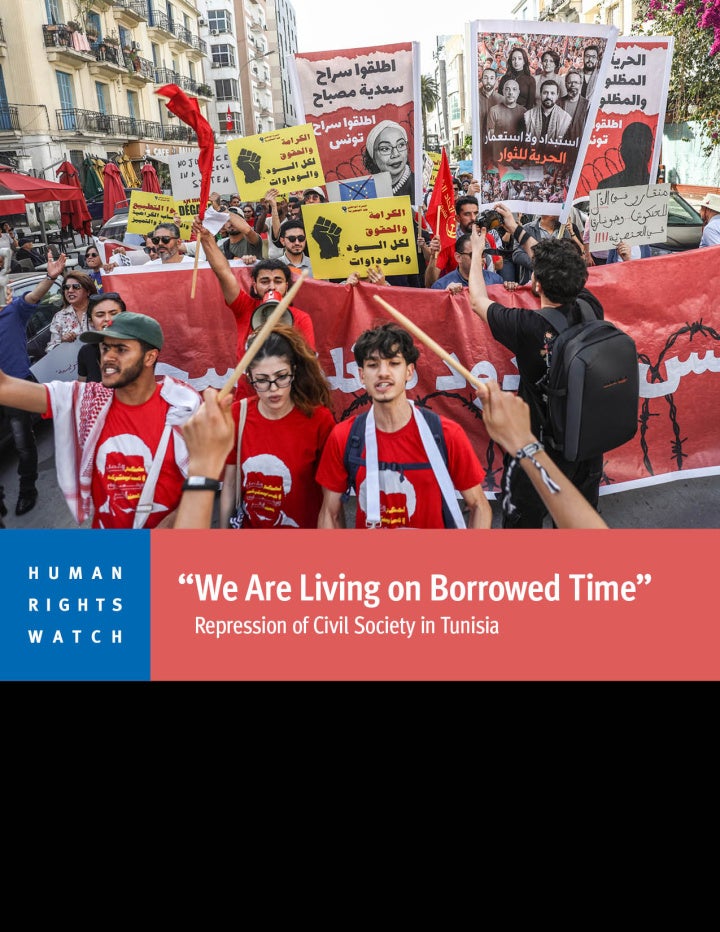
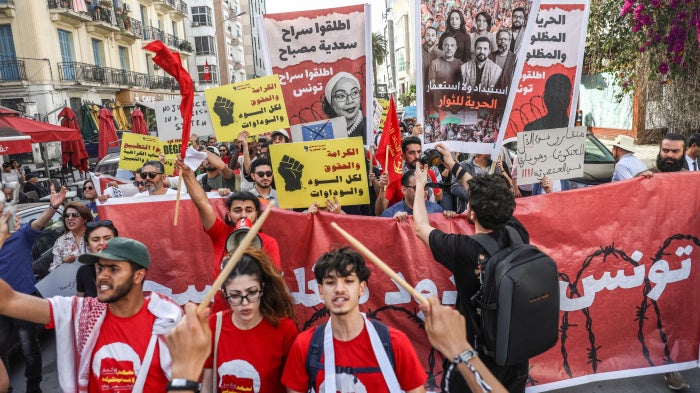
The 49-page report, “‘We Are Living on Borrowed Time’: Repression of Civil Society in Tunisia” documents the Tunisian authorities’ escalating repression of local and international civil society groups, workers, members, and affiliates through the weaponization of abusive prosecutions, arbitrary arrests, detention, financial and criminal investigations, mass suspensions, and threats of dissolution.
On September 20, 1993, 3 Roma (Gypsy) men were killed by a mob in the village of Hadareni following the stabbing death of an ethnic Romanian. During the violence, 13 Roma houses were set on fire and destroyed and an additional 4 houses were seriously damaged.
Many of the 18 countries comprising the Asia-Pacific Economic Cooperation (APEC) group came to the 1994 summit in Jakarta with impressive economic growth rates and poor human rights records. The Asia-Pacific region has generated a debate about the relationship between economic development and human rights.
Revisited Threats to Freedom of Expression Continue in Miami’s Cuban Exile Community
In 1992, we released a report (see B407) documenting instances of harassment and intimidation against members of the Miami Cuban exile community who expressed moderate political views regarding the government of Fidel Castro or relations with Cuba. In addition to intimidation by private actors, the report found significant responsibility by the U.S. government at all levels.
The Egyptian Constitution proclaims Islam the state religion, but also guarantees to all citizens freedom of belief and freedom to practice religious rites.
Child Soldiers and Unaccompanied Boys in Southern Sudan
This report focuses on the use of child soldiers by the rebel Sudan People’s Liberation Army. The government’s ill treatment of children is described in another report (see 1290). The use of child soldiers bodes ill for the future of the country. Boys as young as 11 have been recruited to fight in Sudan’s civil war.
In early August 1994, hundreds of Cubans began leaving their country by boat, heading north toward the United States ninety miles away. Initially, the drama of these perilous journeys was localized, and the influx was treated as just a South Florida news story. The flow of Cubans had rapidly become an exodus, and their story of danger and desperation an international news event. For the U.S.
In this report, we called upon the government of Tajikistan to release all individuals imprisoned or detained for the peaceful expression of political views, and to provide new and fair trials to those convicted of a crime in the absence of internationally guaranteed rights to due process.
During 70 days of conventional warfare between government forces and the separatist southern army, the government army won a military victory over the rebels. This report highlights our concerns regarding both sides as they resorted to unlawful tactics during the conflict.
In its 19th session, held on July 20-21, 1994, the Supreme Soviet of the Republic of Tajikistan voted to hold presidential elections and a constitutional referendum on September 25, 1994. We support the transition to a democratic government in Tajikistan, but believed at the time that conditions in Tajikistan did not permit free and democratic elections
August 1994 marked the tenth anniversary of the bloody conflict in largely Kurdish southeast Turkey between the Turkish government and the separatist Kurdistan Worker’s Party guerrilla movement. What began in 1984 with isolated PKK attacks in rural southeastern Turkey has grown into a conflict that has consumed an estimated 13,000 lives, with over half the losses coming in the past year or so.
Sarajevo, the capital of Bosnia-Hercegovina, has become a stark symbol of both the strengths and the depravities of human nature. The dignity and resourcefulness of Sarajevans who have survived a siege of more than 900 days stands in bold contrast to the atrocities that have been committed in the savage war against civilians that continues, unending, in Bosnia-Hercegovina.
The Work of the Tripartite Commission in Nicaragua
Since the inauguration of Pres. Chamorro in 1990, Nicaragua has been the scene of significant political turmoil and political violence, including violent strikes, destruction of property, politically- inspired kidnappings and the assassination of political figures. Police investigations were marked by irregularities and no suspects have been identified or detained.
Human Rights Abuses Rampant as Nigerian Military Declares Absolute Power
The military government of Gen. Abacha, in a bid to destroy the pro-democracy movement after using abusive and illegal means to break an oil workers’ strike for democracy, is steadily bringing the country closer to chaos and collapse.
Weeks before the opening of the Asia-Pacific Economic Cooperation summit in Jakarta on November 15,1994, the Indonesian government tightened controls on nongovernmental organizations (NGOs) and the press and took harsh anti-crime measures involving what appeared to be extrajudicial executions of suspected criminals.
Every day in Jamaica, children as young as ten years of age are locked in dark, overcrowded, filthy cells which they share with rodents and insects. Sometimes they are held with adults charged with serious crimes. While in the cells, the children are subjected to physical and mental abuse from police and other inmates and are often denied appropriate medical care if they are injured or ill.