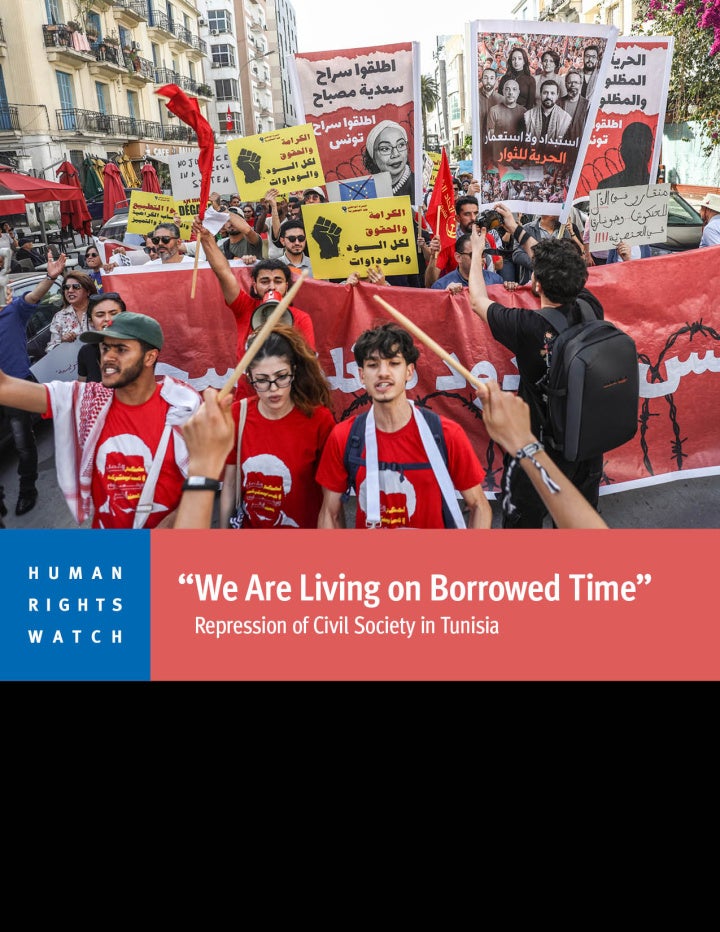
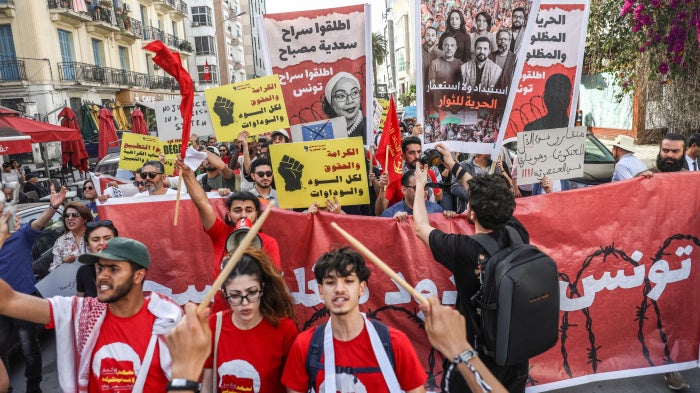
The 49-page report, “‘We Are Living on Borrowed Time’: Repression of Civil Society in Tunisia” documents the Tunisian authorities’ escalating repression of local and international civil society groups, workers, members, and affiliates through the weaponization of abusive prosecutions, arbitrary arrests, detention, financial and criminal investigations, mass suspensions, and threats of dissolution.
The fall of the town of Srebrenica to Bosnian Serb forces in July 1995 made a mockery of the international community's professed commitment to safeguard regions it declared to be “safe areas.” U.N.
The United Nations Operation in the Western Sahara
In 1988, both Morocco and the Polisario Front agreed to a United Nations Settlement Plan. After sixteen years of war, a cease-fire formally took effect in the Western Sahara in September 1991. In August 1995, Human Rights Watch conducted a fact-finding mission to Tindouf, Algeria and to Laayoune, the capital of the Western Sahara.
During the late 1980s, Morocco’s human rights record came under intense scrutiny by the international community. After decades of repression, the government took a series of steps that were critical in creating a climate of greater freedom in Morocco. This wave of changes would make human rights rhetoric a permanent part of the national language and forever alter political realities in Morocco.
In the year after Pres. Aristide returned to Haiti, there was marked, concrete improvement in respect for human rights and the government launched institutional reforms that should bring lasting change. In this report, however, we note several cases of improper use of force and other problems with the interim and new national police forces.
While the Croatian government has taken steps to correct some of the abuses of human rights that had marked Croatia's first two years of independence, violations of civil and political rights by reason of ethnic identity and political dissent continue.
To facilitate its full integration into the world community—and thus the world economy—the Cuban government is trying to improve its human rights image.
In March and May 1995, the Human Rights Watch Children=s Rights Project conducted an investigation in Louisiana into the conditions in which children are confined in that state, examining the human rights aspects of their incarceration.We found that substantial numbers of children in the state training institutions are regularly physically abused by guards, are kept in isolation for long periods o
Letter from Human Rights Watch and the New Cambodian Press Law
Over the last year, the Royal Cambodian Government has waged a campaign to silence its critics, targeting independent newspapers and political figures for prosecution and harassment. On more than a dozen occasions, it has suspended, shut or confiscated newspapers or brought criminal complaints against journalists.
Russian society has been hit hard in recent years by destabilizing changes. An unprecedented wave of crime, population shifts, and crises related to economic transition raised the urgent need for a sense of control and for someone to blame. Increasingly, the scapegoat in both public perception and state policy is people of color.
The children of Sudan, north and south, have been denied their basic rights by all parties to the conflict, and by the government of Sudan even in areas such as Khartoum where there is no war. Many who are considered street children, mostly southerners and Nuba, are removed from their families without notice.
Kuwait practices a system of institutionalized discrimination against its residents known as Bedoons, longtime inhabitants who have been denied Kuwaiti citizenship and are now being rendered stateless.
This report is a culmination of five years of work gathering evidence of the epidemic levels of violence against women and rampant sex discrimination around the world.
Law and Dissent in the Socialist Republic of Vietnam
Vietnam has entered an era of rapid economic and social transformation, heralded by the opening of its economy, its entry into ASEAN and the resumption of diplomatic relations with the U.S. At the same time, the government and the Vietnam Communist Party have sought to maintain firm political control.
Report by Defense Lawyers Charges Inmates Were Deliberately Massacred
The Algerian government covered up how approximately 100 inmates died during thesuppression of an uprising at Serkadji prison in February 1995, the bloodiest incident during the first three years of civil strife in the country.