US Civil Rights Enforcement Under the Trump Administration
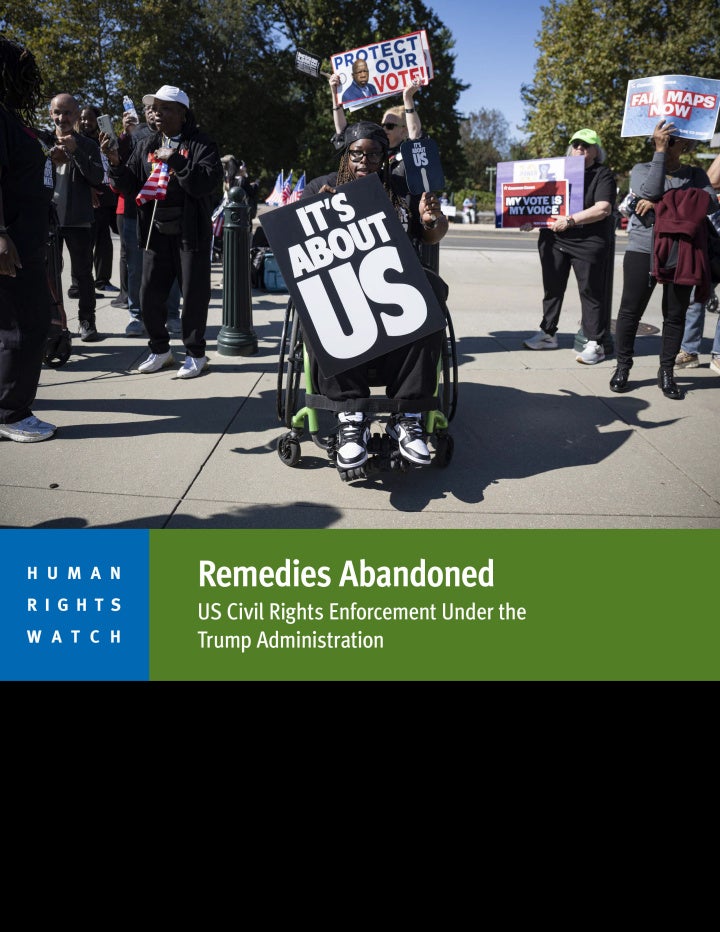
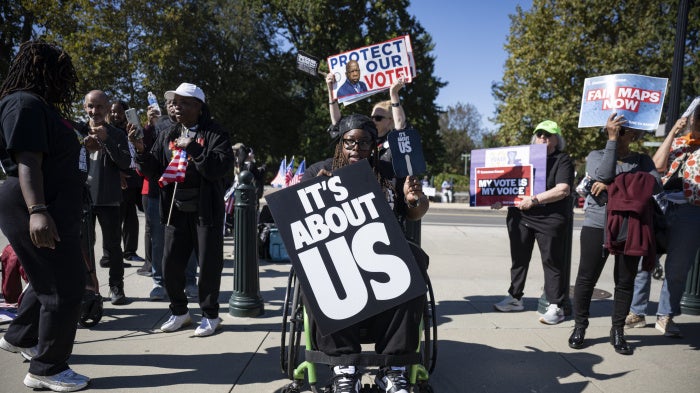
The 112-page report, “Remedies Abandoned: US Civil Rights Enforcement Under the Trump Administration,” documents the administration’s efforts to unravel the work of four key agencies between January 2025 and the spring of 2026: the Justice Department’s Civil Rights Division, which lost about 75 percent of its attorneys; the Education Department’s Office of Civil Rights, which moved to lay off nearly half its staff in one day and closed 7 of its 12 regional offices; the Housing and Urban Development Department’s Fair Housing Office, which shrank dramatically; and the Equal Employment Opportunity Commission, which reached its lowest staffing levels in over 40 years.
Laws of War Violations and the Use of Weapons on the Israel-Lebanon Border
For over a decade, a conflict has raged on the border of Israel and Lebanon, where Israel occupies a large section of Lebanese territory. Civilians have been the principal targets and victims in this conflict.
Despite the government of Uzbekistan's professed commitment to freedom of the press—made both explicitly and publicly over the past two years—state censorship of the media remains pervasive and intimidation of journalists is rampant. The tone and subject matter of articles published in Uzbekistan is strictly controlled by the government.
In late 1994, the authoritarian government of Uzbekistan, long stigmatized as a serious human rights abuser, showed the first signs that it desired to change its image.
As the 1997 parliamentary elections in Indonesia approach, the political atmosphere has begun to heat up and civil liberties are deteriorating. Since the first such election under the “New Order” government of President Soeharto in 1971, they have never been the “democratic festival” that the government would have both outsiders and its own citizens believe.
Since the National Islamic Front in Sudan took power following a military coup in 1989, it has created restrictions on daily life and political activity in an effort to maintain control. The Sudanese refer to these rules as the “red line,” and anyone who breaks the rules and crosses the line while expressing their political or civil independence is severely punished.
Three years after the deaths of more than 1,000 people in Bombay’s worst incident of communal violence since independence, the government of the Indian state of Maharashtra unexpectedly terminated the commission of inquiry that had been set up to investigate the riots.
In 1954 Turkey signed the 1953 European Convention for the Protection of Human Rights and Fundamental Freedoms. Since that time, Turkish citizens who believe that the state has violated their rights guaranteed under the Convention and who have not been able to find domestic legal redress can bring suit against their own government under Article 25.
On October 31, 1992, fighting erupted between Ingush militias and North Ossetian security forces and paramilitaries supported by the Russian Interior Ministry and Army troops in the Prigorodnyi region of North Ossetia, a republic located in the North Caucasus of the Russian Federation.
In December 1995, some 1,200 political prisoners in Syria were released pursuant to an amnesty marking the 25th anniversary of the rule of Pres. Asad. It was widely reported that most, if not all, of the released prisoners were members or supporters of the Muslim Brotherhood.
The publication of Death By Default on January 7, 1996 was followed by several weeks of intense coverage of the report by the international news media.
The Dayton accord offered the promise of a lasting peace because it incorporated both military enforcement and strong mechanisms to protect human rights and ensure accountability for past abuses, including the High Representative, the International Police Task Force, the OSCE's human rights and election monitoring mission, and the Office of the Ombudsperson.
For decades Albania was eastern Europe's most closed and repressive state. During his 40-year reign, former communist leader Enver Hoxha banned religion, forbade travel and outlawed private property. Any resistance to his rule was met with brutal retribution, including internal exile, long-term imprisonment or execution.
Human Rights and Parliamentary Elections in the Islamic Republic of Iran
Iranians voted on March 8, 1996, to elect 270 members of the parliament, or Majles, in an election process that severely limited citizen participation. Parliamentary elections could represent a real contest for power in Iran’s political system—but only if arbitrary bans on candidates and other constraints on political life are lifted.
Political repression in Tibet has increased sharply since 1994, and there are now more political prisoners in custody there than at any time since 1990.