US Civil Rights Enforcement Under the Trump Administration
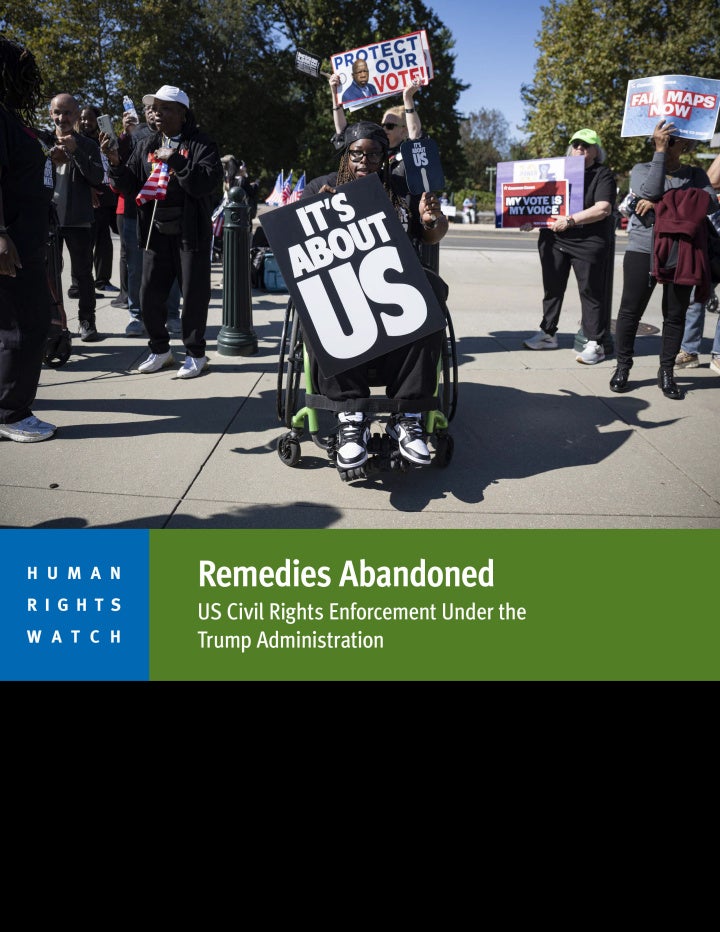
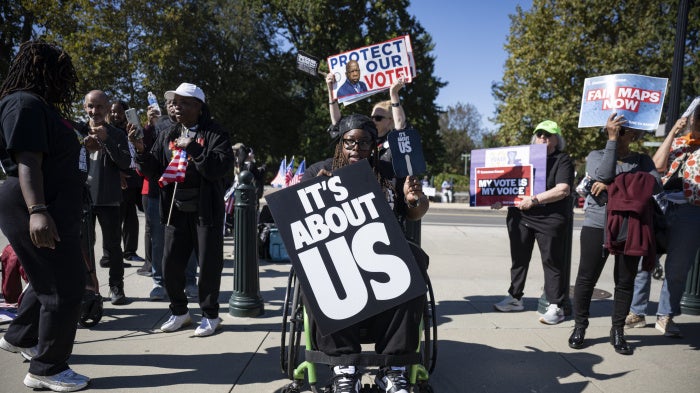
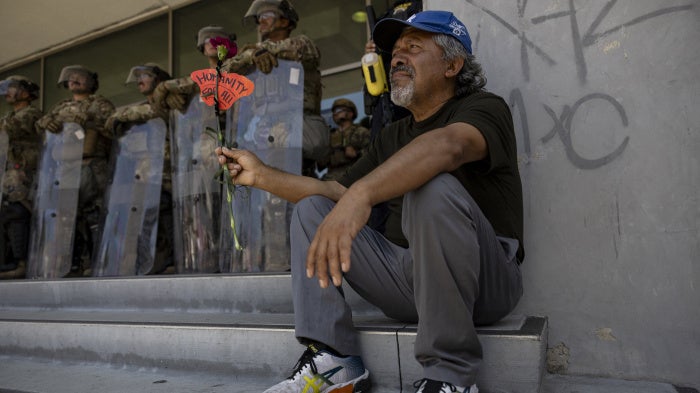
The 112-page report, “Remedies Abandoned: US Civil Rights Enforcement Under the Trump Administration,” documents the administration’s efforts to unravel the work of four key agencies between January 2025 and the spring of 2026: the Justice Department’s Civil Rights Division, which lost about 75 percent of its attorneys; the Education Department’s Office of Civil Rights, which moved to lay off nearly half its staff in one day and closed 7 of its 12 regional offices; the Housing and Urban Development Department’s Fair Housing Office, which shrank dramatically; and the Equal Employment Opportunity Commission, which reached its lowest staffing levels in over 40 years.
Human Rights Watch has created packet containing background information on the state of human rights in several American countries, in anticipation of the Second Summit of the Americas.
In the past year, the Haitian National Police (HNP) Force has committed serious human rights abuses, including extrajudicial executions, beatings in detention, and killings resulting from an excessive use of force.
In the past year, the Haitian National Police (HNP) Force has committed serious human rights abuses, including extrajudicial executions, beatings in detention, and killings resulting from an excessive use of force.
Despite positive movement toward the consolidation of political freedoms, human rights violations in Mexico continue to be extremely serious. State and federal police and members of the army continue to engage in torture, arbitrary detention, and other widespread abuses. Prosecutors frequently accept such abuses and judges often fail to question them.
Despite positive movement toward the consolidation of political freedoms, human rights violations in Mexico continue to be extremely serious. State and federal police and members of the army continue to engage in torture, arbitrary detention, and other widespread abuses. Prosecutors frequently accept such abuses and judges often fail to question them.
Immigration practices, police abuse, the death penalty, prison conditions, and issues of discrimination continue to be some of the most serious human rights violations in the United States.
Even as democracy has advanced in Argentina, the country still faces a number of serious human rights problems, including police brutality, lack of independence of the judiciary, and harassment of journalists who expose such problems.
This report documents human rights abuses related to the work of the police and other law enforcement officials in Macedonia, with an emphasis on police violence and violations of the right to due process. It reveals a pattern of abuse that is ignored by Macedonia's political leaders and tolerated by the international community.
Five years of civil war in Tajikistan were formally brought to a close on June 27, 1997, when a peace accord was signed between the government and the United Tajik Opposition (UTO). A major force, however, was left out of the peace negotiations: the political opposition based in Tajikistan's northern region, Leninabad.
Human Rights Watch, the largest U.S.-based international nongovernmental human rights organization, welcome the presentation of an historic peace accord to the people of Ireland, north and south.
Human Rights Watch condemned an attack made by Burmese government and Democratic Karen Buddhist Army (DKBA) troops upon a Burmese refugee camp in Thailand.
The collapse of the Asian economy has given rise to massive layoffs of workers and wage and benefit cuts, not only in those countries worst affected by the economic crisis, but region-wide.
The civilian population of Burundi feels trapped between the two sides in the civil war, as both the armed forces and the rebels have used civilians as proxy targets. The civil war raging in Burundi since October 1993 has above all been a war against civilians. When Major Pierre Buyoya took power in a July 1996 coup, he claimed that he was intervening to prevent an expansion of ethnic violence.
Abuse of Undocumented Migrants, Asylum Seekers, and Refugees in South Africa
Unpunished attacks on foreigners in South Africa are disturbingly common; and foreigners are regularly victimized by the South African police,the army, and by guards at detention facilities. Detention conditions for migrants awaiting deportation are substandard and overcrowded. South Africa's treatment of refugees is also troubling, and fails to conform with international standards.