US Civil Rights Enforcement Under the Trump Administration
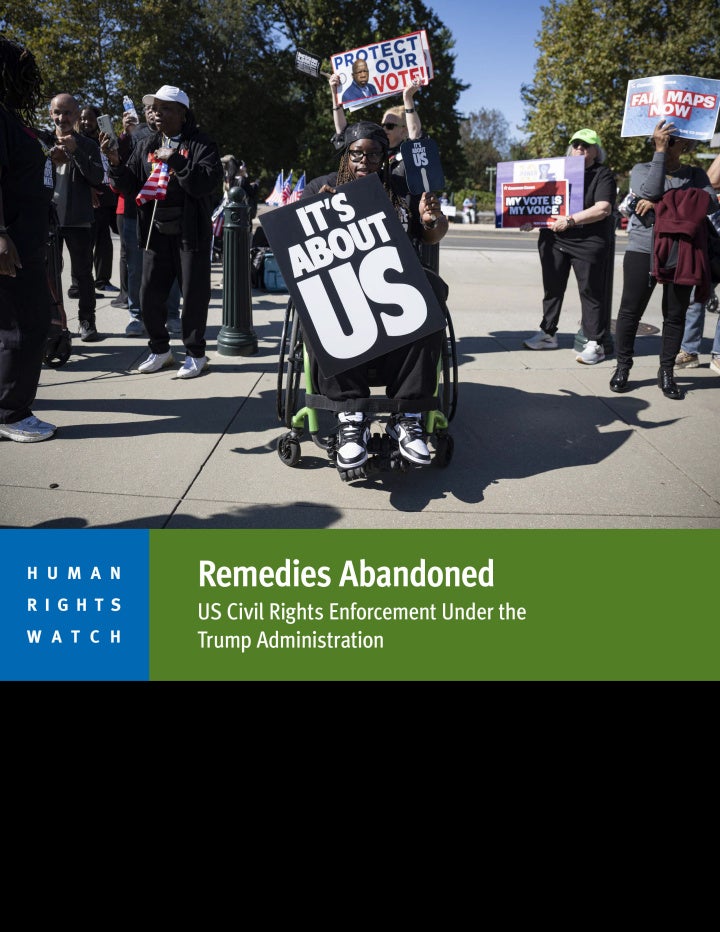
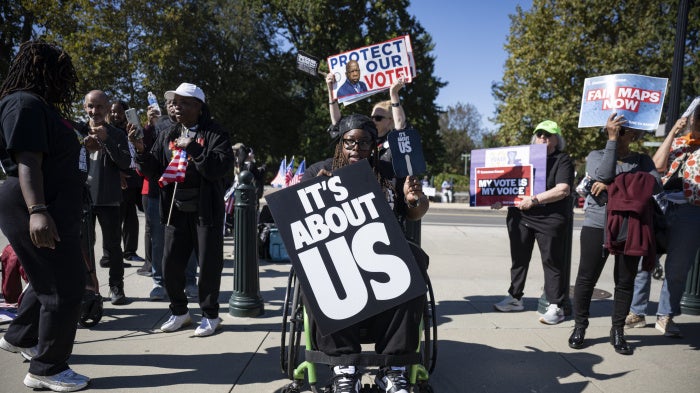
The 112-page report, “Remedies Abandoned: US Civil Rights Enforcement Under the Trump Administration,” documents the administration’s efforts to unravel the work of four key agencies between January 2025 and the spring of 2026: the Justice Department’s Civil Rights Division, which lost about 75 percent of its attorneys; the Education Department’s Office of Civil Rights, which moved to lay off nearly half its staff in one day and closed 7 of its 12 regional offices; the Housing and Urban Development Department’s Fair Housing Office, which shrank dramatically; and the Equal Employment Opportunity Commission, which reached its lowest staffing levels in over 40 years.
In the run-up to important parliamentary elections, civil and political rights are seriously restricted in Croatia, Human Rights Watch said in this report. The report describes this political repression as the "human rights legacy" of the late President Franjo Tudjman, who died earlier this month. Parliamentary elections in Croatia are scheduled for January 3, 2000.
This report is based on interviews with more than one hundred East Timorese returnees in transit centers in Dili, the capital of East Timor. It documents the continuing obstacles to return for East Timorese refugees in West Timor and other parts of Indonesia.
Colonel Mengistu Haile Mariam headed the junta which in 1974 overthrew the government of Emperor Haile Selassie in a bloody coup. Known as the "Derg" or "Dergue," the "committee," the junta consisted of about a hundred junior officers drawn from all regions of Ethiopia.
Multi-party democracies remain stable throughout most of Latin America and the Caribbean, with the notable exception of Cuba, where the government of Fidel Castro celebrated its fortieth anniversary in power with no sign of a significant political opening on the horizon.
For the last two years, the government of Bulgaria has pledged to control the country's notorious arms trade as part of its strategy to join the North Atlantic Treaty Organization (NATO) and the European Union (E.U.). Sofia has taken important steps toward reform, but further improvements are urgently needed to ensure that the legacy of irresponsible weapons dealing is put to rest.
The Russian police routinely torture people in custody in order to force them to confess, Human Rights Watch charges in this report. Russian courts commonly accept these forced confessions as grounds for conviction, and federal and local governments do not recognize police torture as a problem, the report says.
Every recognized country in the world, except for the United States and the collapsed state of Somalia, has ratified the Convention on the Rights of the Child, pledging to uphold its protections for children. Today the convention stands as the single most widely ratified treaty in existence.
Human Rights Watch has prepared this assessment of the Patten Commission report-issued on September 9, 1999-as a means of following up on its participation in the commission's consultation process and as a contribution to the government's three month post-report consultation period.
Sovereignty loomed less large in 1999 as an obstacle to stopping and redressing crimes against humanity. Governmental leaders who committed atrocities faced a greater chance of prosecution and even military intervention.
With frequent references to juvenile predators, hardened criminals, and young thugs, U.S. lawmakers at both the state and federal levels have increasingly abandoned efforts to rehabilitate child offenders through the juvenile court system. Instead, many states have responded to a perceived outbreak in juvenile violent crime by moving more children into the adult criminal system.
Though nine years have passed since Pakistan ratified the U.N. Convention on the Rights of the Child, Pakistani children in conflict with the law continue to be denied the juvenile justice protections of the convention.
Despite legislation protecting freedom of speech and the press in Tajikistan, in practice freedom of expression is severely limited. For six years major opposition parties and their newspapers were banned. The government of Tajikistan continues to employ a variety of tactics to limit political content in the remaining media.
In the early morning of May 14, 1999, in the midst of NATO's air campaign against Yugoslavia, Serbian security forces descended on the small village of Cuška--Qyshk in Albanian--near the western Kosovo city of Pec (Pejë). Fearing reprisals, many men fled into the nearby hills while the rest of the population was forcibly assembled in the village center.
In the wake of the military takeover in Pakistan, Human Rights Watch released this major report on the state of women's rights in the country. The 100-page report, Crime or Custom?