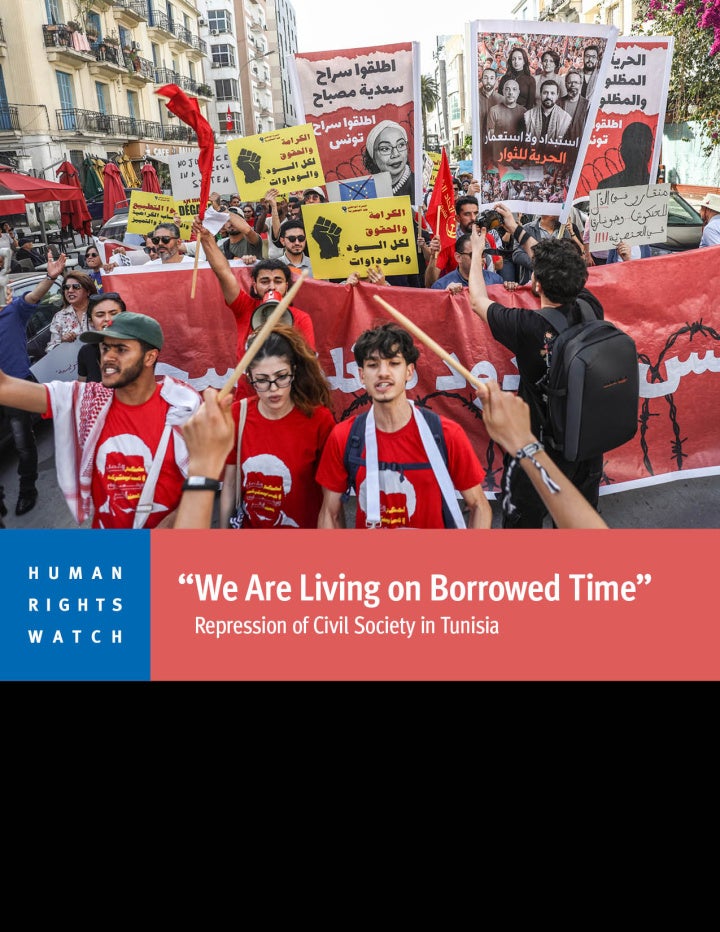
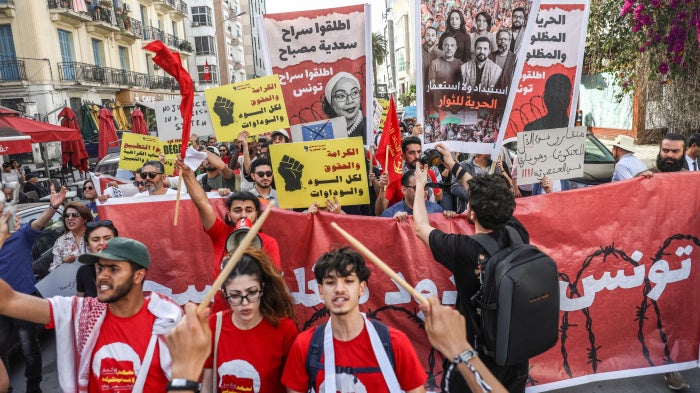
The 49-page report, “‘We Are Living on Borrowed Time’: Repression of Civil Society in Tunisia” documents the Tunisian authorities’ escalating repression of local and international civil society groups, workers, members, and affiliates through the weaponization of abusive prosecutions, arbitrary arrests, detention, financial and criminal investigations, mass suspensions, and threats of dissolution.
Human Rights Watch's engagement with IOM arises from our concern that IOM has no formal mandate to monitor human rights abuses or to protect the rights of migrants and other persons, even though literally millions of people worldwide participate in IOM-sponsored programs and projects. We began to monitor and document IOM operations in the field in the early 1990s.
Inadequate Nutrition and Health Care in the Russian Armed Forces
This 40-page report details how conscripts are deprived of adequate food. The diet of conscripts often lacks meat and green vegetables, and falls short of the Russian military’s own nutritional standard for soldiers. The food they do receive is often of poor quality, rotten, or bug-infested.
Egypt should investigate and discipline police and plainclothes security officials who beat demonstrators protesting the Iraq war and tortured some of those detained. In this 40-page report, Human Rights Watch documents excessive use of force by security forces to disperse demonstrators protesting the U.S.-led war against Iraq in March, violating their right to freedom of assembly.
On October 27, 2003, arms researcher Igor Sutiagin faces a troubling anniversary: four years will have passed since security service officers detained him at his home. Ever since, Sutiagin has been waiting in a jail cell for a court to decide his fate.
Zimbabwean authorities discriminate against perceived political opponents by denying them access to food programs. International relief agencies in Zimbabwe fail to ensure that access to food is based on need alone and is not biased by domestic or international political concerns.
Mentally ill offenders face mistreatment and neglect in many U.S. prisons. One in six U.S. prisoners is mentally ill. Many of them suffer from serious illnesses such as schizophrenia, bipolar disorder, and major depression. There are three times as many men and women with mental illness in U.S. prisons as in mental health hospitals.
Post-War Civilian Casualties in Baghdad by U.S. Forces
The U.S. military is failing to conduct proper investigations into civilian deaths resulting from the excessive or indiscriminate use of force in Baghdad. This 56-page report confirms twenty deaths in the Iraqi capital alone between May 1 and September 30.
Four months after martial law was declared in Aceh, there is growing concern for the safety and well-being of the civilian population. The Indonesian government has succeeded in severely limiting the flow of information from the province. It is denying access to Aceh to almost all diplomats, independent international observers, and international human rights organizations.
In January 2003, U.S.-Central America Free Trade Agreement (CAFTA) negotiations began among the United States, Costa Rica, El Salvador, Guatemala, Honduras, and Nicaragua. The final negotiating round is scheduled for early December 2003. CAFTA presents an important opportunity to raise labor standards throughout Central America.
On October 15, 2003, citizens of Azerbaijan will vote for a new president, following an election campaign that from the beginning was heavily manipulated by the government to favor Prime Minister Ilham Aliev, son of President Heidar Aliev. The government ensured that election commissions would be stacked to favor Aliev, and banned nongovernmental organizations from monitoring the vote.
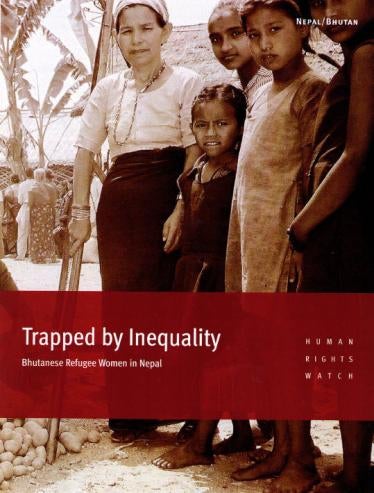
Bhutanese refugee women in Nepal encounter gender-based violence and systematic discrimination in access to aid.This 77-page report examines the uneven response of UNHCR and the government of Nepal to rape, domestic violence, sexual and physical assault, and trafficking of girls and women from refugee camps.
Colombian President Álvaro Uribe has presented a bill to his congress that would allow paramilitaries who have committed atrocities to skip prison for a fee. Among them are men that have ordered and carried out the killings of thousands of Colombian civilians.
Russia’s forces are committing abuses against displaced Chechens in Ingushetia as the conflict in Chechnya spills over into this neighboring republic. This 28-page report documents arbitrary arrest and detention, ill-treatment, and looting by Russia’s forces in Ingushetia this summer.
More than 11,000 children fight in Colombia's armed conflict, one of the highest totals in the world. Both guerrilla and paramilitary forces rely on child combatants, who have committed atrocities and are even made to execute other children who try to desert.