US Civil Rights Enforcement Under the Trump Administration
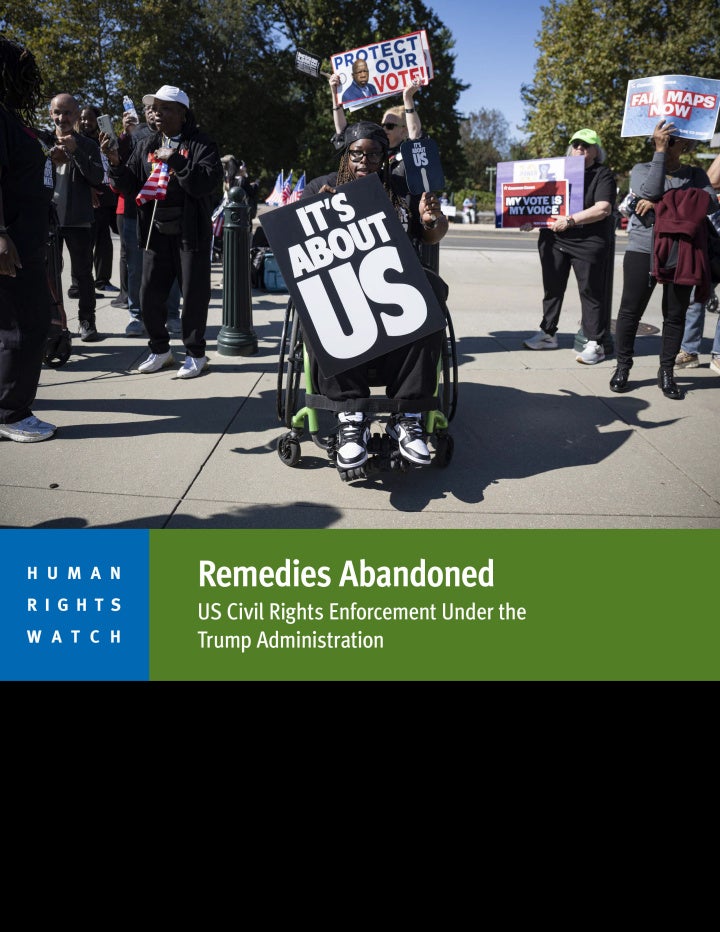
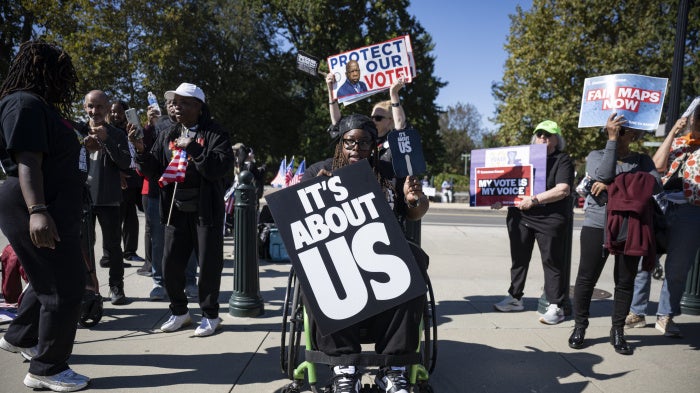
The 112-page report, “Remedies Abandoned: US Civil Rights Enforcement Under the Trump Administration,” documents the administration’s efforts to unravel the work of four key agencies between January 2025 and the spring of 2026: the Justice Department’s Civil Rights Division, which lost about 75 percent of its attorneys; the Education Department’s Office of Civil Rights, which moved to lay off nearly half its staff in one day and closed 7 of its 12 regional offices; the Housing and Urban Development Department’s Fair Housing Office, which shrank dramatically; and the Equal Employment Opportunity Commission, which reached its lowest staffing levels in over 40 years.
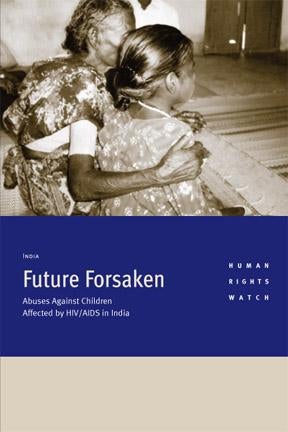
Abuses Against Children Affected by HIV/AIDS in India
This 209-page report documents how many doctors refuse to treat or even touch HIV-positive children. Some schools expel or segregate children because they or their parents are HIV-positive. Many orphanages and other residential institutions reject HIV-positive children or deny that they house them.
This 66-page report documents the widespread attacks against Serbs, Roma, Ashkali (Albanian-speaking Roma) and other minorities that took place in Kosovo on March 17-18. Human Rights Watch details the near-complete collapse during the crisis of Kosovo’s security institutions—the NATO-led Kosovo Force (KFOR), international civilian police from the U.N.
Abuses against Female Migrant Domestic Workers in Indonesia and Malaysia
This 110-page report documents the abuse and exploitation that Indonesian female domestic workers experience at each step of the migration process. Most domestic workers are forbidden to leave their workplace and unknown numbers suffer psychological, physical, and sexual assault by labor agents and employers.
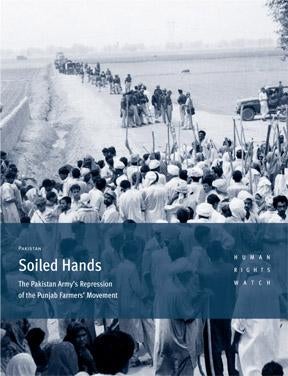
The Pakistan Army’s Repression of the Punjab Farmers’ Movement
In the Pakistani military’s traditional stronghold of Punjab, paramilitary forces working with the army are killing and torturing farmers who refuse to sign contracts that would cede their land rights to the army.
A Human Rights Watch Briefing Paper, July 20, 2004
Numerous reports from Human Rights Watch and other sources have described the “hand-in-glove” manner in which the Government of Sudan and the nomadic ethnic militias known as the Janjaweed have operated together to combat a rebel insurgency in Darfur. Hundreds of eyewitnesses and victims of attacks have testified to the close coordination between government forces and their militia partners in the conflict. Militia leaders and members have been supplied with arms, communications equipment, salaries and uniforms by government officials and have participated in joint ground attacks on civilians with government troops, often with aerial bombing and reconnaissance support from government aircraft.
Two years after the April 4, 2002, ceasefire agreement between the Angolan government and the opposition National Union for the Total Independence of Angola (UNITA), Angola is in transition. Although no date has been set for the first national elections since 1992, these are widely expected to be held no later than 2006.
In a memorandum published today, Human Rights Watch seeks to clarify some of the questions and misconceptions that have arisen in response to our recent report regarding threats to judicial independence in Venezuela.
Exploitation and Abuse of Migrant Workers in Saudi Arabia
Migrant workers in the purportedly modern society that Saudi Arabia has become continue to suffer extreme forms of labor exploitation that sometimes rise to slavery-like conditions. Their lives are further complicated by deeply rooted gender, religious, and racial discrimination.
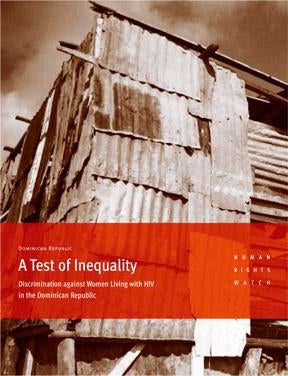
Discrimination against Women Living with HIV in the Dominican Republic
Women in the Dominican Republic are routinely subjected to involuntary HIV testing, and those who test positive are fired and denied adequate healthcare. This 50-page report documents the human rights violations women living with HIV suffer in the public health system as well as in the workplace.
Human Rights Watch has issued numerous reports showing that human rights abuses against persons living with and at high risk of HIV/AIDS contribute significantly to new HIV infections worldwide. This is true in Thailand, the host of this year’s AIDS conference, as well as in numerous other countries worldwide.
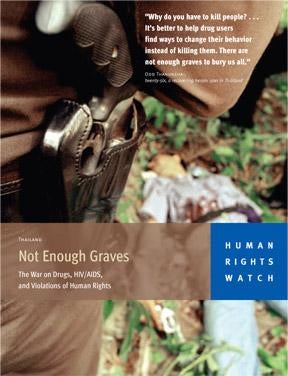
The War on Drugs, HIV/AIDS, and Violations of Human Rights
This 60-page report provides fresh evidence of extrajudicial killings, arbitrary arrests and other human rights violations by Thai authorities. The report contains first-hand testimony from relatives of people killed during the drug war, as well as drug users who endured beatings, forced confessions and arbitrary arrests at the hands of Royal Thai Police.
This 33-page report documents how the Tunisian authorities continue to hold as many as 40 of the country’s more than 500 political prisoners in long-term isolation in prisons around the country. This policy violates Tunisian law as well as international penal standards, undermining government claims of prison reform.
The States Parties to the Convention on Conventional Weapons (CCW) have long recognized the dangers of cluster munitions. They first questioned the civilian harm these weapons cause at the Lucerne Conference in 1974 that eventually led to the CCW.