US Civil Rights Enforcement Under the Trump Administration
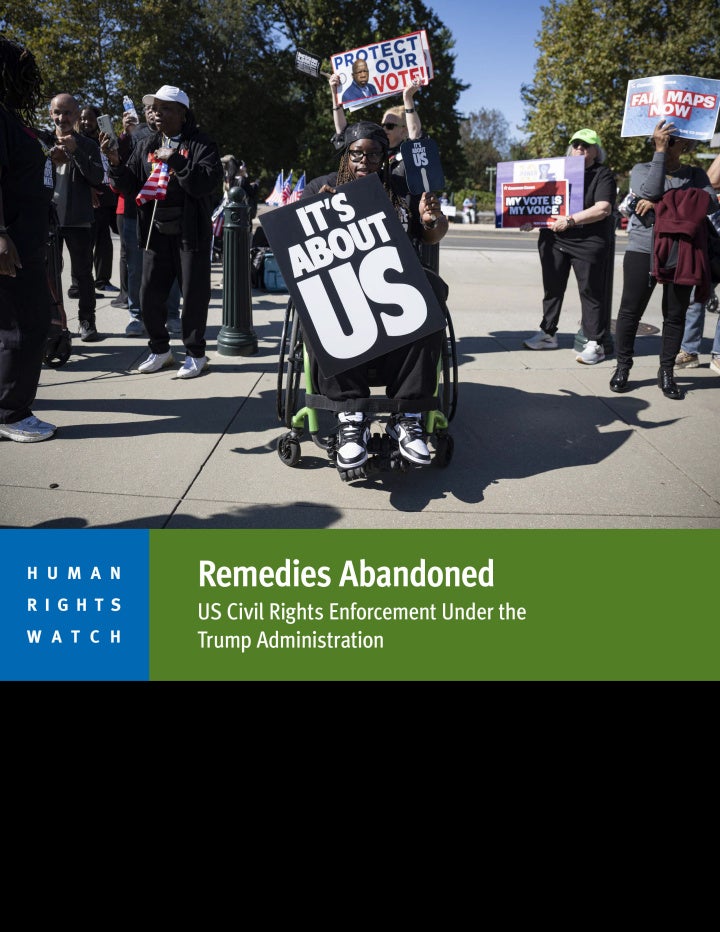
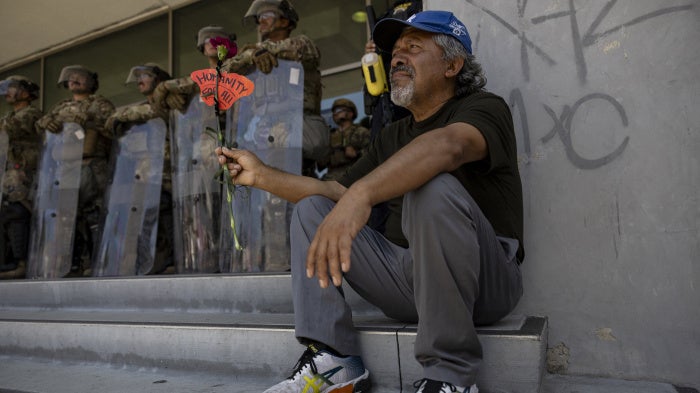
The 112-page report, “Remedies Abandoned: US Civil Rights Enforcement Under the Trump Administration,” documents the administration’s efforts to unravel the work of four key agencies between January 2025 and the spring of 2026: the Justice Department’s Civil Rights Division, which lost about 75 percent of its attorneys; the Education Department’s Office of Civil Rights, which moved to lay off nearly half its staff in one day and closed 7 of its 12 regional offices; the Housing and Urban Development Department’s Fair Housing Office, which shrank dramatically; and the Equal Employment Opportunity Commission, which reached its lowest staffing levels in over 40 years.
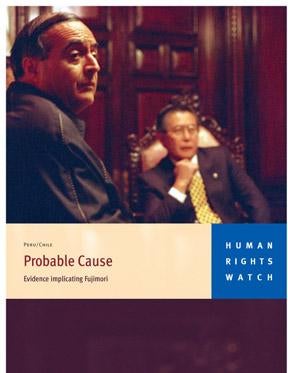
This 22-page report focuses specifically on information implicating Fujimori in five criminal cases currently pending in Peru, including human rights violations as well as acts of corruption that undermined Peru’s democratic institutions.
This 60-page report documents cases of girls as young as five working 100 or more hours per week, without rest breaks or days off, for as little as six and a half Moroccan dirhams (about 70 U.S. cents) a day.
Some twenty-four million citizens of the Democratic Republic of Congo (DRC) have registered to vote in the first nation-wide elections to be held in more than forty years. In the press to get the Congolese to the polls, donor nations and others in the international community must not neglect continuing efforts to establish the rule of law, freedom of expression, security, and good governance.
In June 2005, Iranians elected Mahmoud Ahmadinejad, who had campaigned on a platform of improving economic conditions, as their new president. Ahmadinejad assumed his new post in early August 2005 with the backing of those political factions in Iran who most vigorously opposed political and social reforms initiated by his predecessor, Mohammad Khatami.
The United States is holding an unknown number of terrorism suspects in secret overseas locations, and refusing either to acknowledge the detentions or to give information on the fate or the whereabouts of these detainees. The following questions and answers address legal issues concerning U.S. detainees disappeared into secret prisons.
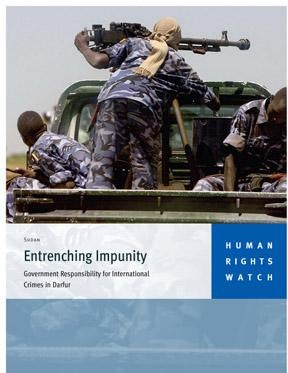
Government Responsibility for International Crimes in Darfur
This 85-page report documents the role of more than a dozen named civilian and military officials in the use and coordination of “Janjaweed” militias and the Sudanese armed forces to commit war crimes and crimes against humanity in Darfur since mid-2003.
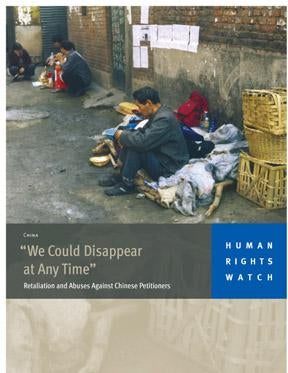
Retaliation and Abuses Against Chinese Petitioners
This 89-page report is the first in-depth look at the treatment of Chinese citizens who travel to Beijing to demand approval of or answers to their complaints of mistreatment by officials. Research was carried out in China. Petitioners, many of them rural people with minimal education or resources, often come to Beijing fleeing local violence and seeking a venue of last resort.
Human Rights Watch welcomes the opportunity to address the International Organization for Migration (IOM) and its Member States at the 2005 Governing Council meeting (90th Session).
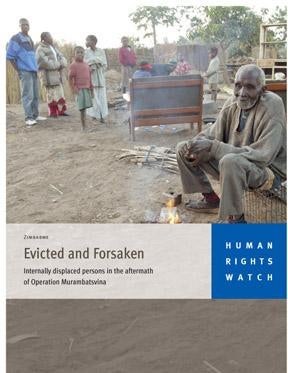
Internally displaced persons in the aftermath of Operation Murambatsvina
This 61-page report documents the government’s denial of assistance and protection to people internally displaced as a result of Operation Murambatsvina (“Clear the Filth”), which began in May. The report also examines the role of international agencies, and in particular the United Nations country team, in addressing the humanitarian crisis in Zimbabwe.
Human Rights Watch has released a list of persons believed to be in U.S. custody as “ghost detainees” -- detainees who are not given any legal rights or access to counsel, and who are likely not reported to or seen by the International Committee of the Red Cross.
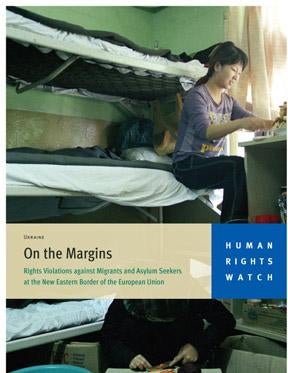
Rights Violations against Migrants and Asylum Seekers at the New Eastern Border of the European Union
This 77-page report documents the routine detention of migrants and asylum in appalling conditions, including severe overcrowding, frequently inadequate bedding and clothing, and little or no access to fresh air, exercise and medical treatment. The report also documents the physical abuse, verbal harassment, robbery and extortion suffered by those in detention.
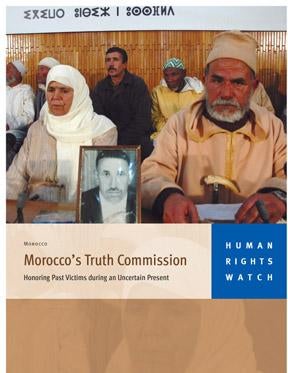
This 48-page report discusses how after nearly two years of investigations into abuses committed between 1956 and 1999, the state-appointed Equity and Reconciliation Commission (ERC) is to submit its final report and recommendations to King Mohamed VI at the end of this month.
On November 23, 2005, the State Duma, Russia’s parliament, is scheduled to consider a draft law that would dramatically restrict the work of nongovernmental organizations (NGOs) working in Russia.
Techniques described in the November 18 ABC News report—prolonged forced standing, sleep deprivation, and exposure to cold—are illegal and may possibly amount to torture. These techniques were used by Soviet and North Korean interrogators, and have been reported more recently in Egypt, Burma, Iran and Turkey.