After the Storm
A new web feature looks at climate change, planned relocation, and people with disabilities in Siargao, Philippines.
This report found that statements by US military authorities after the attack indicate that they failed to understand that the targeted building was a mosque, that prayer was about to begin, and that a religious lecture was taking place at the time of the attack. A proper analysis of the target and its use would probably have established at least some of these elements. Human Rights Watch has not found evidence to support the allegation that members of al-Qaeda or any other armed group were meeting in the mosque.
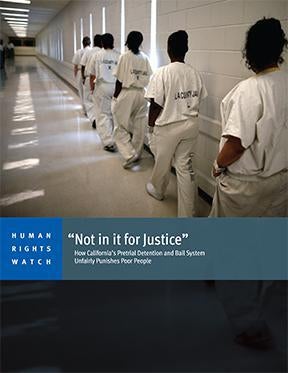
This report details how about 63 percent of prisoners in California county jails in recent years were not sentenced, with many being held awaiting trial because they could not afford bail.
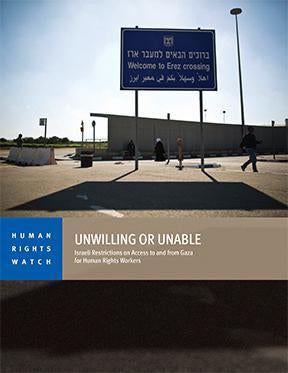
This report documents how Israel systematically bars human rights workers from traveling into and out of Gaza, even where the Israeli security services make no security claims against them as individuals. Egypt is also imposing severe travel restrictions on its border with Gaza. The International Criminal Court (ICC) prosecutor’s office should take note of the restrictions in the context of its ongoing preliminary examination of the Palestine situation.
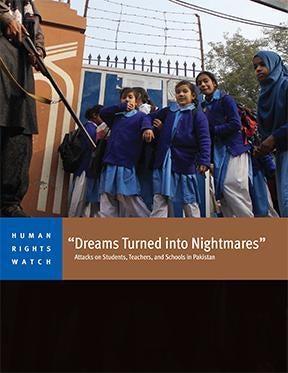
This report is based on 48 interviews with teachers, students, parents, and school administrators in the Pakistani provinces of Punjab, Sindh, and Khyber Pakhtunkhwa (KP). It documents attacks by militants from January 2007 to October 2016 that have destroyed school buildings, targeted teachers and students, and terrorized parents into keeping their children out of school. These attacks have often been directed at female students and their teachers and schools, blocking girls’ access to education. The report also examines occupation of educational institutions by security forces, political groups, and criminal gangs.
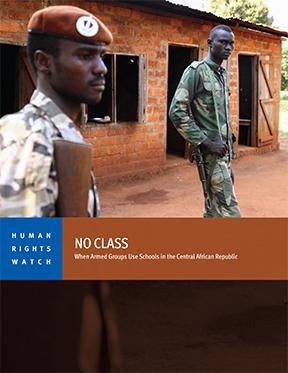
This report contains examples of law and practice from 40 countries, from Afghanistan to Yemen, instituting some level of protection for schools or universities from military use. Many of the examples come from countries currently or recently involved in armed conflict, indicating that governments and armed forces are recognizing the negative consequences of military use of schools and have found practical solutions to deter such use. Examples of these measures can be found throughout the world, in legislation, court decisions, and military policies and doctrine. Governments should adopt and follow protections for schools, Human Rights Watch said.
This report found that the Philippine National Police have repeatedly carried out extrajudicial killings of drug suspects, and then falsely claimed self-defense. They plant guns, spent ammunition, and drug packets on their victims’ bodies to implicate them in drug activities. Masked gunmen taking part in killings appeared to be working closely with the police, casting doubt on government claims that the majority of killings have been committed by vigilantes or rival drug gangs. In several instances that Human Rights Watch investigated, suspects in police custody were later found dead and classified by police as “found bodies” or “deaths under investigation.” No one has been meaningfully investigated, let alone prosecuted, for any of the “drug war” killings.
This report documents how thousands of children in Armenia live in orphanages, residential special schools for children with disabilities, and other institutions. They often live there for years, separated from their families. More than 90 percent of children in residential institutions in Armenia have at least one living parent. Human Rights Watch also found that the Armenian government is not doing enough to ensure quality, inclusive education for all children. Inclusive education involves children with disabilities studying in their community schools with reasonable support for academic and other achievement.
This report examines obstacles, including some rooted in outmoded government policies, that prevent more than 1.5 million adolescents from attending secondary school and cause many students to drop out because of poor quality education. The problems include a lack of secondary schools in rural areas, an exam that limits access to secondary school, and a discriminatory government policy to expel pregnant or married girls.
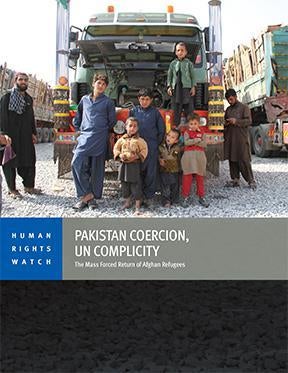
This report documents Pakistan’s abuses and the role of the United Nations High Commissioner for Refugees (UNHCR) in promoting the exodus. Through enhancing its “voluntary repatriation” program and failing to publicly call for an end to coercive practices, the UN agency has become complicit in Pakistan’s mass refugee abuse. The UN and international donors should press Pakistan to end the abuses, protect the remaining 1.1 million Afghan refugees in Pakistan, and allow refugees among the other estimated 750,000 unregistered Afghans there to seek protection, Human Rights Watch said.
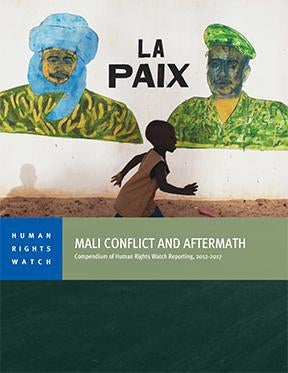
This compendium contains much of Human Rights Watch’s reporting and analysis from 2012 to 2017. In our advocacy we called on all sides to abide by international humanitarian law, or the laws of war, and urged Mali’s government to take concrete steps with the assistance of its international supporters to address the conditions that led to the crisis and that fuel ongoing instability.
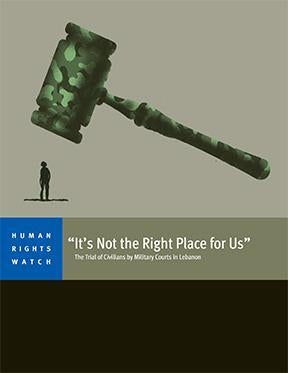
This report documents the due process deficiencies inherent in trying civilians before military courts, the use of confessions extracted under torture, and allegations that Ministry of Defense or army officials have used the courts’ broad jurisdiction to intimidate individuals or retaliate against critical speech or activism. Children have also reported being tortured while awaiting prosecution in these courts.
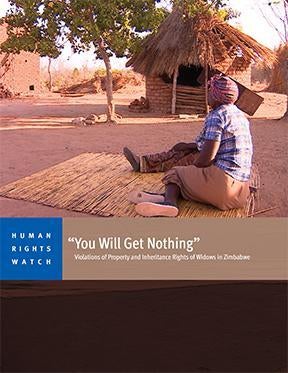
This report found that in-laws often tell women shortly after the deaths of their husbands that the relatives intend to take over the homes and lands or other property where the husband and wife had lived for decades. One widow quoted her brother-in-law’s words to her after her husband’s funeral, in front of the family that had gathered: “He said in my face, ‘You are rubbish and you will get nothing. I am taking everything.’”
World Report 2017 summarizes key human rights issues in more than 90 countries and territories worldwide. It reflects investigative work that Human Rights Watch staff undertook in 2016, usually in close partnership with human rights activists in the country in focus.
This report documents abuses suffered by a group of hijras, when they were forced to undergo so-called medical examinations at a hospital in Dhaka, the capital, in 2015, as part of a government employment program. The medical exams were ordered as part of the routine government hiring procedure, but absent a clear procedure to identify and respect hijras, hospital staff responded based on their own personal biases. Although a 2013 directive from the cabinet recognizes hijras as a third gender, the government has not developed rights-based procedures for changing their gender on official documents, leaving them open to abuse when they seek to assert their rights, Human Rights Watch found.