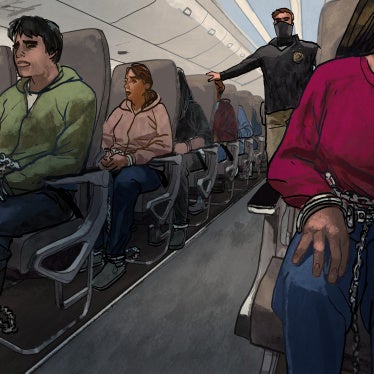
Germany and four other European governments are reportedly preparing to announce a scheme to send rejected asylum seekers from around the world to Rwanda. The idea is not new, and it has never worked. Paying Kigali to host a European deportation program would hand the Rwandan government money and political leverage while it jails its critics at home, supports the abusive M23 armed group and carries out war crimes in neighboring Democratic Republic of Congo.
Rwanda has already been party to three schemes by other governments to offload people they don’t want. Each one has been marred by human rights concerns.
I was denied entry to Rwanda in May 2024, when I landed in Kigali, following the publication of a Human Rights Watch report on Rwanda’s targeting of critics beyond its borders. At the time, the United Kingdom was doubling down on its plans to send asylum seekers to Rwanda, claiming, in defiance of the facts, that conditions there could be independently monitored.
In 2023, the UK’s Supreme Court ruled its deal unlawful, partly over fears that people sent to Rwanda could be pushed onward to countries where they faced persecution. The scheme was scrapped in July 2024 after delivering nothing but a large bill for UK taxpayers. A similar deal between Israel and Rwanda a decade ago resulted in Rwandan officials confiscating Eritrean and Sudanese asylum seekers’ documents or forcing them to move on to other countries. In 2025, Rwanda agreed to take in 250 third-country nationals from the United States in exchange for $7.5 million. Disturbingly little is known about the whereabouts of the more than 20 people deported to Rwanda so far.
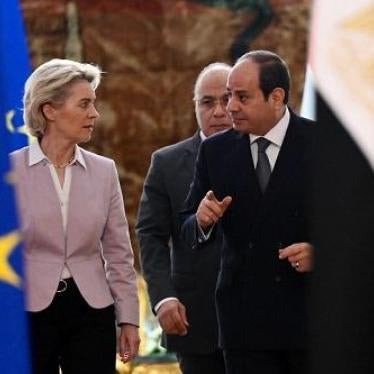
Despite these precedents and Rwanda’s abysmal human rights record, five European Union countries—Austria, Denmark, Germany, Greece, and the Netherlands—appear poised to set up a euphemistically named “return hub” in Rwanda. Officials claim this time will be different because they will deport only people who have exhausted their legal options and safeguards will be in place. But the core problems remain. People transferred to Rwanda would depend on a justice system that cannot guarantee protection; the risk of onward removal to places where they could be harmed remains very real, as does the risk of arbitrary detention, refoulement, and restricted access to due process and remedies. There are serious doubts about whether integration in Rwanda could succeed.
The newly enacted EU Return Regulation says such agreements may only be reached with countries that respect international human rights standards. By any reasonable measure, Rwanda does not fit the bill.
Its government has largely silenced the opposition. Victoire Ingabire, leader of the unregistered opposition party DALFA-Umurinzi, was arrested in June 2025; in September 2025, the European Parliament called for her release. In January 2026, during Rwanda’s UN human rights review, Germany, Greece, Denmark, and the Netherlands themselves raised concerns, including on detention conditions and the lack of independence of the national human rights institution. More than a dozen journalists, commentators, and opposition activists remain imprisoned. Very few dare report critically after a series of suspicious deaths, including of a journalist and a commentator. Human Rights Watch has also documented torture in official prisons and appalling conditions in transit centers, where homeless people, street vendors, and others considered “undesirable” are held without due process.
European governments are also well aware of Rwanda’s military support to, and control over, the M23 armed group, which has been linked to serious abuses and war crimes. In February 2025, the European Parliament adopted a resolution urging the EU to freeze direct budget support for Rwanda and suspend a minerals agreement until Rwanda ends its involvement in Congo. Germany reduced bilateral aid to Rwanda in 2025 because of it. In Uvira in eastern Congo, Rwandan troops and M23 fighters went door-to-door, killing men and boys suspected of belonging to opposing armed groups. UN experts have documented Rwanda’s role in the illicit exploitation of natural resources in eastern Congo.
This latest iteration of the Rwanda plan should be dropped. Germany and its allies must recognize that nominal safeguards won’t mitigate the risks of serious human rights abuses, especially where there is so little scope for independent monitoring. The EU should stop trying to shift its responsibilities to far away countries and instead invest in rational, humane, and rights-respecting migration policies at home.