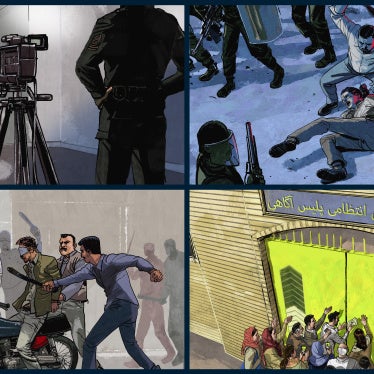
- Within a span of only five months, between March 18 and the end of August 2026, Iran’s authorities announced the executions of 29 people in connection with recent protests. These executions were unlawful and in violation of international human rights law. Several protesters executed were teenagers aged 18 and 19. Scores more remain at imminent risk of execution. Some executions have been carried out in public to further instill fear, marking a significant escalation.
- Executions have followed grossly unfair and summary proceedings, ranging in protest-related cases from just over five weeks to less than eight months from arrest to execution. In most cases, no allegations of killings have been made and protesters have been convicted of vague national security charges and executed for acts such as allegedly damaging public property, throwing stones, or breaking into government buildings.
- Urgent and coordinated diplomatic action by UN member states is needed, including to encourage the use of measures such as universal jurisdiction to hold officials responsible for serious international crimes, including torture and enforced disappearances, to account.
(Beirut) – Iranian authorities are unlawfully executing protesters and political dissidents on a weekly basis, a relentless attack on the right to life, Human Rights Watch and the Abdorrahman Boroumand Center for Human Rights in Iran said today.
Between March 18 and end of August 2026, authorities arbitrarily executed at least 59 men on politically motivated and vague national security charges following grossly unfair trials. They include at least 29 arrested in connection with December 2025-January 2026 protests and at least 3 reportedly arrested in connection with the 2022 Woman, Life, Freedom protests. Several were teenagers aged 18 or 19 and many others in their early 20s. Five were executed in public, violating the absolute prohibition of torture and other ill-treatment.
“Day after day, Iran’s authorities are sending protesters, including teenagers, to the gallows based on torture-tainted ‘confessions’ and following grossly unfair proceedings that are too short to establish a defendant’s guilt even for a minor offense, let alone for capital charges,” said Bahar Saba, senior Iran researcher at Human Rights Watch. “The authorities’ message is clearly that protests will be met with brutality, whether through bullets on the streets or public executions following sham trials.”
Human Rights Watch and the Boroumand Center reviewed evidence pertaining to the cases of individuals executed between March 18 and the end of August 2026 as well as people under death sentences or at risk of receiving the death penalty in connection with recent protests. The organizations interviewed 12 individuals, including human rights defenders, journalists, lawyers, former cellmates, and other informed sources.
Researchers also examined audio messages from detainees, several audio recordings and transcripts of interviews by human rights defenders that were shared with the organizations, as well as official statements and execution announcements, including by the judiciary’s official news agency, state media reports, human rights organizations’ reporting, and court verdicts in three capital cases. The organizations also reviewed several coerced “confession” videos of individuals later executed that were broadcast on state media.
Summary proceedings, torture-tainted “confessions,” and public executions have been the hallmark of the authorities’ weaponization of the death penalty in the aftermath of January 2026 massacres of protesters to instill fear and deter further public dissent, the groups said. The vast majority of protesters have been executed within only six months of their arrest, denying them adequate time to prepare a defense.
Saleh Mohammadi, 19, a wrestling champion, was arbitrarily executed about five weeks after his arrest. Amir Hossein Hatami, 18, was arbitrarily executed 84 days after his arrest. Sasan Azadvar Jonaqani, 21, a karate champion, was arrested, convicted, and arbitrarily executed in under four months for acts such as allegedly breaking windows of a police bus with stones and a baton.
Capital charges in 16 of the 29 cases did not involve any allegations of killing, let alone intentional killing that international human rights law limits the application of capital punishment to. Under international law, the death penalty is legally exceptional and may be applied, if at all, in the states that have retained it, for the “most serious crimes,” limited to intentional killing only and under the strictest limitations and safeguards.
Human Rights Watch and the Boroumand Center oppose the death penalty in all cases without exception, regardless of the nature of the crime, as the ultimate cruel, inhuman, and degrading punishment.
Young protesters have been executed for allegedly setting fire to buildings and vehicles; making, possessing, and using Molotov cocktails; and entering and destroying public and government buildings.
In at least 10 of the remaining 13 cases, the state raised allegations of involvement in killings or fatal incidents but did not charge defendants with murder. Defendants were solely convicted of vaguely worded crimes, such as “waging war against God” and “corruption on earth.” Authorities have used these vague offenses to sentence people, including groups, to death for alleged acts such as incitement to violence, nonfatal assault, or possession of weapons without establishing their actual role in any killing.
In several cases, authorities relied on the charge of “operational action on behalf of hostile states,” a capital offense introduced under a 2025 law titled: “Intensifying Punishments for Spies and Collaborators with the Zionist Regime and Hostile States.”
“At least eight protesters were convicted under the vaguely worded 2025 Espionage Law, which broadened punishable conduct and cut procedural deadlines,” said Roya Boroumand, executive director of the Abdorrahman Boroumand Center for Human Rights in Iran. “Originally introduced after the nationwide protests of late 2019 and early 2020, the law has become a fast-tracked mechanism for sentencing protesters to death without evidence of espionage or cooperation with a hostile state and a chilling message to those who might expose how these convictions were obtained.”
The organizations documented patterns of denial of access to independent legal counsel of one’s choice and torture and ill-treatment, including beatings, mock executions, and threats of rape. Defendants were sentenced by courts that fundamentally lack independence and impartiality. This includes courts’ systematic use of “confessions” extracted under torture and unsubstantiated reports by security and intelligence bodies as evidence.
Scores of other protesters and political dissidents, including women, children, and several people whose co-defendants have already been executed, remain at imminent risk of execution. On July 28, 2026, Amnesty International reported that it had identified 60 people, including 3 children, at risk of execution in connection with protests. The Volunteer Committee to Follow-Up on the Situation of Detainees, a network of Iranian activists in exile, has published the names of over 60 people sentenced to death as of August 14. According to another organization, Iran Human Rights, over 70 protesters are at risk of execution in Isfahan Prison alone.
The number of protesters and dissidents at risk of execution is believed to be much higher. Many cases have gone unreported due to internet shutdowns and a well-founded fear of state reprisals. A July official directive by the Ministry of Intelligence, issued under the 2025 Espionage Law, designated hundreds of media outlets, human rights organizations, and activists as “enemies,” criminalizing any contact with them. This has exacerbated the climate of fear, further forcing relatives of victims to remain silent when advocacy and international scrutiny could help save the lives of those on death row, the groups said.
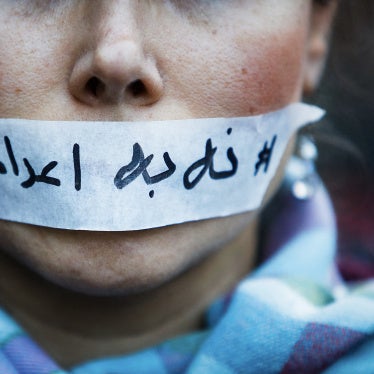
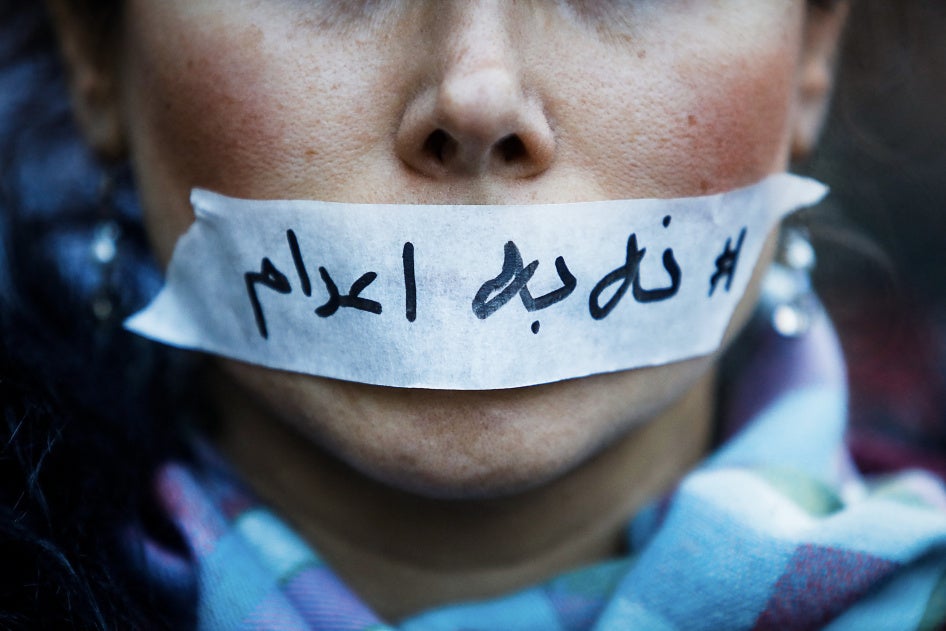
Opposition to the death penalty and unlawful execution of protesters is itself treated as “criminal” conduct. On July 30, Tehran’s prosecutor announced that criminal cases had been opened against several people who had expressed their opposition to executions.
Authorities have systematically smeared and vilified protesters, including those arbitrarily executed, by labelling them as the “ground troops of a US-Israeli coup” and repeatedly blaming them for “providing a fertile ground and an excuse” for the military strikes against Iran in February.
The sharp increase in political executions is taking place against the backdrop of a very significant rise in executions in Iran. The Boroumand Center recorded at least 2,113 in 2025, the highest annual known number since the late 1980s.
United Nations member states should urgently press Iran’s authorities to halt all executions and establish a moratorium leading to abolition of the death penalty, Human Rights Watch and the Boroumand Center said.
UN bodies and experts and human rights organizations have found that systematic, structural, and historical impunity in Iran for those responsible for violations and crimes under international law, including judicial and prosecutorial officials, remain a key driver of atrocities in the country. In its reports since 2024, the UN Fact-Finding Mission on Iran has found that “judges issuing death sentences relied on torture-tainted evidence and presided over trials marred by serious fair trial violations” and, in that context, may be responsible for serious crimes under international law.
Given the impunity in Iran, judicial authorities in other countries should carry out investigations under the principle of universal jurisdiction with a view toward holding Iranian officials suspected of responsibility for serious international crimes to account. Where sufficient evidence exists, states should prosecute these crimes in accordance with national laws. States that provide for structural investigations—that is, investigations that examine patterns of violations which can then be linked to specific cases for individual prosecutions—should collect and preserve evidence in connection with serious international crimes committed in Iran to facilitate future criminal proceedings.
Unlawful and Arbitrary Executions in Iran
Under international human rights law, deprivation of life is, as a rule, arbitrary if it is inconsistent with international law or domestic law. International human rights law imposes severe restrictions on the use of the death penalty in countries that have retained it. The imposition of the death penalty in a manner that is contrary to provisions of the International Covenant on Civil or Political Rights (ICCPR), to which Iran is a state party, and without strict adherence with safeguards and restrictions imposed on the use of the death penalty would render executions arbitrary.
For instance, executions carried out on the basis of death sentences issued for offenses that do not meet the threshold of the “most serious crimes” as well as vaguely worded offenses that breach the principle of legality are arbitrary deprivations of life. Similarly, violations of fair trial guarantees provided under article 14 of the ICCPR also render executions arbitrary in nature according to the UN Human Rights Committee. This includes the use of forced confessions, denial of access to independent lawyers of one’s choosing, denial of the right to presumption of innocence, denial of the right to seek pardons and commutations of a death sentence, and a lack of independence or impartiality of the trial or the court.
While Human Rights Watch and the Boroumand Center primarily focused on 29 execution cases connected with recent protests, the organizations found similar patterns of gross violations of international human rights law in other cases. In at least 58 out of the 59 cases, people had conviction on the basis of vaguely worded charges such as “waging war against God,” “corruption on earth” “armed rebellion,” espionage, and “operational activity on behalf of hostile states.” These charges fall under the jurisdiction of revolutionary courts, which lack independence and impartiality and are responsible for the majority of death sentences in Iran. According to official reports, in two cases, defendants were convicted of both murder and vaguely worded offenses in connection with the same acts. In most cases, authorities have not made any allegations of involvement in killings. Additionally, based on Iran’s domestic laws, individuals have been denied access to lawyers of their choosing during the preliminary investigations.
In 2021, the then UN Special Rapporteur on Iran stated: “The entrenched flaws in law and in the administration of the death penalty in Iran mean that most, if not all, executions are an arbitrary deprivation of life.”
Executions for Vague Charges, Alleged Property Damage
Between March 18 and the end of August 2026, authorities announced the executions of 29 people in connection with recent protests, almost all on the basis of vaguely worded laws that contravene the principle of legality, given that persons could not predict that an act would amount to a crime. The charges against 16 involved no allegations of killing, let alone intentional killing. In one of the remaining cases, a protester was broadly accused of having led “riots that resulted” in the deaths of members of security forces. Under international human rights law, the death penalty is legally exceptional and may be applied, if at all, in the states that have retained it, for the “most serious crimes,” limited to intentional killing only and under the strictest limitations and safeguards.
Contrary to international law, Iranian authorities have executed protesters for acts such as blocking streets, damaging public property, and conduct deemed collaboration with “hostile states” as stipulated under the 2025 Espionage Law, which was first introduced in parliament in 2020 and fast-tracked for adoption following the June 2025 Israel-Iran armed conflict. None of these charges reach the threshold of “the most serious crimes.”
On April 30, 2026, Branch 1 of Revolutionary Court in Isfahan arbitrarily executed Sasan Azadvar Jonaqani, 21, for “waging war against God.” According to excerpts from the verdict, published by the judiciary’s news agency, Mizan, the government did not allege that Azadvar had killed anyone. Instead, he was accused of “actively participating in riots,” “attacking and throwing stones at security forces,” causing damage to private vehicles, and “inciting and encouraging people at the scene to riot and [cause] unrest.”
Erfan Kiani, arbitrarily executed on April 25, was convicted of “waging war against God” for alleged involvement in similar acts. Mizan reported he was accused of throwing stones and a Molotov cocktail toward security forces, acts of vandalism such as destruction of traffic cameras, possession of a machete, and obstructing a street.
On June 1, authorities arbitrarily executed Ashkan Maleki and Mehrdad Mohammadinia, from Iran’s oppressed Kurdish minority, in Alborz province. Mizan reported that Branch 15 of the Revolutionary Court in Tehran had sentenced them to death for “participating in operational action against national security on behalf of the Zionist regime and the hostile state of US and hostile groups” as well as “entering sacred religious buildings with intent to destroy and set fire to public and private property… to confront the sacred system of the Islamic Republic during war.”
Mizan reported they were convicted and sentenced to death under the 2025 Espionage Law, based on “confessions” in detention and reports by intelligence and security bodies. A co-defendant, Arman Marefati, also Kurdish, is at imminent risk of execution.
On July 22, authorities announced that Mehdi Khanaki had been executed. Mizanreported that a revolutionary court in Karaj, Alborz province, convicted him of “operational action in favor of the Zionist regime, the United States, and hostile groups” and of “manufacturing, procuring, and possessing military weapons and ammunition and using them” and sentenced him to death under the Espionage Law.
The authorities accused Khanaki of membership in an unnamed “terrorist group” and of taking part in the “US-Zionist coup,” a term the government often uses in reference to the December 2025-January 2026 protests. Mizan reported that according to weapons experts, the weapons allegedly seized from his residence had been discharged during “the time period of the riots of December/January.” The authorities did not tie the alleged use of the weapons to any specific incidents or accuse Khanaki of any involvement in killings.
Other protesters remain on death row and at risk of execution for alleged acts that did not involve intentional killing. Benyamin Naghdi, 26, a mixed martial arts fighter and kickboxer, is at imminent risk of execution after Branch 41 of the Supreme Court upheld his death sentence in July. Branch 1 of the Revolutionary Court in Shiraz sentenced him to death for “corruption on earth” for allegedly using a fire extinguisher as a makeshift flamethrower against security forces passing by on motorcycles during protests in Shiraz, Fars province, on January 3.
In a media interview with a domestic outlet, Naghdi’s lawyer, Mostafa Nili, said that Naghdi had initially been charged with attempted murder. But after preliminary investigations, he was indicted for “waging war against God,” “membership in groups disrupting national security,” “gathering and colluding to commit crimes against national security,” and “propaganda against the system.”
Prosecutors dropped charges pertaining to inflicting bodily injury on security forces and possession of a cold weapon, Nili said, but judges ruled that the charges against his client collectively amounted to “corruption on earth.” Nili said that no one was injured during the incident.
On July 15, the authorities arbitrarily executed Mohammad Amini Dehaghani, arrested in connection with protests in Isfahan province after convicting him of “waging war against God” and “corruption on Earth.” Mizanreported he was accused of blocking roads, setting fire to the Dehaghan governor’s office with a Molotov cocktail, throwing a Molotov cocktail at a local police station and inciting others to attack the police station on January 9, and “requesting [others to give him] a Kalashnikov rifle to fire.” He was further accused of “propaganda against the system,” “disturbing the public opinion and the society’s psychological security,” and “communicating with opposition channels.”
Mizan reported he was convicted based on his “confessions” and CCTV footage that allegedly showed him participating in the attack on the governor’s office. The authorities did not report any deaths or injuries in the alleged attack.
Official court statements and execution announcements show that at least eight men executed in connection with recent protests were convicted under the 2025 Espionage Law. Iran’s laws already make a wide range of conduct punishable by death, including free expression, which is protected under international human rights law.
The Espionage Law has further expanded the scope of capital punishment, imposing the death penalty for vaguely worded offenses pertaining to collaboration and cooperation with “hostile states” and long prison terms for acts such as “sending footage, images, or information to [media] networks, citizen journalists, or online foreign [social media] pages where [such acts] contravene national security.”
The law also provides for expedited proceedings by special branches of revolutionary courts, including cutting the appeal time from 20 days to 10.
Failure to Establish Individual Guilt, Denial of Right to Effective Defense
Prosecutorial and judicial officials have violated the rights of those convicted of capital offenses, including of the presumption of innocence, and in cases where Human Rights Watch and the Boroumand Center were able to obtain information, officials failed to clearly establish the individual guilt of those convicted, including in cases where authorities accuse defendants of involvement in killings.
Under General Comment 36 of the UN Human Rights Committee, the execution of a sentenced person whose guilt has not been established beyond reasonable doubt constitutes an arbitrary deprivation of life. In addition, denial of adequate time and facilities for the preparation of the defense—for example, through rushed and summary proceedings or denial of access to casefile material to the defense—also breach fair trial guarantees provided for under article 14 of the ICCPR, thus rendering any ensuing executions arbitrary in nature.
As of late August, there were allegations of involvement in killings in the cases of 12 protesters who were executed. However, the vast majority were not charged with murder. Instead, Human Rights Watch and Boroumand Center researchers discerned a pattern of vaguely worded crimes such as “waging war against God” and “corruption on earth,” which allowed convictions, even of large groups, without establishing their guilt for intentional killing. Even in at least two out of the three cases where murder charges appear to have been made, defendants were also convicted of “waging war against God.” It remains unclear in these cases whether executions were carried out following finalization of convictions for murder or “waging war against God” charges.
At least one protester was convicted of vaguely worded offences such as “operational activity on behalf of the Zionist regime and the United States” over broad accusations of “leading riots that resulted” in the deaths of members of security forces.
Vaguely worded “offenses” allow for the imposition of the death penalty for acts that do not meet the threshold of the “most serious crimes.” As such, they have enabled courts to sentence protesters to death for alleged acts such as nonfatal assault, incitement to violence, and possession of weapons without establishing that they were involved in a killing.
Moreover, charges such as “waging war against God” and “corruption on earth” fall under the jurisdiction of revolutionary courts. Although Iran’s judiciary lacks independence as a whole and trials—including those before criminal courts, which have jurisdiction to try murder cases—are systematically unfair, revolutionary courts are especially used to stifle dissent. Human rights organizations as well as UN bodies and experts have consistently documented that these courts operate closely with security and intelligence bodies and exhibit blatant bias and extreme hostility toward real and perceived dissidents.
Based on a verdict by Branch 1 of Criminal Court One in Qom reviewed by Human Rights Watch along with reports by Mizan, Saleh Mohammadi and Saeed Davoudi, arbitrarily executed on March 19, were tried and convicted in two parallel proceedings, one before a criminal court and another before a revolutionary court. In the criminal court, Mohammadi was tried on the charge of murder and Davoudi for nonfatal assault in connection with the death of a member of the security forces. Based on the February 3 verdict, Mohammadi was convicted of murder and sentenced to retribution in kind, while Davoudi was convicted of assault and sentenced to a prison term and payment of blood money.
However, they were also charged with “waging war against God” in contravention of the prohibition of being tried and convicted multiple times in connection with the same alleged acts. A special branch of the revolutionary court convicted the two men and sentenced them to death, including Davoudi, who had only been convicted of nonfatal assault. A third man, Mehdi Ghasemi, also executed on March 18, was tried on the same charge alongside Mohamamdi and Davoudi, but in connection with the alleged killing of another member of security forces in a separate incident, an example of group trials in unrelated cases.
In another case, commonly known as the “Shohada Square” case, 16 people—including twin sisters, Romina and Taraneh Rahimi, and three brothers, Milad, Mehrdad, and Ali Boeri—were tried by Branch 1 of the Revolutionary Court in Isfahan, presided by Judge Morteza Barati, on vague national security charges, including capital offenses such as “waging war against God.” According to information provided by an informed source to the Boroumand Center and reviewed by Human Rights Watch, the defendants were accused of involvement in the death of an Islamic Revolutionary Guard Corps (IRGC) member and an unhoused person during protests in Shohada Square in Isfahan on January 8. However, none have been charged with murder.
On August 30, human rights organizations reported that the revolutionary court had sentenced 10 of the defendants—1 woman and 9 men—to death, and the remaining 6 to prison terms of between 16 and 36 years.
In addition to gross fair trial violations, numerous questions have been raised about the facts of the case. Based on information received by researchers and reports by Persian-language media, the IRGC member was not killed where the defendants were alleged to have been the night of the incident. Sources reported that authorities have also accused the defendants of conduct such as bringing in bottles or lighters intended to make Molotov cocktails as evidence of “waging war against God,” without presenting evidence that the defendants were involved in the killings.
According to the information reviewed, authorities have also prevented defendants from mounting an effective defense, including by refusing to admit exculpatory evidence such as videos on defendants’ phones that counter the state’s accusations of their involvement in the killings. Consistent with well-established patterns, the case against these defendants is based on “confessions” that defendants say were obtained under torture. Officials have also denied lawyers access to case files.
Individuals identifiedby human rights organizations to have been sentenced to death are Taraneh Rahimi, Mehrdad Boeri, Armin Gholami, Parsa Jafari, Mehdi Jafari, Ahmadreza Saeedi, Navid Elyasi, Abolfazl Dadgostar, Mehdi Mansouri, and Mohammad Mehdi Asadi.
High-ranking judicial officials have explicitly endorsed charging protesters with vaguely worded capital offenses. State media on January 10 reported that Iran’s prosecutor general, Mohammad Movahedi Azad, said: “The charges against all the rioters are the same, whether an individual who, with the aim of destruction and causing harm to security and the people’s public property, has aided rioters and terrorists… or mercenary individuals who took up arms.” State media noted that Azad “emphasized that that all the offenders in this matter are waging war against God.”
Judiciary reports citing court verdicts as well as information provided by informed sources show that courts have relied heavily or solely on statements by detainees incriminating themselves and others, given in the absence of their lawyers, and unsubstantiated reports by security and intelligence bodies, for capital offense convictions.
While most verdicts are not accessible, the three reviewed by the organizations show that these rulings lack reasoning, fail to address facts, and either make no references to the defense—including any exculpatory evidence or witness accounts put forward by the defendant’s legal counsel—or dismiss them outright. In one capital case, an informed source reported that the state’s own evidence showed that the accused were not at the scene of the alleged offense when it was committed. Nonetheless, the court disregarded that evidence and sentenced the defendants to death.
Executions Following Summary Proceedings and Mass Trials
Executions in Iran, including for national security offenses, are systematically carried out following summary proceedings, in many cases involving only one or two brief court hearings. In the cases involving the December 2025-January 2026 protests and the Israel-Iran armed conflict, proceedings have been extremely summary. The entire proceedings from arrest to execution, including preliminary investigation, trial before a lower court, and Supreme Court review, have ranged from just over five weeks to eight months.
A Qom criminal court sentenced Saleh Mohammadi to death only 26 days after the offense he was alleged to have committed.
Courts have also carried out summary proceedings in capital cases with several to dozens of defendants involving complex allegations and questions of fact.
A revolutionary court in Isfahan sentenced at least 12 people—Shervin Bagherian, 18, Amir Hossein Safari, Abolfazl Sepahi, Ali Dashti, Alireza Raisi, Abolfazl Ebrahimi, Alireza Sepahi, Erfan Esfandiari, Gol Mohammad Mohammadi, Amirhossein Ebrahimi, Amirhossein Maleki, and Ghaem Hosseini—to death for charges such as “waging war against God” and “corruption on earth” for alleged involvement in the killing of four members of security forces during protests at Alilkhani Square in Isfahan on January 8.
Human rights organizations have reported that between 59and 62people were arrested in connection with the incident. Some state media outlets have reported that 23 others have been sentenced to prison terms of between 5 and 10 years in connection with the case.
State media and the judiciary have published no details on the dates when those sentenced to death were arrested, tried, sentenced, and had their verdicts upheld by the Supreme Court. However, according to the Volunteer Committee to Follow-Up on the Situation of Detainees, the sentences were sent to the Office for the Implementation of Sentences, a unit at the Prosecutor’s Office, after being finalized by the Supreme Court on July 5.
On July 19, authorities arbitrarily executed Esfandiari and Mohammadi, an Afghan national. On July 28, they publicly executed Abolfazl Sepahi and Safari. Hosseini, also an Afghan national, was arbitrarily executed on August 20. The others remain at imminent risk of execution. An informed source said the authorities had also intended to execute Alireza Sepahi, Abolfazl Sepahi’s cousin, in public on July 28, but he had a heart attack at the gallows and was taken to a hospital. He has been returned to prison and remains at imminent risk of execution.
In another case involving seven defendants, Branch 15 of the Revolutionary Court in Tehran sentenced Amir Hossein Hatami, 18, Mohammad Amin Biglari, 19, Ali Fahim, Abolfazl Salehi Siavashani, Shahin Vahedparast Kolor, Shahab Zohdi, and Yaser Rajaifar to death for “waging war against God” and “corruption on earth.”
Authorities charged the seven with throwing stones at and breaking into a base in Tehran belonging to the Basij, a force under the IRGC, on January 8 and setting two motorcycles on fire. Mizan also reported that protesters, including Hatami, attempted to seize 20 assault rifles and 1,800 loose rounds of ammunition but failed to do so. The authorities did not accuse the defendants of killing or injuring anyone.
In an interviewwith a domestic media outlet, Biglari’s lawyer stated that Biglari had been sentenced on February 8, following a group proceeding that was held the previous day, indicating that only one hearing may have been held in the case.
Between April 2 and 6, the authorities arbitrarily executed Hatami, Fahim, Biglari and Vahedparast Kolor. On August 16, the nongovernmental group Human Rights Activists in Iran’s news agency, HRANA, reported that the Supreme Court had overturned the sentences against three other defendants and sent the case back to a revolutionary court. They remain at risk of receiving the death penalty.
Death Penalty Based on Torture-Tainted and Coerced TV ‘Confessions’
Trials of individuals arrested in connection with recent protests have taken place against the backdrop of the authorities’ systematic vilification of protesters as “rioters,” “terrorists,” “enemy mercenaries,” those “waging war against God,” and “criminals.” Since January, Mizan and other state media have released hundreds of videotaped “confessions,” including by people charged, tried, and convicted of capital offenses in connection with protests. Coerced television “confessions” violate the absolute prohibition of torture and other ill-treatment as well as the rights to presumption of innocence and a fair trial.
In the Alikhani Square case in Isfahan, state media broadcast “confessions” of several of the accused on January 23 only a couple of weeks after the reported incident, in a so-called “documentary” called “Shock.” While the faces are blurred, at least two identify themselves by their first names. In the 37-minute video, those filmed make statements incriminating themselves and others. These TV “confessions” violated the defendants’ rights including to presumption of innocence. Available information, consistent with well-established past patterns in similar cases, also indicate that they were coerced. Human Rights Watch obtained credible information of torture in the cases of one of the individuals depicted in the video. Incriminating statements were made in the absence of lawyers and in a context where those accused appear to not even have understood the nature of the charges against them.
In one segment, an interrogator asks an individual identified as 18-year-old Shervin Bagherian if he knows “what the verdict against him is” and proceeds to say that it was “waging war against God.” Bagherian then asks: “Can you please tell me what [that] is, I do not know.” After the interrogator informs him that it means “execution,” the young man pleads in distress: “For God’s sake, not execution. Sir, I made a mistake.”
The organizations were able to obtain information from informed sources showing patterns of torture, ill-treatment, and enforced disappearances in several capital cases they investigated. Authorities beat defendants, including on the face, resulting in bruises and injuries, and subjected them to electric shocks, mock executions, prolonged solitary confinement, threats of rape and sexual assault, threats to arrest and rape family members, and food and sleep deprivation.
Informed sources said that security and intelligence bodies tortured and ill-treated defendants to extract “confessions,” which served as the main evidence of guilt. In some cases investigated, information showed that defendants retracted their “confessions” in court. Yet, no investigations into their allegations were carried out.
In the case of Saleh Mohammadi and Saeed Davoudi, Human Rights Watch reviewed the verdict by a criminal court in Qom, which shows that both defendants retracted their “confessions” in court, saying they had been extracted under torture. The court dismissed their testimony without investigations, ruling that the allegations were not credible because “no marks of torture or [other forms of] pressure were witnessed on the accused persons.”
On September 2, Dadban, a legal counseling center based outside of Iran, reported that a lawyer in the “Shohada Square” case in Isfahan had lodged a complaint against the IRGC’s Intelligence Organization in connection with allegations of torture, ill-treatment, and violations of defendants’ due process rights. Dadban reported that the complaint detailed allegations of coerced “confessions,” beatings, as well as sexual assault against the Rahimi sisters.
The Kurdistan Human Rights Network published three extensive audio recordings from prison by Mehrab Abdollahzadeh, a 28-year-old Kurdish man who was executed on May 4 in connection with the 2022 Woman, Life, Freedom protests. Abdollahzadeh provided a harrowing account of torture and gross fair trial violations.
Abdollahzadeh described that following his arrest on October 22, 2022, Intelligence Ministry officials first pressured him to act as an informant and when he refused, accused him of involvement in the death of a Basij member. He reported that intelligence officials tied him to a chair, beat him, threatened him with arresting his family members including his mother and sister, held him in a closet-sized room for 15 days, and gave him a substance he described as hallucinogenic. He said that he ultimately decided to give officials “false information” so that they would free his girlfriend, whom the authorities had brought into the detention facility.
The Boroumand Center spoke with a former prisoner who corroborated that interrogators tortured and ill-treated Abdollahzadeh.
Under international law, the failure in death penalty cases to respect article 7 of the ICCPR, which prohibits all forms of torture and ill-treatment, would inevitably render the execution arbitrary in nature, also in violation of article 6.
Public and Secret Executions
On July 28, 2026, authorities executed Abolfazl Sepahi and Amir Hossein Safari in Alikhani Square in Isfahan, where four members of security forces were reportedly killed on January 8.
Mizan reported that the authorities executed Saleh Mohammadi, Saeed Davoudi, and Mehdi Ghasemi on March 19 “in the presence of a group of people in Qom,” indicating that they were executed in public. The verdict against Mohammadi sentenced him to public execution.
Public executions of protesters further escalate the death penalty to a weapon of political repression. In addition to violating the rights and human dignity of those executed, by making an exhibit of an inherently cruel and degrading punishment, public executions also aim to instill fear in the population and deter additional public dissent.
Under international law, public executions are a violation of the right to life as well as the absolute prohibition against torture and cruel, inhuman, or degrading treatment or punishment.
The authorities have also carried out several secret executions of protesters without advance notice to their family members and lawyers, depriving them of a final visit.
A human rights defender told Human Rights Watch that authorities did not notify the family or lawyer of Mehrab Abdollahzadeh prior to his execution on May 5. Amnesty International reported that Ashkan Maleki and Mehrdad Mohammadinia were also arbitrarily executed in secret without advance notice to their families or lawyers.
Secret executions and denying families a last visit violate international law, including by inflicting severe mental suffering on those executed and their relatives in breach of the absolute prohibition of torture and other ill-treatment.
Systematic Denial of the Right to Legal Counsel; Persecution of Lawyers
Consistent with their decades-long pattern of denying detainees access to legal representation, authorities have denied individuals accused of capital offenses access to a lawyer during the investigation phase and access to independent lawyers of their choosing during trials.
Under Note to Article 48 of the Iranian Code of Criminal Procedure, individuals charged with certain offenses, including national security offenses, are denied the right to an independent lawyer of their own choosing. Only lawyers approved by the head of the judiciary can be appointed to defend them. The UN Fact-Finding Mission on Iran and human rights organizations have documented a pattern of complicity by many judiciary-approved lawyers in grave human rights violations.
Under international human rights law and standards, including article 14(b) of the ICCPR as well as the UN Basic Principles on the Role of Lawyers, the right to a lawyer means that a person has the right to legal counsel of their choice.
In an interview with a domestic media outlet, the lawyer for Mohammad Amin Biglari, executed after a group trial, stated that a state-appointed lawyer represented Biglari at his trial and that Biglari’s appointed lawyer and another lawyer had been independently appointed only at the appeal stage. However, the court denied them access to the case file and prohibited them from mounting a defense. Denying lawyers, especially independent lawyers, access to case file material is a well-established pattern, especially before revolutionary courts.
Moein Khazaeli, a human rights lawyer at Dadban, who is in regular contact with lawyers in Iran, told Human Rights Watch that after the January massacres of protesters, authorities subjected lawyers to escalating levels of harassment and intimidation, threatening them with arrest for taking on protest-related cases.
In one case, he said, a revolutionary court judge openly threatened a lawyer who had gone to the courthouse to take on the case of a man charged with a capital offense, telling him that if he insisted on representing the man, the judge would issue an arrest warrant for the lawyer on the spot. Human Rights Watch found that the accused person, deprived of the right to an independent lawyer of his choosing, was later executed.
The persecution of lawyers, in particular in cases involving national security charges, has intensified since January. The Boroumand Center documented the arrest of at least 19 lawyers in the month following the January massacres, while lawyers previously targeted for defending political and human rights cases have faced renewed prosecutions and arbitrary punishments such as disbarment.
By treating vigorous legal defense as itself a crime, the authorities further deny victims meaningful access to justice and undermine the independence of the legal profession.
Responsibility of Prosecutorial and Judicial Officials
Human Rights Watch has extensively documented the involvement of Iranian judicial authorities in gross violations of human rights and serious crimes under international law, including systematic torture and enforced disappearances in capital cases resulting in unlawful executions, as well as the ongoing crimes against humanity against the Baha’i religious minority. The UN Fact-Finding Mission on Iran has made extensive findings on the role of members of Iran’s judiciary in relation to serious human rights violations. The mission found that in some cases, violations in Iran amounted to crimes against humanity including of murder, imprisonment, torture, persecution, and other inhumane acts. It further examined the responsibility of judges for the crimes against humanity of murder, torture, and persecution in connection with cases of imposition of the death penalty and executions.
In 2025, the UN Fact-Finding Mission on Iran recalled that jurisprudence at international and national levels, including before domestic and international courts, as well as findings by UN investigative bodies and a truth and reconciliation commission demonstrates that in certain circumstances, judges and prosecutors may incur individual criminal responsibility for their acts, including in relation to serious crimes under international law.