The 75-page report, “No Money, No Care: Obstetric Violence in Sierra Leone,” documents cases of verbal abuse, medical neglect, and abandonment of women and girls facing serious obstetric complications, practices that experts interviewed say are common. Many women interviewed said they were shamed and mistreated by healthcare providers for expressing pain, needing help, or for not having enough money to pay fees. Others described humiliating experiences in which healthcare providers treated them brusquely or withheld important health information. Some cases documented constitute obstetric violence, a largely unaddressed form of gender-based violence prevalent across the world.
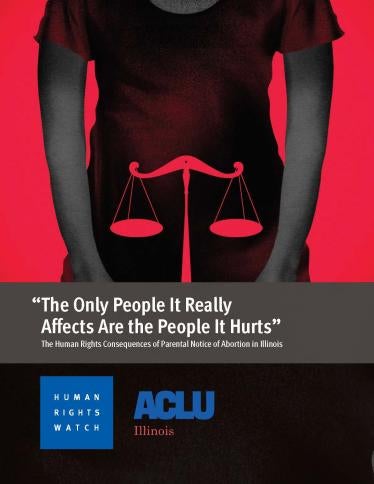
The Human Rights Consequences of Parental Notice of Abortion in Illinois
The 73-page report, “‘The Only People It Really Affects Are the People It Hurts’: The Human Rights Impacts of Parental Notice of Abortion in Illinois,” is the product of a collaboration between Human Rights Watch and the ACLU of Illinois. The groups found that young people often seek judicial bypass because they fear physical or emotional abuse, being kicked out of the home, alienation from their families or other deterioration of family relationships, or being forced to continue a pregnancy against their will. The groups also documented the hardships faced by young people forced to involve unsupportive family members in their abortion decision or navigate an unfamiliar court system to obtain a judicial bypass, and the additional stress and delays in seeking care this caused.
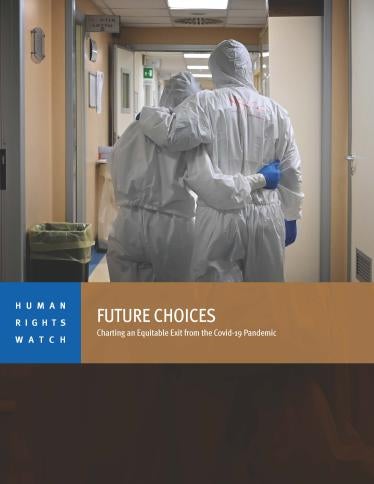
Charting an Equitable Exit from the Covid-19 Pandemic
On March 11, 2020, the World Health Organization (WHO) declared that an outbreak of the viral disease Covid-19—first identified in late 2019 in Wuhan, China—had reached the level of a global pandemic. Citing concerns with “the alarming levels of spread and severity,” the WHO called on governments to take urgent and aggressive action to stop the spread of the virus.
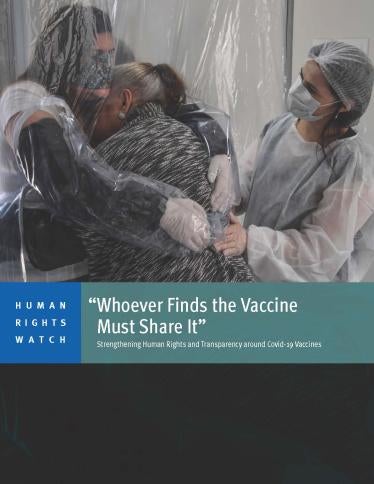
Strengthening Human Rights and Transparency Around Covid-19 Vaccines
The 77-page report, “‘Whoever Finds the Vaccine Must Share It’: Strengthening Human Rights and Transparency around Covid-19 Vaccines,” examines three significant barriers to universal and equitable access to any vaccine that is found to be safe and effective – transparency, supply, and pricing. Human Rights Watch spells out governments’ human rights obligation to ensure that the scientific benefits of the research they fund with public money are shared as widely as possible to protect people’s lives, health, and livelihoods. Human Rights Watch also argues that using public money without reporting its terms and conditions undermines the human rights principles of transparency and accountability. Governments should take steps to maximize the availability and affordability of safe and effective vaccines and minimize debt for low- and middle-income countries.
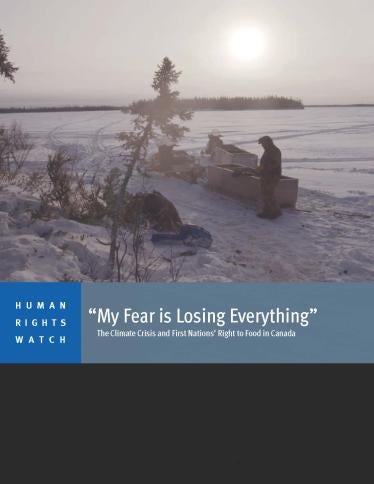
The Climate Crisis and First Nations’ Right to Food in Canada
The 120-page report, “‘My Fear is Losing Everything’: The Climate Crisis and First Nations’ Right to Food in Canada,” documents how climate change is reducing First Nations’ traditional food sources, driving up the cost of imported alternatives, and contributing to a growing problem of food insecurity and related negative health impacts. Canada is warming at more than twice the global rate, and northern Canada at about three times the global rate. Despite its relatively small population, Canada is still a top 10 greenhouse gas emitter, with per capita emissions 3 to 4 times the global average.
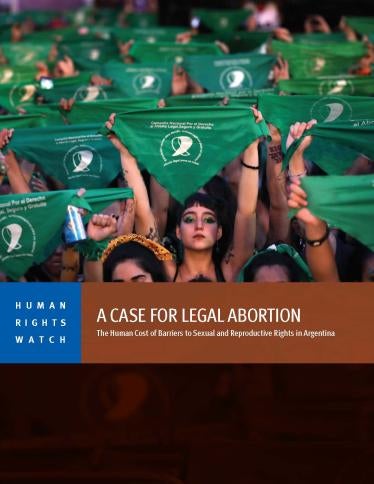
The Human Cost of Barriers to Sexual and Reproductive Rights in Argentina
The 77-page report named “A Case for Legal Abortion: The Human Cost of Barriers to Sexual and Reproductive Rights in Argentina,” describes the consequences of the Senate’s rejection of a 2018 bill that would have fully decriminalized abortion during the first 14 weeks of pregnancy. Human Rights Watch documented cases of women and girls who have, since then, encountered an array of barriers to access legal abortion and post-abortion care. The barriers include arbitrarily imposed gestational limits, lack of access to and availability of abortion methods, fear of criminal prosecution, stigmatization, and mistreatment by health professionals.
Tanzania’s Anti-LGBT Crackdown and the Right to Health
This report documents how since 2016 the government of Tanzania has cracked down on LGBT people and the community-based organizations that serve them. The Health Ministry in mainland Tanzania has prohibited community-based organizations from conducting outreach on HIV prevention to men who have sex with men and other key populations vulnerable to HIV. It closed drop-in centers that provided HIV testing and other targeted and inclusive services, and banned the distribution of lubricant, essential for effective condom use for HIV prevention among key populations and much of the wider public.
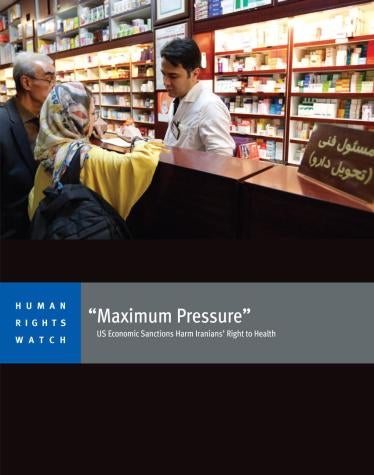
US Economic Sanctions Harm Iranians’ Right to Health
This report documents how broad restrictions on financial transactions, coupled with aggressive rhetoric from US officials, have drastically constrained the ability of Iranian entities to finance humanitarian imports, including vital medicines and medical equipment. While the US government has built exemptions for humanitarian imports into its sanctions regime, Human Rights Watch found that in practice these exemptions have failed to offset the strong reluctance of US and European companies and banks to risk incurring sanctions and legal action by exporting or financing exempted humanitarian goods. The result has been to deny Iranians access to essential medicines and to impair their right to health. Under international law, the US should monitor the impact of its sanctions on Iranians' rights and address any violations sanctions cause.
A Guide for First Nations Communities and Advocates
This report provides an overview of the legal framework behind the human right to water and recommendations on how to work with government officials and other towards the realization of this right.
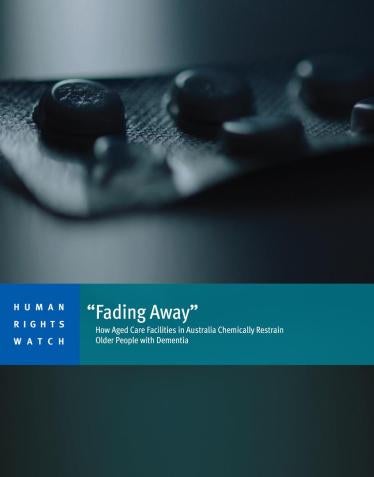
How Aged Care Facilities in Australia Chemically Restrain Older People with Dementia
This report found that instead of providing support to older people with dementia, facilities use drugs to control their behavior, a practice known as chemical restraint. Many of the drugs used to control people in aged care facilities are antipsychotics that are not approved in Australia for older people with dementia. In addition to the physical, social, and emotional harm for older people restrained with these drugs, the use of these drugs in older people with dementia is also associated with an increased risk of death.
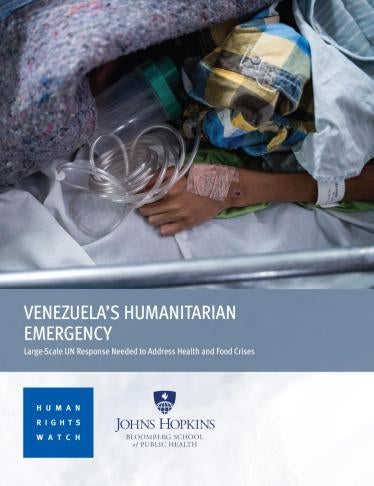
Large-Scale UN Response Needed to Address Health and Food Crises
This report documents increased numbers of maternal and infant deaths; the unchecked spread of vaccine-preventable diseases, such as measles and diphtheria; and sharp increases in the transmission of infectious diseases such as malaria and tuberculosis in Venezuela. Available data shows high levels of food insecurity and child malnutrition, as well as of hospital admissions of malnourished children.
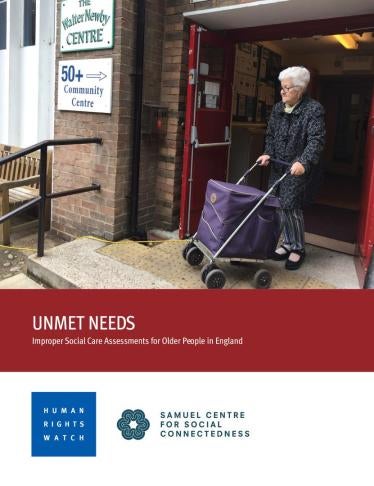
Improper Social Care Assessments for Older People in England
For this report, Human Rights Watch spoke with older people and their relatives in 12 cities and towns across England. Some said that assessors appeared not to understand their disabilities and support needs. In other cases, before beginning an assessment, assessors announced that services would be cut regardless of an individual’s actual need. In some cases, services were denied or cut significantly, affecting older people’s health and wellbeing.
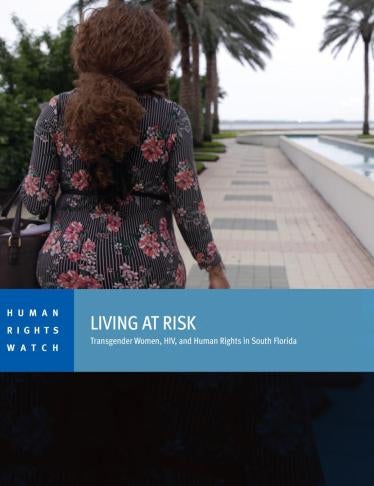
Transgender Women, HIV, and Human Rights in South Florida
This report documents the harmful impact of state and federal policies on transgender women in two Florida counties – Miami-Dade and Broward – that have the highest rates of new HIV infection in the United States. Many women interviewed said they experience disrespect, mistreatment, and in some cases, denial of services from government-funded clinics. Florida’s inaccurate and incomplete data collection on HIV among transgender people leaves them undercounted and excluded from government programs to address the epidemic.
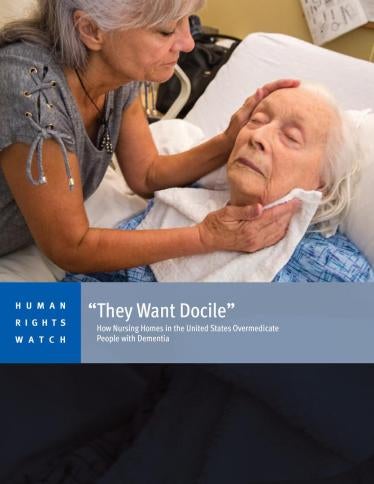
How Nursing Homes in the United States Overmedicate People with Dementia
This report estimates that every week in US nursing facilities, more than 179,000 people, mostly older and living with dementia, are given antipsychotic drugs without an appropriate diagnosis. Facilities administer these drugs in many cases without obtaining informed consent from residents or their families.
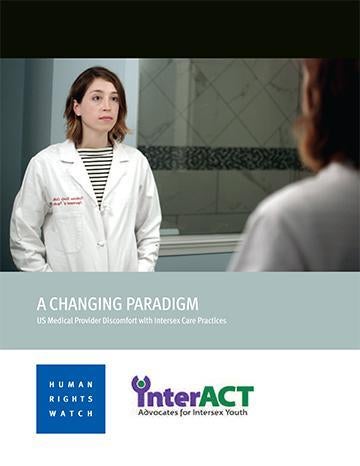
US Medical Provider Discomfort with Intersex Care Practices
This report examines the controversy over the operations inside the medical community and the pressure on parents to opt for surgery. Once called “hermaphrodites”—a term now considered pejorative and outdated, intersex people are not rare, but their needs are widely misunderstood. Based on a medical theory popularized in the 1960s, doctors perform surgery on intersex children—often in infancy—with the stated aim of making it easier for them to grow up “normal.” The results are often catastrophic, the supposed benefits are largely unproven, and there are rarely urgent health considerations requiring immediate, irreversible intervention.
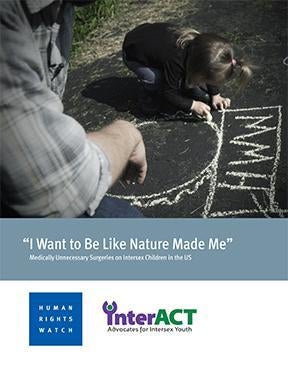
Medically Unnecessary Surgeries on Intersex Children in the US
This report examines the physical and psychological damage caused by medically unnecessary surgery on intersex people, who are born with chromosomes, gonads, sex organs, or genitalia that differ from those seen as socially typical for boys and girls. The report examines the controversy over the operations inside the medical community, and the pressure on parents to opt for surgery.