War Crimes and Crimes Against Humanity in Burkina Faso by All Sides
The 316-page report, “‘None Can Run Away’: War Crimes and Crimes Against Humanity in Burkina Faso by All Sides,” documents the devastating impact on civilians of an armed conflict that has received scant global attention. Researchers documented 57 incidents involving Burkinabè military forces and allied militias known as the Volunteers for the Defense of the Homeland (VDPs), and the Islamist armed group Jama’at Nusrat al‑Islam wa al‑Muslimin (JNIM) since the current military junta seized power in September 2022. Human Rights Watch issued a question and answer document to explain the legal issues involved.
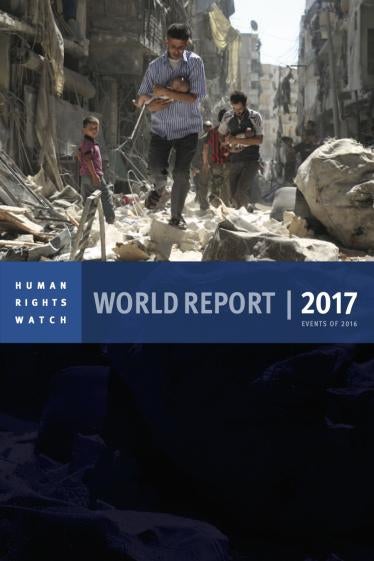
World Report 2017 summarizes key human rights issues in more than 90 countries and territories worldwide. It reflects investigative work that Human Rights Watch staff undertook in 2016, usually in close partnership with human rights activists in the country in focus.
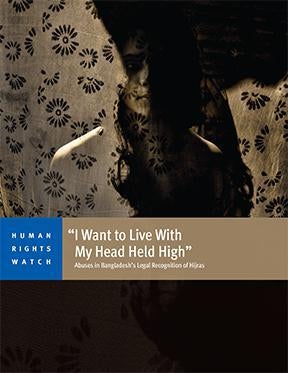
Abuses in Bangladesh’s Legal Recognition of Hijras
This report documents abuses suffered by a group of hijras, when they were forced to undergo so-called medical examinations at a hospital in Dhaka, the capital, in 2015, as part of a government employment program. The medical exams were ordered as part of the routine government hiring procedure, but absent a clear procedure to identify and respect hijras, hospital staff responded based on their own personal biases. Although a 2013 directive from the cabinet recognizes hijras as a third gender, the government has not developed rights-based procedures for changing their gender on official documents, leaving them open to abuse when they seek to assert their rights, Human Rights Watch found.
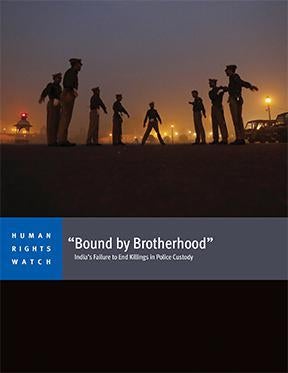
This report examines police disregard for arrest regulations, custodial deaths from torture, and impunity for those responsible. It draws on in-depth investigations into 17 deaths in custody that occurred between 2009 and 2015, including more than 70 interviews with victims’ family members, witnesses, justice experts, and police officials. In each of the 17 cases, the police did not follow proper arrest procedures, making the suspect more vulnerable to abuse.
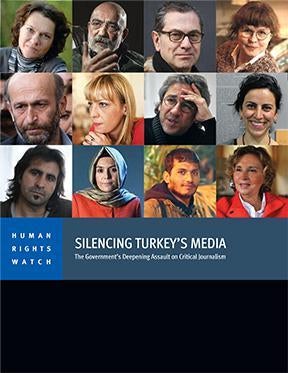
The Government’s Deepening Assault on Critical Journalism
This report documents five important components of the crackdown on independent domestic media in Turkey, including the use of the criminal justice system to prosecute and jail journalists on bogus charges of terrorism, insulting public officials, or crimes against the state. Human Rights Watch also documented threats and physical attacks on journalists and media organizations; government interference with editorial independence and pressure on media organizations to fire critical journalists; the government’s takeover or closure of private media companies; and restrictions on access to the airwaves, fines, and closure of critical television stations.
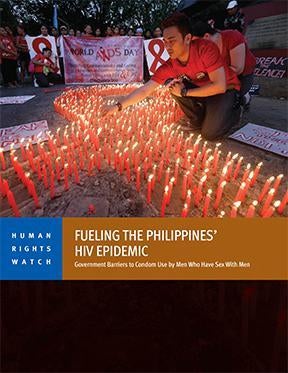
Government Barriers to Condom Use by Men Who Have Sex With Men
This report documents the failure of national and local governments in the Philippines to address the growing HIV prevalence among men who have sex with men.
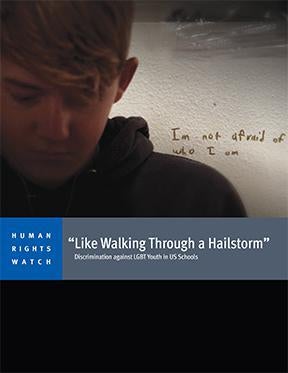
This report documents a range of problems facing LGBT students. The concerns include bullying and harassment, exclusion of LGBT topics from school curricula and resources, restrictions on LGBT student groups, and discrimination and bigotry from both classmates and school personnel on the basis of sexual orientation and gender identity.
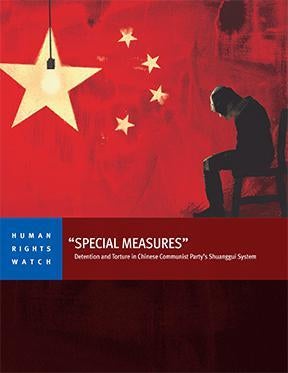
Detention and Torture in the Chinese Communist Party’s Shuanggui System
This report details abuses against shuanggui detainees, including prolonged sleep deprivation, being forced into stress positions for extended periods of time, deprivation of water and food, and severe beatings. Detainees are also subject to solitary and incommunicado detention in unofficial detention facilities. After “confessing” to corruption, they are typically brought into the criminal justice system, convicted, and sentenced to often lengthy prison terms.
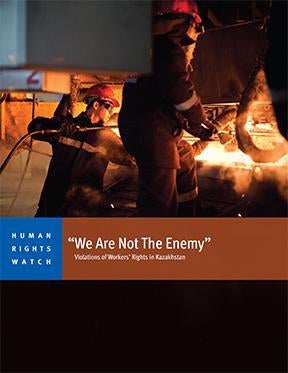
This report details the significant legal and practical obstacles workers in Kazakhstan must overcome to organize and defend their interests in the workplace. Human Rights Watch interviewed more than 50 trade union leaders, labor activists, and workers in key industries across Kazakhstan, and documented harassment, surveillance, and, in some cases, spurious legal prosecution or dismissals in apparent retaliation for labor activism. The Kazakh government should take immediate steps to lift restrictions on workers’ rights and the ability to organize.
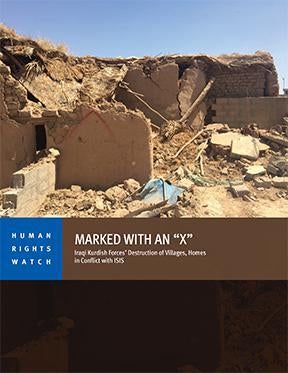
Iraqi Kurdish Forces' Destruction of Villages, Homes in Conflict with ISIS
This report looked at destruction of homes between September 2014 and May 2016 in disputed areas of Kirkuk and Nineveh governorates, areas nominally under Iraqi government jurisdiction but under Kurdistan Regional Government (KRG) control. The destruction, which took place after KRG Peshmerga forces routed Islamic State (also known as ISIS) fighters, targeted Arab homes while leaving Kurdish homes intact. KRG leaders have maintained that these are historically Kurdish areas that they intend to incorporate into the Kurdistan region.
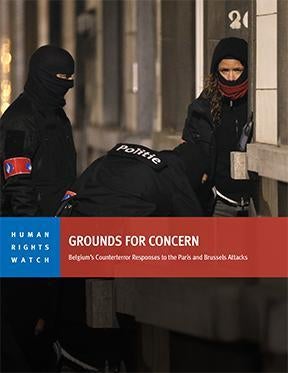
Belgium’s Counterterror Responses to the Paris and Brussels Attacks
This report details measures that place prisoners detained for terrorism in prolonged isolation, and allow the government to suspend passports and review terrorism suspects’ phone and email logs without judicial approval. Other laws can revoke Belgian citizenship and criminalize comments that stop short of direct incitement to terrorism. It also details abusive police responses during counterterrorism raids and detentions.
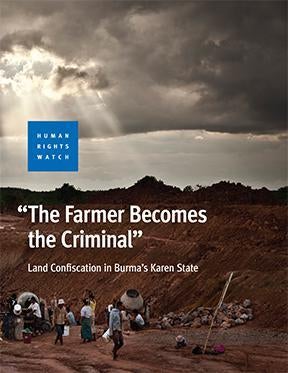
This report documents human rights violations by militias, police, and government officials in Karen State for the confiscation of land from ethnic Karen farmers, many of whose families had farmed the land for generations.
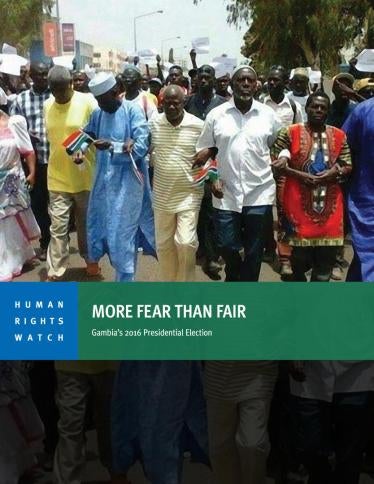
This report describes how the government of President Yahya Jammeh, who came to power in a 1994 coup, has used a crackdown on the opposition, domination of state media, and state resources for campaigning to ensure a political advantage in the election. Authorities have threatened, arbitrarily arrested, jailed, and tortured members of opposition political parties. Since April, more than 90 opposition activists have been arrested for participating in peaceful protests, with 30 sentenced to three-year prison terms. Two opposition activists have died in custody.
Turkey’s Post-Coup Suspension of Safeguards Against Torture
This report documents how the weakening of safeguards through decrees adopted under the state of emergency has negatively affected police detention conditions and the rights of detainees. It details 13 cases of alleged abuse, including stress positions, sleep deprivation, severe beatings, sexual abuse, and rape threats, since the coup attempt.
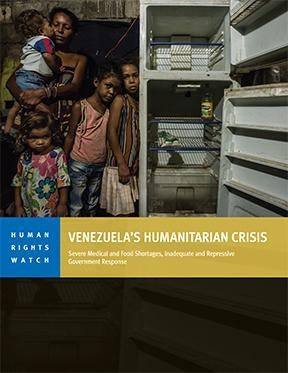
Severe Medical and Food Shortages, Inadequate and Repressive Government Response
This report documents how the shortages have made it extremely difficult for many Venezuelans to obtain essential medical care or meet their families’ basic needs. The Venezuelan government has downplayed the severity of the crisis. Although its own efforts to alleviate the shortages have not succeeded, it has made only limited efforts to obtain international humanitarian assistance that might be readily available. Meanwhile, it has intimidated and punished critics, including health professionals, human rights defenders, and ordinary Venezuelans who have spoken out about the shortages.