The Inhumane Effects of White Phosphorus Munitions and the Need for Stronger Law
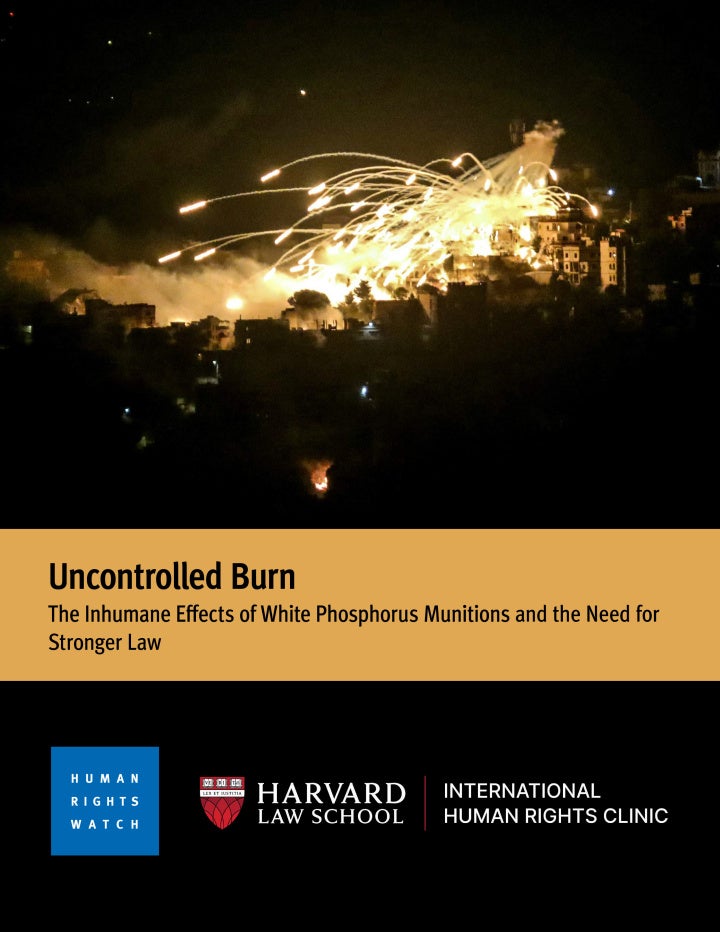
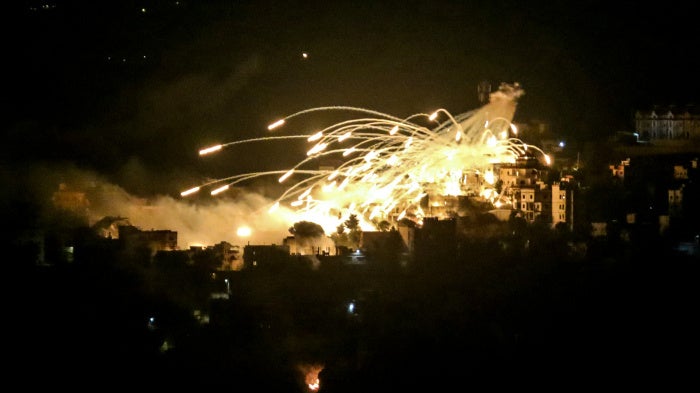
The 45-page report, “Uncontrolled Burn: The Inhumane Effects of White Phosphorus Munitions and the Need for Stronger Law,” documents 23 verified incidents of Israeli use in southern Lebanon between March and May 2026. The report also details the horrific harm the munitions have caused in armed conflicts in recent years. White phosphorus munitions, which produce fire when their payload is exposed to oxygen, are not currently regulated by a specific treaty.
The Rwandan government is using the pretext of security to cover human rights abuses against Rwandan citizens, Human Rights Watch said in this report. The report details cases of assassination, murder, arbitrary detention, torture, and other abuses perpetrated chiefly by soldiers of the Rwandan Patriotic Army, and by members of a government-backed citizens' militia called the Local Defense Force.
Serbia's Campaign of Violence and Harassment Against Government Critics
The Serbian and Yugoslav governments have consistently used repressive measures-unfair trials, harassment, and violence-against opposition politicians, street demonstrators, and independent domestic critics.
On April 3, 2000, as part of a larger agreement between the International Monetary Fund (IMF) and the government of Angola to reform the economy, the IMF and government reached an agreement to monitor oil revenues that would be supervised by the World Bank.
Nearly four years ago, in May 1996, the United States began a search for alternatives to antipersonnel landmines so that the U.S. military could completely eliminate their use "as soon as possible." A little more than a year later, a target date of 2006 was established for fielding alternatives, thus permitting the U.S. to join the 1997 Mine Ban Treaty (Ottawa Convention) at that time.
Continuing abuses of civilians by all parties, the growing regionalization of the Central African conflict, and the threat of increased violence from extremist organizations underscore the urgency of ending the war in Burundi. But a peace without accountability for past crimes offers little hope for future stability within Burundi or the larger region.
The individuals responsible for the killing, mass destruction, and forced expulsions that convulsed East Timor last September must be brought to justice. The United Nations and its member states, actively involved in East Timor at the time of the carnage, have a particular obligation to see that justice is done.
The trial of Tunisia's most outspoken human rights lawyer, Radhia Nasraoui, and twenty co-defendants was attended by jurists representing Amnesty International, Human Rights Watch, the Observatory for the Protection of Human Rights Defenders (a joint program of the International Federation of Human Rights [FIDH] and the World Organization Against Torture [OMCT]), and other organizations.
Human Rights Watch began investigating the use of rape and other forms of sexual violence by all sides in the conflict in 1998 and continued to document rape accounts throughout the refugee crisis in 1999.
Local human rights defenders play a crucial role in promoting the rule of law. They are a lifeline of information, tying victims of government abuse to the rest of society, and providing the first recourse for victims in their search for redress and justice.
Six parties will contest elections to the lower chamber of a new bicameral parliament in Tajikistan on February 27, 2000. The vote will mark the first multiparty elections since the June 1997 peace agreement that ended Tajikistan's civil war, and are seen as the culmination of the peace process.
In the early 1990s, when the Turkish government's conflict with Kurdish separatists was at its most fierce, a right-wing organization called "Hizbullah" began attacking suspected sympathizers of the Kurdish Workers' Party (PKK). Young assassins operated in broad daylight in the mainly Kurdish cities of southeast Turkey.
Since the election of President Khatami in May 1997, Iranian reformists have spoken openly of respecting basic freedoms and the rule of law. In Iranian society generally, many petty social restrictions have been eased. The atmosphere surrounding the current parliamentary election campaign in Iran is notably freer than the last time around, in March 1996.
This report has the limited goal of assessing the number of civilian deaths from NATO attacks, as a step toward assessing NATO forces' compliance with their obligation to make protection of civilians an integral part of any use of military force. The benchmarks to be used for judging NATO's attacks are those of international humanitarian law, also known as the laws of war.
Russian soldiers summarily executed at least thirty-eight civilians in the Staropromyslovski district of Grozny, Chechnya, between late December and mid-January, according to testimony taken by Human Rights Watch. Most of the victims were women and elderly men, and all appear to have been deliberately shot by Russian soldiers at close range.
There are currently more than twenty thousand prisoners in the United States, nearly two percent of the prison population, housed in special super-maximum security facilities or units. Although supermax facilities are ostensibly designed to house incorrigibly violent or dangerous inmates, many of the inmates confined in them do not meet those criteria.