Two incidents of videoed cruelty of stray animals in China this summer have triggered widespread outrage. Both spread rapidly online, and both showed a familiar government response: censorship, intimidation, and dispersion.
In late June, videos of four boys cruelly mistreating and burning a dog and her puppies in Jieyang, Guangdong province, circulated widely online. Public outrage was swift and overwhelming: paid billboards and other advertisements appeared in over 100 cities across the country called for an end to animal abuse. More than 70,000 people signed an online petitiondemanding accountability and a national animal protection law.
Animal protection supporters abroad crowdfunded a billboard in Hong Kong’s Mong Kok district and purchased screen advertisements in Taipei and New York’s Times Square.
On June 30, the government, while acknowledging that the abuse occurred and explaining the consequences for those responsible, also urged "netizens not to spread related information."
Suppression followed. Social media platforms removed posts about “Wang Wang,” a generic and endearing term supporters used for the puppies’ mother. The Chinese social media site Weibo also reportedly blocked a celebrity’s statement and a related trending topic. Online, people have reported that police ordered memorial advertisements taken down from public screens in several cities. An organizer told the BBC that police had questioned and threatened dozens of others, telling them to stop their activism.
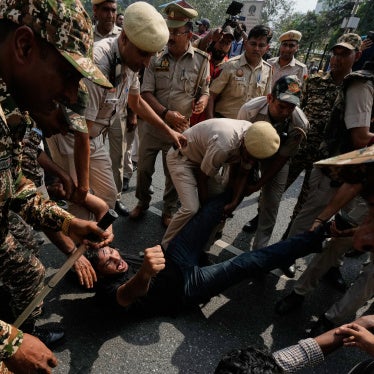
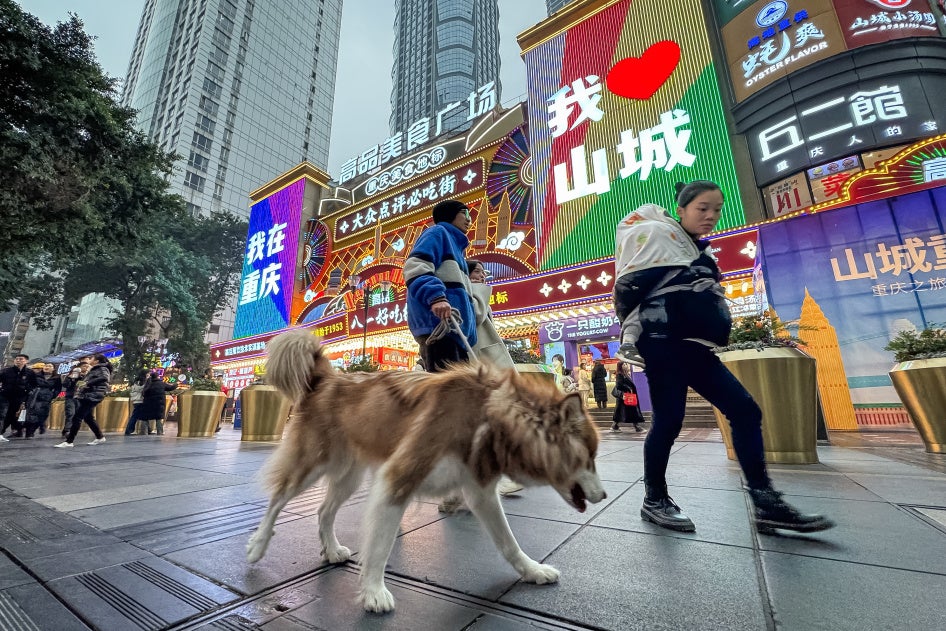
The Jieyang response follows a pattern. Earlier in June, police in the municipality of Chongqing forcibly dispersed hundreds of residents who had gathered for days to protest another reported case of dog abuse. They injured several people and briefly took dozens away before detaining—under public pressure—the alleged abuser.
Animal abuse has clearly touched a nerve in China, especially among young people for whom pets have become an important source of companionship. Peaceful expressions of public outrage should never be considered a threat to state security. Chinese authorities should stop suppressing public discussion of animal abuse, free any protesters still detained, and investigate police violence in Chongqing. They should also listen to what people are saying, whether it’s about personal freedom, the rights of the public, or the protection of Wang Wangs.