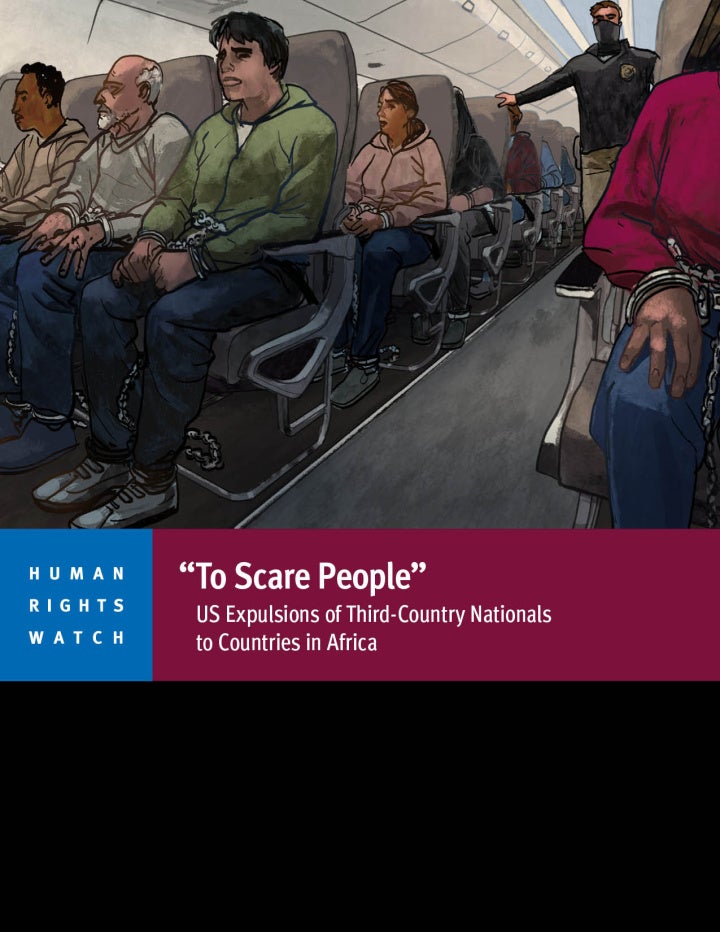
US Expulsions of Third-Country Nationals to Countries in Africa
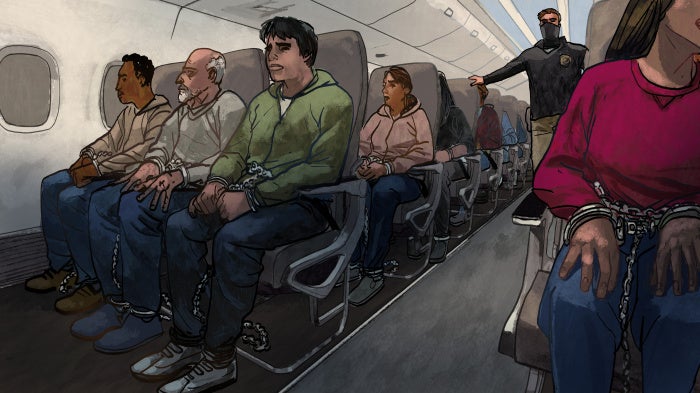
The 125-page report, “‘To Scare People’: US Expulsions of Third-Country Nationals to Countries in Africa,” documents that US authorities denied the more than 500 people transferred to third countries a meaningful chance to contest their removals or to articulate their fears of being removed to these countries. Some countries arbitrarily detained people they had accepted, and some have sent people onward to the risk of persecution or torture in their home countries, violating the international law principle of nonrefoulement.
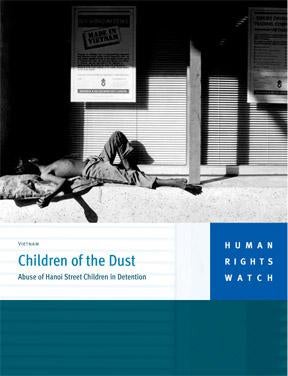
This 77-page report documents cases of serious violations of the rights of street children in Hanoi. Police routinely round up street children in arbitrary sweeps and deposit them at state “rehabilitation” centers – euphemistically called “Social Protection Centers” – where they are detained for periods ranging from two weeks to as much as six months.
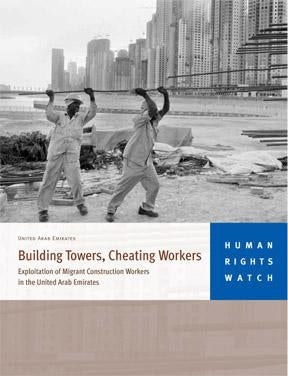
Exploitation of Migrant Construction Workers in the United Arab Emirates
Based on extensive interviews with workers, government officials and business representatives, this 71-page report documents serious abuses of construction workers by employers in the United Arab Emirates.
The second Congo war began in 1998 and involved the Democratic Republic of Congo (DRC) government forces of Laurent Kabila, which were supported by Angola, Zimbabwe, and Namibia, against several rebel movements backed by Uganda, Rwanda, and Burundi.
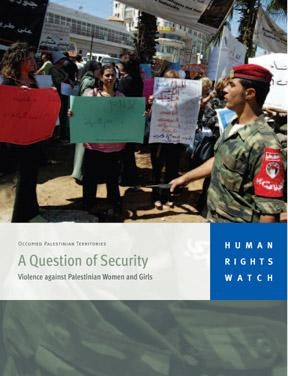
This 101-page report, based on field research conducted in the West Bank and Gaza in November 2005 and early 2006, documents dozens of cases of violence ranging from spousal and child abuse to rape, incest and murders committed under the guise of family “honor.” There is increasing recognition of the problem, and some PA officials have indicated their support for a more vigorous government res
This 45-page paper documents how the UK government is undermining the torture ban, even as it proclaims its efforts to combat torture worldwide. Torture, including returns to risk of torture, is prohibited by international law. No exceptions are allowed, even in time of war or national emergency.
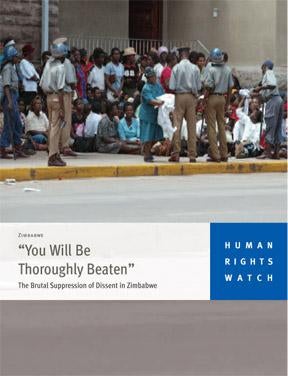
This 28-page report reveals the repressive tactics that the Zimbabwean government has used against civil society activists in the past year. Human Rights Watch has documented systematic abuses against activists, including excessive use of force by police during protests, arbitrary arrests and detention, and the use of torture and mistreatment by police and intelligence officials.
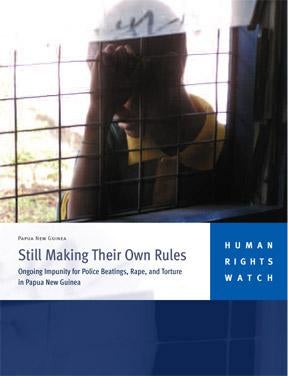
Ongoing Impunity for Police Beatings, Rape, and Torture in Papua New Guinea
This 50-page report is a follow-up to Human Rights Watch’s 2005 report on police violence against children. The report tracks developments in 2005 and 2006, and determines that abusive police officials rarely face punishment. Police violence against children remains rampant in Papua New Guinea, despite recent juvenile justice reform efforts.
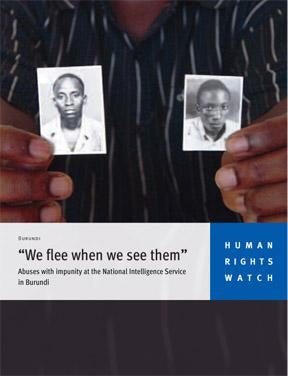
Abuses with Impunity at the National Intelligence Service in Burundi
This 33-page report, “‘We flee when we see them’: Abuses with Impunity by the Burundi National Intelligence Service,” documents five incidents of extrajudicial executions, as well as instances of torture and arbitrary detention. Some detainees were beaten with batons until they lost consciousness.
This briefing paper documents how the government barred at least 12 students from university registration this past year, despite the fact that graduate programs had accepted them on the basis of successful competitive entrance examinations.
European Union efforts to shift responsibility for migration to countries beyond EU borders threaten the human rights of migrants, asylum seekers, and refugees. Current EU migration polices are largely focused on keeping migrants and asylum seekers outside EU borders.
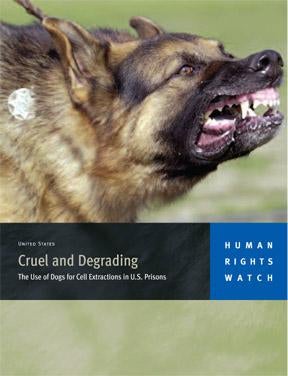
The Use of Dogs for Cell Extractions in U.S. Prisons
This 20-page report publicly reveals this practice for the first time. It also shows that the practice is not only cruel, but wholly unnecessary as there are safer, more humane alternatives that corrections officers can use – and most across the country do use – to remove prisoners from their cells.
An Analysis of the Uzbek Government’s June 30, 2006 Aide-Memoire
In this 16-page briefing paper, Human Rights Watch analyzes an Uzbek government memorandum from June 2006, which was prepared in response to a December 2005 UN General Assembly resolution that was critical of Uzbekistan’s human rights record.
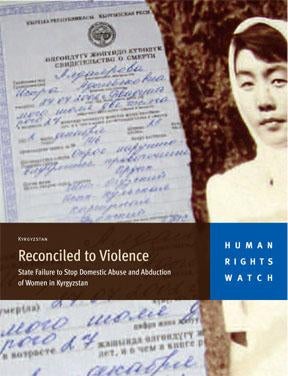
State Failure to Stop Domestic Abuse and Abduction of Women in Kyrgyzstan
This 140-page report concludes that although Kyrgyzstan has progressive laws on violence against women, police and other authorities fail to implement them. As a result, women remain in danger and without access to justice.