US Expulsions of Third-Country Nationals to Countries in Africa
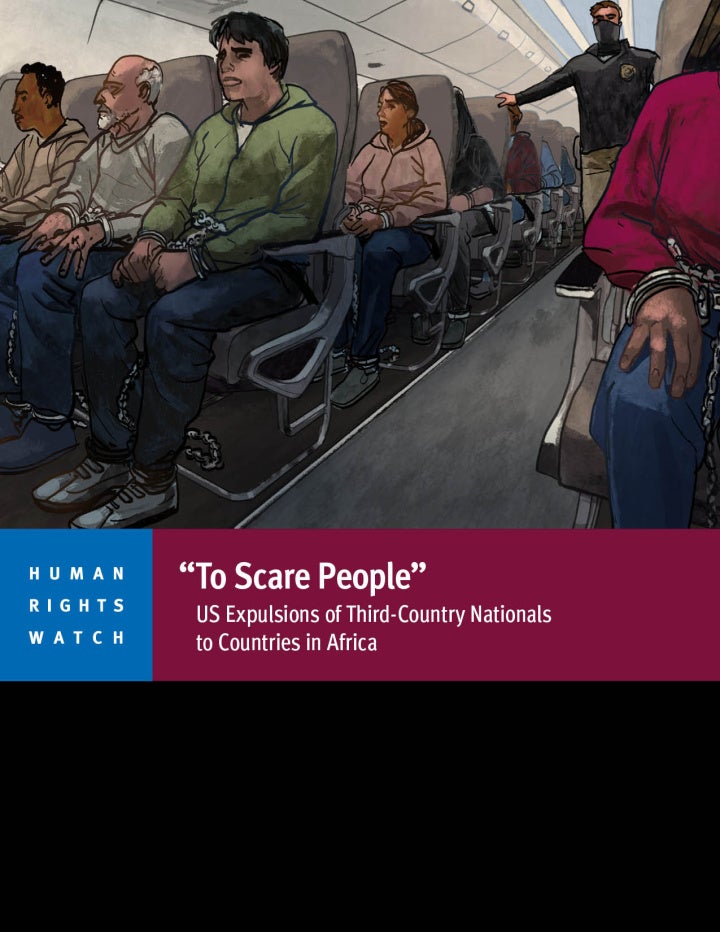
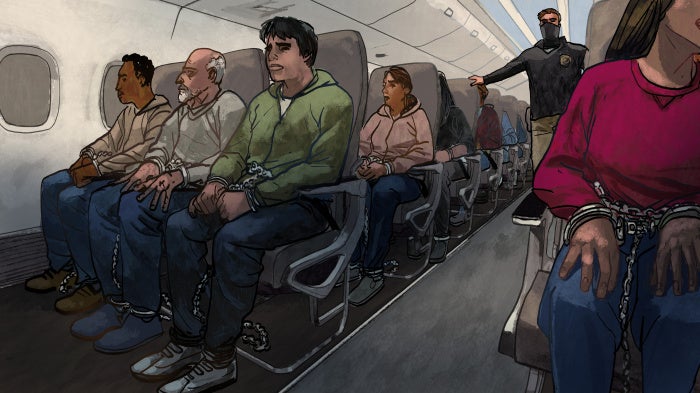
The 125-page report, “‘To Scare People’: US Expulsions of Third-Country Nationals to Countries in Africa,” documents that US authorities denied the more than 500 people transferred to third countries a meaningful chance to contest their removals or to articulate their fears of being removed to these countries. Some countries arbitrarily detained people they had accepted, and some have sent people onward to the risk of persecution or torture in their home countries, violating the international law principle of nonrefoulement.
This 20-page report documents two incidents in late November 2006 in which 13 persons were killed. On November 19, genocide survivor Frederic Murasira was killed in the commercial center of Mugatwa in eastern Rwanda. Within hours, residents of a nearby village inhabited by genocide survivors killed eight Mugatwa residents who apparently had played no part in the murder.
While some governments have already started making meaningful reforms to help domestic workers work in greater safety and dignity, others are pursuing superficial changes that fail to address the root causes of exploitation and abuse. Governments around the world have choices to make about the route they will take; this essay identifies some of the positive options available.
Human Rights Watch’s 556-page World Report 2007 contains survey information on human rights developments during 2006 in more than 75 countries. In addition to the introductory essay on the European Union, the volume contains essays on freedom of expression since 9/11, the plight of migrant domestic workers, and a human rights agenda for UN Secretary-General Ban Ki-Moon.
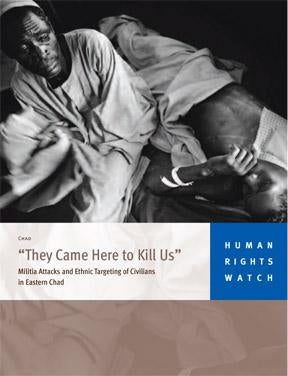
Militia Attacks and Ethnic Targeting of Civilians in Eastern Chad
This 70-page report documents a drastic deterioration in the human rights situation in eastern Chad, where more than 300 civilians were killed and at least 17,000 people displaced in militia violence in November 2006 alone. In most instances, civilians were targeted on the basis of ethnic identity.
This 17-page briefing paper outlines the sweeping powers that Egypt's Political Parties Law grants to the Political Parties Committee, a body dominated by the president and the ruling party, to license and suspend political parties. The law gives President Mubarak and the ruling party broad authority to choose who may compete against them and under what terms.
The Impact of Turkey’s Compensation Law with Respect to Internally Displaced People
In this 40-page briefing paper, Human Rights Watch analyzes how the Turkish government is failing to provide fair compensation for hundreds of thousands of mainly Kurdish villagers displaced by the military’s brutal counterinsurgency campaigns in the southeast.
During the Israel-Hezbollah war, Israel was accused by Human Rights Watch and numerous local and international media outlets of attacking two Lebanese Red Cross ambulances in Qana on July 23, 2006.
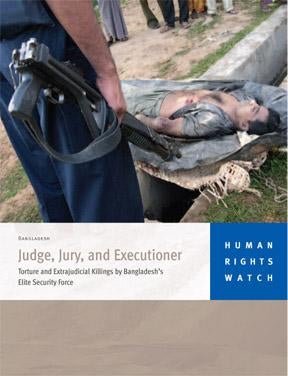
Torture and Extrajudicial Killings by Bangladesh’s Elite Security Force
This 79-page report describes how Bangladesh's Rapid Action Battalion (RAB), established in 2004 to stop spiraling crime, has made a practice of killing criminal suspects in detention. Torture methods used by the force include beatings, boring holes in suspects with electric drills, and the application of electric shock.
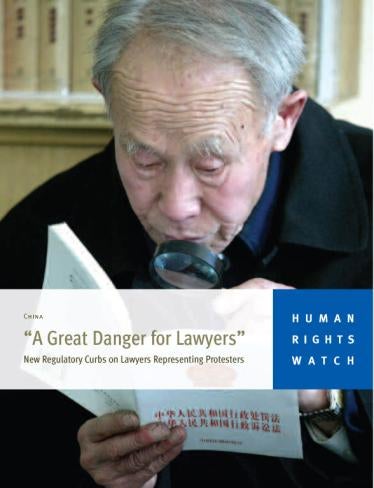
New Regulatory Curbs on Lawyers Representing Protesters
This 71-page report details the “Guiding Opinions on Lawyers Handling Mass Cases,” which were introduced in March 2006, and discusses subsequently adopted local variants. The report explains how the Guiding Opinions let local authorities interfere in cases involving 10 or more plaintiffs, making it more difficult for the cases to get a fair hearing in court.
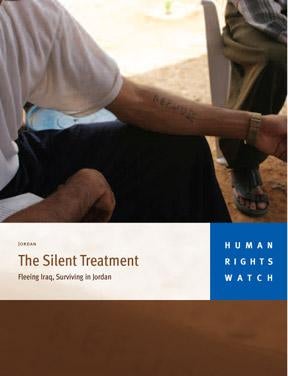
After fleeing violence and persecution in Iraq, hundreds of thousands of Iraqis living in Jordan face a daily threat of arrest, fines and deportation because the Jordanian government treats them as illegal immigrants rather than refugees. Since the war in Iraq began in 2003, more than 1 million Iraqis have fled, but none of Iraq’s neighbors, nor the United States, treats them as refugees.
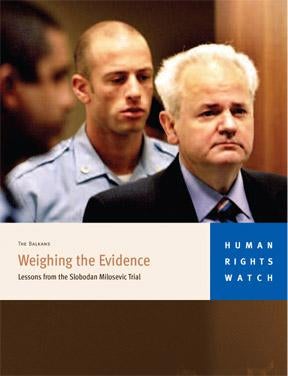
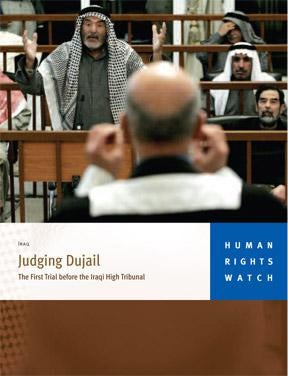
This 95-page report is based on 10 months of observation and dozens of interviews with judges, prosecutors and defense lawyers, and is the most comprehensive analysis to date of the trial.
Rights to Freedom of Expression and Information under Angola’s New Press Law
In this 25-page report, Human Rights Watch analyses Angola’s new Press Law, which was issued in May. The report concludes that, despite improvements over previous Angolan law, the new law still contains elements that undermine press freedom. In addition, many of its crucial provisions will remain inoperable unless implementing legislation is enacted immediately.
The task of the intergovernmental working group on review of mandates is wide-ranging and important. In this paper, Human Rights Watch identifies the six key points that should help guide the working group's review.
Human Rights Watch Briefing Paper for the 37th Session UN Committee against Torture
This 16-page briefing paper is addressed to the Committee against Torture. It documents ill-treatment and torture by pro-Moscow Chechen forces under the effective command of Prime Minister Ramzan Kadyrov, as well as by federal police personnel.