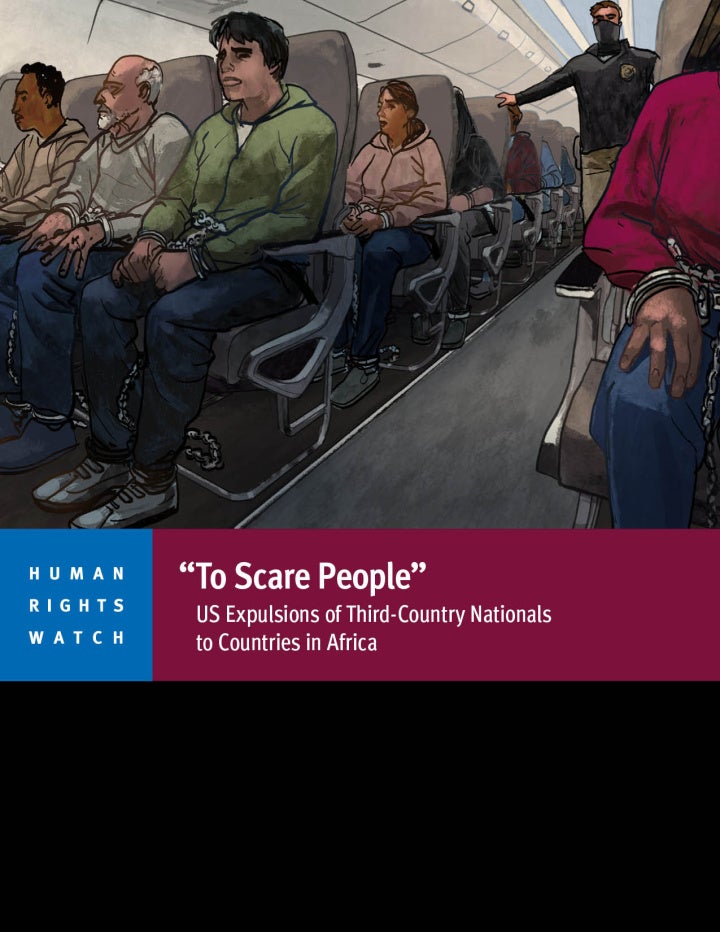
US Expulsions of Third-Country Nationals to Countries in Africa
The 125-page report, “‘To Scare People’: US Expulsions of Third-Country Nationals to Countries in Africa,” documents that US authorities denied the more than 500 people transferred to third countries a meaningful chance to contest their removals or to articulate their fears of being removed to these countries. Some countries arbitrarily detained people they had accepted, and some have sent people onward to the risk of persecution or torture in their home countries, violating the international law principle of nonrefoulement.
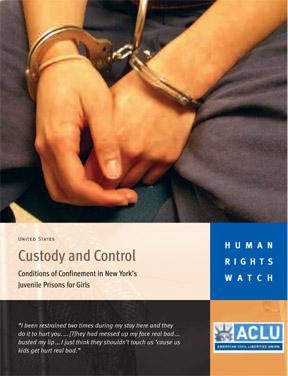
Conditions of Confinement in New York’s Juvenile Prisons for Girls
This 136-page report provides an in-depth look at the abuses and neglect suffered by girls confined in two remote New York State juvenile facilities known as Tryon and Lansing. The facilities are operated by the New York Office of Children and Family Services (OCFS) and are the only two higher-security facilities in New York State holding girls.
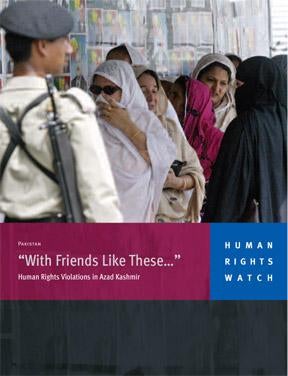
This 71-page report, based on research in Azad Kashmir, uncovers abuses by the Pakistani military, intelligence services and militant organizations. In Azad Kashmir, a region largely closed to international scrutiny until a devastating earthquake hit in 2005, the Pakistani government represses democratic freedoms, muzzles the press and practices routine torture.
This 58-page briefing paper makes 34 recommendations to the Sri Lankan government and the Liberation Tigers of Tamil Eelam (LTTE), known as the Tamil Tigers, to better protect civilians. Human Rights Watch urges the government and the LTTE to accept a United Nations human rights monitoring mission in Sri Lanka and adopt specific measures to protect the civilian population.
The General Intelligence Department and Jordan’s Rule of Law Problem
This 66-page report documents the arbitrary arrest and abusive treatment of detainees held at the General Intelligence Department’s (GID) central detention facility in Amman. The report finds that there is no clear basis in Jordanian law for the GID’s law enforcement role, and that detainees cannot seek an independent judicial review of the grounds for arrest and continued detention.
New Approaches to Addressing Human Rights Situations
The new Human Rights Council (“HRC” or “Council”) was created in order to strengthen protection for the victims of human rights violations worldwide. The Council’s ability to succeed in that mission will depend on the development of a more effective approach to consideration of human rights situations in particular countries.
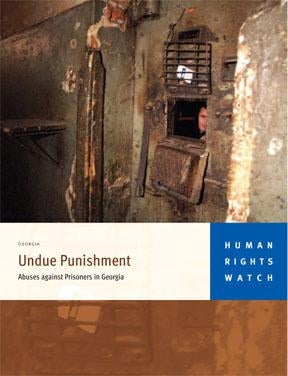
This 101-page report documents the conditions in which the majority of the country’s 13,000 prisoners are being held. In many facilities, prisoners live in severely overcrowded, filthy and poorly-ventilated cells. In the last two years, the prison population has nearly doubled due to the routine use of pretrial detention, even for nonviolent offences.
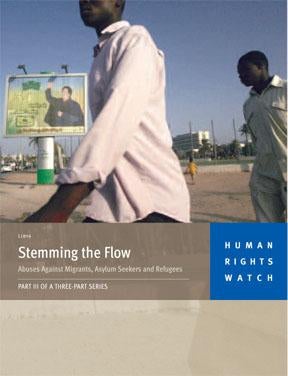
Abuses Against Migrants, Asylum Seekers and Refugees
This 135-page report documents how Libyan authorities have arbitrarily arrested undocumented foreigners, mistreated them in detention, and forcibly returned them to countries where they could face persecution or torture, such as Eritrea and S
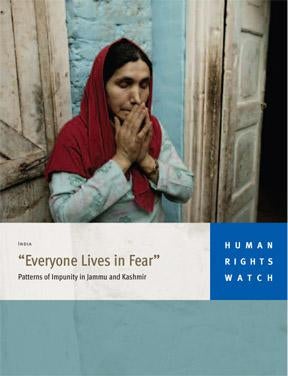
This 156-page report documents recent abuses by the Indian army and paramilitaries, as well as by militants, many of whom are backed by Pakistan. Indian security forces have committed torture, “disappearances” and arbitrary detentions, and they continue to execute Kashmiris in faked “encounter killings,” claiming that these killings take place during armed clashes with militants.
This 42-page report documents the drastic deterioration in the security of the estimated 34,000 Palestinian refugees in Iraq since the fall of Baghdad in April 2003.
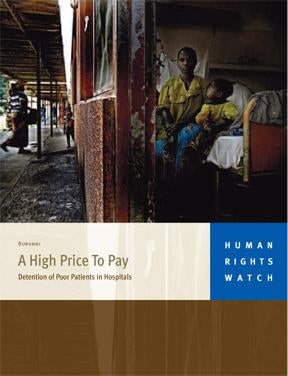
This 75-page report documents how Burundian hospitals in 2005 detained hundreds of indigent patients, sometimes in inhumane conditions. Many of those detained were women giving birth who unexpectedly needed caesarian deliveries.
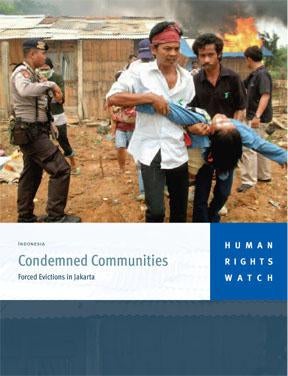
This 115-page report describes the Jakarta regoinal government’s excessive use of force to clear out urban slums. It draws on numerous evictees’ accounts of government security forces beating or mistreating them before destroying their homes and possessions.
Continuing Obstacles to the Reintegration of Serb Returnees
This 41-page report analyzes the key human rights problems affecting Serbs returning to Croatia, including violence and intimidation, the loss of housing rights and limited access to state employment. Successive government programs to assist returning Serbs have failed to deliver real benefits, with the qualified exception of a program to rebuild war-damaged homes.
Indefinite Detention Under Malaysia’s Emergency Ordinance
This 35-page report documents how the Malaysian government has detained criminal suspects indefinitely without charge or trial, subjected them to beatings and ill treatment while in detention, and rearrested them upon court-ordered release. The Emergency Ordinance was enacted in 1969 as a “temporary measure” to respond to ethnic riots.
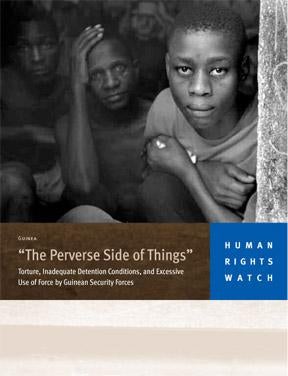
Torture, Inadequate Detention Conditions, and Excessive Use of Force by Guinean Security Forces
This 30-page report documents how police brutally torture men and boys held in police custody. The victims are individuals suspected of common crimes as well as those perceived to be government opponents. Once transferred from police custody to prison, many are left to languish for years awaiting trial in cramped, dimly lit cells where they face hunger, disease and sometimes death.
In May 2006, Human Rights Watch released its initial paper on the functions of the new Human Rights Council (HRC), focusing on universal periodic review (UPR), country situations, and the review of special procedures. In the ensuing months, numerous member states, nongovernmental organizations (NGOs), and leading scholars have offered proposals for how the UPR should be conducted.