War Crimes and Crimes Against Humanity in Burkina Faso by All Sides
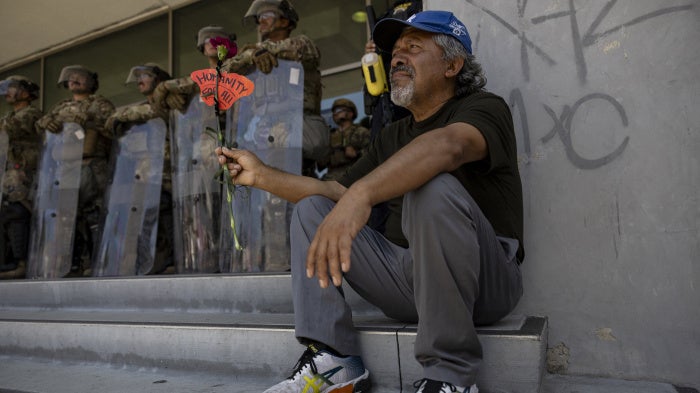
The 316-page report, “‘None Can Run Away’: War Crimes and Crimes Against Humanity in Burkina Faso by All Sides,” documents the devastating impact on civilians of an armed conflict that has received scant global attention. Researchers documented 57 incidents involving Burkinabè military forces and allied militias known as the Volunteers for the Defense of the Homeland (VDPs), and the Islamist armed group Jama’at Nusrat al‑Islam wa al‑Muslimin (JNIM) since the current military junta seized power in September 2022. Human Rights Watch issued a question and answer document to explain the legal issues involved.
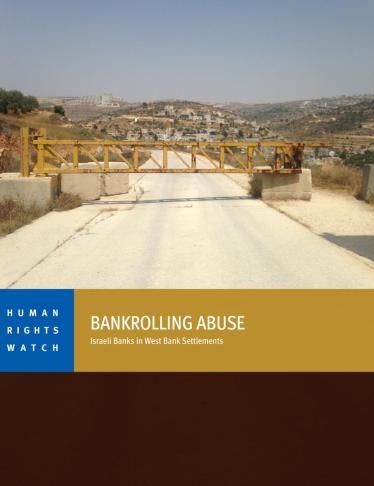
This report details new research on the scope of banking activities in settlements and the violations to which these activities contribute. Israel’s seven largest banks provide services to settlements. The report also documents the involvement of most of them in building housing units that expand settlements by acquiring property rights in new construction projects and shepherding the projects through to completion. The transfer by the occupier of members of its civilian population into the occupied territory, and the deportation or transfer of members of the population of the territory, are war crimes. By facilitating expansion of settlements, these banking activities facilitate unlawful population transfers.
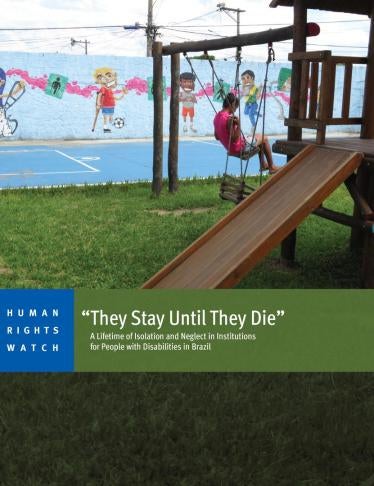
A Lifetime of Isolation and Neglect in Institutions for People with Disabilities in Brazil
This report found that many people with disabilities enter institutions as children and remain there for their entire lives. Most of these institutions visited by Human Rights Watch researchers did not provide for more than people’s basic needs, such as food and hygiene, with scarce contact with the community and little opportunity for personal development. Some residents are tied to their beds and given sedatives to control them.
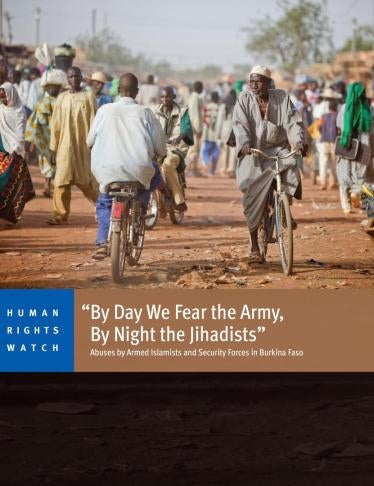
Abuses by Armed Islamists and Security Forces in Burkina Faso
This report documents the killings and harassment of villagers in the Sahel region caught between Islamists’ threats to execute those who collaborated with the government, and the security forces, who expected them to provide intelligence about the presence of armed groups, and meted out collective punishment when they didn’t. The report also addresses the brutal 2016 and 2017 armed Islamist attacks in Ouagadougou and documents detention-related abuses of suspects by the security forces.
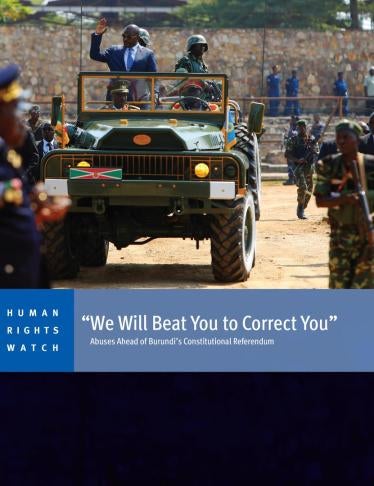
Abuses Ahead of Burundi’s Constitutional Referendum
This report documents violations and abuses by state security forces, intelligence services, members of the ruling party’s youth league – the Imbonerakure – and others close to the ruling party, in the year and a half leading up to the referendum. Many victims were targeted for refusing to register to vote or contribute funds to finance upcoming polls. In some cases, simply not belonging to the ruling party, the National Council for the Defense of Democracy-Forces for the Defense of Democracy (Conseil national pour la défense de la démocratie-Forces de défense de la démocratie, CNDD-FDD), was enough to create suspicion and provoke a response.
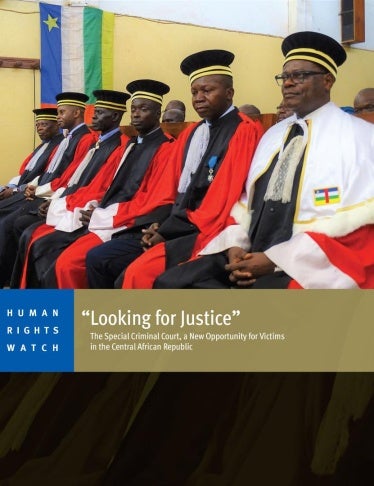
The Special Criminal Court, a New Opportunity for Victims in the Central African Republic
This report discusses the progress, obstacles, and challenges for the Special Criminal Court in its initial phases. Based on regular observation of the court and interviews with victim representatives, activists, court staff, UN representatives, donors, and government officials, Human Rights Watch offers observations on the current stage of the court’s development.
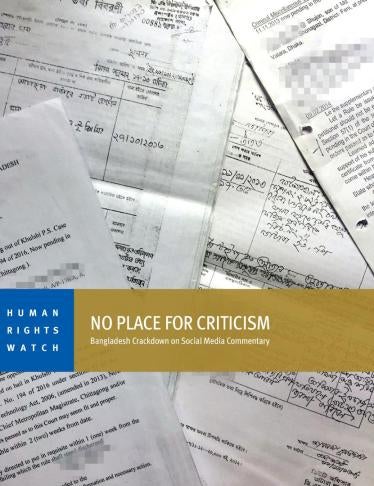
This report details dozens of arbitrary arrests since the Information and Communication Technology Act 2006 was amended in 2013 to incorporate harsher penalties and allowing the police to make arrests without warrant. As of April 2018, the police had submitted 1,271 charge sheets to the Cyber Tribunal in Dhaka, claiming sufficient evidence to prosecute under section 57 of the ICT Act.
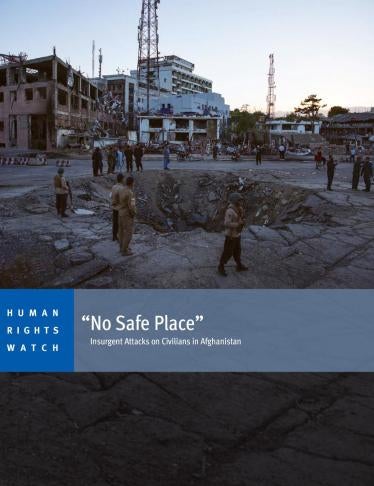
This report documents attacks since 2016 by the Taliban and groups affiliated with the Islamic State of Khorasan Province (ISKP), an affiliate of the Islamic State. While the Taliban claim they do not target civilians, the report documents indiscriminate attacks by the Taliban that have killed and injured thousands. ISKP-linked groups have targeted civilian facilities in urban areas of Afghanistan, including many Shia mosques. The report, based on interviews with 45 civilian victims of insurgent attacks and their relatives, highlights the lasting consequences of the attacks on affected families and communities.
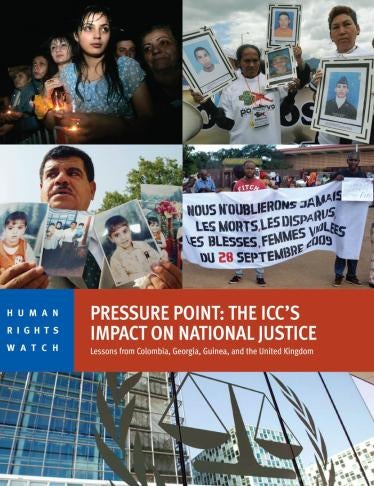
Lessons from Colombia, Georgia, Guinea, and the United Kingdom
This report examines aspects of the ICC Office of the Prosecutor’s practices in its preliminary examinations, which determine whether the court’s criteria to open a full investigation are met. Human Rights Watch found serious obstacles to justice in national courts, and mixed success in spurring progress in domestic prosecutions through the office’s interactions with authorities in Guinea, Colombia, Georgia, and the United Kingdom. But Human Rights Watch concluded that the office’s engagement can help make an important contribution.
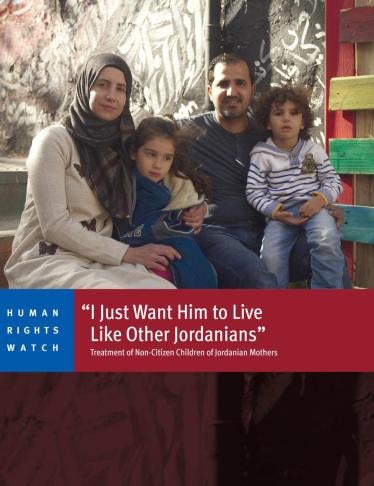
Treatment of Non-Citizen Children of Jordanian Mothers
This report details the ways Jordanian authorities restrict the rights of non-citizen children of Jordanian women to work, own property, travel from and return to Jordan, enroll in higher education, and access government health care and other services. A 2014 government decision purporting to ease restrictions has fallen far short of expectations. The multiple forms of exclusion and discrimination non-citizen children face often lead to severely diminished prospects for their future and place undue economic and social burdens on their families.
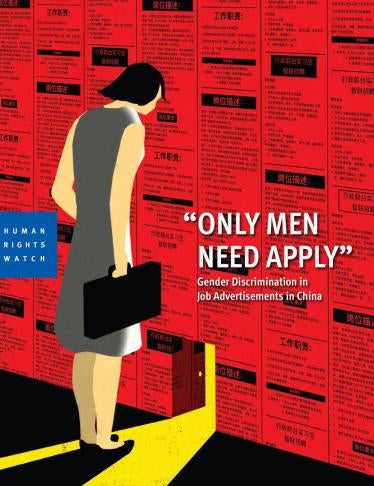
Gender Discrimination in Job Advertisements in China
This report analyzes over 36,000 job advertisements posted between 2013 and 2018 on Chinese recruitment and company websites and on social media platforms. Many of the ads specify a requirement or preference for men. Some job posts require women to have certain physical attributes – with respect to height, weight, voice, or facial appearance – that are irrelevant to job duties. Others use the physical attributes of companies’ current female employees to attract male applicants.
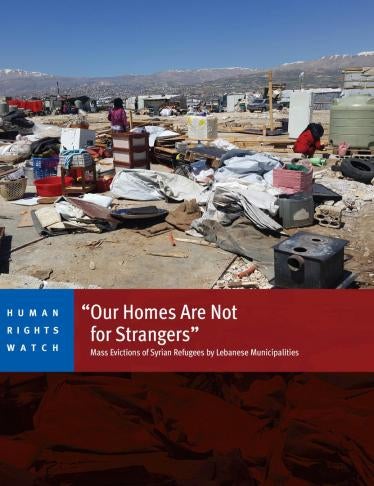
Mass Evictions of Syrian Refugees by Lebanese Municipalities
This report documents inconsistencies in the reasons municipalities have given for expelling Syrians and the failure of the central government to protect refugees’ rights. United Nations officials identified 3,664 such evictions from 2016 through the first quarter of 2018. While Lebanese municipal authorities make tepid claims that the evictions were based on housing regulation infractions, Human Rights Watch found the measures taken by these municipalities have been directed exclusively at Syrian nationals, and not Lebanese citizens or other foreign nationals.
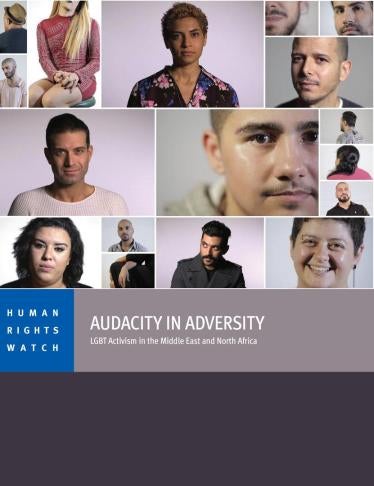
In this report, activists tell their stories and describe how they are building their movements. To confront myths and counteract the isolation of many LGBT people in the region, Human Rights Watch and AFE teamed up to produce the videos featuring Arabic-speaking LGBT activists describing their journeys of self-acceptance. Through the video series, they offer messages of support and encouragement to LGBT people throughout the Arabic-speaking world.
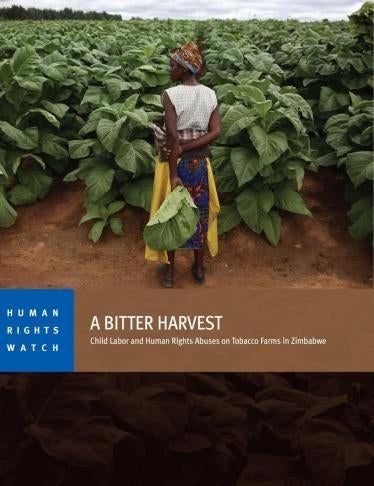
Child Labor and Human Rights Abuses on Tobacco Farms in Zimbabwe
This report documents how children work in hazardous conditions, performing tasks that threaten their health and safety or interfere with their education. Child workers are exposed to nicotine and toxic pesticides, and many suffer symptoms consistent with nicotine poisoning from handling tobacco leaves. Adults working on tobacco farms in Zimbabwe also face serious health risks and labor abuses.
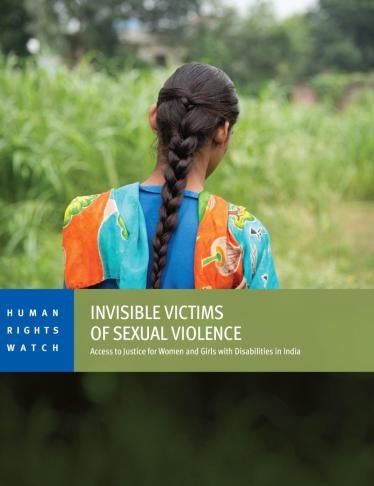
Access to Justice for Women and Girls with Disabilities in India
This report details the challenges many women and girls with disabilities face throughout the justice process: reporting abuse to the police, obtaining appropriate medical care, having complaints investigated, navigating the court system, and getting adequate compensation.
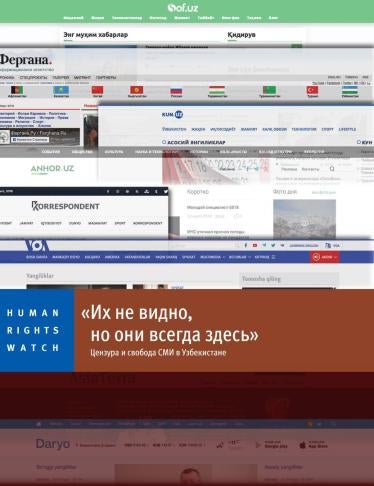
This report examines the situation for journalists, media outlets, and the exercise of free speech since Mirziyoyev assumed the presidency in September 2016. Human Rights Watch found that despite positive moves such as easing certain restrictions on free expression, censorship remains a potent force and the authorities selectively prosecute journalists, writers, and ordinary citizens expressing critical views.