After the Storm
A new web feature looks at climate change, planned relocation, and people with disabilities in Siargao, Philippines.
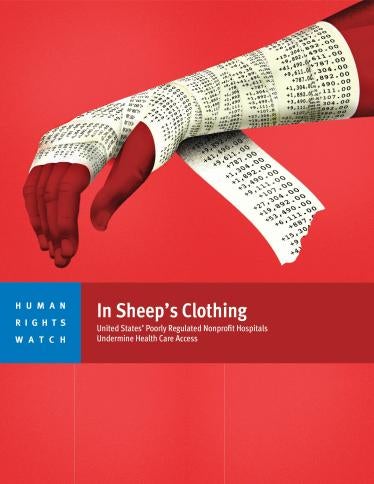
The 62-page report, “In Sheep’s Clothing: United States’ Poorly Regulated Nonprofit Hospitals Undermine Health Care Access,” describes how the US government’s lack of guidance and oversight allows privately operated tax-exempt hospitals to spend far less on making healthcare services accessible for people without the means to pay than the massive public subsidies they receive. In 2020, for example, nonprofit hospitals collectively received about $28 billion in tax benefits but only spent about $16 billion on free or reduced-price “charity care,” according to the Kaiser Family Foundation.
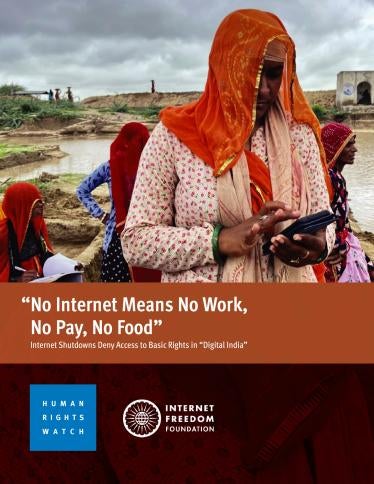
The 82-page report “‘No Internet Means No Work, No Pay, No Food’: Internet Shutdowns Deny Access to Basic Rights in ‘Digital India,’” finds that internet shutdowns impair essential activities and adversely affect economic, social and cultural rights under Indian and international human rights law. Indian authorities, in the name of maintaining public order, have ignored Supreme Court orders setting out procedural safeguards to ensure that internet suspensions are lawful, necessary, proportionate, and limited in scope and territory. Decisions by central and state government authorities to disrupt internet access are often erratic and unlawful, and are used for restricting protests and preventing cheating in examinations.
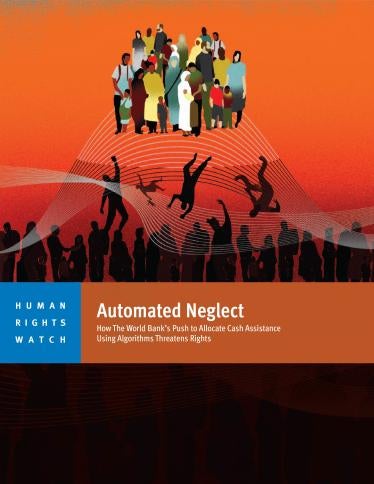
The 74-page report, “‘Automated Neglect’: How The World Bank’s Push to Allocate Cash Assistance Using Algorithms Threatens Rights,” details how an automated cash transfer program in Jordan known as Takaful (a word similar to solidarity in Arabic) profiles and ranks the income and well-being of Jordanian families to determine who should receive support – an approach known as poverty targeting. This system, which the World Bank has funded in Jordan and seven other countries in the Middle East and North Africa, is depriving many people of their right to social security even as they go hungry, fall behind on rent, and take on crippling debt.
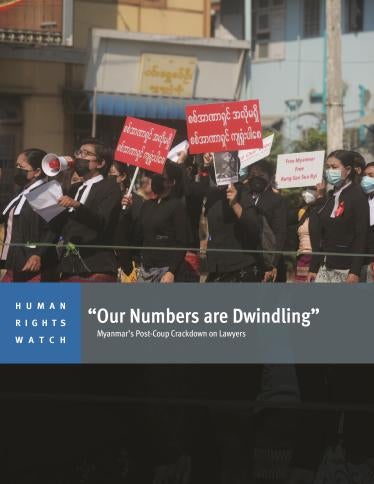
The 39-page report, “‘Our Numbers are Dwindling’: Myanmar’s Post-Coup Crackdown on Lawyers,” examines the junta authorities’ pattern of harassment, surveillance, arrests, and in some cases torture of lawyers since the coup, particularly those taking on political cases. At least 32 lawyers have been arrested and placed in pretrial detention with little evidence supporting the charges against them, according to the Assistance Association for Political Prisoners.
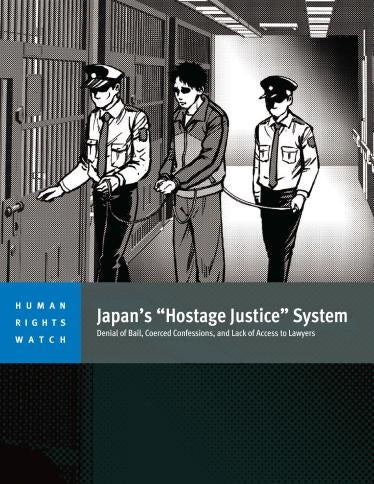
The 101-page report, “Japan’s ‘Hostage Justice’ System,” documents the abusive treatment of criminal suspects in pretrial detention. The authorities strip suspects of their right to remain silent, question them without a lawyer, coerce them to confess through repeated arrests and denial of bail, and detain them for prolonged periods under constant surveillance in police stations. The Japanese government should urgently undertake wide-ranging reforms, including amending the criminal procedure code, to ensure detainees their fair trial rights and make investigators and prosecutors more accountable.
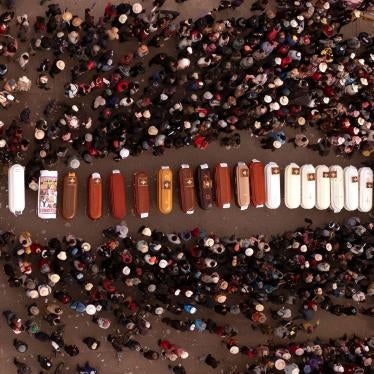
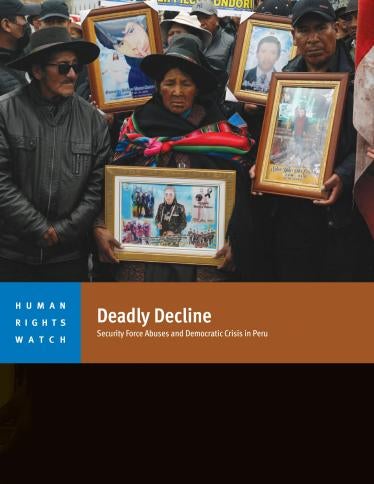
The 107-page report, “Deadly Decline: Security Force Abuses and Democratic Crisis in Peru,” documents excessive use of force by security forces, due process violations and abuses against detainees, and failures in criminal investigations, as well as the entrenched political and social crisis that is eroding the rule of law and human rights in Peru. While some protesters were responsible for acts of violence, security forces responded with grossly disproportionate force, including with assault weapons and handguns. Forty-nine protesters and bystanders, including 8 children, were killed.
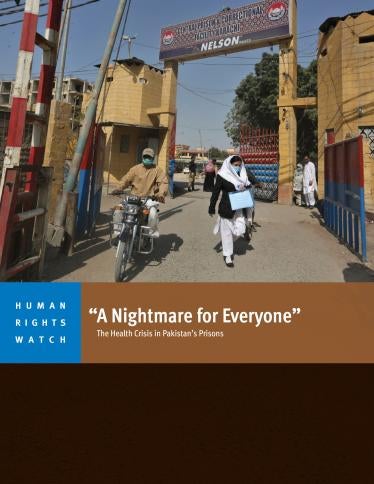
The 55-page report, “A Nightmare for Everyone: The Health Care Crisis in Pakistan’s Prisons,” documents widespread deficiencies in prison health care in Pakistan and the consequences for a total prison population of more than 88,000 people. Pakistan has one of the world’s most overcrowded prison systems, with cells designed for a maximum of 3 people holding up to 15. Severe overcrowding has compounded existing health care deficiencies, leaving inmates vulnerable to communicable diseases and unable to get medicines and treatment for even basic health needs, as well as emergencies.
The 55-page report, “We Must Provide a Family, Not Rebuild Orphanages,” documents risks to children from institutions in areas directly affected by the conflict as well as those evacuated to other areas of Ukraine or to European countries. According to government figures, Ukraine had more than 105,000 children in institutions before Russia’s full-scale invasion in February 2022, the largest number in Europe. Nearly half were children with disabilities, according to UNICEF. Russia bears responsibility for the crisis facing these children, but the war adds to the urgency for Ukraine, with support from foreign governments and humanitarian agencies, to stop institutionalizing children and expand family- and community-based care.
The 127-page report, “‘Cut Off from Life Itself’: Lebanon’s Failure on the Right to Electricity,” argues that electricity is fundamental to nearly every aspect of living and participating in present- day societies, and as such, the internationally protected right to an adequate standard of living includes the right of everyone, without discrimination, to sufficient, reliable, safe, clean, accessible, and affordable electricity. At present, the government provides electricity for only one to three hours a day on average, while people who can afford it supplement that supply with private generators. The public sector and private generator industry rely on polluting climate-intensive fossil fuels. The electricity crisis has exacerbated inequality in the country, severely limited people’s ability to realize their most basic rights, and pushed them further into poverty.