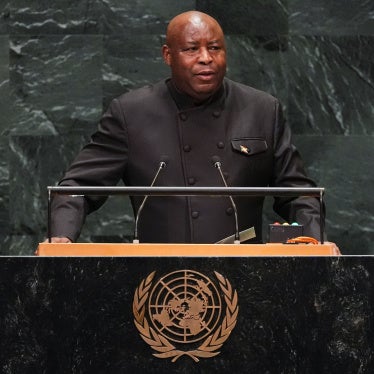

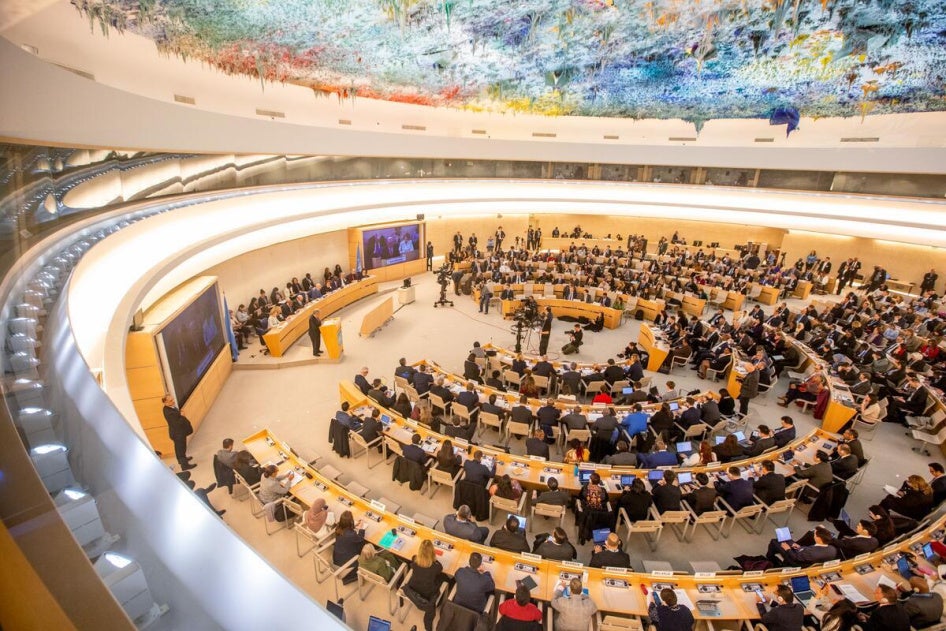
A United Nations Human Rights Council resolution on October 7 calling for concrete action against systemic racism should have been an opportunity for governments to demonstrate their commitment to racial justice.
Instead, the United Kingdom called for a vote, breaking from last year’s consensus on the annually tabled resolution.
Citing concerns about the applicability of international law to establish responsibility and accountability for colonial harm, the UK objected to language on reparations and then abstained from the vote; European Union members of the Council also abstained. Regardless, the resolution passed with 30 votes in favor, 17 abstentions, and none against.
The loss of last year’s consensus reveals the gap between the UK and other European governments’ stated dedication to combat racism and their actual political willingness to address its historical roots.
European governments have present-day obligations to tackle racial discrimination and provide effective remedies. The International Convention on the Elimination of All Forms of Racial Discrimination requires states, including the UK, to ensure just and adequate reparation for harm resulting from racial discrimination. The experts who monitor this treaty earlier this year set out clear legal guidance on states’ obligations for such reparation.
Enslavement and colonialism helped establish racial inequalities, the consequences of which persist today. Human Rights Watch has documented systemic racism, including racial profiling and barriers to economic and social rights in Europe. Reparatory justice is essential to confronting these enduring harms.
Jamaica’s pursuit of an advisory opinion from the Judicial Committee of the UK’s Privy Council underscores the importance of examining governments’ legal arguments. Its petition asks whether the enslavement of Africans was lawful under English and international law, and whether the UK owes a reparatory remedy. Next month’s Commonwealth Heads of Government Meeting in Antigua and Barbuda offers another opportunity to change course. King Charles’s forthcoming Caribbean visit will, apparently, include an acknowledgement of Britain’s involvement in enslavement, although Buckingham Palace says decisions on reparations and formal apologies rest with the UK government.
The UK and other European governments should engage meaningfully with African and Caribbean initiatives and affected communities to develop reparatory measures for the harms they were and are responsible for. These measures can include, according to UN principles, compensation, restitution, rehabilitation, acknowledgment of wrongdoing and reforms to prevent recurrence. Affected communities should shape the process and its outcomes.
The United Nations Human Rights Council resolution calls on governments to move “from rhetoric to reality.” Those that are serious about ending systemic racism should embrace reparatory justice as part of that work.