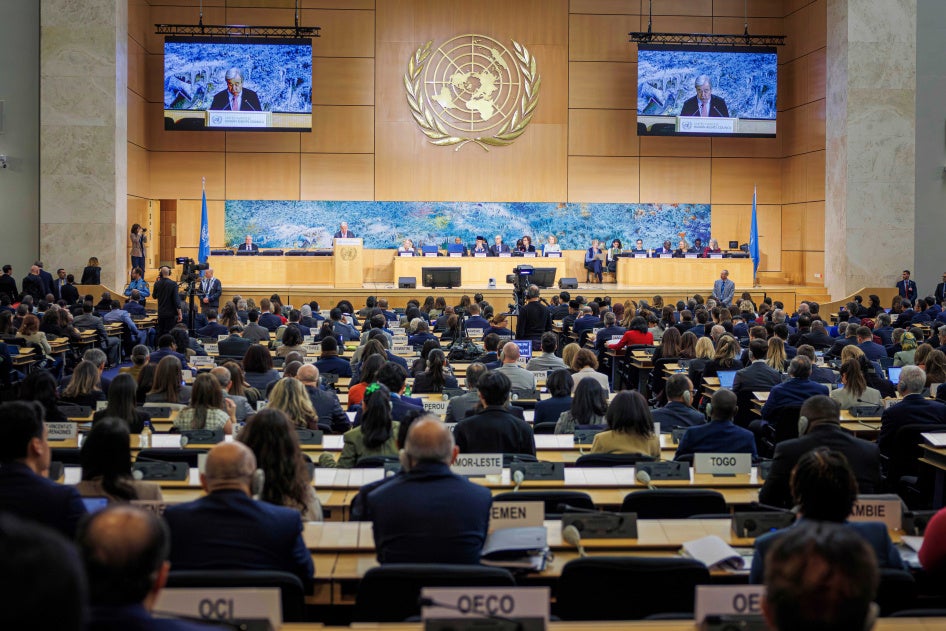
This statement was delivered by Human Rights Watch at the 63rd regular session of the UN Human Rights Council during a general debate on racism, racial discrimination, xenophobia and related forms of intolerance, follow-up and implementation of the Durban Declaration and Program of Action held on September 30 - October 1, 2026.
Mr. President,
Globally, authoritarianism and attacks on civil society threaten hard-won progress towards racial equality and justice. As new threats for racialized communities have emerged, including stemming from use of technology, states’ actions continue to fall short of eradicating historically linked systemic racism and inequalities.
In our research around the world, Human Rights Watch has documented the human rights impacts of systemic racism. Racial profiling by law enforcement remains a widespread phenomenon in many countries, including European states, and leads to the social exclusion of racialized people from public spaces and society, and impacts their economic and social rights.
Many European governments continue to deny the existence of systemic racism in their countries —whether within their police forces or other authorities. Some European governments continue to show political unwillingness to collect essential disaggregated equality data that would render lived experiences of systemic discrimination visible to policymakers and allow for more effective state responses.
Given the urgency, states should demonstrate renewed commitment to implement the Durban Declaration and Programme of Action (DDPA) and effectively confront systemic racism and inequality, in close collaboration with civil society.
Building on the DDPA, calls for reparatory justice from Africans and people of African descent also demand action. We urge European states, the US and other states to answer these calls to address their legacies of colonialism and enslavement. The Council should keep the fight against systemic racism high on the political agenda. The time for real and concrete action is now.