(Istanbul, October 13, 2026) – The authorities in Türkiye, the host of the upcoming 2026 United Nations Climate Change Conference (COP31), are arbitrarily arresting and prosecuting activists and others involved in environmental protests even as the summit nears, Human Rights Watch said today.
“With Türkiye about to host the annual UN climate change summit, its environmental crackdown is a salient reminder of its intolerance of dissent,” said Deniz Bayram, assistant Europe and Central Asia researcher at Human Rights Watch. “Turkish authorities should listen to people’s concerns about the environmental impact of activities such as mining in their areas and address them, instead of arresting and prosecuting protesters.”
In August 2026, Human Rights Watch interviewed 23 people who had been at environmental protests and reviewed relevant media reports, documents, and judicial proceedings.
Human Rights Watch also documented the treatment of environmental protesters in two of the areas currently affected. Protests against coal mining in the Akbelen forest in Türkiye’s southwest Muğla province have been taking place since 2023, while gold mining exploration in the Perşembe Plateau and surrounding areas in the eastern Black Sea region has sparked protests throughout 2026. Authorities in both areas have forcibly dispersed nonviolent protesters, including by using tear gas, water cannons, and pepper spray. Police have arrested and fined protesters and intimidated local residents with arbitrary identity checks.
In September, Human Rights Watch wrote to the Interior Ministry, the Milas Chief Prosecution Office in Muğla, the Korgan Chief Prosecution Office in Ordu, and the Tirebolu Chief Prosecution Office in Giresun seeking further information and a response to the findings. None have responded at the time of writing.
Law enforcement and security forces have arrested community members, lawyers, and journalists at protests. Protesters face a variety of criminal charges and investigations on dubious allegations including illegal gathering, using violence to prevent a public official from carrying out their duty, trespassing, insulting public officials, and spreading false information. The authorities have also temporarily arrested at least two people who expressed support for the protests online.
In one instance, on July 29, the authorities arrested protesters in the eastern Black Sea area for up to eight hours without legal due process. Those arrested included two children and an 84-year-old woman.
Environmental defenders have also faced criminal charges, administrative fines, and other legal pressure for monitoring environmental harm or seeking to protect their land and environment.
In advance of a July NATO summit in Ankara, the authorities ordered the arrest of 225 people, ranging from political activists to nature conservation supporters, on suspicion of “membership in armed organizations.” Courts on June 25 and 26 placed 178 in pretrial detention and 34 under judicial control, without citing compelling evidence of criminal activity. Among those detained were 13 members of a nature conservation organization who were later released, along with 14 others who had been under house arrest.
The continuing criminal investigations and arrests of environmental protestors since 2023 have created a significant chilling effect on the rights to expression and assembly, protected under international human rights law and the Turkish constitution. Many have ended in decisions not to prosecute or acquittals, but investigations impose an immense burden on those targeted, as they last for years and require them to appear repeatedly before law enforcement agencies.
A 75-year-old woman in Denizli, in western Türkiye, was fined in May 2024 when she refused to allow two mining company staff access to her property in a protest against coal mining. She was accused of beating the staff members, allegations she strenuously denies. The decision is under appeal.
Police and gendarmes have prevented journalists and bystanders from filming environmental protests in the affected areas, in some cases using violence, and arrested and opened investigations against journalists covering the protests, media reported.
Human Rights Watch has previously raised concerns with Turkish authorities that its efforts to expand coal mining and coal-fired power capacity in Türkiye pose serious risks to public health, environmental protection, and the protection of other human rights.
The crackdown on environmental defenders is part of a wider attack on civic space in the country, Human Rights Watch said, including the detention of activists in Istanbul protesting an anti-LGBT crackdown on September 15, 2026. Some of them allege that they were ill-treated during the more than 24 hours they were arrested.
Civil society participation is important for holding states to account for their environmental policies, Human Rights Watch said. It is also essential in contexts where decisions made by the central government can have serious local environmental impact.
As host of COP31 in November, Türkiye has an obligation to facilitate the participation of civil society in the conference.
“The Turkish government has ignored environmental protections and turned on local people who are speaking out against environmental damage to their communities,” Bayram said. “States attending COP31 should speak out against Türkiye’s crackdown on environmental defenders and remind their hosts that civil society participation is critical to achieving COP goals.”
For additional details, please see below.
Methodology
In August 2026, Human Rights Watch interviewed 23 people who had been at environmental protests: 15 community members, 6 lawyers, and 2 journalists. Human Rights Watch documented investigations and prosecutions related to long-running environmental protests in Akbelen forest in Muğla, western Türkiye, between 2023 and 2026, and protests in the eastern Black Sea region in 2026, as well as investigations linked to those protests.
Human Rights Watch also reviewed media reports, indictments, traffic penalties, and other administrative fines issued against protesters; court decisions, court-appointed expert reports relevant to the protests, and forensic medical reports; and photographs from protesters documenting their injuries.
Human Rights Watch examined the judicial proceedings against protesters in four cases in İkizköy village, in the Milas district of Türkiye’s southwestern Muğla province, including relevant investigation documents and the decisions on conviction and acquittal, and assessed the laws used to prosecute them.
Akbelen: Protests Banned Over Coal Mining in Forest, Olive Groves
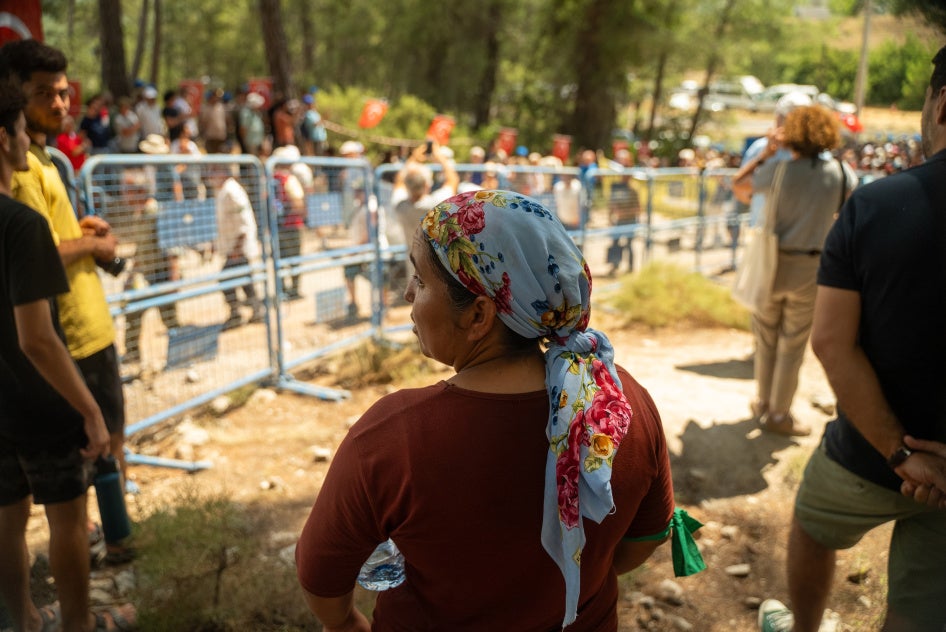
Since 2019, residents of İkizköy have been pursuing court cases to prevent the expansion of an open-pit lignite mine into Akbelen forest, the clearance of the legally protected forest, and the expropriation of nearby olive groves. The forest clearing case is pending while a court halted the expropriation of the olive groves.
On July 17, 2021, after the Muğla Forestry Directorate cut down about 30 trees, community members began to monitor Akbelen forest for potential unlawful activity. On August 10, about 250 gendarmes intervened and arrested 11 protesters, including Füsun Ergün, who was forcibly removed after tying herself to an olive tree. Ergün and another environment defender, Gülören Demir, were convicted of resisting public officials and sentenced to 6 months and 20 days in prison, subsequently converted to fines.
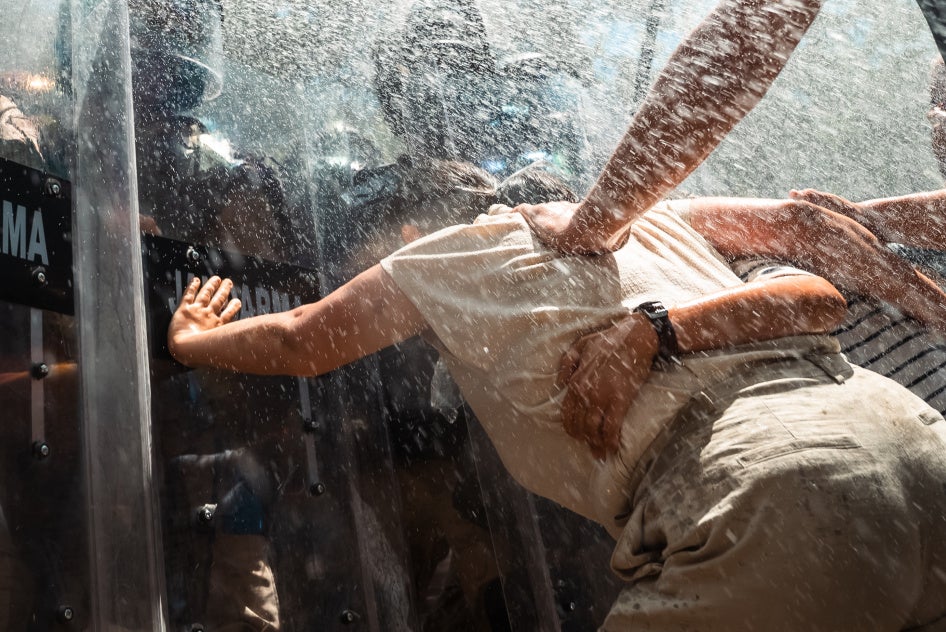
When the authorities resumed clearing the forest in July 2023, police used tear gas and water cannons against protesting villagers. The media reported that at least 40 people were arrested, including 14 later charged with resisting police officers. A broad coalition of civil society groups from across the country soon joined the protests. By August 2023, the authorities had cut down about three-fifths of the forest, despite the pending court case.
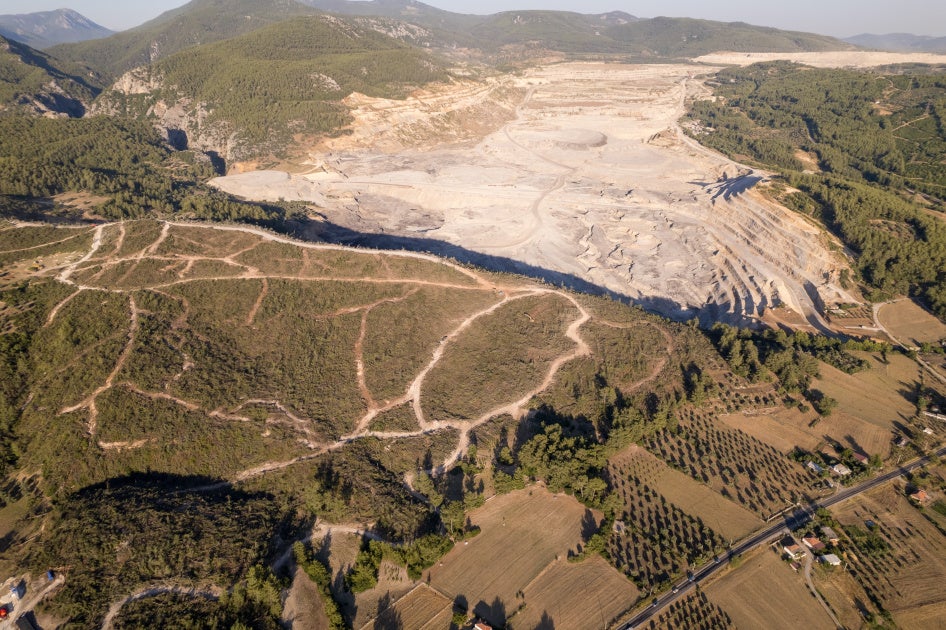
The government has prosecuted six community members for their participation or presence at various protests since 2023. Four were convicted for resisting public officials and are appealing. Two of them, Ahmet Tatar, 63, who faced multiple charges of resisting public officials, and an 85-year-old man accused of insulting the president, were acquitted.
At least 55 others have been criminally investigated, 3 lawyers representing community members said.
Many of the investigations have remained open for years. İsmail Atal, a lawyer who is himself the subject of two investigations, said that “keeping the investigations [open] for years leaves the threat of prosecution hanging over protesters like a Sword of Damocles, deterring them from taking part in further protests.”
The Human Rights Watch review of the cases and interviews with those investigated suggests a pattern of intimidation aimed at discouraging protests.
The authorities have arrested Tatar three times, and he said prosecutors had opened ten criminal investigations against him, most for allegedly resisting public officials or preventing them from performing their duties. Eight are ongoing, and two resulted in prosecutions both ending in acquittals. The prosecutor appealed the acquittals, and to date one acquittal has been upheld. “Of course I will continue to join protests,” Tatar said. “It is my moral obligation to humanity. But it is difficult and burdensome to deal with all these investigations.”
Prosecutors have, however, failed to effectively investigate allegations against security officers for violations of protesters’ rights in Akbelen. On September 13, 2023, Tatar said, gendarmes broke his camera, struck him with their hands on his back and ankles, forced him face-down to the ground, pressed on his neck and back, cuffed his hands behind his back, and searched his tent. Tatar said he identified the gendarmes by name and filed complaints, supported by medical reports documenting his injuries, but the court dismissed his complaints.
İpek Sarica, another lawyer, also filed a criminal complaint about violence she says she experienced during a protest in 2023. After a prosecutor declined to prosecute the case, Sarica appealed, but her complaint has remained unresolved for over three years.
In a third case, Nejla Işık, the village head of İkizköy, filed a complaint alleging a violation of her right to privacy after a siginal jammer and a large number of gendarmes were deployed very close to her house. Prosecutors declined to open a case, which Işık’s lawyers challenged. The case is pending before the Constitutional Court.
Güven Göknar, 66, from Muğla, said he intervened in a July 2023 protest against deforestation when gendarmes used pepper spray against protesters at close range. He was sentenced to five months in prison for allegedly resisting public officials, after footage showing him raising his hand was misinterpreted as showing him throwing a stone. He said he raised his hand to tell the gendarmes to stop; his appeal is pending.
On March 30, 2026, Esra Işık, 26, was arrested during a protest against an expropriation order covering 649 land parcels in İkizköy. She spent 42 days in pretrial detention. On July 6, the Milas Criminal Court convicted her of “resisting officials” and sentenced her to two years and one month in prison, together with a suspended sentence for insulting public officials. Esra Işık’s lawyers have appealed.
Another lawyer interviewed said that community members have been fined between 40,000 to 250,000 Turkish lira (about US$825 to $5,160) for acts including putting up tents and banners in connection with the Akbelen protests. People who have been fined and their lawyers said that in some cases fines were finalized without proper notification, with officials falsely recording that recipients had refused to accept notifications being served. As a result, some community members faced seizures of their bank accounts and property, while some were forced to pay. A lawyer said they had succeeded in having some fines cancelled, but not all of them.
In 2023, prosecutors investigated 25 environmental activists in Edremit, on the north Aegean coast, for an unauthorized protest in solidarity with environment defenders in Akbelen. The case was later dropped.
The authorities have also exerted pressure on lawyers representing the Akbelen community. Atal said that gendarmes arrested him on allegations of obstructing public officials as he traveled to the village on July 29, 2023, held him for several hours, and that he has been kept under investigation.
Prosecutors opened a criminal investigation against Arif Ali Cangı, another lawyer, for allegedly inciting hatred and hostility among the public after he posted a social media post criticizing continued mining activity in Akbelen in the aftermath of the 2023 earthquake. The investigation remains open.
The experience of journalists covering environmental protests suggests that the authorities open criminal investigations deliberately to interfere with their work.
Prosecutors summoned a citizen journalist, Zeynep Kuray, on August 3, 2023, while she was reporting on the Akbelen protests. She then learned that the Milas Prosecution Office had opened an investigation against her for “spreading misleading information,” a criminal offense punishable with a prison term of one to three years, which eventually closed in 2024. Two other journalists arrested at their homes in İzmir in February 2024 said that police had questioned them about their presence at the Akbelen protests.
Eastern Black Sea: Crackdown against Gold Mining Protests
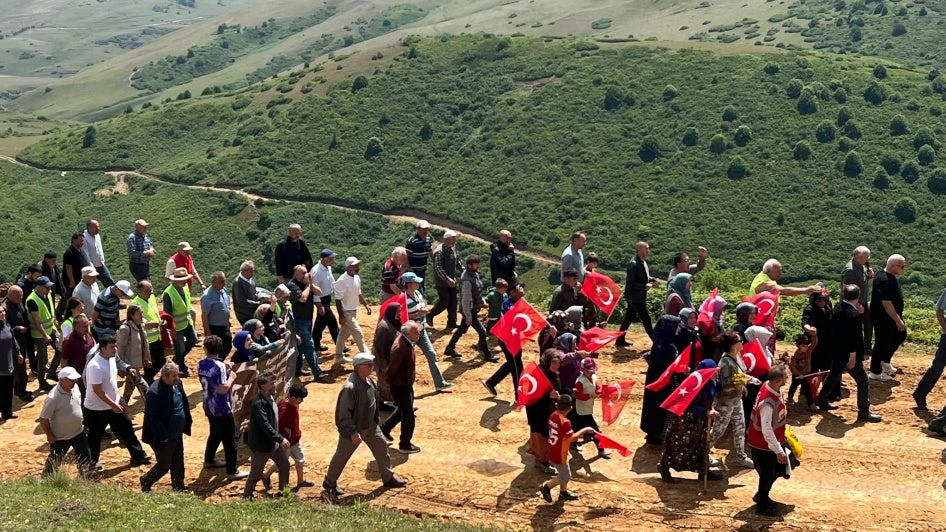
In Türkiye’s eastern Black Sea region, residents of the Perşembe Plateau have been protesting gold mining exploration since early 2026. The high plateau is in the northern part of Korgan-Aybastı districts, about 110 kilometers from Ordu, the provincial capital. The residents raise livestock for their livelihoods.
The area designated for gold exploration is classified as pasture under Turkish law and requires specific permits to be mined. Türkiye’s Environment Ministry issued a permit in 2024. Human Rights Watch interviewed 11 residents who said they had been excluded from consultation and information about the project, which could potentially force them to relocate. They became aware of the project after it began affecting water they needed for livestock and household use, as well as from public statements by environmental groups.
The community challenged the Environment Ministry’s permit. A court-assigned expert report dated June 15, 2026, warned that the project could disrupt the area’s hydrogeology, or groundwater flow, and that local water resources were critical to pastoral activities, livestock farming, and the community’s drinking and domestic water needs.
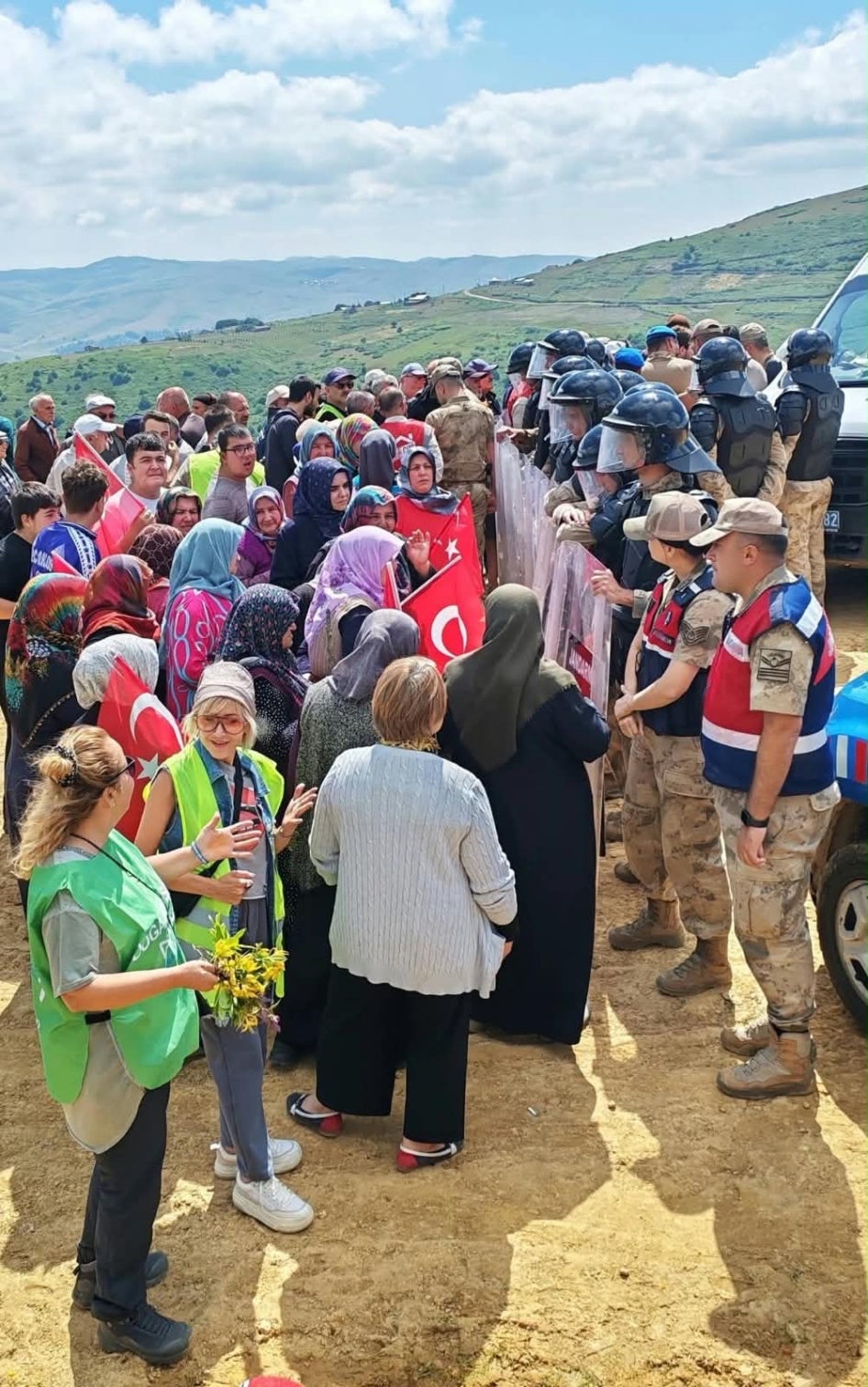
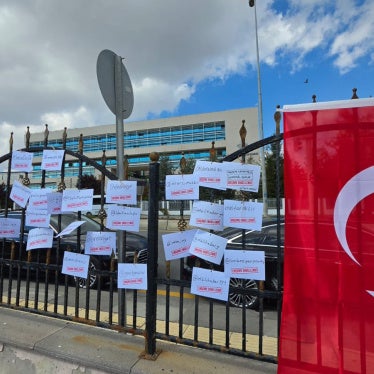
The authorities fined the protesting community members in June and August in Giresun and Ordu provinces for hanging banners and issued traffic penalties for alleged “improper parking,” which residents believe was retaliation for protesting.
On July 29, more than 50 residents protested drilling in Perşembe Plateau. Gendarmes arrested about 15 people.
Human Rights Watch interviewed four men who were among at least 11 taken to the Tepealan gendarmerie station in Korgan, some handcuffed. They said they were held for about eight hours without being told why or whether they were under investigation, then released. One said gendarmes made some arrestees sign a document stating that they would not attend any further protests. The men said they have received no information since about any investigation or legal basis for their arrest.
Leyla Acerce, 40, attended the protest with her husband and four children. She said that gendarmes formed a large circle, their shields pointing outwards, and pushed her into the circle, where she fainted. She was dragged and left sitting in a chair outside in heavy rain for hours. She was later transferred alone to Korgan State Hospital by ambulance. Acerce said she called the police from the hospital to report that she had been beaten by the gendarmes. The police came to the hospital. The hospital gave the police the medical report documenting her injuries but refused her a copy.
Her husband, Ali Acerce, 47, said that when he tried to help his wife, three gendarmes handcuffed him, twisted his arm, and forced him into a container, where he was held for about two hours. He was then taken to the Tepealan gendarmerie station, where he was held for six hours and then released. He said that their 22-year-old son, İlyas, was also arrested for about six hours. Police made the family wait for hours when they went to the police station to file a complaint about their treatment by the gendarmes. They are not aware of any action on their complaint.
Nuriye Dilek, 48, and another woman in her 50s who requested anonymity out of fear for her family, said four gendarmes dragged them from the protest and forced them into an unmarked white van. “They threw me into the van like a sack,” Dilek said.” I thought they would break our arms as they twisted them.”
Human Rights Watch observed bruising on Dilek’s wrists and on the other woman’s chest and arms six days after the protest. Interviewees also said that they saw gendarmes drag two girls, both under 18, by their hair and put them into an unmarked van.
Dilek said she saw gendarmes and plain clothes officers pointing out community members who had spoken out about defending the plateau in videos shared on social media. Musa Duman, 60, said that during questioning in a separate investigation, a prosecutor asked him about photos and videos he had shared online from the protests.
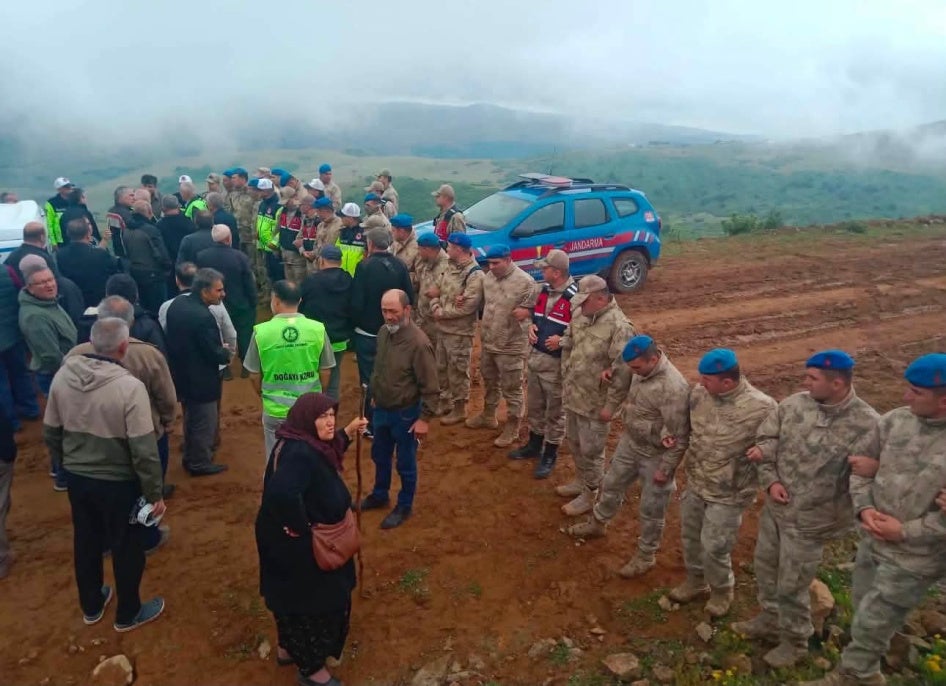
Residents said that after the protest, they faced a range of apparent retaliatory measures by the gendarmerie, including repeated identity checks in the small community where they had lived for years. If they did not carry identification, gendarmes photographed their faces at close range “as if we were criminals,” one resident said.
Residents also reported verbal harassment and that following a solidarity protest on August 1, 17 traffic fines were issued to protesters and visitors for alleged improper parking or tinted windows. Local activists also said gendarmes used a signal jammer during the protest to disrupt communications, and Human Rights Watch reviewed photographs showing gendarmes carrying jamming equipment. Jammers were also used at other protests in Akbelen.
An 84-year-old woman who had been arrested said she was now hesitant to appear in protest photos or videos after gendarmes contacted her sons, who live in other cities, and told them not to let their mother attend protests. Dilek also said that authorities had contacted her son.
Dilek said that her husband, Halil Dilek, 53, and another man were arrested on suspicion of theft of materials related to mining operations and detained overnight at the Tepealan gendarmerie station. Halil Dilek said that he was distressed because his wife was travelling and that his teenage daughter was alone at home. He said that the prosecutor who questioned him the following day asked about his participation in the protests and photos he had shared on social media, raising concerns of surveillance and pressure over his environmental activism.
On August 27, residents of Perşembe Plateau, including Duman and Nuriye Dilek, met with Ordu’s governor to discuss the project and the excessive use of force and violence by the gendarmerie. When Dilek said that gendarmes had beaten and dragged her and that her clothes had been torn open during the altercation, she said the governor asked what she was doing there in the first place.
Duman said that on September 9, gendarmes summoned him to give a statement about his Facebook post criticizing the governor’s response. He was told he was suspected of publicly disseminating misleading information.
The authorities have sought to suppress environmental protests in other areas of the eastern Black Sea designated for gold mining exploration. On April 5, residents of Görele and Tirebolu in Giresun province, east of Ordu, gathered to protest work at a gold mining project, despite a court order suspending the work. A large number of gendarmes confronted them, said a lawyer, Sevda Karataş, and the company complained the protesters had interfered with its “freedom to work.” Subsequently, Karataş, Ömer Cebeci, a municipal council member, and Nihal Nakıpoğlu, a local environmental association member, were summoned for questioning by the prosecutor.
Karataş, who represents two community members from Tirebolu in Giresun, said that a prosecutor investigated her clients for alleged threats, disseminating misleading information, and interfering with the company’s “freedom to work.” The investigation remains open.
Mesut Yilmaz, a 33-year-old local resident who actively posts about the protests on social media, said that police questioned him for about six hours about more than 100 pages of his social media posts. On June 2, he was fined, paying the maximum penalty of 115,000 lira (about $2,500) for putting up banners announcing a gold mining protest for May 29.
The Right to Protest Under Human Rights Law
The right to peaceful protest is protected under international human rights law, including under the European Convention on Human Rights (ECHR) and International Covenant on Civil and Political Rights (ICCPR); Türkiye is party to both. The right to peaceful assembly is closely linked to the right to freedom of expression.
While the rights to freedom of assembly and expression are not absolute and can be subject to restrictions, both the ECHR and ICCPR require that any restriction must be prescribed by law to pursue a legitimate aim and to be necessary and proportionate to that aim. Blanket bans on protests are disproportionate and unjustifiable.
The UN Human Rights Committee, which oversees compliance with the ICCPR, in its General Comment No. 37 (2020) stipulates that peaceful assemblies should not be criminalized, and that states must facilitate and protect such gatherings. The European Court of Human Rights has repeatedly found that Turkish authorities’ use of powers under the Law on Meetings and Demonstrations (Law no. 2911) to ban or disperse protests and punish protestors violated the right of assembly.
The right to peaceful protest is also protected under the article 34 of the Turkish constitution, which guarantees the right to organize peaceful, unarmed demonstrations and marches without prior permission.