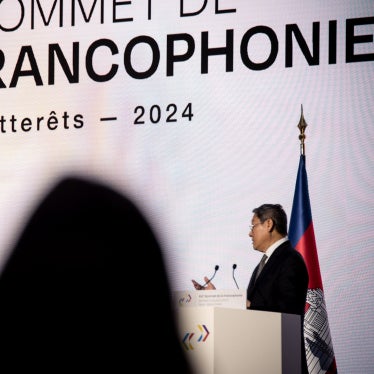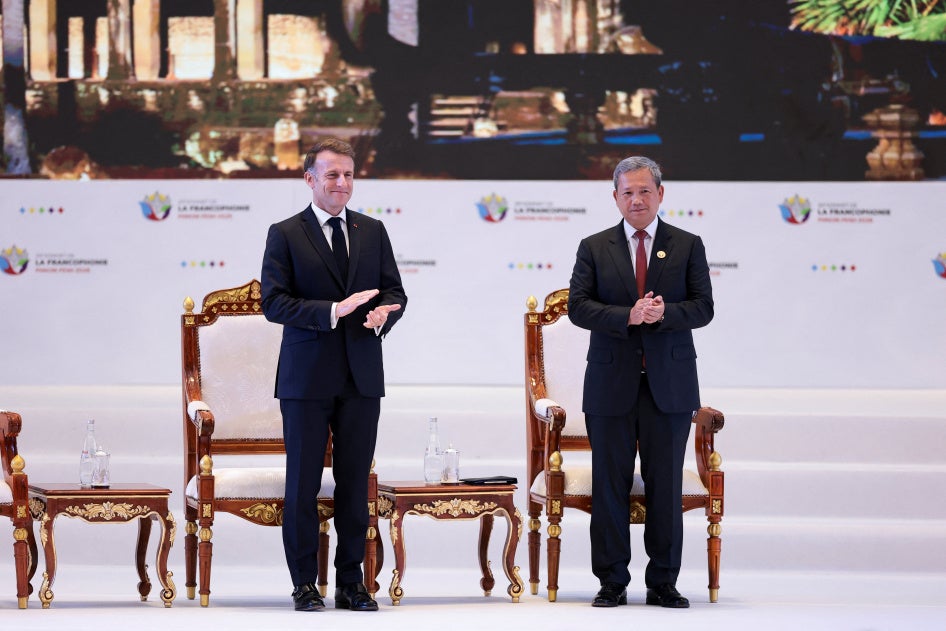
As world leaders recently gathered in Phnom Penh to celebrate the 20th Francophonie Summit with the theme of peace and shared prosperity, French President Emmanuel Macron took to the podium to call publicly for an investigation into the killing of former Cambodian lawmaker and French citizen Lim Kimya. It was a rare public rebuke of the Cambodian government by a foreign leader.
A gunman killed Kimya in Bangkok, Thailand in January 2025. Kimya had served as a parliament member with the opposition Cambodia National Rescue Party before its 2017 dissolution.
A Thai court convicted the gunman, Ekkalak Paenoi, in October 2025 and issued arrest warrants for two Cambodian suspects, Ly Ratanakraksmey and Pich Kimsrin, both of whom have connections to high-ranking Cambodian officials. The Cambodian government—like many of its neighbors in Southeast Asia—is increasingly persecuting activists abroad.
The Cambodian government has yet to acknowledge the arrest warrants or start an impartial investigation. Both men remain at large. France has issued Interpol Red Notices for them on charges of complicity in premeditated murder.
Macron’s raising Kimya’s murder during a joint press conference with Prime Minister Hun Manet sends a strong message that the French government is taking Cambodian authorities’ attacks on activists abroad seriously. The Cambodian government should heed the call and independently and impartially investigate the murder.
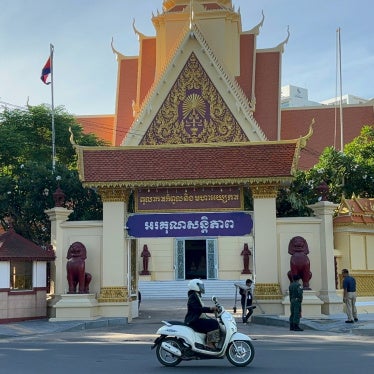
But political repression by the Cambodian government runs deeper than one case. Ahead of 2027 local elections, the authorities are escalating their crackdown on the long suppressed political opposition. Young activists in particular, such as the five imprisoned Mother Nature Cambodia environmental activists, have been punished with baseless treason charges and lengthy prison sentences. Concerned governments should publicly and privately urge Cambodian authorities to release the more than 100 Cambodians currently imprisoned for exercising their fundamental freedoms.
Human Rights Watch was among the local and international organizations that pressed Cambodian authorities to release the Mother Nature activists and others ahead of the Francophonie Summit. The ruling Cambodian People’s Party, which exerts complete control over the country’s courts, was apparently unbothered by these efforts.
Other foreign leaders should amplify Macron’s message and publicly call on Cambodia’s government to reopen the space for the political opposition and respect the fundamental rights of all Cambodians, both at home and abroad.