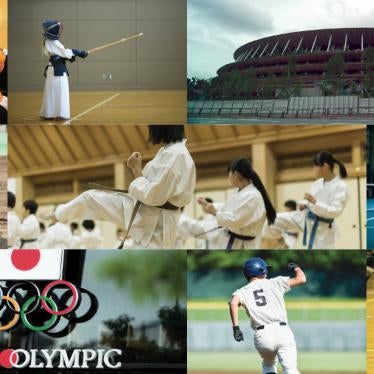

Every October, Japan celebrates Sports Day, a public holiday established to commemorate the 1964 Tokyo Olympic Games and Japan's longstanding commitment to sport as a national priority.
There has been much to celebrate in recent years. For more than six decades, Japan has had dedicated legislation – now known as the Basic Act on Sports – to advance sports on a national level. By investing in facilities, athletes’ development, and public participation—and hosting mega-events like the 2020 Olympics—Japan has become a leading sports nation.
Yet, one critical issue has received too little attention: protecting athletes and children from sports-related abuse. Human Rights Watch has documented the widespread physical, sexual, and verbal abuse many Japanese children and athletes experience when they participate in sports. A professional athlete described suffering abuses from his coach: “I was hit so many times, I can’t count ... the coach … hit [me] in the face in front of everyone. I was bleeding, but he did not stop.”
Under public pressure from athletes and survivors to reform, the Japanese parliament passed in 2025 amendments to the Basic Act on Sport requiring the national government to prevent abuse in sport. So far, however, the government has not adequately implemented the law—largely relying, instead, on individual sports federations and organizations to handle complaints of abuse.
But, as Human Rights Watch has reported, athletes and children are often hesitant to report abuse to these institutions because they fear retaliation and because federations often protect their leaders rather than athletes. Reporting mechanisms also vary widely by sport, creating unequal access to protection.
The Japan Sports Agency is now drafting the government's five-year blueprint for sports policy, which will be implemented in 2027. This plan should better address abuse in sport, including by establishing an independent Safe Sport Center to receive complaints, investigate abuse allegations, and support those who have been harmed.
Sport Day should be an opportunity not only to celebrate Japan’s athletes but to make them safer. Japan’s government should ensure that everyone can participate in sport safely, without abuse, and can report harm through a trusted system.