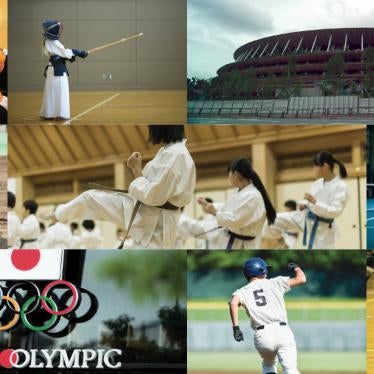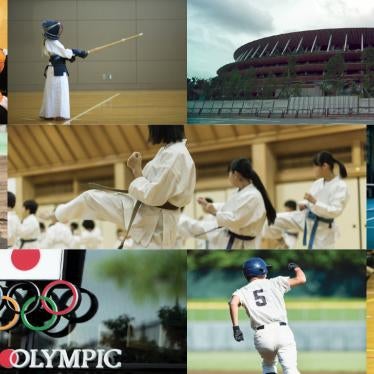

Japan’s athletes have thrilled sports fans around the world with memorable victories and heartbreaking defeats in sports as varied as soccer, tennis, volleyball, figure skating, gymnastics, swimming and wrestling. Those moments of triumph do not come easily. They are built on years of disciplined training, often beginning in childhood.
At its best, that journey should provide children with the joy of play and competition, along with opportunities for physical, mental and personal growth. At Japanese sporting events, you’ll often hear fans shouting Ganbare! (“Do your best!“) or Donmai! (“Don’t mind!“) after a mistake — cheers that celebrate perseverance rather than perfection. Too often, however, that spirit disappears behind the scenes. Many young athletes instead encounter physical, verbal and even sexual abuse in the very environments meant to help them develop.
That is why Aug. 8, Safe Sport Day, matters. It is a global moment to reaffirm that sport should be safe, inclusive and accountable for everyone, including children, women and people with disabilities. Established in 2020 through the international safeguarding movement, the day is now marked by the International Olympic Committee as well as organizations working to protect athletes worldwide.
Corporal punishment
The safe sport message is especially relevant for Japan. Human Rights Watch has documented that children in Japan frequently experience abuse in sports training within Japanese schools, federations and elite sports programs. Its 2020 investigation — based on interviews with more than 50 current and former child athletes, an online survey and reviews of sports organizations across Japan — found that physical violence remained deeply embedded in coaching culture. Many coaches, parents and even athletes continued to believe corporal punishment was an acceptable way to build discipline and improve performance, despite overwhelming evidence that it causes lasting physical and psychological harm. While many Japanese athletes are this year starring on a global stage, from the Winter Olympics to the World Cup, as well as the upcoming Asian Games and Asian Para Games, other young athletes and families are still struggling with abuse.
In 2013, Japan pledged to take steps to combat abuse of athletes. In recent years, these efforts have accelerated under pressure from courageous survivors of abuse. From students and parents to current and former professional athletes, many have voiced that the abuse so many athletes face in Japan needs to end. That pressure has been driven not only by high-profile scandals but also by countless less-visible cases.
Human Rights Watch documented abusive coaching practices including children being slapped across the face, struck with bats and bamboo kendo sticks, and subjected to other violent punishments unrelated to legitimate training or competition. The report emphasized that such abuse was often normalized rather than treated as misconduct.
The experiences documented by Human Rights Watch illustrate how routine such violence could become. “I was hit so many times, I can’t count,” explained one 23-year-old former athlete from Fukuoka in an in-depth 2020 Human Rights Watch report on the abuse of child athletes in Japan. “I was hit in the face in front of everyone. I was bleeding, but he did not stop hitting me.”
This was by no means an isolated case. Human Rights Watch found that many athletes described abusive coaching as an accepted part of sport, with few reporting any meaningful consequences for the coaches responsible.
Much-needed reforms have been announced since the report’s release. In June 2025, the Japanese National Diet passed a revision to the Basic Act on Sport, requiring national and local governments to adopt measures against physical, sexual and verbal abuse of athletes. In January 2026, the Japan Sports Agency released guidelines for improving safety in sport that include measures to tackle harassment and abusive behavior.
These reforms build on earlier efforts following several notorious abuse cases, including the 2012 suicide of a 17-year-old Osaka high school basketball player after repeated physical abuse by his coach and allegations involving Japan’s women’s Olympic judo team. Earlier initiatives, including the 2013 Declaration on the Elimination of Violence in Sport and governance codes adopted in 2019, helped raise awareness but remained largely nonbinding and lacked consistent enforcement mechanisms.
Yet a major gap remains. The draft interim report for the fourth Sport Basic Plan, the government’s five-year blueprint for implementing sports policy through 2031, does not provide adequate measures to prevent abuse and ensure safe sport in Japan. This is not only a missed opportunity to protect child athletes, but it also violates the spirit and the letter of the new law. Unless the plan is substantially strengthened before it is finalized, Japan risks undermining the very reforms it has recently adopted.
To implement these new laws and guidelines, Japan needs to develop more capacity to monitor and report abuse in sport. The country currently lacks a specialist body where victims of mistreatment in sport — including children and their parents — can safely report such harm and seek help. As Human Rights Watch research has shown, athletes who experience physical mistreatment, whether through verbal abuse, sexual abuse, bullying, discrimination or other forms, are usually expected to report concerns through structures and leaders connected to the very organizations involved. This can create fear, conflicts of interest and distrust.
Human Rights Watch also found that reporting systems vary widely across Japanese sports organizations. Some federations have no reporting mechanism at all, while others accept complaints only by mail or fax. There is little publicly available information on how many complaints are investigated or what sanctions are imposed, making it difficult for athletes and families to trust that abuse will be addressed consistently.
Athletes frequently must report abuse through the very organizations responsible for supervising the coaches involved. This fragmented system leaves sports federations to create their own rules for prevention, investigation and discipline, resulting in inconsistent standards and significant gaps in child protection.
Local nongovernmental organizations, athletes and experts are pushing for Japan to establish an independent Safe Sport Center dedicated to educating the public and eradicating mistreatment in sport, modeled on similar bodies in Australia, Canada, Germany, the Netherlands, New Zealand, Singapore, the United Kingdom and the United States. Such centers provide independent mechanisms for reporting abuse, protecting athletes and promoting safe sport.
Confidentiality
An independent center could establish uniform safeguarding standards across all sports, receive confidential complaints, conduct independent investigations, collect nationwide data on abuse and ensure consistent sanctions when misconduct occurs. It would also help end the current patchwork system in which the protection available to athletes depends largely on the sport they happen to play.
Such a body should be independent from sports federations and governing bodies. It should be accessible to everyone, from children playing community sports to elite athletes competing at the highest international level. It should allow anonymous reporting and provide professional support, investigation, appropriate consequences and retraining opportunities for abusers. Most importantly, it should give athletes confidence that their concerns will be heard and investigated fairly and without retaliation.
Japan has already acknowledged through legislation that athlete abuse demands government action. The next step is ensuring those legal commitments are reflected in the country’s long-term sports policy. Without meaningful implementation, new laws and guidelines risk becoming aspirations rather than real protections for the children they were intended to safeguard.
The nation’s victories on the soccer field, on the ice rinks and on the regional and global stage deserve celebration. But to match its athletic success, Japan should also be committed to ensuring that every person who participates in sport can do so safely and without fear. Now is the time to establish an independent Safe Sport Center and make safe sport a reality for all.
Kanae Doi is Japan director and Hanna Yumura is an officer in the Asia Division of Human Rights Watch.