As armed conflicts proliferate around the globe, World Mental Health Day is a reminder that the psychological toll stemming from hostilities result in mental health harms that have lasting effects on people’s lives. Insecurity, trauma, anxiety, and confusion are the norm for many who have endured armed conflict.
Access to services is frequently inadequate—even though over a fifth of conflict-affected populations are estimated to experience mental health conditions such as post-traumatic stress, depression or anxiety. For people, including children, with intellectual disabilities, these harms can be compounded by social, attitudinal, and environmental barriers, which interact with their disability and can heighten their exposure to violence and exclusion.
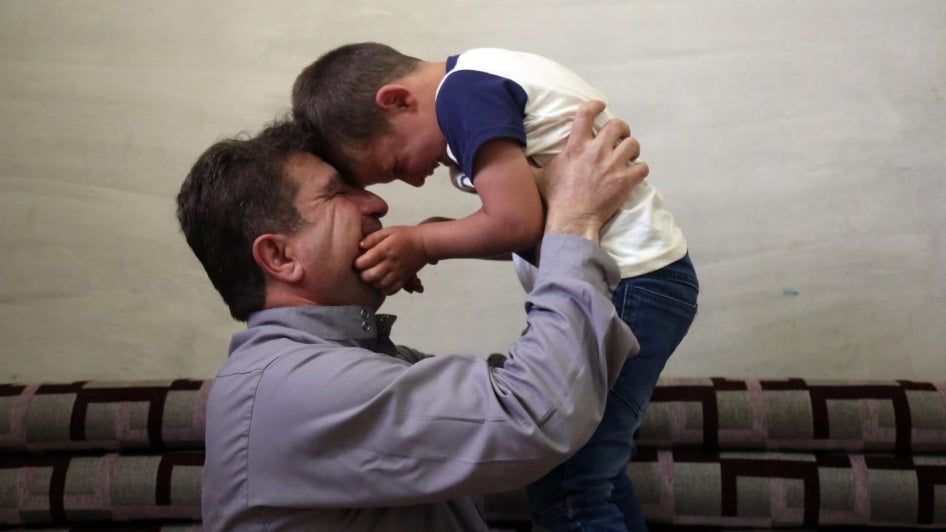
The father of a boy with an intellectual disability in Syria, described in 2020 the effects that the war there had had on his son. The boy, who was 13 at the time, had become increasingly withdrawn and isolated. “He sits alone, doesn’t want to interact with any other kids,” said his father, who also described the psychological distress affecting his other children. “You can see the fear in their eyes. They have no hopes for the future.”
Because of communication barriers, a lack of accessible information, and inadequate communication support, people with intellectual and other disabilities are frequently excluded from humanitarian assistance and mental health services, even when such services are available to others affected by the conflict. Human Rights Watch has documented lack of inclusive psychological support for people with disabilities in other armed conflicts, including Gaza and Sudan.
Governments should address these gaps by integrating disability-inclusive mental health support during conflict and recovery, in line with their international obligations. Humanitarian agencies providing such services should also take steps to ensure that their programs are disability-inclusive and do not exclude people with disabilities. This could include providing accessible communication methods, such as pictograms and play therapy for children, training staff to provide disability-inclusive support, and equipping them with tactile regulation tools—like weighted lap pads, squeeze balls, and noise-canceling headphones—to help manage sensory overload.
Accessible, inclusive mental health care and support are policies that cannot undo the trauma of war, but they can help create the conditions for recovery, inclusion, and hope for the future.