Brussels, 7 October 2026
Re: Addressing human rights concerns during EU-GCC summit
Dear President Costa and President von der Leyen,
We are writing ahead of the October 24 European Union – Gulf Cooperation Council (EU-GCC) summit in Riyadh, and in the context of ongoing negotiations for bilateral EU deals with GCC countries, to urge you to use these opportunities to raise serious concerns and formulate concrete requests to address human rights and labour rights shortcomings in GCC countries.
Our recommendations concern five main priorities:
- Addressing the United Arab Emirates (UAE)’s role in fueling atrocities in Sudan;
- Freedom of expression and political prisoners across the region, including notably EU citizens jailed in Bahrain;
- Death penalty, with executions that continue to be carried out and particularly in Saudi Arabia;
- Labour rights violations, especially in the context of bilateral deal negotiations, with particular regard to Saudi Arabia ahead of its hosting of the 2034 FIFA World Cup;
- The Houthis’ detention of UN and NGO staff in Yemen, and the need to press states with influence over the Houthis on the matter.
UAE and Sudan
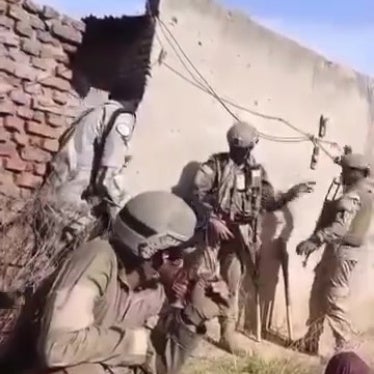
Human Rights Watch’s research contributed to ever growing evidence of UAE military support to abusive Rapid Support Forces (RSF) in Sudan, which have committed widespread war crimes, crimes against humanity and ethnic cleansing.
As you meet with UAE leadership, and during the proceedings of the Summit, we urge you to call on them to immediately and urgently end the provision of personnel, weapons, equipment, and all related assistance to the RSF, and make it clear publicly that the EU is documenting the role, that Abu Dhabi-based Global Security Services Group (GSSG), its CEO Mohamed Hamdan al-Zaabi and other individuals and entities have apparently played in the provision of support to the RSF, with a view to imposing targeted sanctions.
You should also lay out how the UAE’s continued support to the RSF in Sudan risks impacting on EU arms transfers and military training and cooperation and on negotiations for bilateral partnership and trade agreements.
Political prisoners in GCC countries
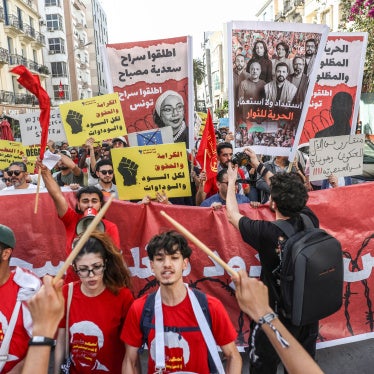
In Bahrain, authorities have intensified their repression in recent months, including by arbitrarily arresting dozens of people for exercising their right to free expression, and stripping 69 people, mostly children, of citizenship. Human rights defenders and political leaders have remained arbitrarily detained for over a decade, including Hassan Mushaima, Dr. Abduljalil al-Singace, Sheikh Ali Salman, and EU citizens Abdulhadi al-Khawaja and Mohammed al-Muqdad.
In the UAE, at least 83 are behind bars for peaceful exercise of their freedom of expression, many of them following grossly unfair mass trials. Among them are Ahmed Mansoor, a prominent human rights defender; Nasser bin Ghaith, an academic; and Khalaf al-Romaithi, a businessman.
In Saudi Arabia, the government continues to detain individuals for exercising basic rights, with high profile detainees such as Salman al-Odah, Waleed Abu al-Khair and Manahel al-Otaibi still in prison.
You should raise these cases of political prisoners and detained activists with GCC countries and publicly call for their immediate release.
Death penalty
According to Amnesty International, GCC countries retain the death penalty, with executions carried out in the UAE, Kuwait, and Saudi Arabia in 2025.
Saudi Arabia’s soaring use of the death penalty is particularly alarming, including at least 17 Ethiopian nationals executed in 2026 without due process and dozens more remaining at imminent risk of execution over drug-related offences. In 2025, Saudi Arabia executed at least 356 people, including at least two people convicted of crimes committed as children. The June 2025 execution of journalist Turki al-Jasser raised concerns that the Saudi government is using the death penalty to crush peaceful dissent.
We urge you to call on all GCC leaders for an immediate moratorium on executions, with a view to abolish the death penalty and to respect international fair trial and detention standards.
Labour rights
GCC states have failed to protect millions of migrant workers from serious labor abuses, and during the 2026 regional conflict GCC governments intensified restrictions on the rights of people, including migrant workers, to freedom of expression, association, and peaceful assembly. These repressive policies have exacerbated restrictions on migrant workers to raise concerns about working conditions in an already repressive environment.
The failure of GCC states to protect migrant workers extends to inadequate occupational health and safety protections from extreme heat, a risk that is particularly prevalent in Gulf states during the summer months.
Moreover, as Saudi Arabia gears up to host mega events such as the 2034 World Cup, migrant workers continue to face widespread labor abuses, some of which may amount to situations of forced labor, across all employment sectors and geographic regions, and Saudi authorities are systematically failing to protect them from and remedy these abuses.
As emphasized in our 2024 submission to the EU on the ongoing negotiations, we urge you to link talks on bilateral partnership and trade agreements to specific conditions and benchmarks contributing to positive change in GCC countries. Those include ratification of core human rights and ILO conventions, calendarization of reforms to ensure compliance with international human rights and labour rights standards, and participation of independent civil society, which is currently limited or non-existent within most of the GCC countries, to monitor and implement those deals’ provisions.
Houthi detentions of UN and civil society staff in Yemen
Human Rights Watch is extremely concerned about the safety and security of the dozens of UN and civil society staff who have been arbitrarily detained by the Houthis over the last two years. At least eight, who are all in critical health conditions, now face trial, despite not having had adequate access to lawyers. Some have stated that they were forced, under torture, to make confessions to participating in espionage, which carries the death penalty.
We urge the EU to take a greater role in advocating for the release of the detainees, including by approaching authorities with influence over the Houthis, including some GCC governments, to increase their efforts towards pushing for the release of the detainees.
We hope you will both raise these issues with GCC leaders in Riyadh and give clear instructions to EEAS and DG Trade staff negotiating deals with the GCC countries, and we stand ready to provide further information on these and other pressing issues.
Kind regards,
Philippe Dam, EU Advocacy Director, Human Rights Watch
Michael Page, Deputy Director, Middle East and North Africa division, Human Rights Watch