1. What is the fact-finding mission?
An independent and rigorous scrutiny and investigation mechanism. The Independent International Fact-Finding Mission on Venezuela (FFM) is a special mechanism created by the UN in 2019 to exercise scrutiny and investigate gross human rights violations in Venezuela. Its work has been highly regarded, and its continuity deemed necessary, so its mandate has been renewed in 2020, 2022, and 2024 for two-year periods.
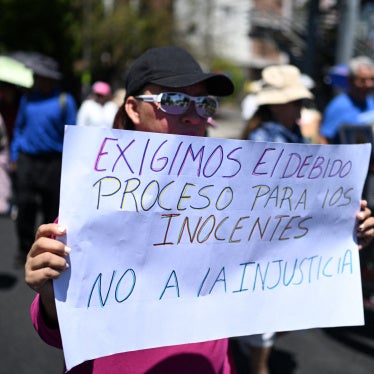
A victim and justice-centred mandate. The FFM exists to help victims obtain justice, and hold perpetrators accountable for human rights violations, in the absence of pathways to achieve this at the national level. Specifically, the FFM investigates extrajudicial executions, arbitrary detentions, torture and other cruel, inhuman and degrading treatment, enforced disappearances, and sexual and gender-based violence, committed since 2014.
A source of public, regular and reliable information. The FFM is composed of independent experts with extensive experience and expertise of international law. Its work is presented to the UN Human Rights Council (HRC) in Geneva, allowing international scrutiny and the engagement of countries from around the world and civil society.
Identification of suspected perpetrators: Between 2020 and 2026, the FFM has identified a number of mid- and high-ranking perpetrators, chains of command within intelligence services and security forces, and a state policy against the civilian population who might be considered dissident that would constitute crimes against humanity, including persecution on political grounds.
2. Why must the mission be maintained until 2028?
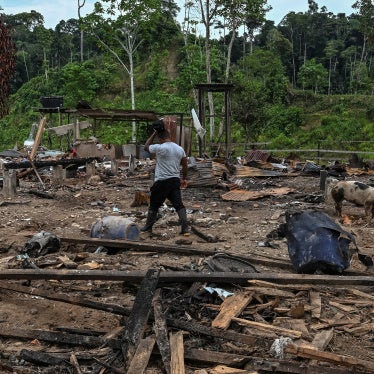
The conditions that warrant the existence of the FFM remain more valid than ever. The current context in Venezuela is volatile, and the social, humanitarian and human rights situation remain concerning. Since the concerning events of January 2026, some changes to the conduct of Venezuelan authorities have been observed, but the policy of repression remains intact, specifically in regard to its members, structures, and institutions. The June earthquakes have exposed the lack of protection of the Venezuelan population. Hundreds of people remain arbitrarily detained for political reasons, individuals identified as possible perpetrators of crimes against humanity, including those named by the FFM in its reports, continue to hold high-ranking government roles, and the government's efforts to evade justice at the national and international levels have deepened.
Evidence-based recommendations offer a verifiable roadmap. Continued reporting by the FFM will help guide the international community, and actors inside the country, in terms of necessary reforms to ensure reparation for, and the non-repetition of the human rights crisis that the country has suffered for long over a decade. Their analysis can also help the international community distinguish cosmetic reforms announced from meaningful changes to law and policy.
Impunity breeds repetition. Efforts to secure a future in which human rights are protected in Venezuela must prioritize truth, justice, reparation, and guarantees of non-repetition for serious human rights violations and crimes under international law. The FFM’s investigations, reporting, and recommendations offer a unique body of ongoing work that serves as a guide for necessary changes in the country. Their continued efforts to build dossiers on – and publicly identify - individuals suspected of responsibility for crimes against humanity and other grave abuses is a key tool in this regard.
3. How is the FFM complementary to the work of the UN Human Rights Office and international justice mechanisms?
Technical assistance and monitoring in the country. The renewal of the FFM’s mandate must go hand-in-hand with the renewal of the monitoring and cooperation mandate of the Office of the High Commissioner for Human Rights (OHCHR), as has been the case since 2020. They are two different, complementary, and necessary mechanisms. While the FFM focuses on investigating gross human rights violations, with a view of combating impunity and ensuring full accountability for perpetrators and justice for victims, robust public reporting, and provision of guidance and structural recommendations, the OHCHR monitors the human rights situation as a whole and offers technical assistance to the authorities in addition to its regular reporting. The FFM, like many other investigative bodies, has proved it is able to carry out robust investigations despite being barred from the country, but pressure should be increased now to allow them to visit.As two different and necessary mandates, staff of both mechanisms must be able to enter the country and have access to victims, their relatives, and human rights defenders.
International justice mechanisms. The Venezuelan justice system has been a tool for systematic and widespread repression, including by judges, prosecutors, and other judicial personnel. In this environment, international justice institutions play an essential role. The FFM's findings serve as a source of information for courts that can attribute individual criminal responsibility and sanction those who have committed crimes under international law, including the International Criminal Court as well as some national courts, as in Argentina under the principle of universal jurisdiction.
4. How can the Mission contribute to the future of Venezuela?
Without structural changes, deterrence and informed recommendations are still necessary. Venezuela faces an altered context, but not one structurally different. The international community must remain vigilant and demand systemic human rights changes. Investigations and recommendations by the FFM over the next two years are the best tool at the international community’s disposal to demand that the necessary changes be made to ensure truth, justice, reparation, and guarantees of non-repetition.
In the face of uncertainty, it is necessary to guarantee international scrutiny and debate. The situation in Venezuela is dynamic, and demands for urgent and structural changes must be made. In this uncertain landscape, the continuity of the OHCHR and of the FFM’s scrutiny and investigations over the next two years guarantees that the human rights situation in the country will be subject to periodic review and debate by the UN, states, and civil society. Regularity and predictability offer a minimum floor of scrutiny over any progress that could materialize in the country.
5. Who is responsible for the renewal of the mission?
A resolution approved by the UN Human Rights Council in Geneva. The FFM’s mandate was created and has been maintained by decision of the UN HRC, which is made up of 47 member states. The renewal of its current mandate must be decided through a new resolution that should be tabled and voted on during its 63rd session, which will take place between 7 September and 7 October 2026.
Regional leadership with global support, based on principles and human rights. As in previous resolutions that sustained the FFM’s mandate, states in the Americas continue to lead the renewal of the mandate of the FFM. Since 2024, the states that lead this effort are Argentina, Canada, Chile, Ecuador, Guatemala, Paraguay, and Uruguay. This leadership must be supported by the members of the European Union as well as African, Asian, and European countries committed to a future where human rights are protected and guaranteed in Venezuela, including Bolivia, Brazil, Ghana, Gambia, Malawi, Mauritius, Thailand.
Joined by:
Acceso a la Justicia
AlertaVenezuela
Amnesty International
Aula Abierta
Centro de Derechos Humanos de la Universidad Católica Andres Bello (CDH-UCAB)
Centro de Justicia y Paz (CEPAZ)
CIVICUS
CIVILIS
Comité de Familiares de Víctimas de los Sucesos de Febrero y Marzo de 1989 (COFAVIC)
Due Process of Law Foundation (DPLF)
Espacio Público
Foro Penal
Global Centre for the Responsibility to Protect
Human Rights Watch
International Federation for Human Rights (FIDH)
International Service for Human Rights (ISHR)
Justicia, Encuentro y Perdón
Programa Venezolano de Educación Acción en Derechos Humanos (PROVEA)
Robert & Ethel Kennedy Human Rights Center
Washington Office on Latin America (WOLA)
World Organisation Against Torture