Warning: This story contains video and
images of violence and disturbing audio.
Viewer discretion is advised.

“A Strategy of Death”

Investigating Brazil’s Deadliest Police Operation

A HUMAN RIGHTS WATCH Investigation

The morning sun had not risen over Rio de Janeiro as 2,500 police officers geared up for the day ahead. While the city slept, they pulled on uniforms and checked weapons. A few hundred donned the legally required body cameras–many with waning batteries. 

By 4 a.m. on October 28, 2025, the officers huddled together in the pre-dawn darkness. 

“Now is the time for us to show our strength…” said a senior officer, seen in body camera footage, to a group of elite officers from the Battalion of Special Police Operations of Rio's Military Police, the state police force separate from the Armed Forces that is tasked with patrolling the streets and maintaining public order. “This is the moment when our troops will demonstrate our true character….so that we can retake that territory and, of course, assert the power of the state.”

The other officers listened in silence.

“Everyone here knows what we must do,” he concluded. 

The heavily-armed forces piled into vehicles and drove towards the low-income neighborhood of Complexo da Penha. Their mission, on paper, appeared clear: execute 100 arrest warrants for men accused of being members of Comando Vermelho, the Red Command, one of Brazil’s most powerful drug-trafficking groups. 

By day’s end, at least 123 people would be dead, including two children and four police officers. Of those, police killed two men in the early morning hours as they fled the impending raid, while the other 121 people died during the operation itself. A fifth officer would succumb to his injuries less than a month later. 

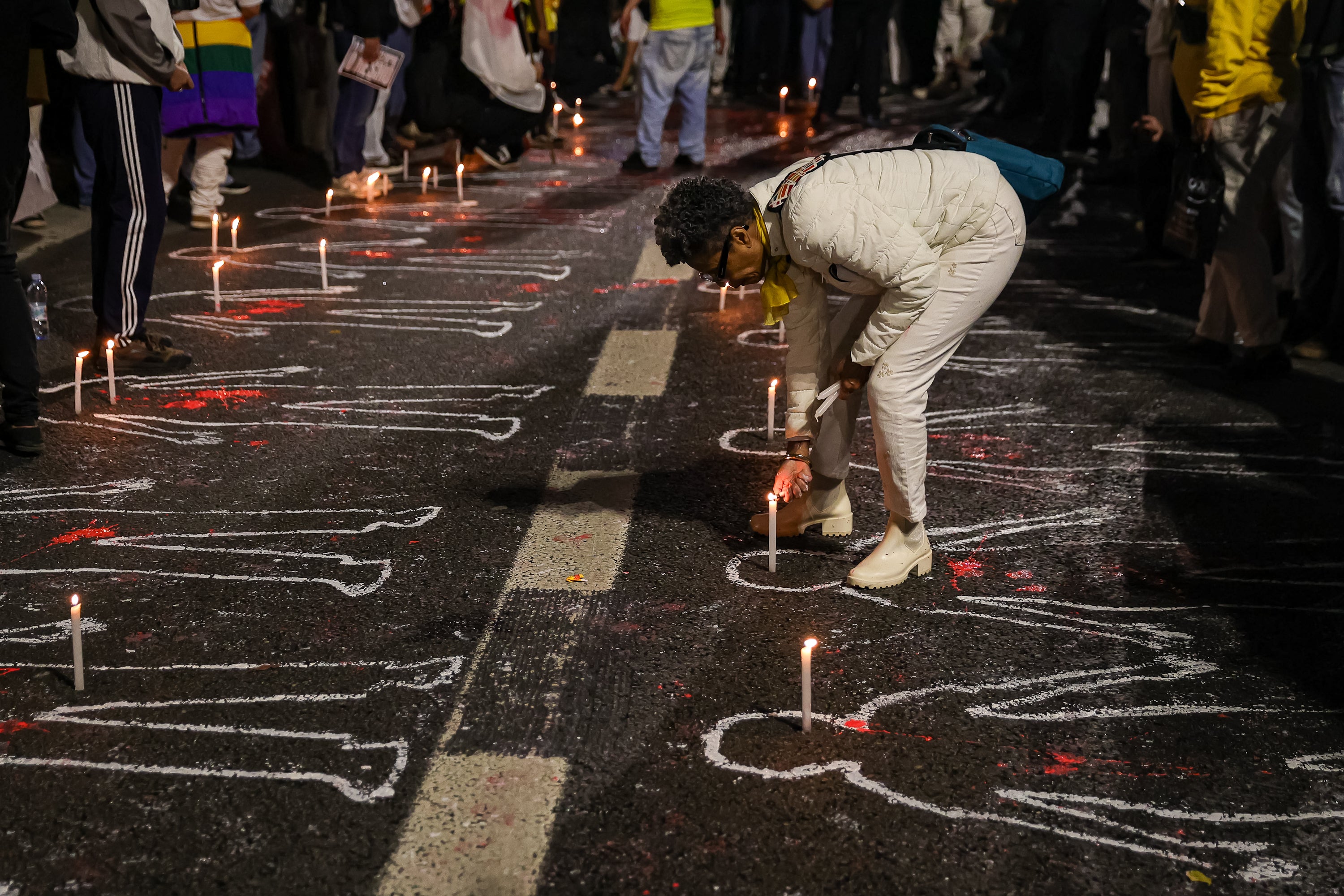
An individual lights a candle on Avenida Paulista in São Paulo
An individual lights a candle on Avenida Paulista in São Paulo, Brazil, on October 31, 2025, to commemorate those killed during Operation Containment in Rio de Janeiro.  © 2025 Allisonsales/picture-alliance/dpa/AP Images

None of the people killed were among the 51 individuals with arrest warrants named in the main investigation justifying the operation. Police entered many homes throughout Complexo da Penha; yet, they did not enter the home of the local gang leader, the main target of the operation, a Civil Police commander told prosecutors.

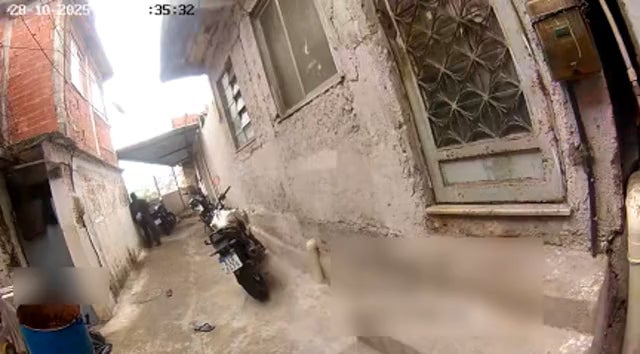
As part of a year-long investigation, Human Rights Watch interviewed 41 witnesses, relatives of victims, and officials. Researchers also obtained and analyzed police body camera footage, autopsy reports, official investigation files, court records, as well as nearly 600 videos and photographs, through the Public Defender’s Office, a working group of local organizations, and open source research. To determine what happened on October 28, 2025, Human Rights Watch researchers analyzed 4,400 hours of body camera footage from cameras worn by officers. We found that none of the killings were captured on camera. 

4,400 hours

of police body camera footage

Human Rights Watch worked closely with the Human Rights Defense Center at Rio de Janeiro’s Public Defender’s Office, and Project Mirante, a Federal Fluminense University research project providing technical assistance to the Public Defender’s Office. After the Public Defender’s Office provided Human Rights Watch with the body camera footage, researchers used custom-built software, AI, and expert review to analyze the footage.

122 autopsy

reports for victims

The Public Defender’s Office provided Human Rights Watch with the autopsy files. Human Rights Watch researchers used custom-built software, large language models, and expert review, to analyze the 2,800 pages of autopsy files for 122 victims. The International Rehabilitation Council for Torture Victims’ Independent Forensic Expert Group, composed of 42 experts the world over, provided forensic review of autopsy reports and additional imagery showing wounds.

8.8k+ pages

of the prosecutors’ investigation

The files, which were provided by the Public Defender’s Office, included statements from both police and witnesses as well as arrest and hospital records. Researchers analyzed these files, piecing together names, dates, and other key details. Additionally, researchers reviewed dozens of pages of court records and additional documentation obtained via freedom of information requests.

41 interviews

with people in person or by phone

Between October 2025 and September 2026, Human Rights Watch interviewed 41 people, including family members of those killed, witnesses, photographers who were on the scene, favela residents, prosecutors, public defenders, and forensic experts.

500+

photographs and videos

Researchers analyzed 579 photographs and videos gathered from a variety of sources: witnesses and journalists; social media; or a working group made up of Papo Reto, Redes da Maré, and Projeto Mirante. Researchers also analyzed satellite imagery, hand-annotated maps, news reports, and social media messages.

Many of the people killed were likely gang-affiliated, and video recorded that day shows armed men in the favela and Vacaria, an elevated wooded area between Complexo da Penha and nearby Complexo do Alemão. Footage from hundreds of police body cameras would have helped determine what really happened. Yet, Human Rights Watch found systematic failures, including manipulation of the devices. Researchers found serious investigative failures, body camera footage showing officers assaulting detainees, and evidence suggesting excessive use of force and that individuals were killed intentionally.

Operação Contenção, or Operation Containment, was the deadliest documented one-day police operation ever in a country where police forces kill more than 6,000 people per year, over 80 percent of whom are Black. It was also the deadliest for police officers, a commander told prosecutors.

Military-style police raids in Rio’s sprawling favelas are common and often result in killings, mainly of boys and young men. For decades, residents have decried an unrelenting cycle of state neglect coupled with police violence. To curb this violence, the Supreme Court in 2022 mandated that police follow certain operational procedures in Rio de Janeiro, including wearing body cameras, coordinating medical responses, and preserving crime scenes. The Supreme Court issued its final ruling in April 2025.

On October 28, 2025, senior police officials and members of the police force repeatedly and at times willfully violated those procedures in favor of a deadly police operation.

As the operation unfolded over the course of about 15 hours, residents received frantic messages and calls from young men, some of them likely armed, in the Vacaria, saying that they were cornered and that they wanted to surrender–that they didn’t want to die. Then their phones went silent.

As the police began to retreat–disappearing into the night–a quiet darkness enveloped the forest.

One officer crossed paths with a small group of residents who had spent the day trying to enter the forest in vain. “We weren’t going to take anyone alive because we arrest them, and soon they’re all back on the street,” the officer said, according to Tauã Brito da Cruz, whose son was killed that day and who has since become a public face of victims’ mothers demanding answers.

“Now go up there,” he told Da Cruz. “It’s full of bodies.’”

Scrambling up the dark hillside, women cried out their sons’ names, they told Human Rights Watch.

Community members search for bodies in a forested area in Complexo da Penha after police withdrew on October 28, 2025. Courtesy of Papo Reto

What they found was carnage, dozens of bloodied bodies strewn across the forest floor and slumped over on boulders. Over 60 percent of victims were shot four or more times.

One man, Yago Ravel Rodrigues Rosario, had been decapitated. 

For the community, the operation was “a chacina” – a massacre. Despite the high death toll, which included five police officers, Rio’s then-governor Claudio Castro celebrated the operation as a “success.” At the time of writing, prosecutors had charged 19 police officers, who are awaiting trial, with breaking into homes, theft, and tampering with body cameras, among other crimes, but none with unlawful use of force. Commanders who made decisions that led to the raid, and commanders of specific units, have not been held accountable.

The Megaoperation

18c5ba20-bf70-42d2-8cb0-5da53dbe572a

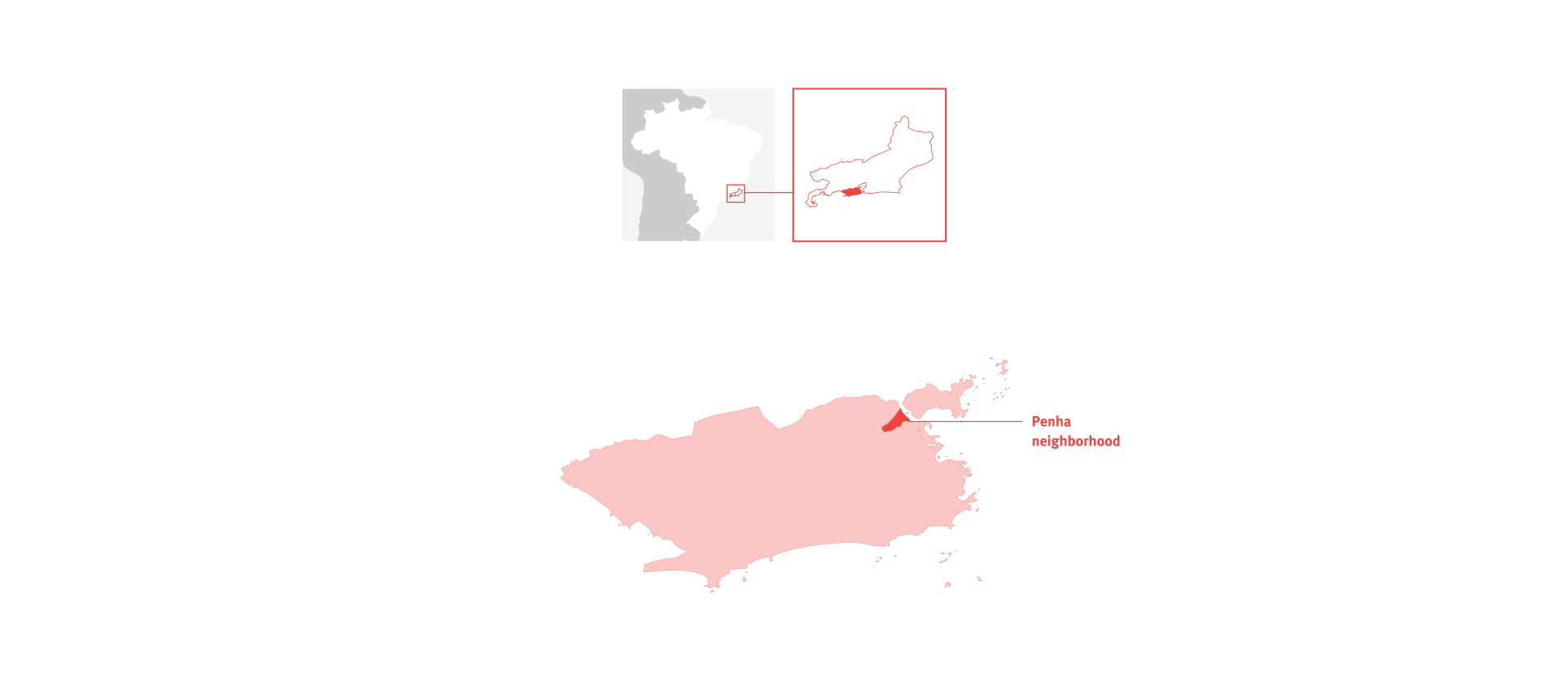
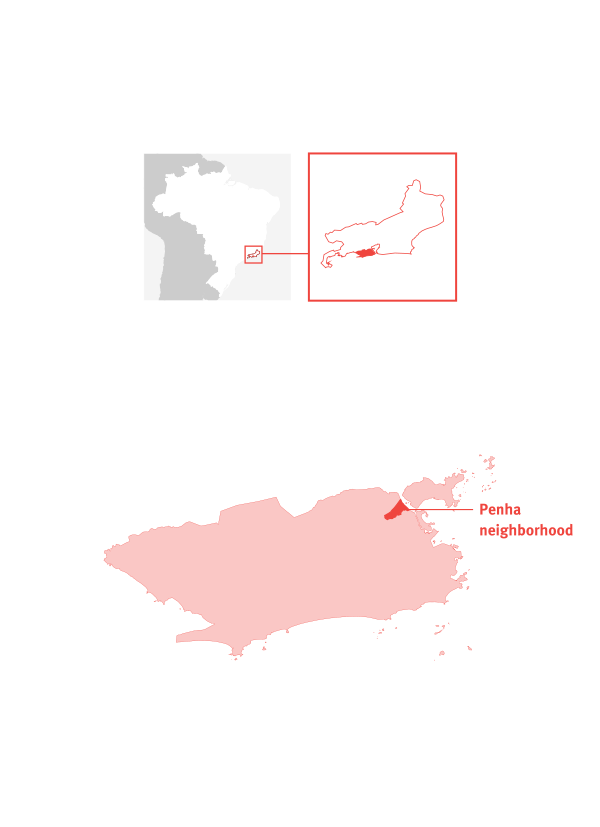
On October 28, 2025, around 2,500 heavily-armed officers from the Military Police and Civil Police, the state force that investigates crimes, were deployed to Complexo da Penha, a stronghold of the Red Command. The criminal organization exerts armed control over low-income neighborhoods where 1.6 million people live in Rio de Janeiro's metropolitan area. 

Police officials said they spent months planning the operation. Officers were backed up by armored vehicles, helicopters, and drones. Their stated goal was to carry out 100 arrest warrants and 145 search and seizure warrants.

8e7d98ae-37a2-45cf-ba69-7a737f20c0d6
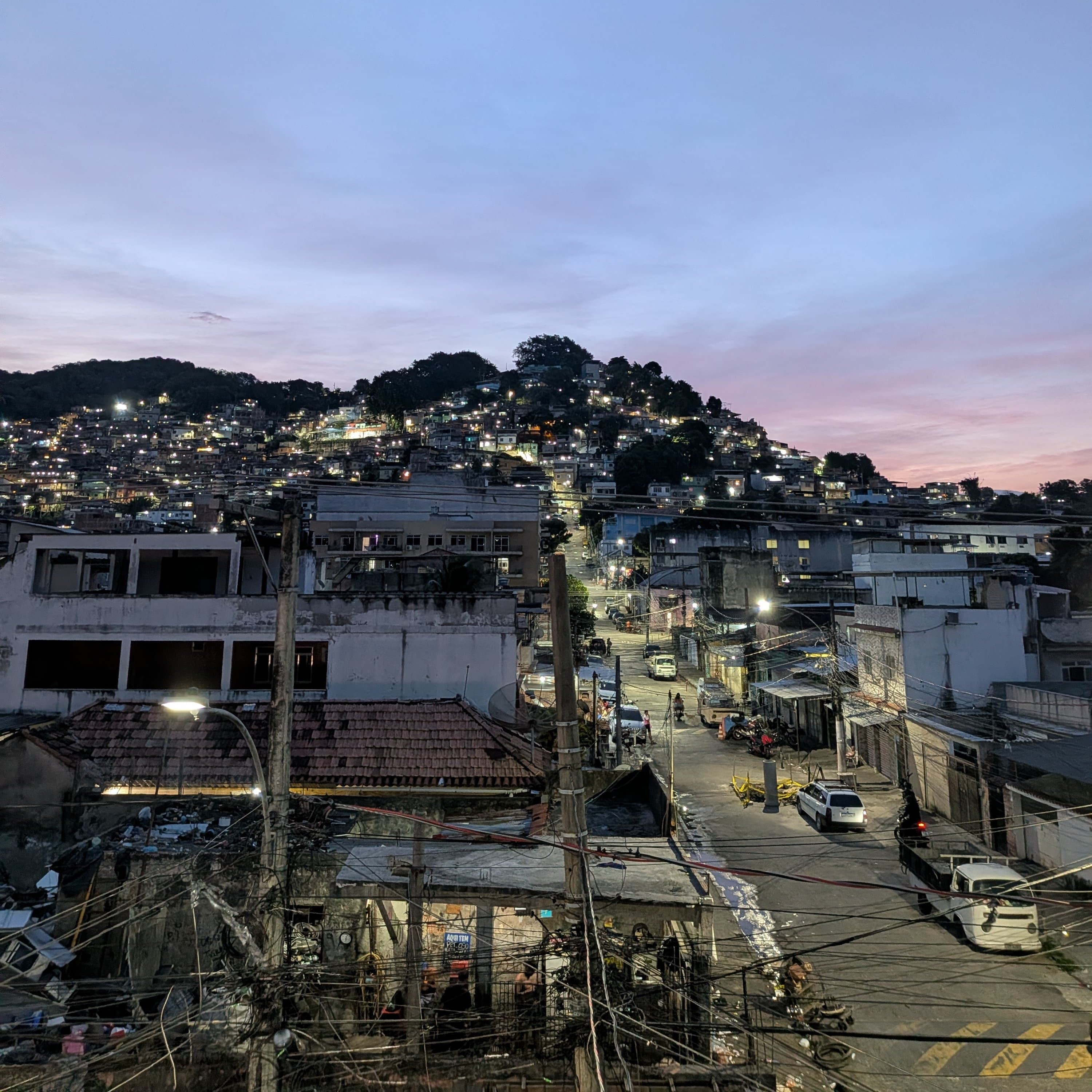
The Penha neighborhood in May 2026. © 2026 Human Rights Watch

Under the Tyranny of Organized Crime
About 30 percent of the population in Rio de Janeiro’s metropolitan area resides in areas controlled by drug-trafficking organizations or paramilitary groups, according to a study by GENI/UFF and Fogo Cruzado. These groups impose fees on goods and services and ruthlessly impose their own rules on residents. State presence in these areas is minimal to non-existent.  

One such area is Complexo da Penha, a sprawling, hillside neighborhood made up of makeshift brick houses and a web of alleys. Black people escaping slavery in the 19th century established this community–and others like it, all of which are known as quilombos in Portuguese–, where many of their descendants still live today.

Rio de Janeiro authorities have long fought criminal groups by sending police to conduct deadly raids in favelas, or low income urban settlements. That strategy has failed. Since 2007, the area controlled by organized crime has grown 130 percent.

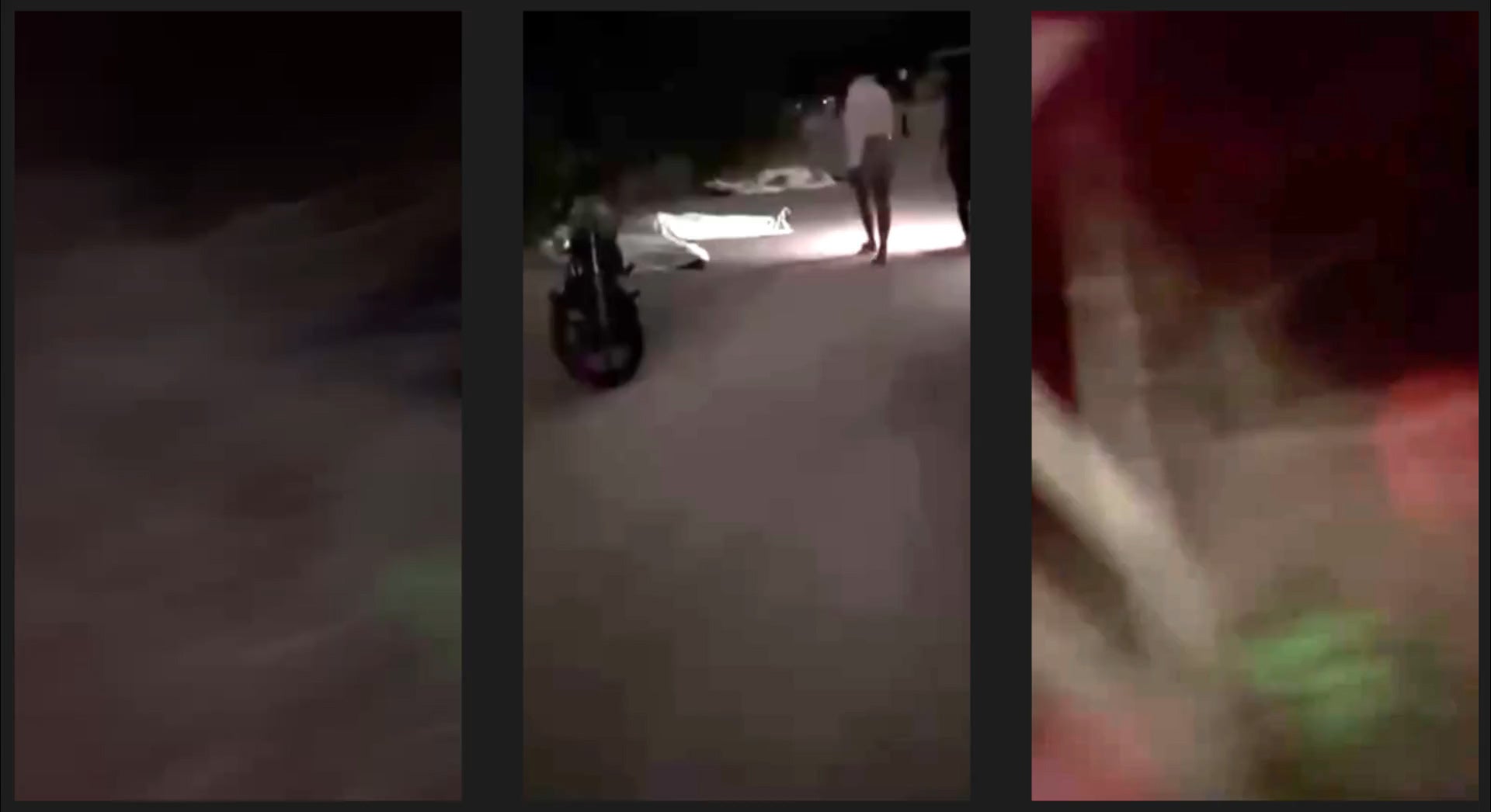
Around 1 a.m. on October 28, a group of people tried to leave Complexo da Penha on motorcycles; Military Police officers reportedly killed two of them in an alleged shootout. 

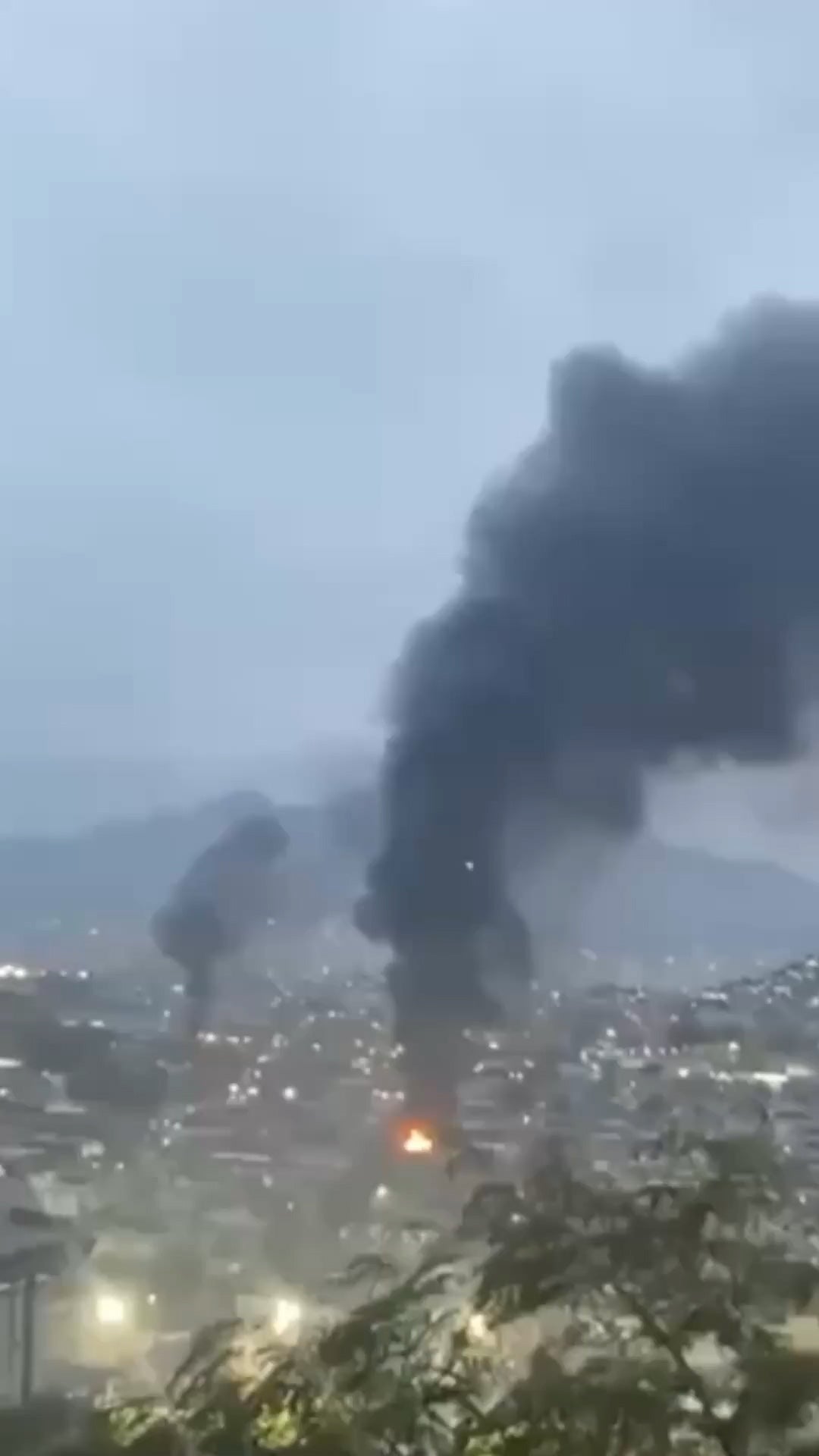
Smoke billows over Complexo da Penha on October 28, 2025, after gang members torched tires and set cars on fire to impede the advance of police. © 2025 Source Unknown/Rights Holder Please Contact

In the hours that followed, police units entering Complexo da Penha from multiple directions encountered armed resistance and makeshift barricades. Drones circled the community. Smoke choked the air as gang members burned tires. Gunfire rang out as officers engaged in firefights with armed men and boys, some of whom were carrying semi-automatic weapons and wearing body armor. 

By late morning, police units surrounded men and boys, some of them armed, in the Vacaria, a forested area on the Serra da Misericórdia, a hill above Complexo da Penha that gang members had used to escape previous police raids. But this time, those who fled into the Vacaria were trapped–they could not easily return to Complexo da Penha’s urban area, where other police units had taken position.

Atop the hill, the Battalion of Special Police Operations (BOPE) was in a position they called a “BOPE wall,” a line of officers tasked with preventing gunmen from escaping into the neighboring Alemão neighborhood. 

The raid took a dramatic turn when Civil Police officers were shot at the edge of the Vacaria. As a result, the BOPE commander directed his officers to come down from the hilltop to help. Fourteen police officers were shot and admitted to the hospital that day, according to investigation documents and hospital records, with all but one admitted by 1:30 p.m. Four officers died, and one more would die within weeks. 

cf6c4566-b860-48af-a250-8b0fd4de9956
The Batalhão de Operações Policiais Especiais, or BOPE, is an elite unit of Rio de Janeiro’s Military Police that routinely uses lethal force against suspects. Its insignia features a knife and two pistols plunged into a skull. © Richard Nunes / Wikimedia Commons

Prosecutors suspect that, around midday, after the police suffered casualties, the raid became a revenge operation–a deadly action to avenge the death of a comrade–a common occurrence in Rio and throughout Brazil.

By the end of the day, police forces had killed scores of people, primarily in the Vacaria, and elsewhere in the community.  

Police arrested 99 people, apparently all in the urban area of the community. Many can be seen in body camera footage; residents witnessed or filmed on their phones some of the arrests.

While a Civil Police commander told prosecutors that “some” suspects surrendered and were arrested in the forest, there is no record of those alleged arrests in the prosecutors’ full investigation, which Human Rights Watch accessed in May. 

A prosecutor told researchers police made no arrests in the Vacaria. A Civil Police commander involved in the operation also told researchers that “there were no arrests because they either fled or they resisted [police]... Nobody was arrested in the forest area probably because it was the epicenter of the shootouts.” The only survivors in the Vacaria were the few who hid, community members said. 

As the sun set over the forest that day, police collected bodies, piling them into armored police vehicles. As he filmed corpses, one officer joked about how much he enjoyed the killing. 

Officers left other bodies scattered in and around the Vacaria. Around 8 p.m., officers descended from the forest and left Complexo da Penha. It was only then that family members were able to look for their loved ones.

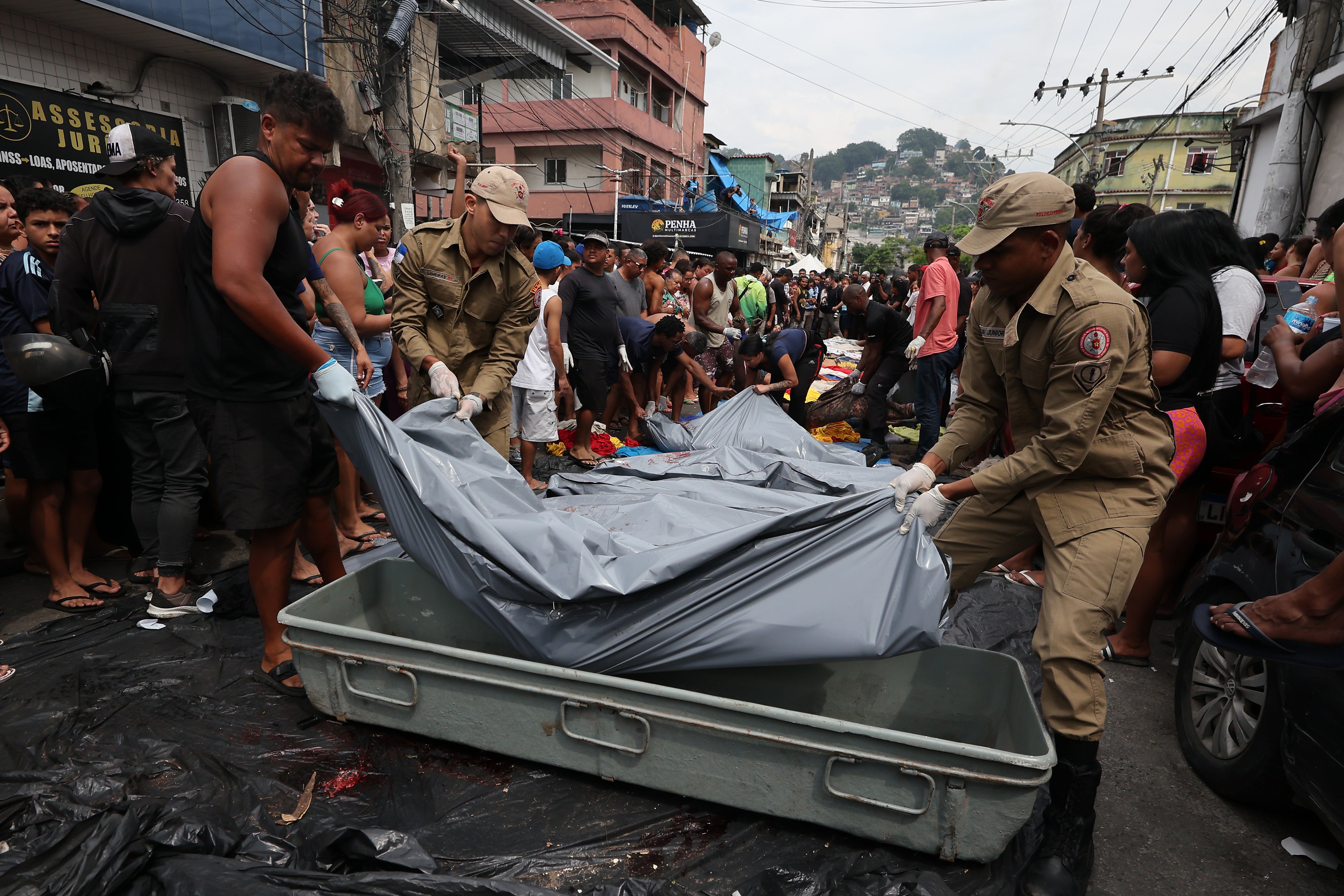
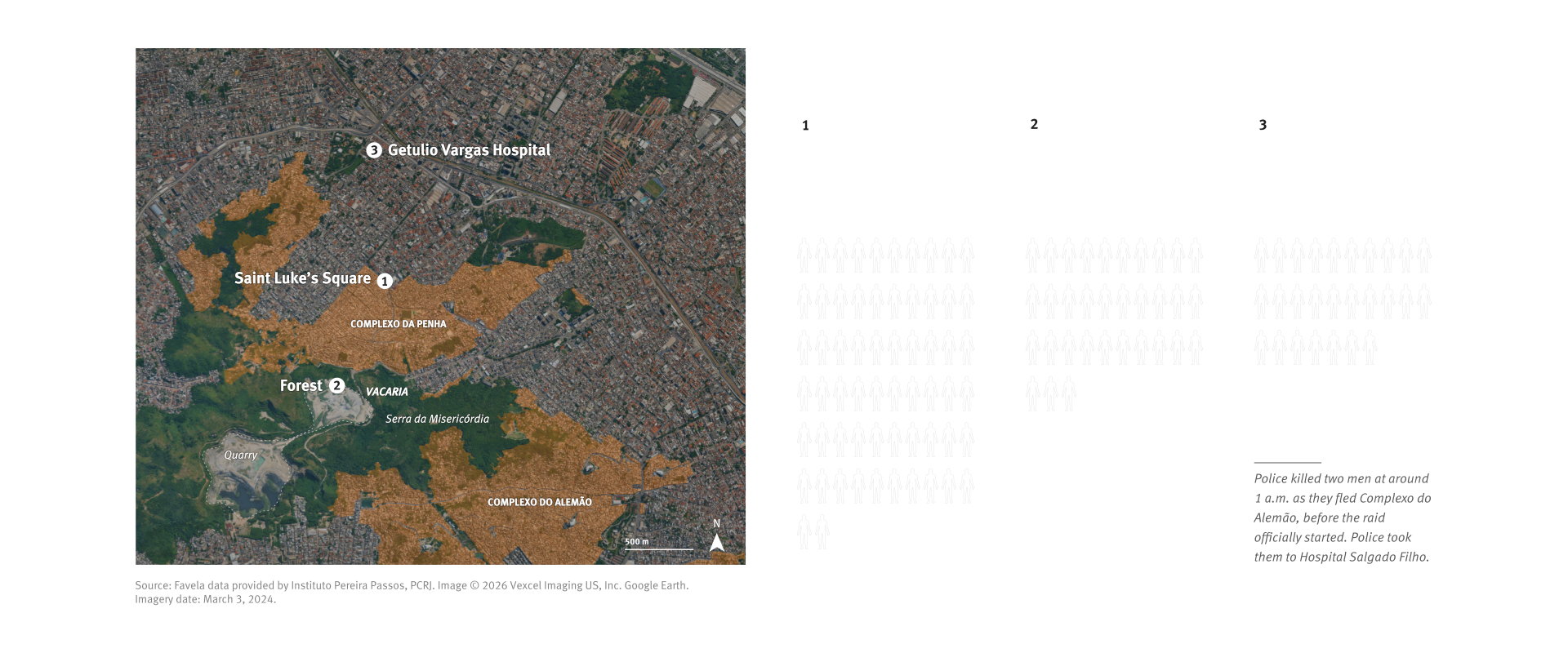
In the darkness, men and women shined their cellphone lights on victims’ faces, and carried their bodies through the trees. Covered now in dirt and their loved ones’ blood, community members transported the remains to Saint Luke Square in Penha. Some people removed tactical or camouflage clothing from victims. They placed 62 bodies side-by-side on the asphalt. 

Body Cameras: Intentional Police Tampering, Obstruction, and Negligence

A 2021 state law established that the state must install body cameras and record everything police officers “see, hear, say, or do.” In 2022, under orders from Brazil’s Supreme Court, Rio de Janeiro state adopted a plan to reduce police killings that requires police to wear body cameras and a 2025 Military Police protocol says officers should wear them in any situation involving “potential shootout or use of physical force.”

During Operation Containment, that didn’t happen.

Human Rights Watch analyzed 4,400 hours of body camera footage for 527 officers using artificial intelligence (AI) to flag key moments and potential tampering in the recordings, followed by a manual review of each flagged moment by researchers. 

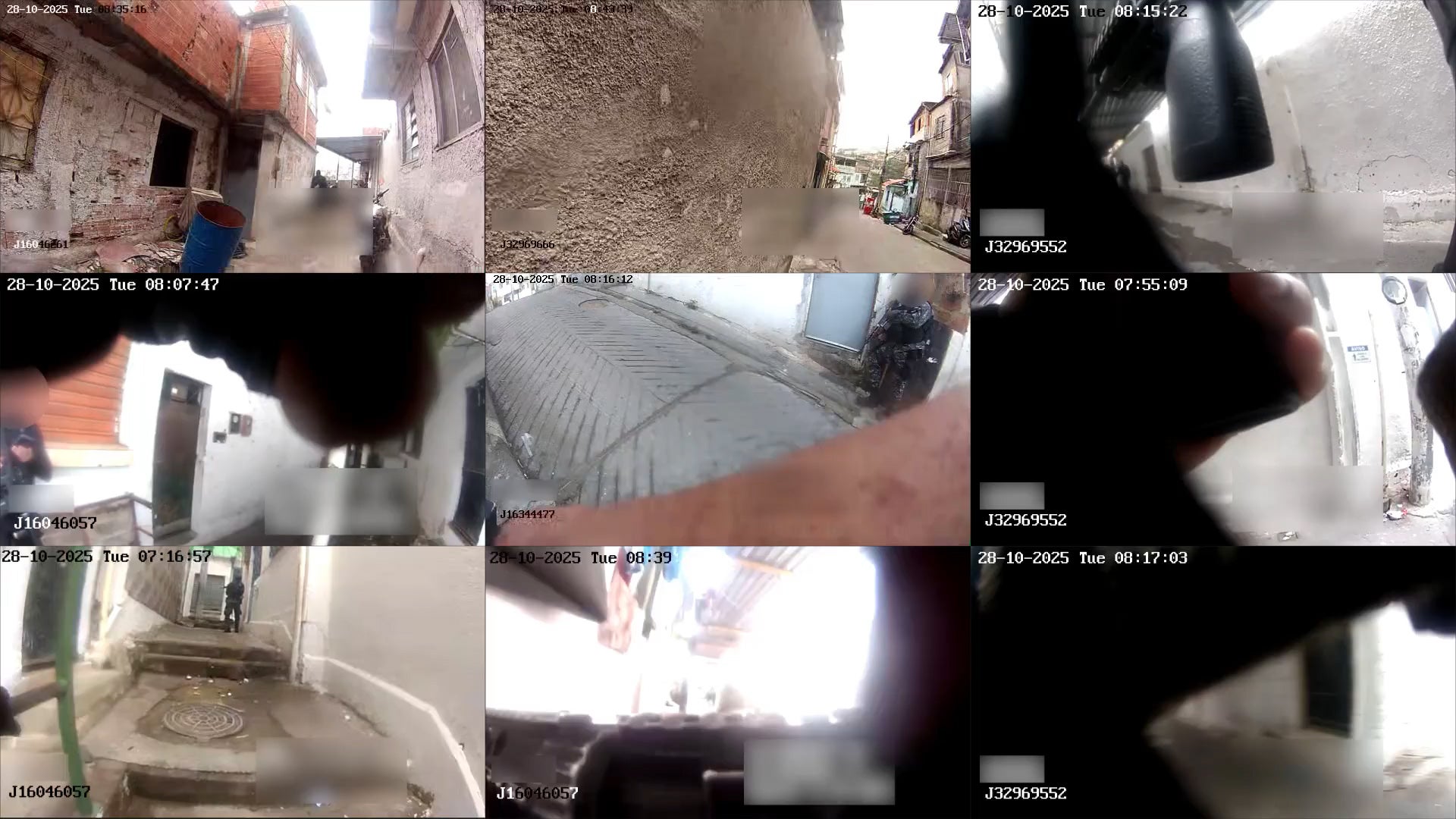
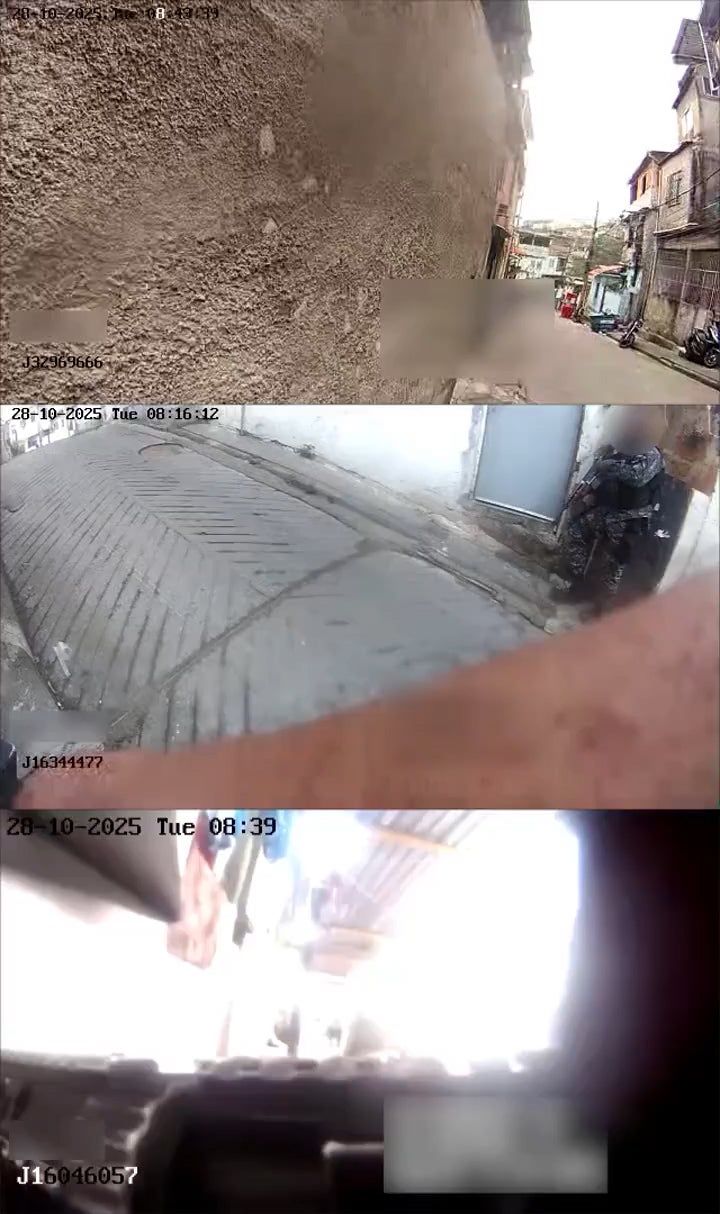
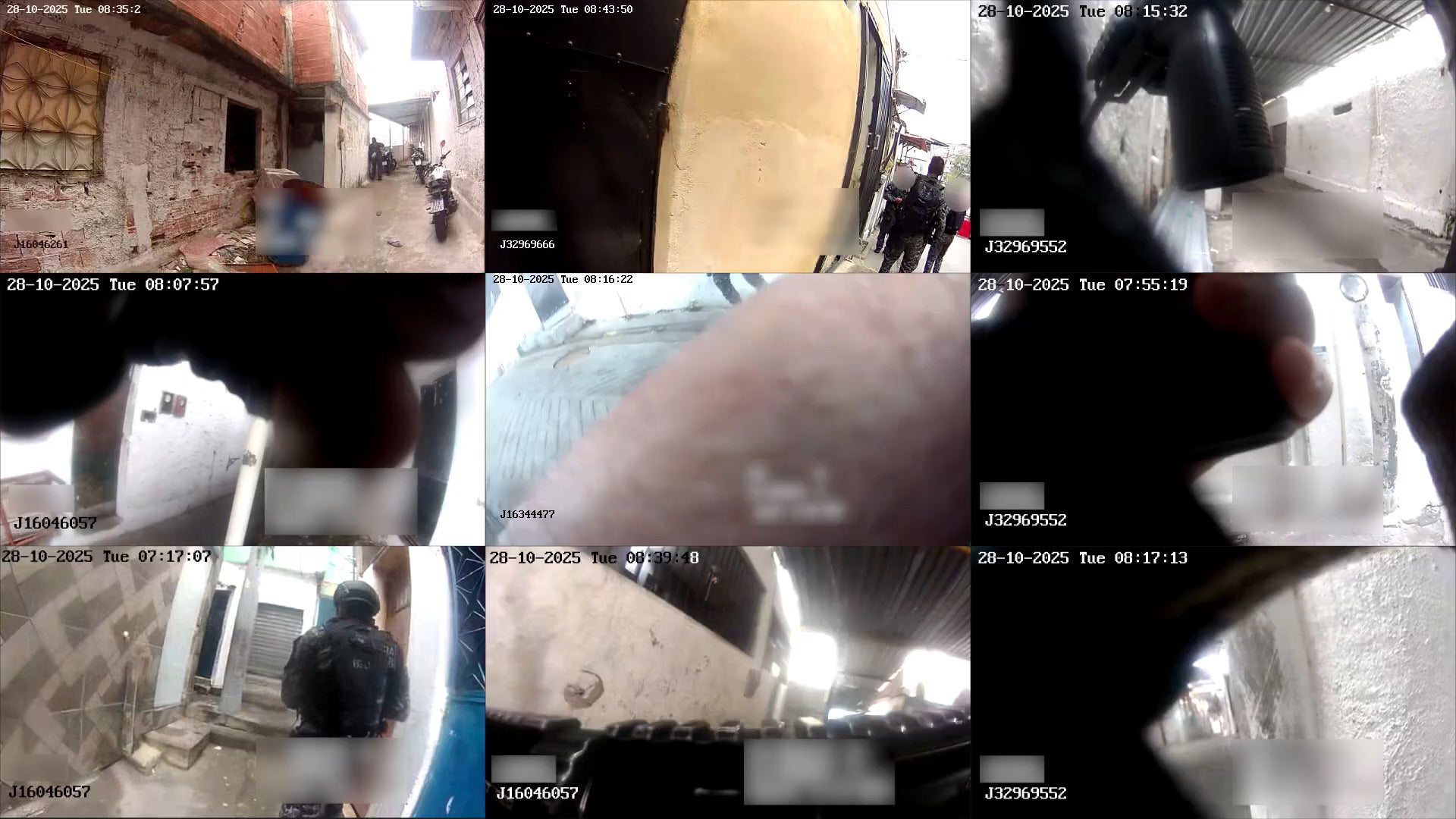
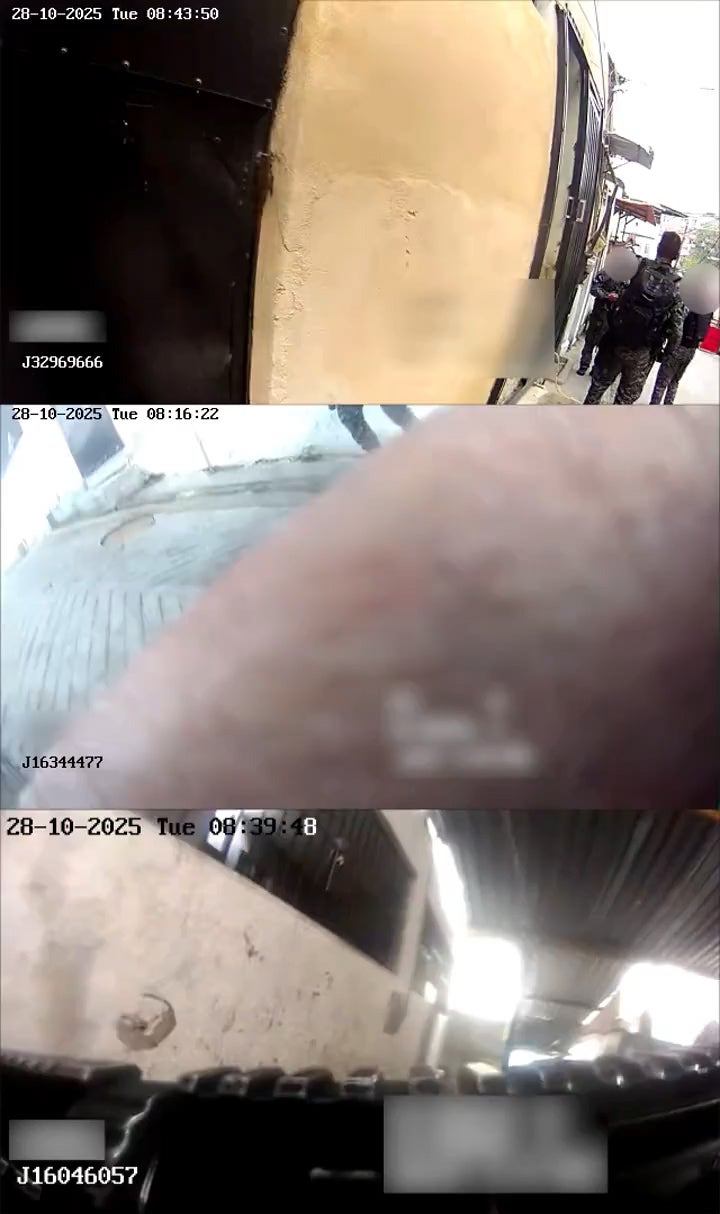
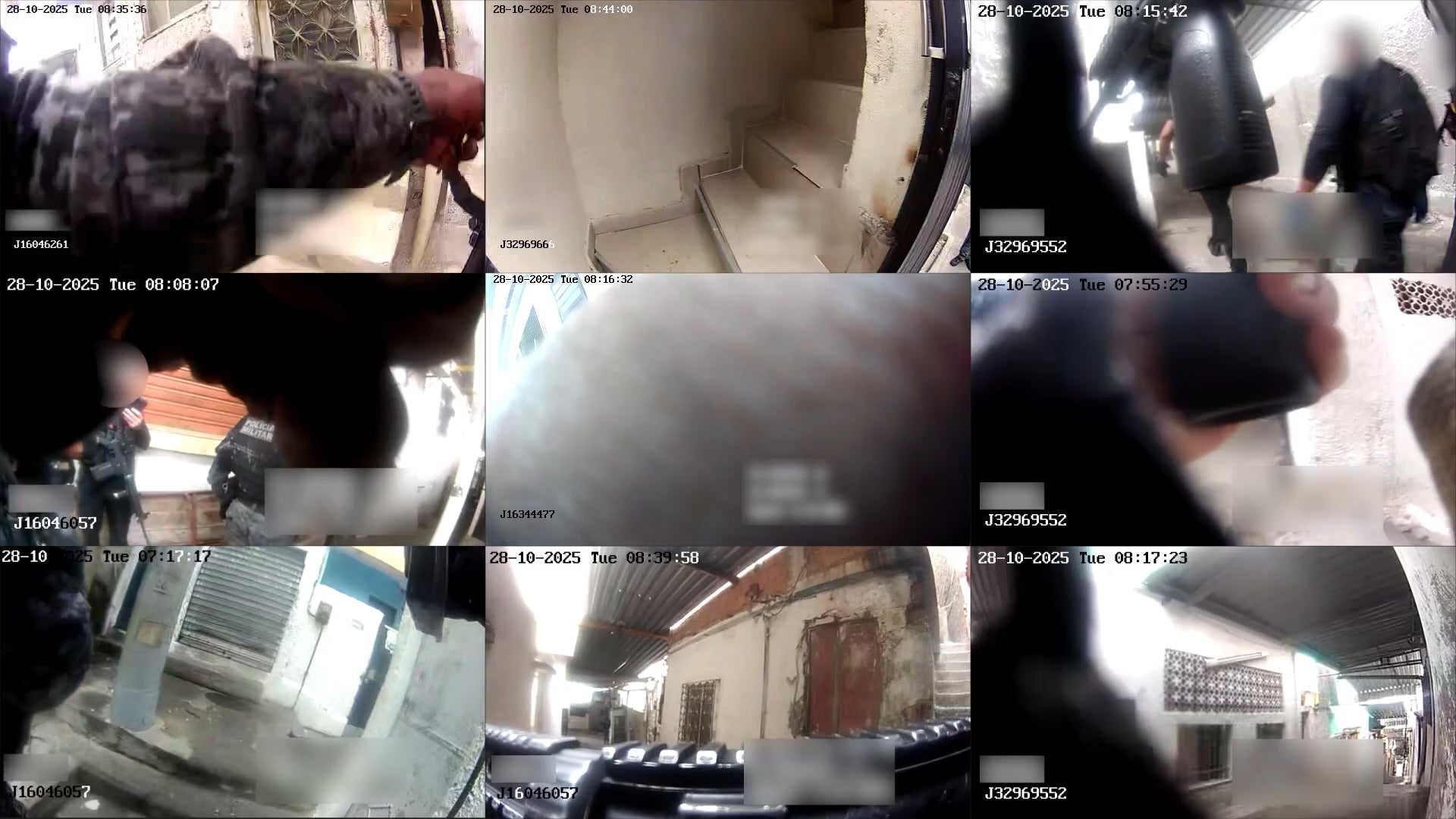
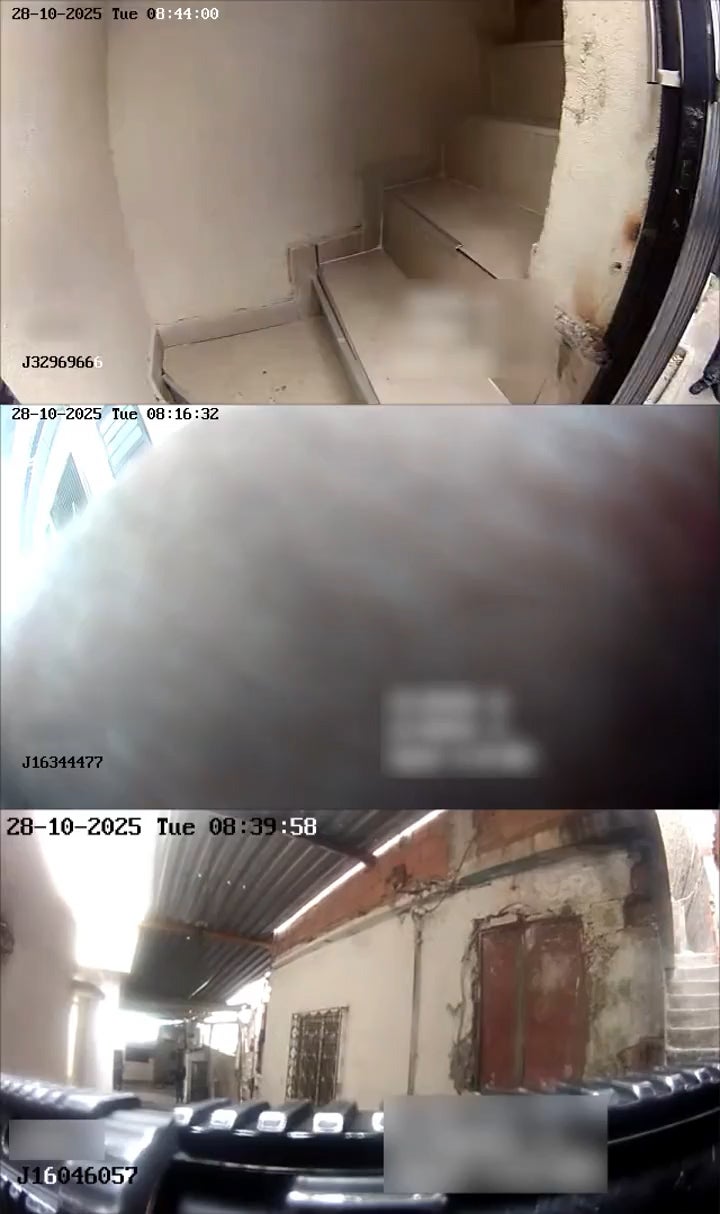
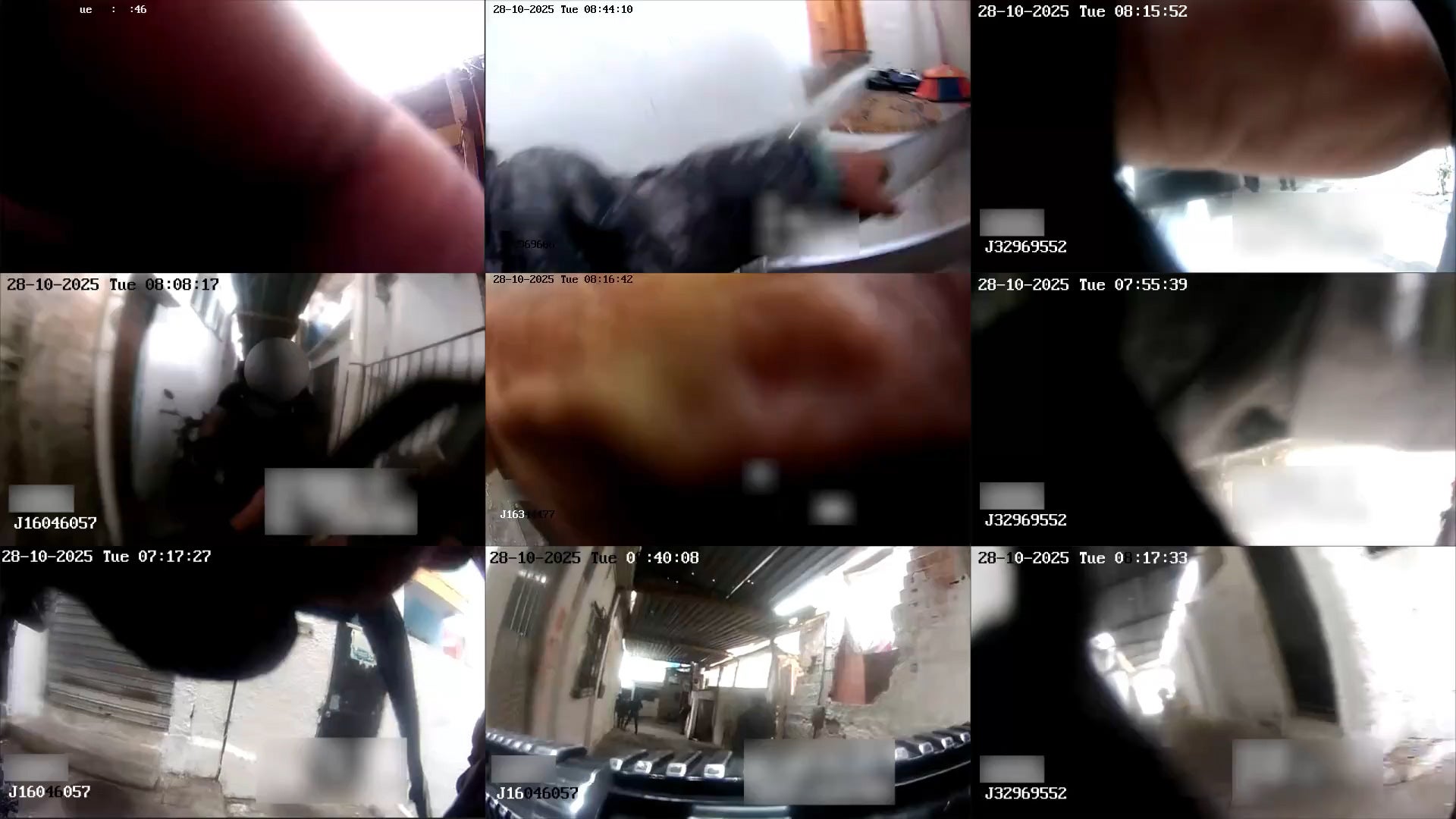
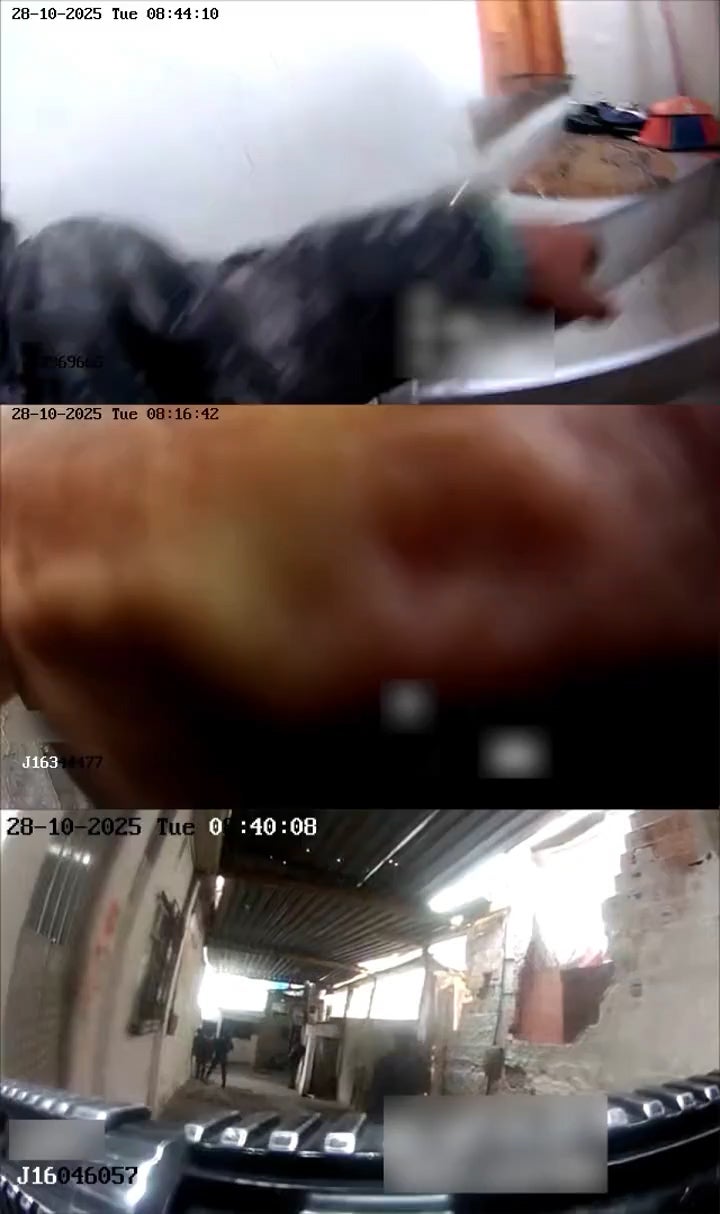
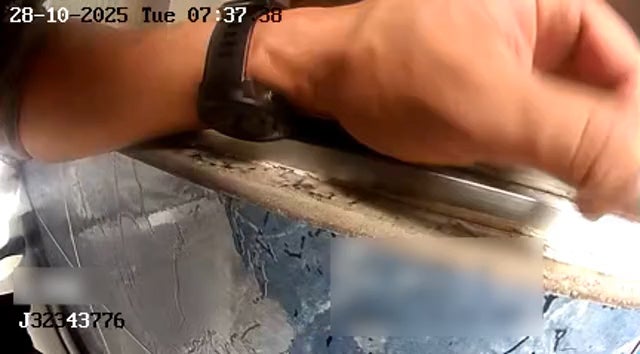
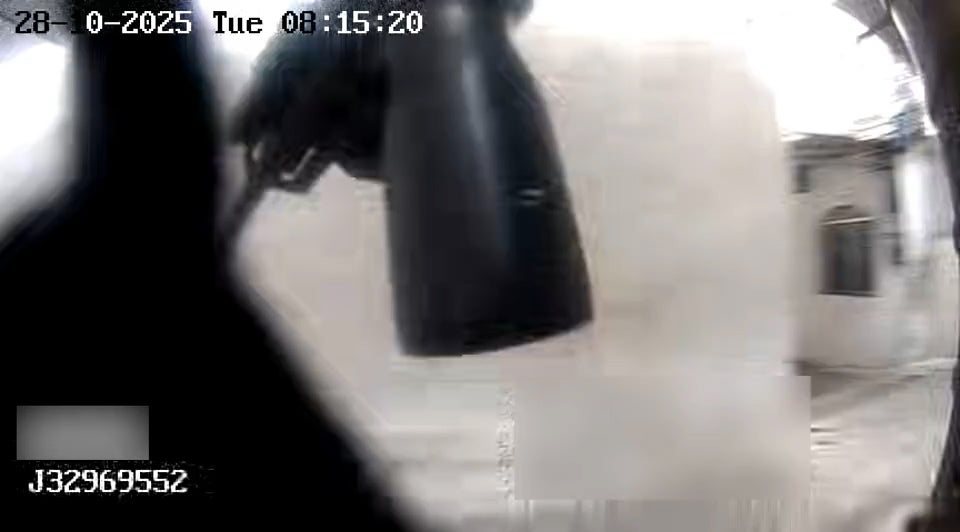
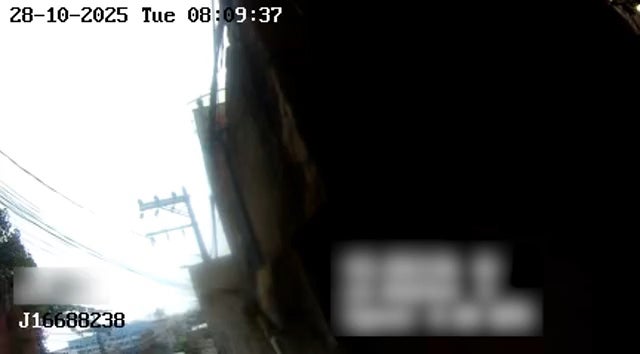
Researchers found evidence that police officers tampered with and obstructed body cameras by leaving the cameras running prior to the operation, effectively draining batteries; covering the lenses; removing cameras and placing them where they would not capture officers’ actions; and leaving cameras in vehicles during the operation. 

Human Rights Watch found that such tampering consistently occurred at key moments–during arrests, shootouts, or while officers entered homes. A majority of such tampering was seen on cameras worn by officers whose units engaged in front-line operations .

Examples of Possible Body Camera Obstructions
 
Suspected intentional tampering

The camera was covered by an officer's hand, removed, or placed in a pocket or backpack during the operation. Intent was suspected when this lasted more than 20 minutes or coincided with suspicious circumstances — such as gunfire on camera audio, the officer entering a residence, or officers seen motioning to or discussing the camera beforehand.


Camera removed or left in vehicle

In other cases, officer intent was unclear, but they may have violated protocol by temporarily removing their body cameras during the operation. During this period, officer activity was not visible.

Despite the Supreme Court rulings , only roughly 23 percent of the 2,500 officers participating in the operation wore body cameras, the Rio de Janeiro government said. Military police told researchers that they had 15,000 body cameras–six times the number of officers who participated in the operation–at the time of the raid. In a document sent to the Supreme Court, the Rio government claimed that technical problems impeded the use of dozens of cameras the day of the raid. 

The Military Police sent the Public Defender’s Office 4,400 hours of footage recorded by 532 cameras assigned to 527 officers, which Human Rights Watch analyzed. At the time of writing, the Public Defender's Office had not received any footage from the 62 cameras that Civil Police reportedly wore. 

Despite saying that they had planned the operation for months, the chief of Rio’s Military Police told reporters that camera batteries may have died before the raid’s end. Military Police protocol specifies that officers should check that cameras have at least 95 percent of battery before using them; it also states that they should carry an extra battery if their shift is more than 12 hours, the nominal battery life, although an officer said older batteries run out sooner and other officers said recordings in high-quality mode may use up more battery. In statements to prosecutors, BOPE commanders admitted that, while BOPE had 14 extra batteries, they did not take any on the operation. 

The Military Police protocol for the use of body cameras also establishes that officers can only remove the cameras in very specific circumstances .

Instances chart

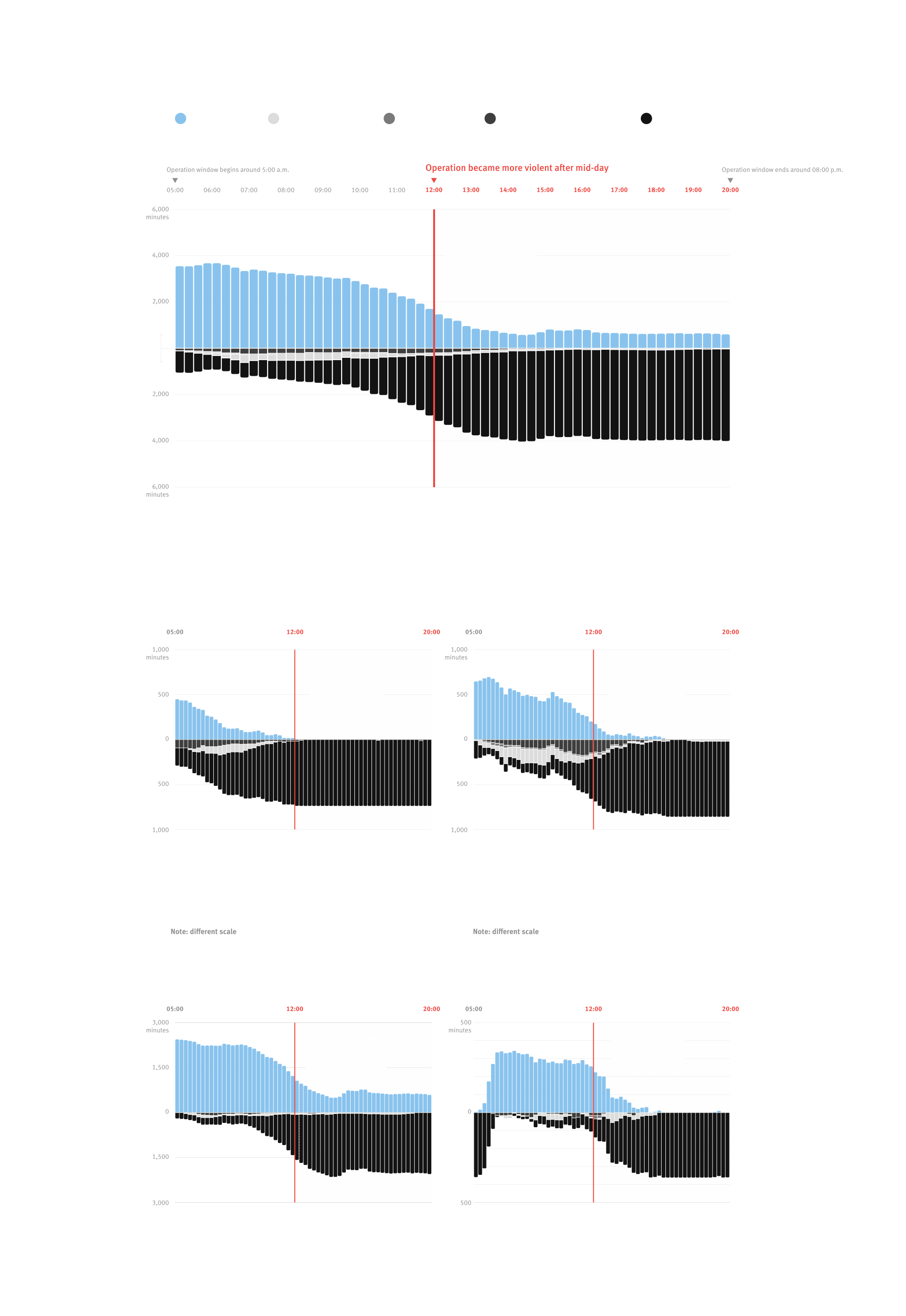
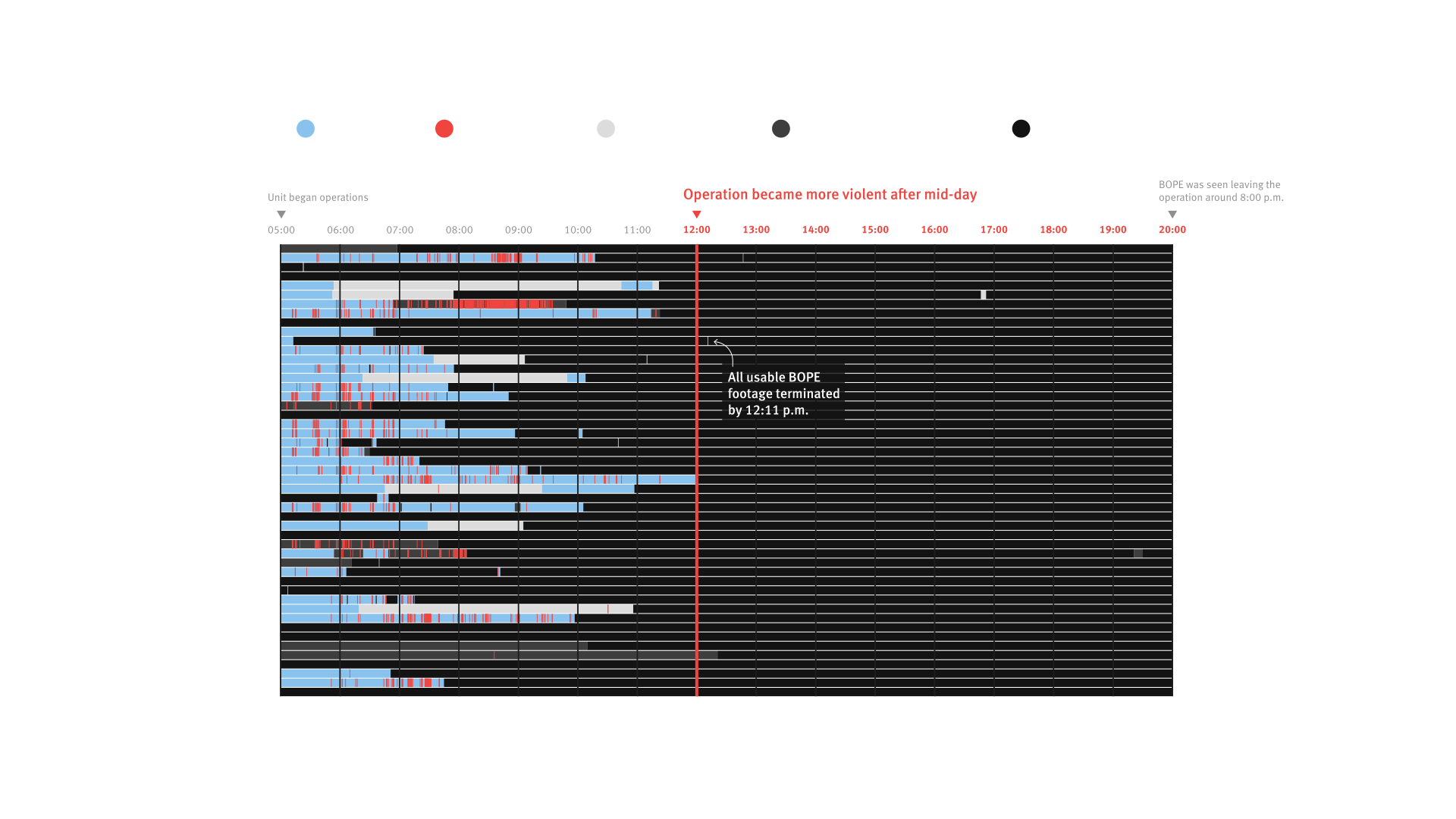
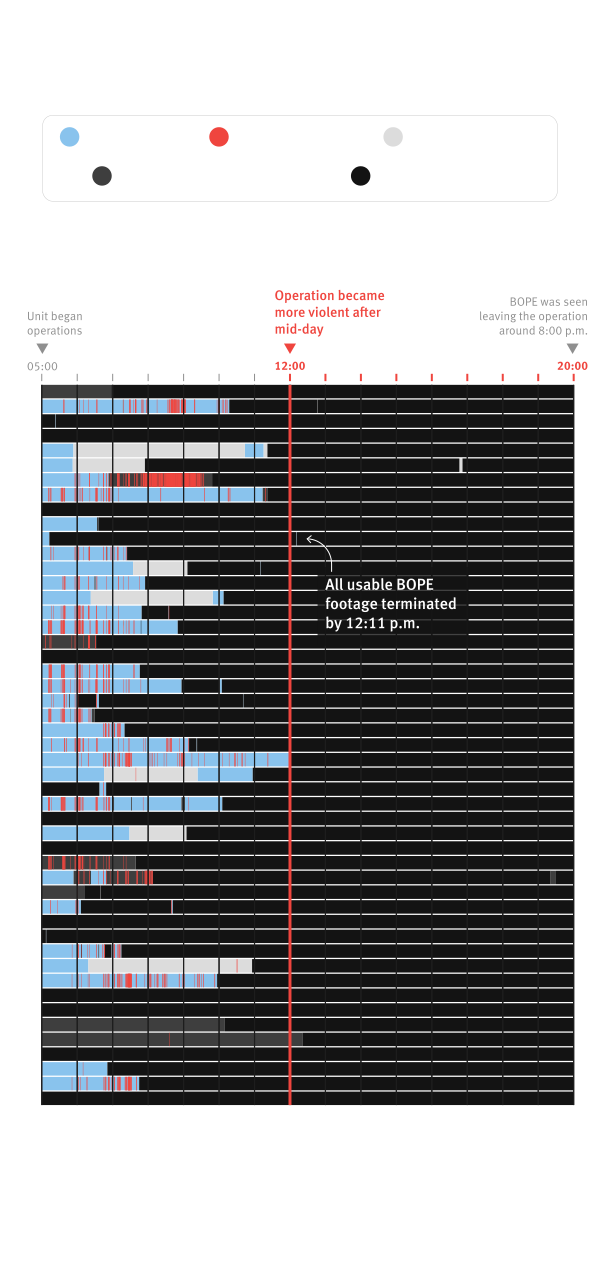
Officers are only able to stop cameras from recording when changing the battery, a procedure for which they have two minutes, Military Police told Human Rights Watch. Of the 305 officers belonging to front-line units from whom Human Rights Watch has footage, 55 percent of recordings terminate or have a significant gap in footage by mid-day, when the operation turned most violent. This indicates that a majority of recordings ended prematurely. The average recording time of front-line officers was 6 hours 38 minutes long, well below the 12-hour battery life.

The reasons for the lack of footage are not clear. But the outcome was: there is not one recording available showing any killings from that day.  

Unit chart timeline

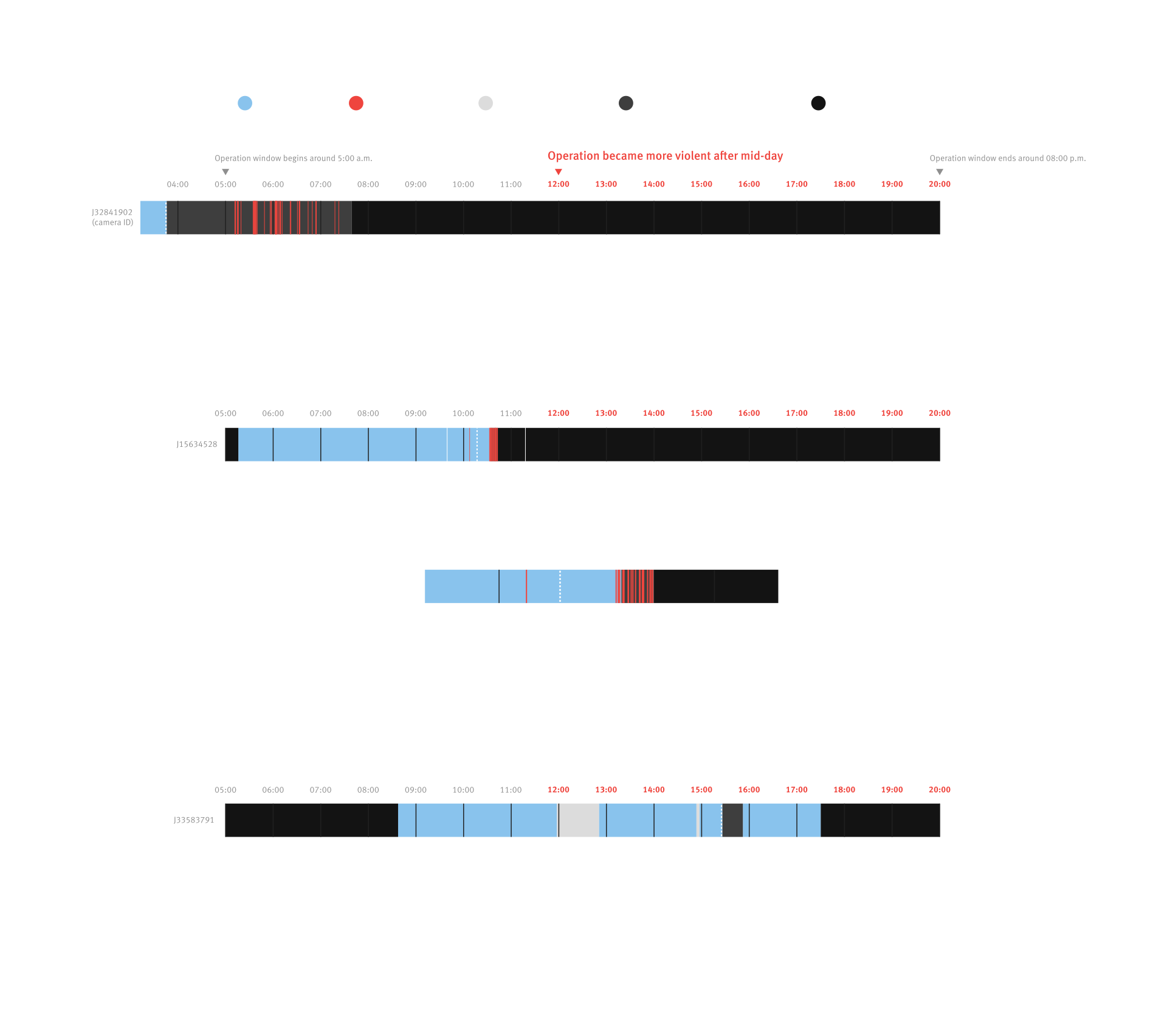
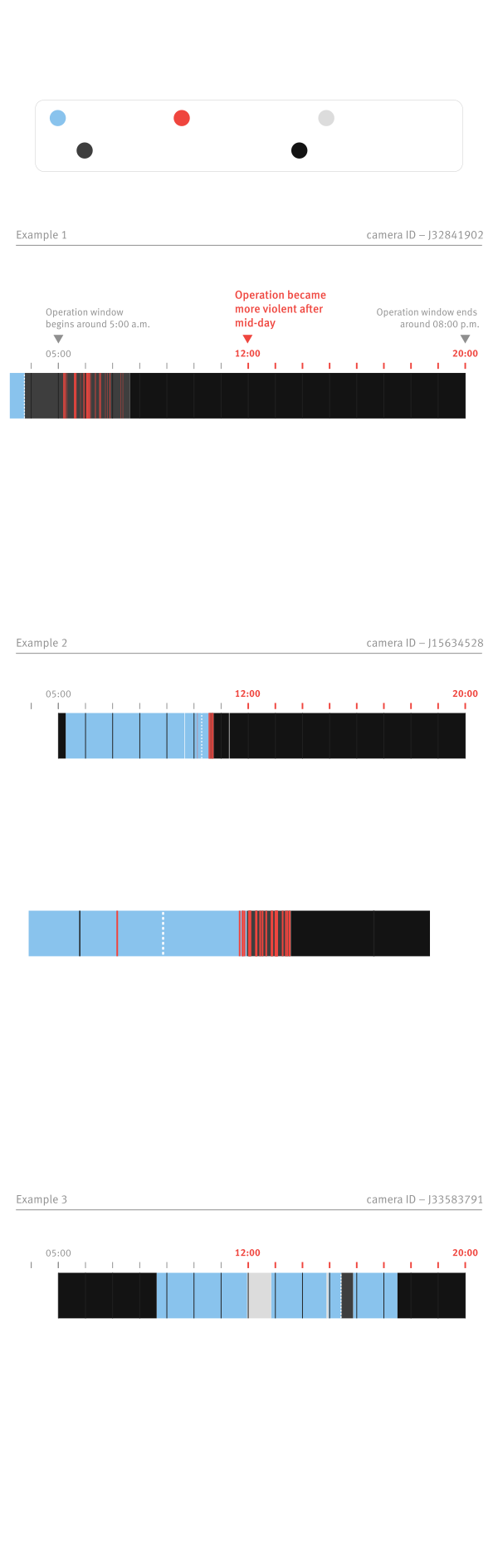
In addition to the missing footage, Human Rights Watch found 278 instances among 132 front-line officers that included camera obstructions, with officers removing or covering body cameras. 

These 278 instances included cases in which researchers could not determine officer intent, but may have violated protocol due to the removal of body cameras during the operation (35) or leaving them in vehicles (97), resulting in officer activity not being visible. The remaining 146 instances involved suspected intentional tampering by removing cameras or covering lenses. 

Specific examples of tampering timeline

The front-line unit with the most missing footage was BOPE, the unit deployed to the Vacaria where the majority of killings took place. None of the footage for the 49 BOPE officers reviewed by Human Rights Watch captured the operation after 12:11 p.m. Despite this lack of footage, researchers found 26 instances of officers potentially tampering with or removing cameras. Through the use of AI and subsequent manual review, researchers determined that 36 percent of gunshot clusters heard on BOPE cameras occurred during camera obstructions. 

BOPE timeline

A prosecutor confirmed to Human Rights Watch in September 2026 that, while there is footage of police shooting, there are no images of a person being killed. 

In body-worn camera footage of a conversation among Shock Battalion officers, they expressed frustration that the cameras prevented them from killing suspects, complaining that those who were arrested would simply be released by the courts.

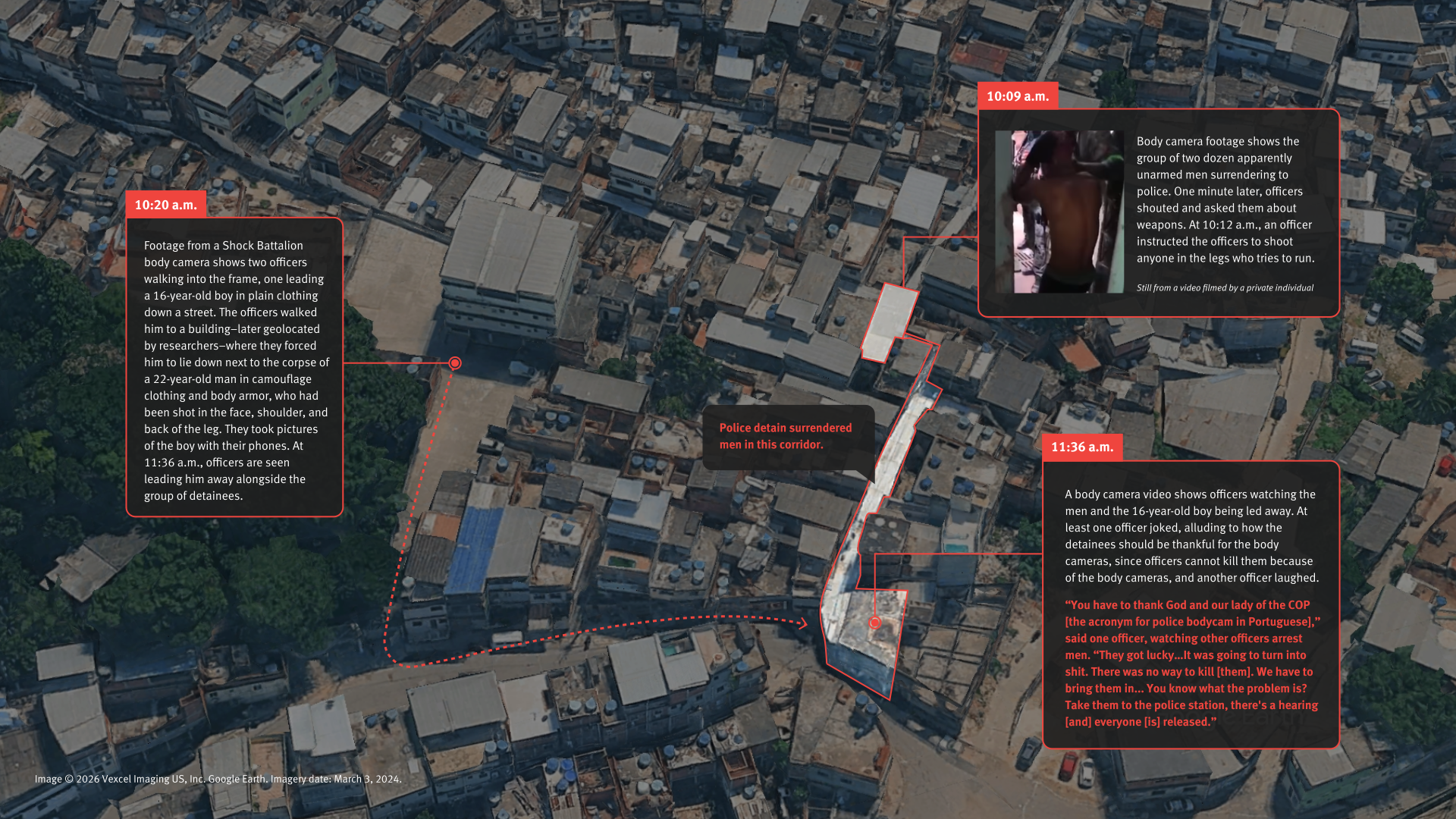
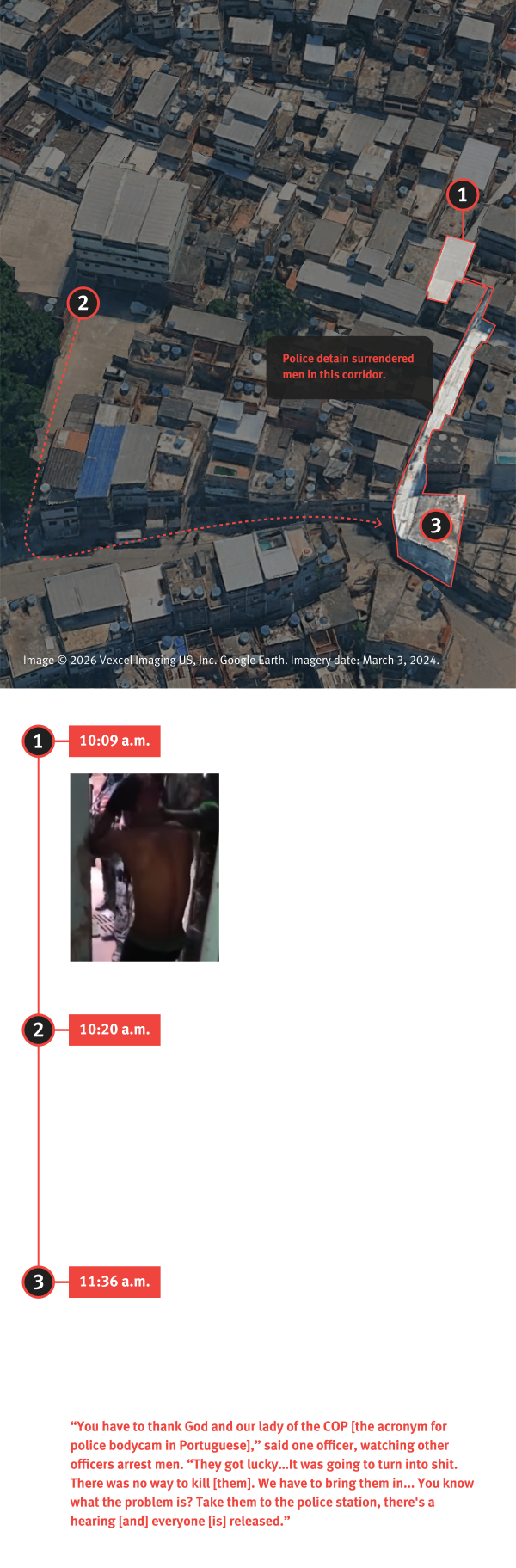
Body cameras did not deter officers from abusing detainees. Just after 10 a.m., in one of several instances analyzed by researchers, Shock Battalion body camera footage showed two officers walking into a room in a house researchers geolocated to the edge of the Vacaria. There, the officers found a boy sleeping on a bed. (Researchers verified his age–16–and his name by comparing body camera footage with official records). A Shock Battalion sergeant punched the boy in the face and threw him to the floor. Though he appeared to be unarmed, officers found camouflage clothing, a pistol, and a handheld radio elsewhere in the room and another officer said, “You’re going to die.” 

Later, the officer asked the boy, “What do you have to offer us?” to which the boy responded, “Don’t kill me,” before offering his phone and other phones to officers. Police then asked him to provide information on the gang.

In a video shared online and verified by researchers, a group of men inside a house several hundred meters away from the detained boy asked a resident to record them as they abandon their weapons and surrender saying, “Please don’t kill us, it’s on tape.” 

Timeline surrendered men

Systematic Investigative Failures

Throughout Operation Containment, police systemically violated Supreme Court-mandated operational procedures and internal police protocols in favor of an operation that appears to have been lethal by design. 

Police conduct also violated Brazil’s obligations under international human rights law, which require state authorities to ensure prompt, effective, and independent investigations of all killings committed by state forces.

Police told prosecutors that they spent months planning the raid into an area that one Civil Police chief described as “possibly the most hostile in Brazil,” where they expected shootouts and casualties. Yet, Alexandre Herdy Barros Silva, the director of the General Department of Homicide and Personal Protection, which would have to record and investigate any killings, only learned of the raid in an informal conversation a week before and did not make any arrangements in preparation, he told prosecutors. 

In the late morning of October 28, hours after the raid began, Herdy called the crime scene teams, including forensic experts, to a police complex roughly four kilometers from Complexo da Penha but they were never sent to the site of the raid itself. 

At the end of the day, as it started getting dark, BOPE collected the bodies of 33 victims , reportedly from the forested area, according to official documents. 

Human Rights Watch verified one photograph and three videos apparently taken by police showing police collecting victims’ bodies and compromising evidence without forensic experts present. Researchers were able to identify two of the victims in the videos.

In one photograph, taken around dusk on October 28 and geolocated by researchers to a quarry flanking the Vacaria, police stood next to at least 19 bodies laid on the ground in two rows next to a “ caveirão ,” an armored police vehicle. Some victims wore camouflage clothing. Two victims had their pants and underwear pulled down, exposing their genitalia. Three verified videos show the bodies piled inside the vehicle, and police making jokes. “Look how wonderful,” one officer said. “We like this.” 

Police drove the bodies to another location, again where there were no forensic experts present, and handed them off to Civil Defense, who took them to the morgue.

But because the bodies had been left on the ground for hours in tropical weather, many were already decomposing by the time medical examiners performed autopsies, making it harder to determine the circumstances of death, according to autopsy reports. 

Commanders later said officers could not preserve any of the crime scenes because they faced armed attacks and could not stabilize the perimeter so that forensic experts could go in. Civil Police did not conduct crime scene analysis of any of the killings, including in cases in which people were killed inside houses–places where it could have been easier for police to secure the premises for crime scene teams. They also did not appear to conduct crime scene analysis in the killing of two men who fled and were killed near the Bonsucesso train station, outside the favela.

Nor were they deployed to Saint Luke Square, where community members laid out the dead. There, forensic experts could have taken photographs and collected evidence, including gunshot residue samples.

9e35ca14-26df-40c2-9a17-26c44beb1cac
Firemen lift bodies recovered from the nearby forest in Saint Luke Square in Complexo da Penha, on October 29, 2025. © 2025 Wagner Meier/Getty Images

The conduct of police during the raid violated Brazilian law and Supreme Court orders dictating that, in cases of police killings, officers need to preserve the scene until forensic experts arrive to examine the evidence. Police conduct also violated international standards. After forensic analysis, state regulations make Civil Defense responsible for removing the bodies.

However, police often flout these requirements by taking dead people to hospitals, later claiming they were alive at the time and they were trying to rescue them.

These false “rescues” destroy crime scene evidence and hinder forensic analysis. This issue is so pervasive that, in 2025, the Supreme Court ordered Rio state to take measures to impede the “improper removal of bodies under the pretext of allegedly providing medical assistance.” 

Despite the court’s orders, during Operation Containment, police removed scores of bodies, while leaving others in the forest without making any arrangements for their pick-up. 

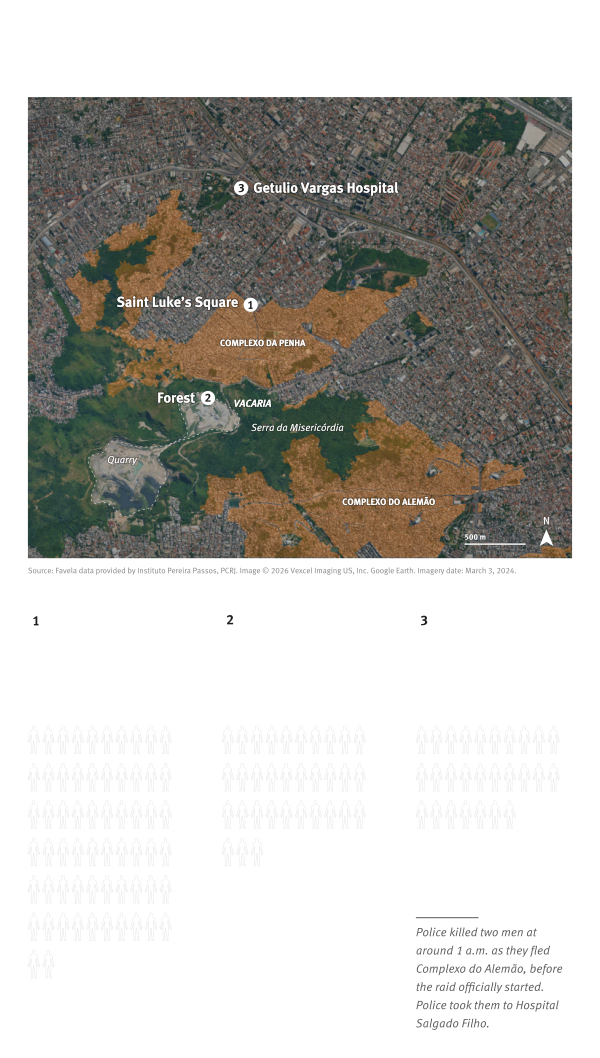
Map where the victims were taken

Records from the nearby Getúlio Vargas Hospital from October 28 show that police and other people brought 26 people who were dead on arrival or died at that hospital, including four police officers. Another officer died less than four weeks later at another hospital. Police and other people brought in at least 21 wounded people who survived. 

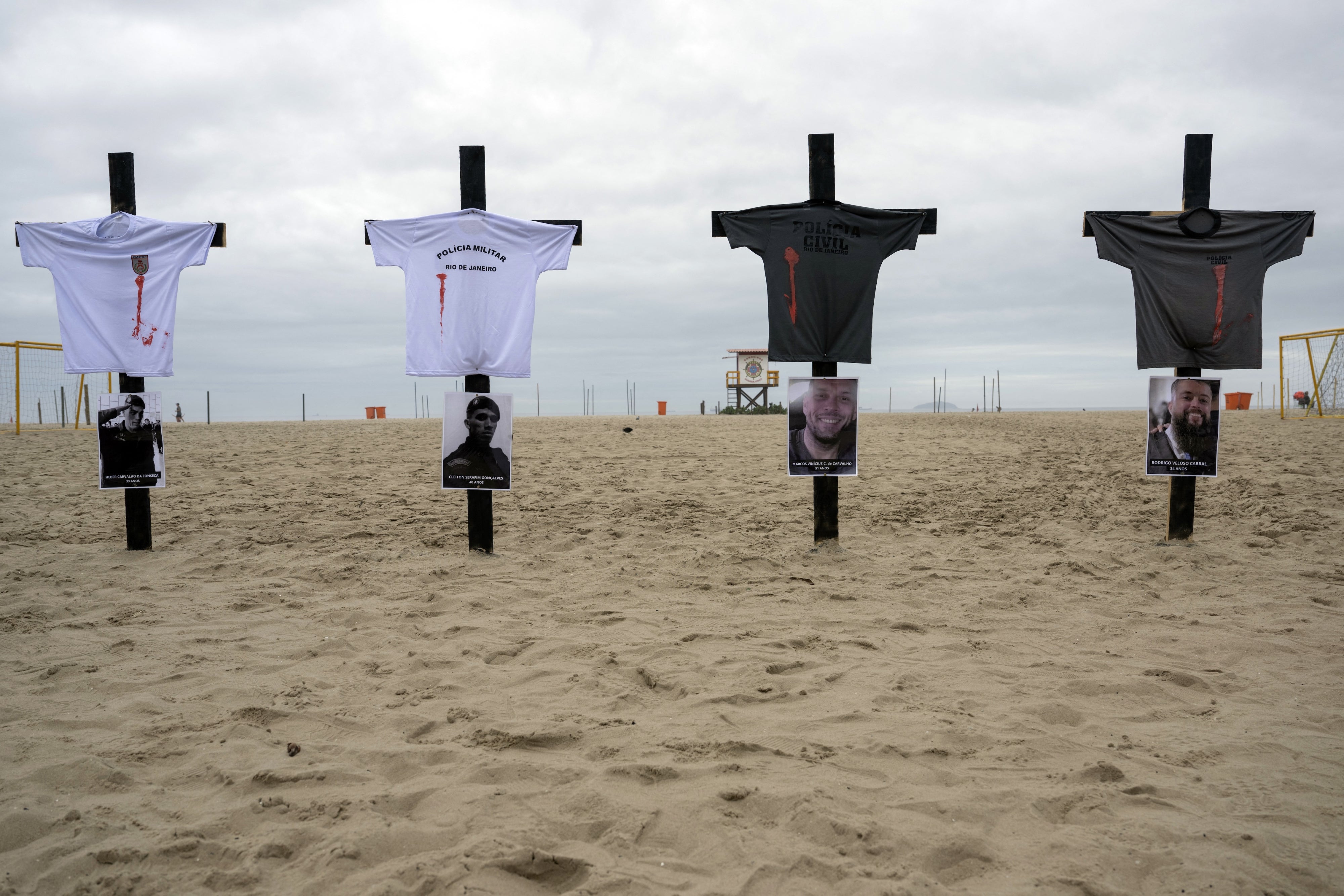
Police officers

Of the 26 dead victims at the hospital, police brought in at least 16 of the non-police victims, all dead on arrival, hospital records show. An additional nine wounded victims were brought to the hospital, but hospital personnel and Civil Police stationed at the hospital failed to record who brought them in.

CORE, a Civil Police special operations unit, brought at least four bodies to the hospital. Later, Herdy, the director of the General Department of Homicide and Personal Protection, gave statements maintaining that CORE said they simply “found the bodies.” One of the victims CORE officers took to the hospital was a 28-year-old man who had been shot at close range, according to the autopsy report. A November 3 police report said there was “no information” about the time of his killing, and said there were “no witnesses.”

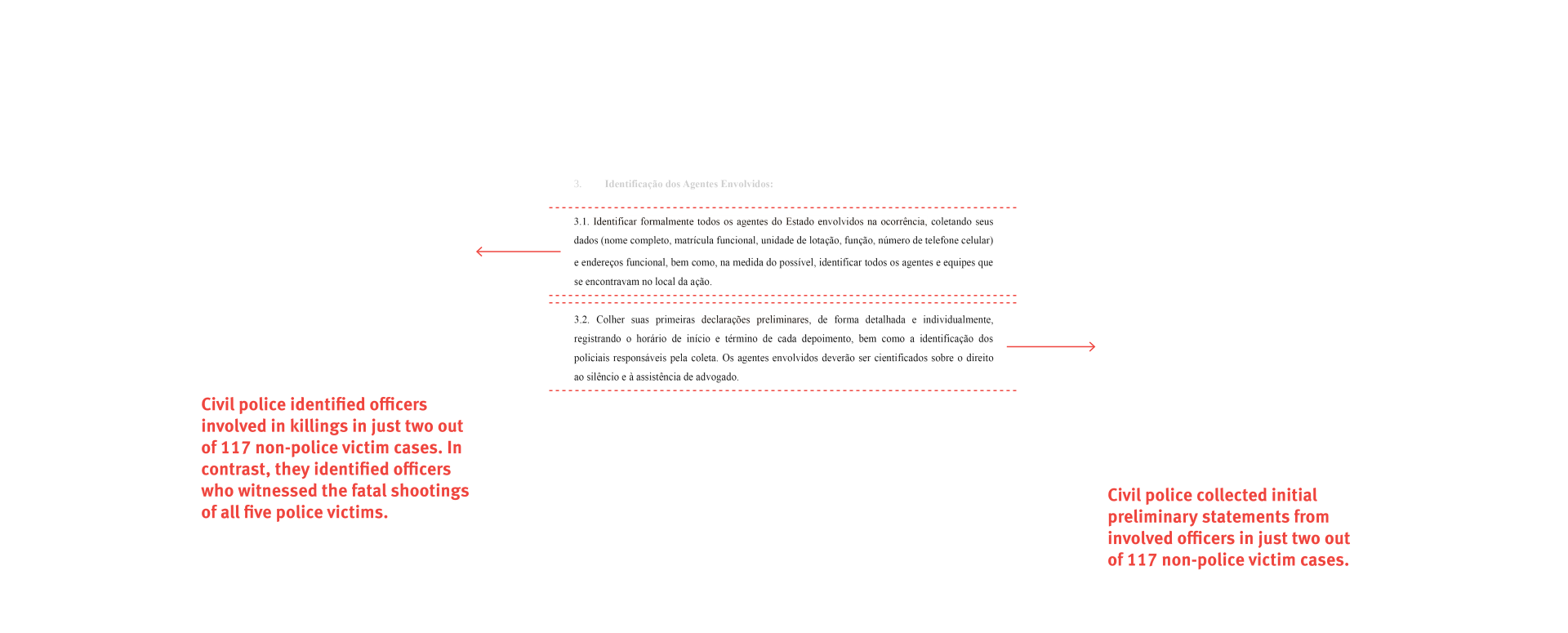
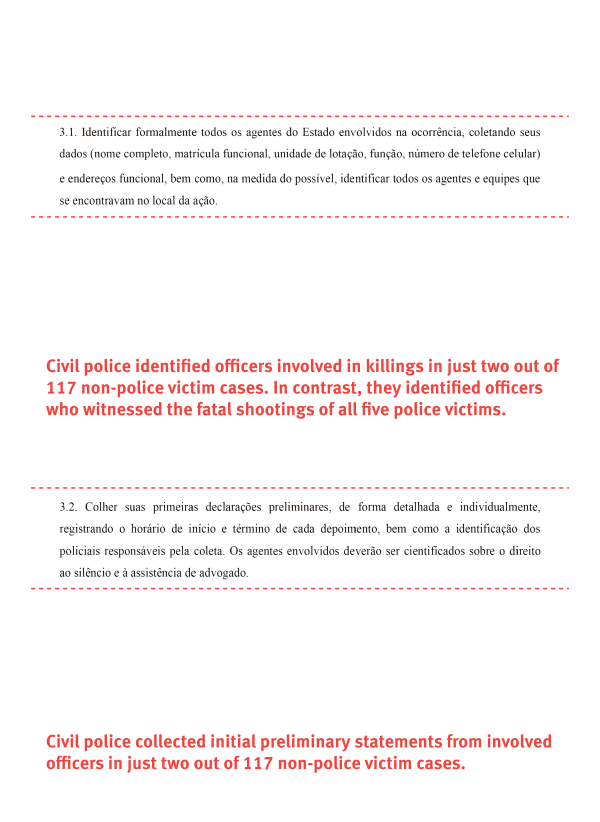
Herdy told prosecutors that while “four or five” Civil Police officers were deployed to the hospital in some cases they did not take the names of police officers who were dropping off bodies nor did they take preliminary statements about where, when, and how victims were killed. In fact, Civil Police collected that information for just two out of 117 non-police victims killed during the raid. Such lack of basic data continues to hinder the ongoing investigation, a prosecutor told Human Rights Watch. It also contradicts the protocol for handling police killings that Herdy signed on May 5, 2025 –less than six months before the operation took place.

Protocol

Yet, in response to a freedom of information request, Civil Police told Human Rights Watch that there is no indication that the protocol was ignored. Its internal affairs department also said there are no disciplinary investigations against any Civil Police officers for their conduct during Operation Containment except for one case of alleged aggression against a detainee.

In response to another freedom of information request, Military Police told Human Rights Watch that it had opened two disciplinary investigations against lower-ranking officers for their conduct during the operation, and an investigation for crimes under the military penal code, without specifying the reason. 

People on a stage holding a press conference
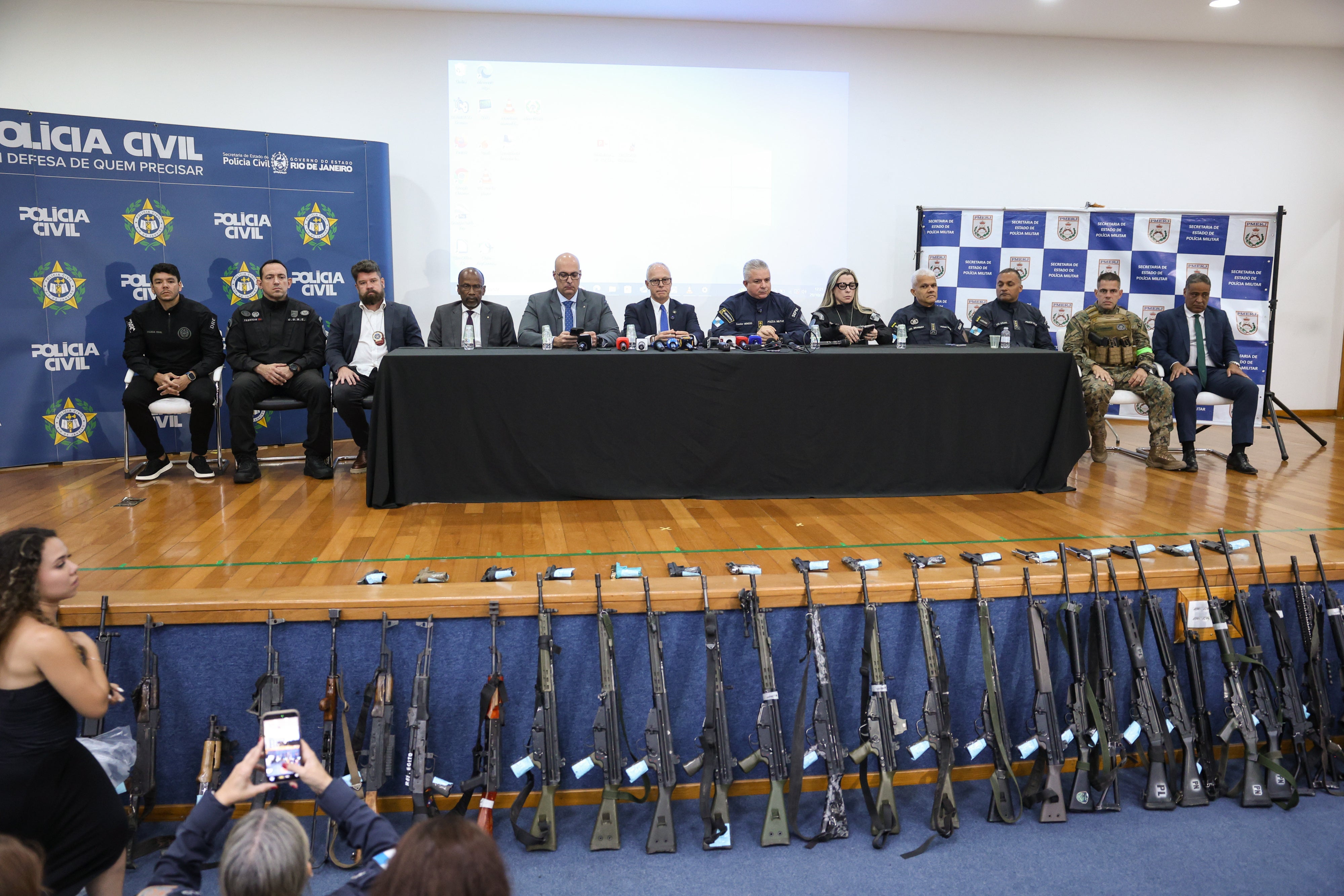
The secretaries of military police, civil police, and public security of Rio de Janeiro sit for a press conference on October 29, 2025, in front of weapons they say were seized during the operation. © 2025 Tomaz Silva/Agência Brasil

Police also failed to keep a strict chain of custody of the 118 weapons they said they had seized. The weapons should have been kept in sealed bags and sent for forensic fingerprint and ballistic analysis. Instead, police presented the unbagged weapons at a press conference. Television reports showed police and even reporters handling guns and other apprehended equipment without gloves. 

Did Police Unlawfully Kill People?  

While 117 men and boys were killed during Operation Containment, in addition to five police officers, only seven were injured by gunfire, taken to the hospital, and then detained by police, hospital records show.

The ratio of people killed compared to those injured and then arrested—almost 17 to 1—is the opposite of what one would expect from a police force that has the duty to protect people’s lives. Brazilian law, its Supreme Court, and international law only allow law enforcement authorities to intentionally use lethal force when it is unavoidable, proportional, and strictly necessary to protect life. 

In one instance, seen in body camera footage at 10:12 a.m., an officer told Shock Battalion officers detaining two dozen men who surrendered, left their weapons in a house, and emerged unarmed, “Look, whoever runs, shoot at their legs.” 

But the analysis of autopsies, including quantifying the volume and location of entry wounds, suggests that officers were not trying to simply demobilize people. Rather, autopsy results suggest that police used excessive force and intended to kill. According to forensic experts from the Independent Forensic Expert Group of the International Rehabilitation Council for Torture Victims who Human Rights Watch consulted, the evidence—including the number of times each victim was shot and the high number of gunshots to the head—suggests that many were targeted and killed intentionally. In many instances, the trajectory of gunshot wounds was from bottom to top, which can be indicative of execution such as when an individual is shot while lying down or otherwise incapacitated.

Relatives of victims have questioned whether some victims were unlawfully killed. In a statement to prosecutors, one woman said that her 23-year-old son called her around 2 p.m. saying he was in an area close to the forest, and needed help surrendering. “He was very scared because the other boys who were with him and who had turned themselves in to the police had been killed,” she said. That was the last she heard from her son, who was killed.

Tauã Brito da Cruz told Human Rights Watch that a young man approached her at the funeral for her 20-year-old son, Wellington Brito Santos. He told her he was in the forest and survived by “pretending to be dead,” she recalled. The young man described “drones scanning the area and police finishing people off,” according to Brito.

“They went in to execute,” Brito said. “It was a strategy of death.”

In a press conference the day after the raid, the then secretary of Civil Police, tasked with carrying out an independent investigation into the killings, said that all people killed were criminals. However, according to human rights law, gang membership or prior criminal convictions do not on their own justify excessive use of force or extrajudicial killing. 

Though social media profiles for many of the victims suggest support of or affiliation with the Red Command, Human Rights Watch did not seek to confirm or disprove gang membership; instead researchers focused on how victims died. 

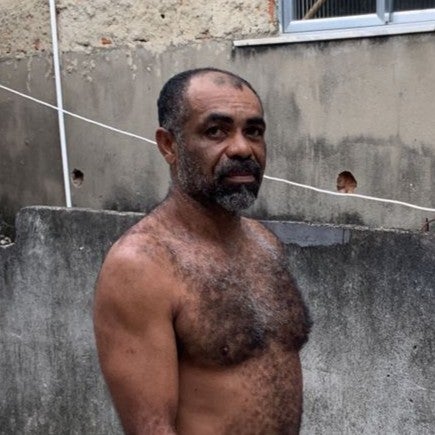
One victim’s killing has come under particular scrutiny. Evidence suggests that police may have unlawfully killed 46-year-old Ronaldo Julião da Silva, who community members say was not a member of the gang and was apparently unarmed when killed. Researchers reviewed Da Silva’s autopsy file and interviewed a relative. A witness reportedly saw police shoot Da Silva while his hands were up and then drag his body into an alley. According to his autopsy files, he was shot in the back, in his left underarm, left hand, and twice in the face.

d4f6ef56-3fab-464b-8218-325a1fc04f2b
© Private

“They killed him and left the body for us to pick up,” said Juliana Conceição, who said she wants the police to admit they “made a mistake.”

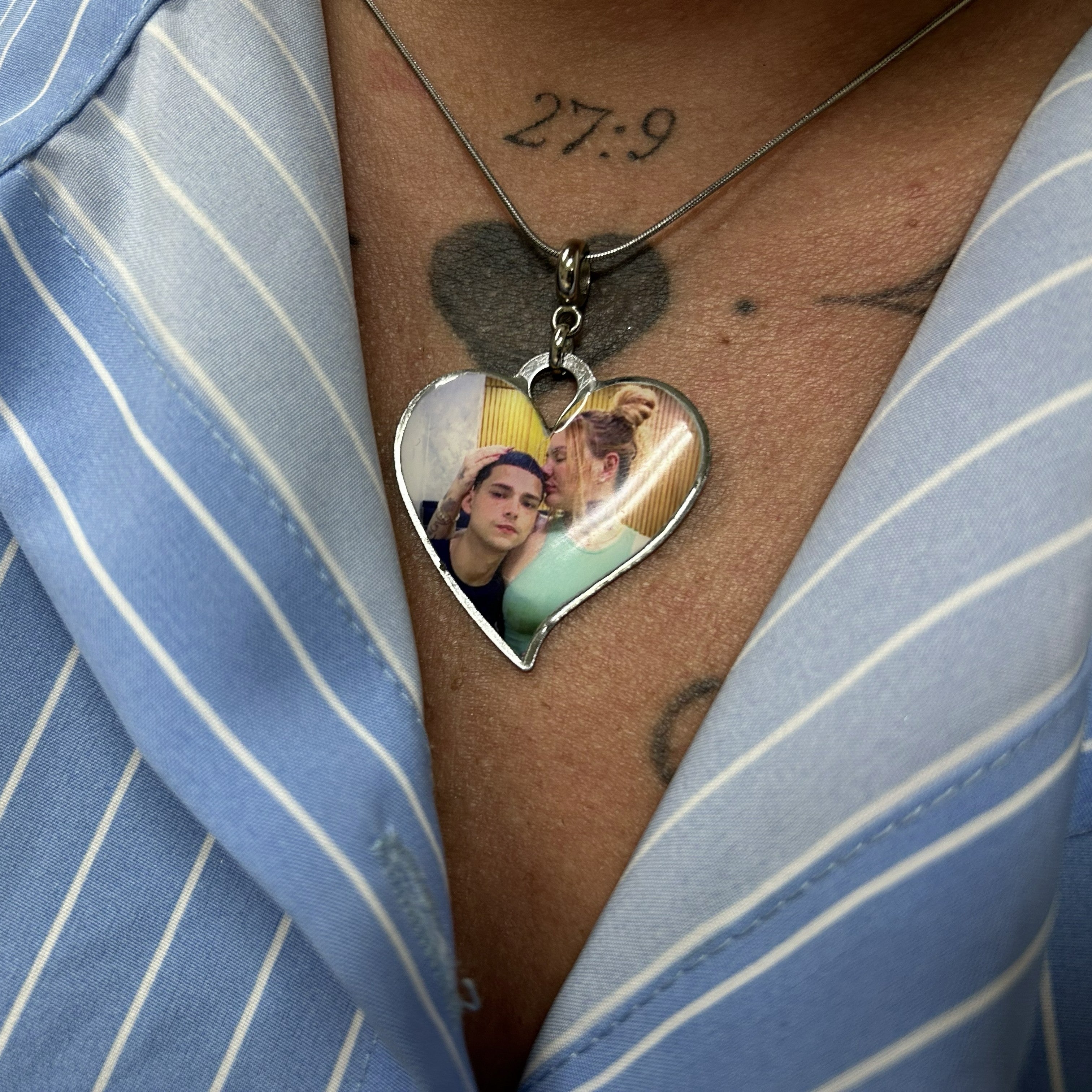
Another victim, 19-year-old Yago Ravel Rodrigues Rosario, was decapitated after he was shot in the lower back. Community members found his body in the forest and his head propped up against a tree. His wounds suggest he was decapitated with a large blade like a machete. While no blades were included in a list of police-issued weapons that day, or weapons seized, researchers verified one video showing an officer in Complexo da Penha with a machete strapped to his back the day of the operation. 

87ad288c-805c-4d24-b1e0-82f0f3501bb2
© 2026 Human Rights Watch

“Why decapitate the boy, why such cruelty?” asked Rakhel Rios. 

Tauã Brito da Cruz, too, seeks answers about her son’s killing. 

At 1 a.m. on October 29, she found Wellington Brito Santos face up near a set of stairs leading to the forest. He was surrounded by what she estimated to be 20 bodies. According to his autopsy file, Santos was shot five times: in his lower left back, the right side of his head, his left shoulder, left arm and left elbow.

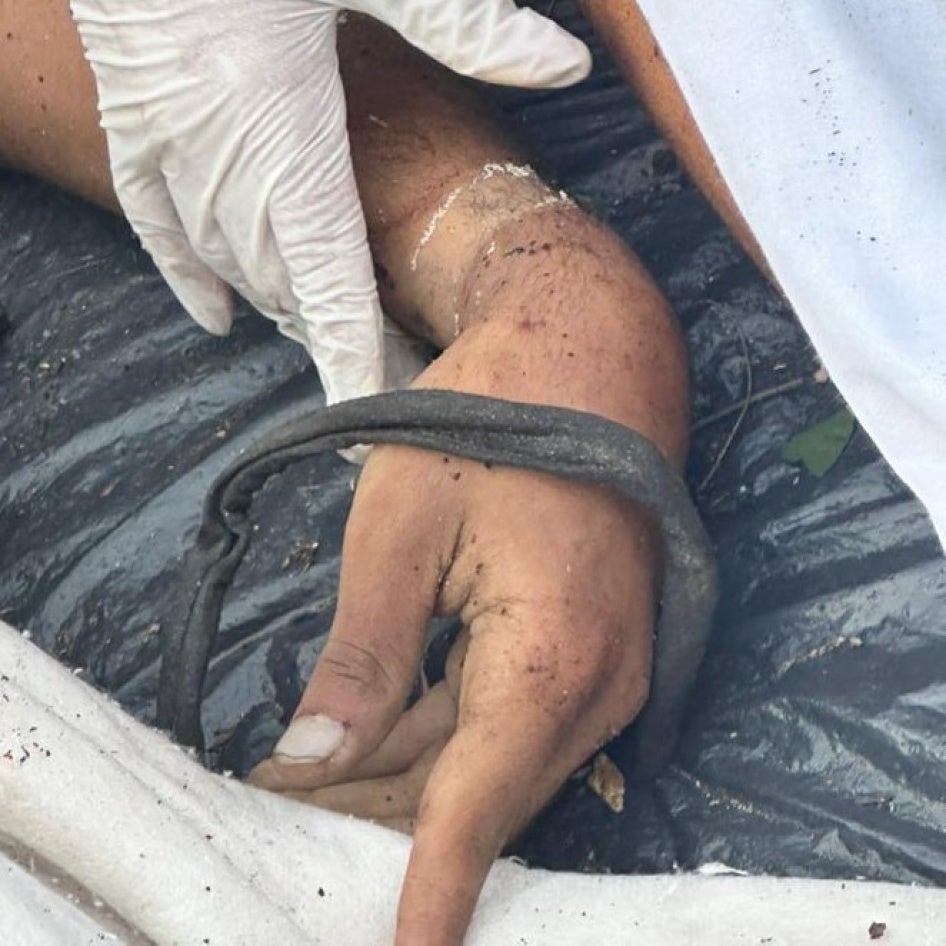
A police drone had filmed him ascending the stairs that morning, apparently carrying a weapon. His mother said she found his body with his hands bound at the front with black fabric. Researchers could not establish when or why his hands were bound.

A close-up of Wellington Brito Santos’s left hand; his mother says his body was found with the black material wrapped around his wrists, October 29, 2025.  Courtesy of Tauã Brito da Cruz.

“People mock [his death], saying, ‘Good riddance–A good criminal is a dead criminal,’” Brito said. “But why does [a] person from the favela not deserve another chance?”

“Nothing Has Changed” 

Human Rights Watch researchers visited Complexo da Penha six months after Operation Containment. 

Residents said they were still controlled by the same criminal organization, the Red Command, which relies on recruiting boys and young men. 

“The gang leaders use new members to fight their wars and replace them immediately if they are killed,” one grieving mother, whose name we are withholding out of concern for her safety, told Human Rights Watch. “Where the state is absent, trafficking fills the gap. The state enters to kill, not to offer anything different.” 

A community leader in Complexo da Penha called for state investment in education, sport, and social services to offer boys and young men real life alternatives beyond joining the gang. Without them, the cycle continues. 

“Both police and drug traffickers violate rights,” the community leader said.

ee393188-e9c0-4b4a-a77a-ea30382dea8a
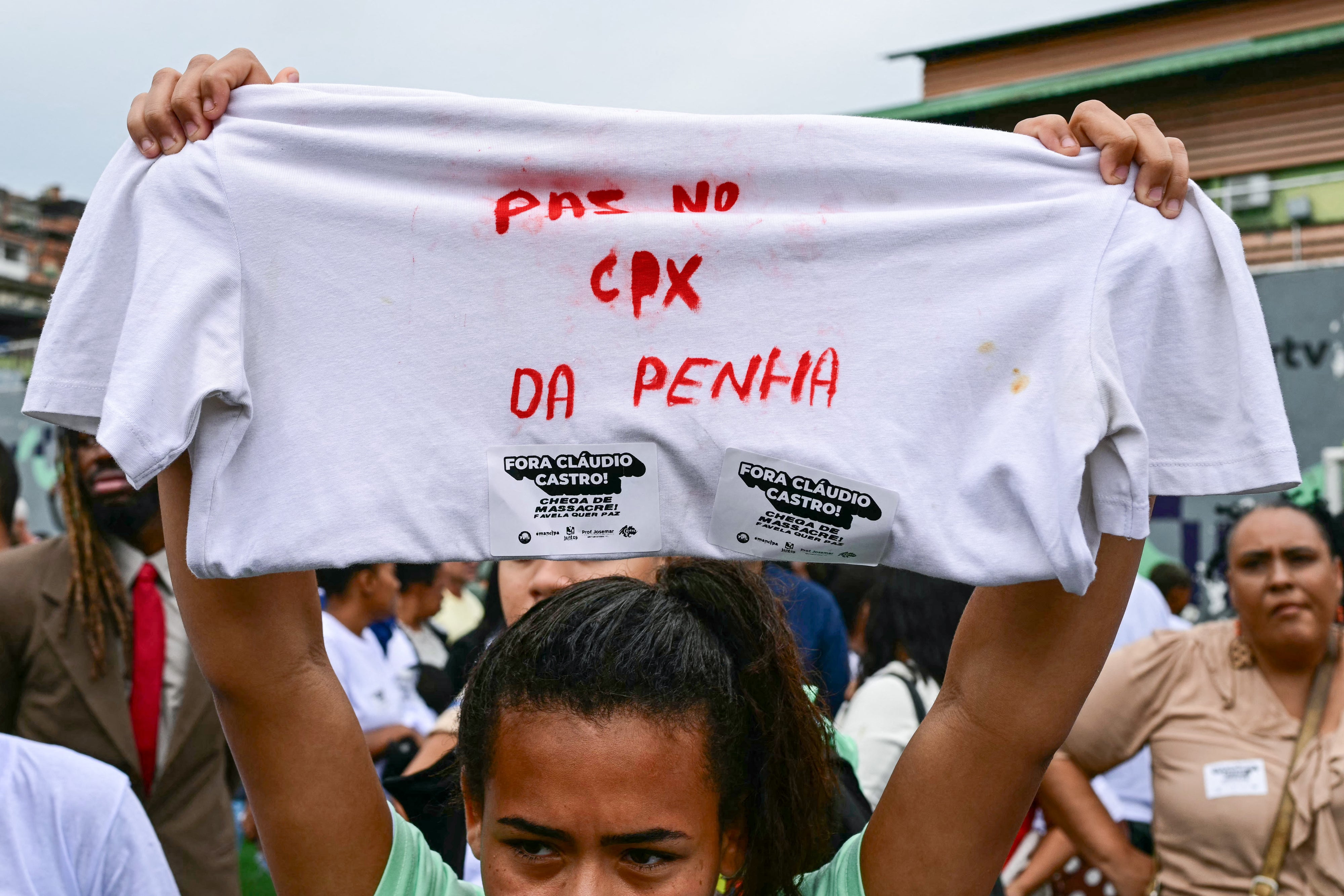
Activists and residents take part in a protest at Complexo da Penha in Rio de Janeiro on October 31, 2025, to demand justice for victims of Operation Containment.  © 2025 Pablo PORCIUNCULA / AFP via Getty Images

Debora Moreira Lemos, 41, grew up in a favela. When she was little, she would hide, terrified, in the closet when the police showed up. 

“I’ve seen [police] operations like this my entire life,” she said. “Nothing has changed.”

Lemos’s son Gabriel Lemos Vasconcelos, 23, died in the October 2025 raid. At the time, she didn’t know that her son was involved in the gang. “He was hiding it,” she said, adding that her son had told a relative he hoped to leave the gang by the end of the year to study. 

But he never got that chance–community members found Vasconcelos’s body in the forest. He had been shot four times in the back, face and chest. The scarcity of evidence made it impossible for Human Rights Watch to determine the circumstances of his death. 

“People are afraid,” said Lemos, “But the mothers want justice.”

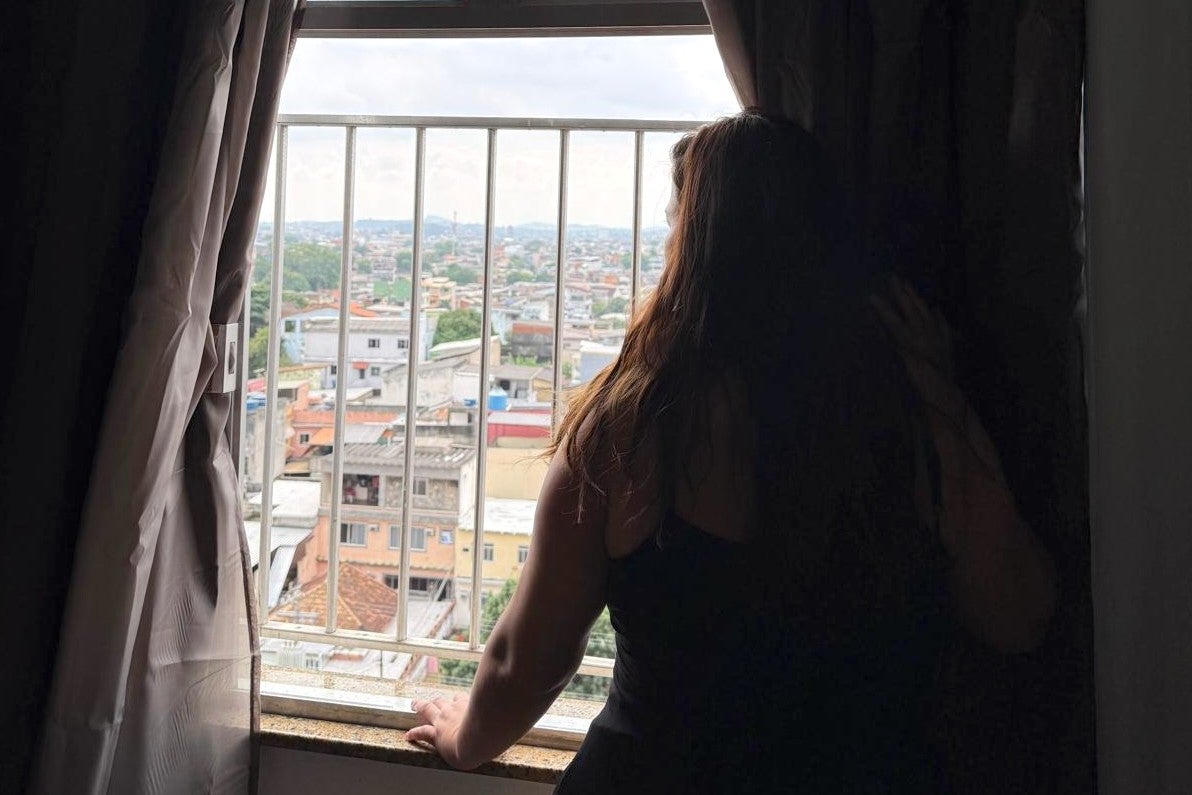
At night, Lemos stands by her living room window, looking out at the sprawling city illuminated around her. It’s a city she’s called home her entire life, the only place her children have ever known. And it’s where her son died, killed in the deadliest documented police raid in Brazil’s history. 

“I wonder, ‘why?’”

f965f8fd-101d-44ed-9b07-26e705f078bc
Debora Moreira Lemos looks out of her window in Rio de Janeiro in April 2026.  © 2026 Human Rights Watch

The Need for Justice 

Brazilian authorities should ensure a prompt, thorough, and independent investigation of each of the killings. They should also investigate the planning and decisions that resulted in such a deadly operation, both for the police as well as non-police victims. Federal and state prosecutors should initiate criminal and civil proceedings to investigate those responsible, including senior political and state officials and commanders of the Military Police and Civil Police. Federal and state prosecutors should also initiate proceedings to investigate the extent of the Military and Civil Police’s violation of Supreme Court orders, Brazilian law, and police force protocols about the proportional use of force, use of body cameras, and preservation of crime scenes and other procedures in cases of killings by police.

This case also highlights the urgent need for Rio de Janeiro’s new governor, who will take office on January 6, to introduce a bill to separate forensic services from the Civil Police and to invest in independent, high-quality forensic analysis, a key part of any criminal investigation, not just in those related to police killings.


Acknowledgments

We thank the many people who spoke with Human Rights Watch and shared their experiences, data and evidence. In particular, we want to thank the relatives of people who were killed who spent hours speaking with us while they were grieving their loved ones. We are also very grateful to André Castro and Ana Carol Lucas Leite from the Public Defender’s Office, Flávia Palladino and Cássio Thyone Almeida de Rosa from Project Mirante, James Lin and Rohini Haar from the Independent Forensic Expert Group, Thainã de Medeiros, from Papo Reto, and Lorena Martins and all members of the Network for the Support of People Affected by State Violence (RAAVE, in Portuguese), as well as members of Redes da Maré.  

Sophia Jones, a researcher in the Digital Investigations Lab in the Technology, Rights and Investigations Division; César Muñoz Acebes, Brazil director; and Damir Khairat, research technologist in the Technology, Rights and Investigations Division, wrote this feature. Sophia Jones and César Muñoz Acebes conducted research and analysis in Rio de Janeiro and remotely, and Damir Khairat developed computational methods to analyze large numbers of documents and data. 

Andrea Carvalho, Brazil researcher; and Carina Abreu, Brazil intern, contributed research. Brian Root, senior advisor and quantitative analyst in the Technology, Rights and Investigations Division, provided data analysis. Ekin Ürgen, research assistant, and Léo Martine, senior geospatial analyst–both of whom are in the Technology, Rights and Investigations Division–contributed research and geospatial analysis. Joseph Saunders, Juanita Goebertus Estrada, Sam Dubberley, Gabi Ivens, Clive Baldwin, Gerry Simpson, Mark Hiznay, Anna Bacciarelli, Margaret Wurth, Julia Bleckner, and Etienne Maynier reviewed the feature. Art direction and development were provided by a staff member in the Creative Media Division, with support from Travis Carr, Win Edson, Malena Seldin, Ivana Vasic, and Matteo Bettini. Renata Escudero provided coordination support. Web development by Christina Rutherford. Edited by Mya Guarnieri.